An eyelash curler is a small tool, but the details matter. The right curve can open the eye without pinching, the right pad can create a smooth bend instead of a sharp crease, and the right handle can help users apply steady pressure without pulling. For beauty buyers, distributors, salons, makeup artists, and private-label sourcing teams, choosing an eyelash curler is not only about appearance. It is about comfort, repeatable performance, safe use, and whether the tool fits the expectations of the final customer.
Olimor Beauty offers beauty tools for customers comparing practical options across everyday personal use, retail assortments, and professional kits. If you are reviewing eyelash curlers alongside other beauty tool products, this guide explains how to compare manual and heated designs, what to check before sourcing, and how to help users get better curl results with less risk of lash damage.
What a Good Eyelash Curler Should Do
A good eyelash curler should lift lashes from the base, create a rounded curve through the lash length, and avoid tugging the skin or breaking lashes. Many disappointing results come from a poor fit rather than poor technique. If the curler arc is too flat for the eye shape, it may miss the outer corners. If it is too curved, it can pinch near the inner or outer corner. If the pad is too hard or worn, the lash line may bend at an unnatural angle.
When evaluating an eyelash curler, focus on these core performance points:
- Eye-shape fit: The top frame should sit close to the lash roots without pressing sharply into the eyelid.
- Pad response: The cushion should be firm enough to support the lashes but soft enough to avoid crimping.
- Pressure control: The hinge and handles should allow gradual squeezing rather than a sudden snap.
- Grip comfort: A secure grip helps users apply even pressure, especially when curling both eyes.
- Clean finish: Smooth edges, aligned parts, and a stable pad channel all affect comfort and perceived quality.
For retail or wholesale purchasing, it is useful to test the product on several eye shapes rather than relying on visual inspection alone. A curler that looks well-made may still feel awkward if the angle or handle spacing is not suitable for the target market.
Manual vs. Heated Eyelash Curlers
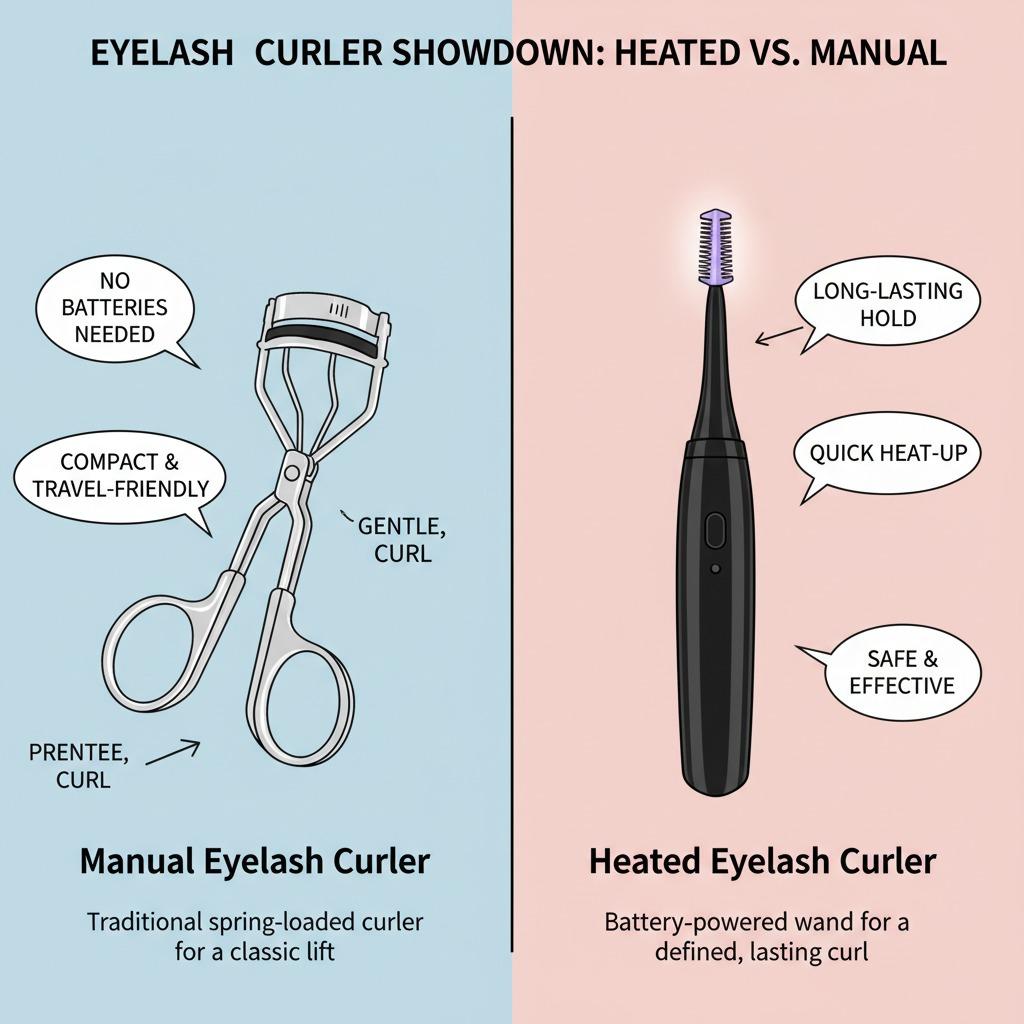
Manual eyelash curlers are the classic choice because they are portable, simple to use, and do not require charging or batteries. They rely on gentle hand pressure to shape the lashes. This makes them practical for everyday makeup bags, travel sets, and professional kits where reliability is essential. Manual curlers are also easy to demonstrate in retail settings because customers can understand the function immediately.
Heated eyelash curlers use warmth to help set the lash shape. The heat can be helpful for lashes that are straight, downward-facing, or resistant to a manual curl. Heated designs vary, but the goal is usually to soften the lash slightly so it can hold a lifted position for longer. Because heat is involved, buyers should pay close attention to temperature control, user instructions, and safety features. A heated curler should never feel uncomfortably hot near the eyelid.
| Feature | Manual Eyelash Curler | Heated Eyelash Curler |
|---|---|---|
| Best for | Quick daily curling, travel, makeup kits | Straighter lashes or users wanting longer hold |
| Main advantage | Simple, portable, no power needed | Warmth helps set the curl shape |
| Key buying check | Frame curve, pad quality, hinge smoothness | Heat comfort, control, and clear instructions |
| User learning curve | Low, but pressure must be gentle | Moderate, because timing and heat matter |
How to Select the Right Curler for Different Users
The best eyelash curler depends on the user’s lash type, eye shape, and makeup habits. For beginners, a well-balanced manual curler is often the most approachable option. It gives immediate visual feedback, and users can learn how much pressure is needed. For makeup artists, it may be useful to keep more than one curler shape on hand because clients’ eyes vary widely.
For short lashes, the curler needs to reach close to the root without pinching. A stable frame and a pad that meets the clamp evenly are important. For long lashes, the goal is to avoid a single bend at the base; users may need to curl in two or three gentle stages along the lash length. For stubborn straight lashes, a heated option may be worth considering, especially when paired with mascara after curling.
Buyers building a retail range should also consider how the product will be explained on packaging or product pages. Clear use guidance reduces misuse and returns. Customers often press too hard or curl after applying mascara, which can stick lashes to the pad and increase breakage risk. A product that includes simple instructions can improve the user experience even when the tool itself is straightforward.
Safe Technique for Better Curl Results
Good technique protects lashes and improves the final look. The most important rule is to curl clean, dry lashes before mascara. Mascara can make lashes stiffer and more likely to stick to the pad, especially if the formula is not fully dry. Users should also avoid rushing, because fast squeezing can create a sharp angle rather than a smooth curl.
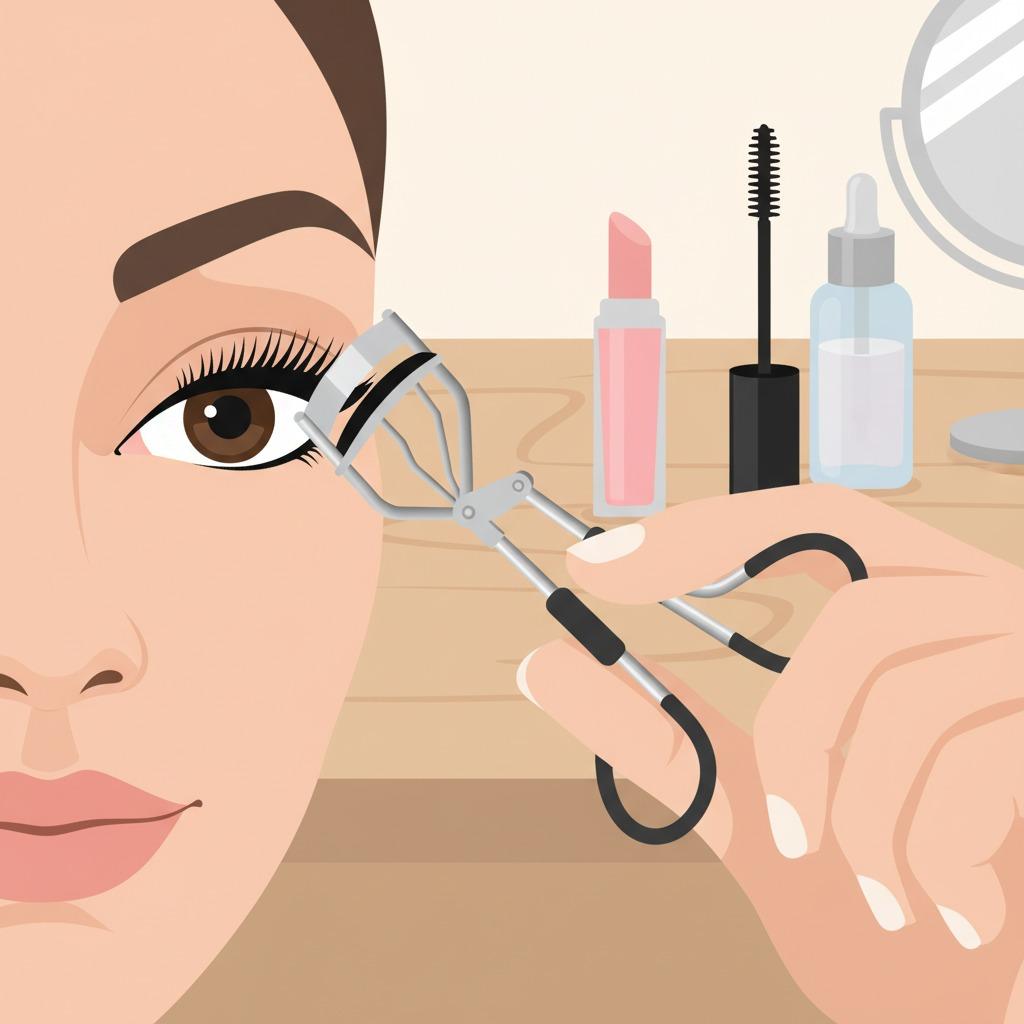
- Start with clean, dry lashes and check that the curler pad is properly seated.
- Open the curler and position it near the lash roots without catching eyelid skin.
- Gently squeeze for a few seconds, using steady pressure rather than force.
- Release fully before moving the curler away from the eye.
- For a softer curve, repeat once at the middle of the lashes and lightly at the tips.
- Apply mascara after curling if desired.
For heated curlers, users should follow the product instructions and test comfort before placing the tool near the eye. Heat should assist the curl, not compensate for excessive pressure or prolonged contact. Any tool used near the eye should be kept clean and handled with care.
Maintenance, Replacement Pads, and Hygiene
An eyelash curler touches the eye area, so maintenance is not optional. Makeup residue, oils, and dust can build up on the pad and frame. This buildup may reduce grip on the lashes and can transfer debris near the eye. A quick wipe after use helps preserve performance, while deeper cleaning should be done regularly depending on frequency of use.
The pad is one of the most important parts to monitor. If it becomes cracked, deeply grooved, sticky, loose, or hardened, it should be replaced. A worn pad can press lashes unevenly and may create breakage. For retail buyers, replacement pad availability is a practical selling point because it extends the usable life of the curler and supports customer satisfaction.
For professional environments, hygiene standards should be stricter. Tools should be cleaned between clients, and any product used around the eye area should be inspected for residue or damage. Even a durable frame can perform poorly if the pad is neglected.
Sourcing Questions for Beauty Tool Buyers
When sourcing eyelash curlers, appearance is only one part of the decision. Buyers should compare samples for consistency, user comfort, and packaging clarity. Olimor Beauty emphasizes precision engineering and user-friendly design in beauty tools, and product evaluation should always connect those goals to practical inspection criteria. Explore related product collections if you are building a coordinated tool assortment.
Useful sourcing questions include:
- Does the frame close evenly across the pad?
- Is the hinge movement smooth, stable, and free from wobble?
- Are edges finished cleanly where the tool contacts the face or fingers?
- Does the curler fit the eye shapes common in the target market?
- Are replacement pads included or available as an accessory?
- For heated curlers, are the use instructions clear and easy to understand?
- Does the packaging protect the tool from deformation during shipping and display?
These checks are especially important for private-label, salon, and distributor orders where a small comfort issue can become a repeated customer complaint. If you are comparing options or preparing specifications, you can send an inquiry with your intended market, preferred tool type, and packaging needs.
Choosing Quality Over Guesswork
The best eyelash curler is the one that fits the user’s eye shape, creates a smooth lift, and remains comfortable through repeated use. Manual curlers remain essential for their simplicity and portability, while heated curlers can be useful for users who need extra help setting a curl. In both cases, the details that matter are practical: frame alignment, pad quality, controlled pressure, clear instructions, and easy maintenance.
For buyers, a strong eyelash curler selection can support everyday consumers, makeup professionals, gift sets, and broader beauty tool assortments. Review samples carefully, test them on real use cases, and prioritize tools that make safe technique easier. To discuss suitable beauty tools for your purchasing plan, contact Olimor for product guidance and sourcing support.