










What Should You Check Before Choosing a Custom Beauty Tools Manufacturer?
A custom beauty tools manufacturer should do more than place a logo on an existing product. For a beauty brand, retailer, distributor, or ecommerce seller, the manufacturing partner influences product function, finish quality, packaging consistency, repeat-order reliability, and ultimately how customers judge the brand.
The strongest supplier is therefore not necessarily the company with the largest catalog or lowest quotation.
Before starting an OEM project, buyers should determine whether a manufacturer can reliably control the product details that actually matter: cutting edges, tip alignment, tension, moving components, surface finishing, tool combinations, branding, packaging, and batch consistency.
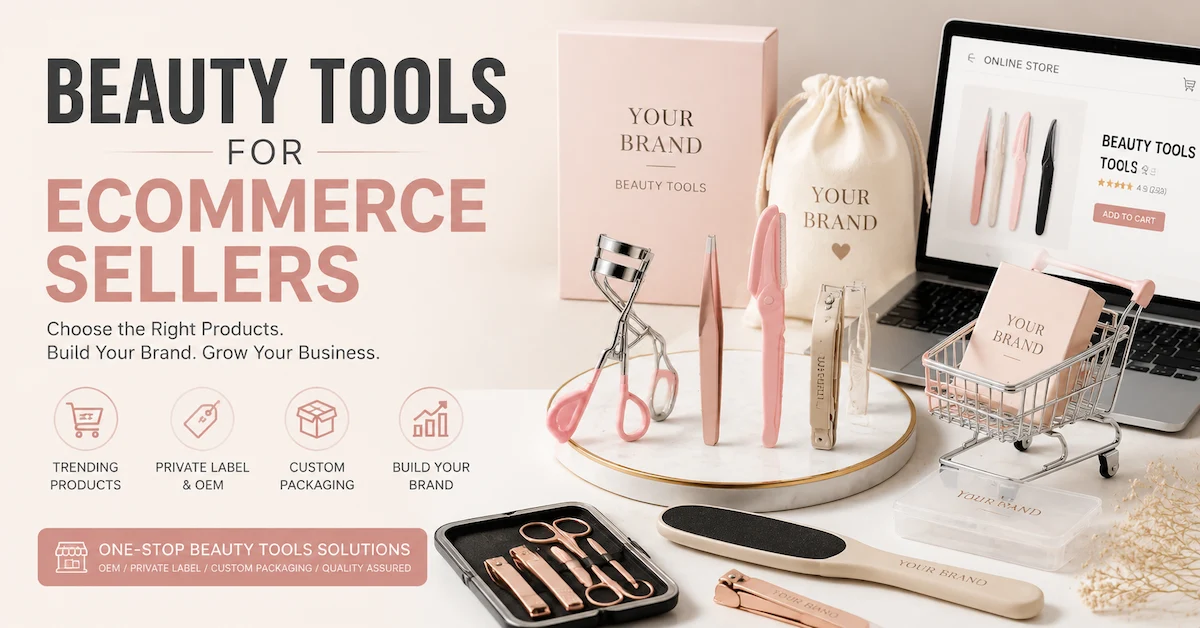
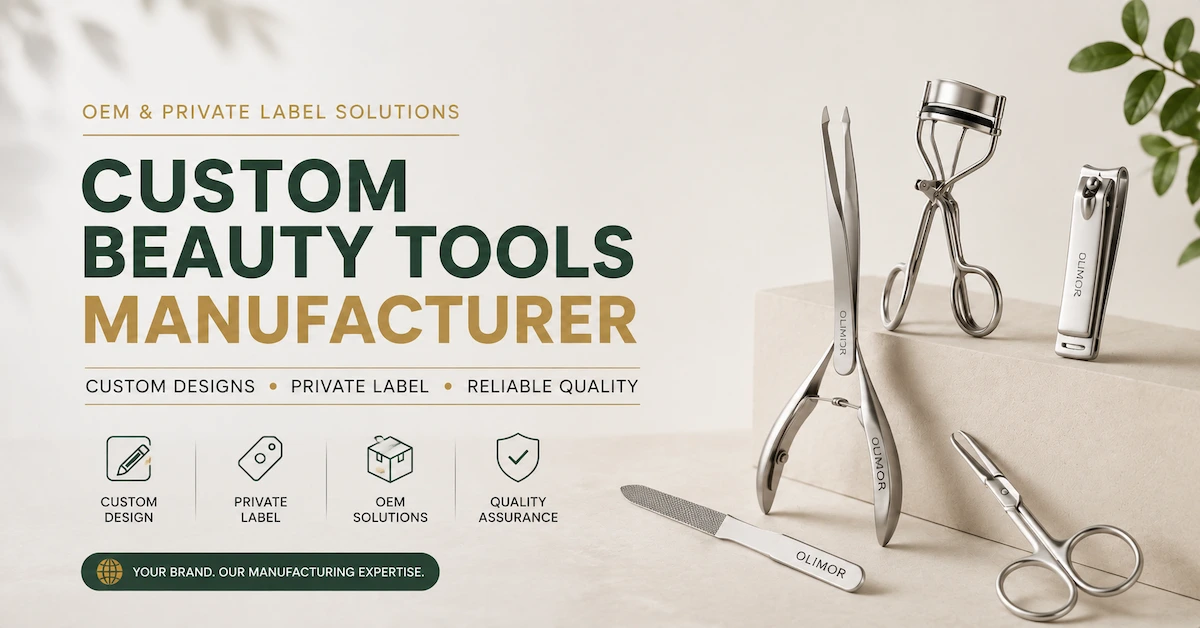
OLIMOR BEAUTY's current beauty tools portfolio covers nail clippers, nippers, tweezers, eyelash curlers, eyebrow razors, manicure sets, foot files, facial tools, nail care tools, beauty scissors, nail files, and other personal-care products.
This range allows buyers to consider both individual SKUs and coordinated private-label collections rather than sourcing every tool from a different supplier.
Check 1: Does the Manufacturer Understand Your Product Category?
Beauty tools may look simple, but different categories require very different manufacturing and inspection priorities.
A supplier that understands these differences can discuss the product in functional terms instead of relying only on appearance and price.
| Beauty Tool | Critical Functional Area | Typical Buyer Concern |
|---|---|---|
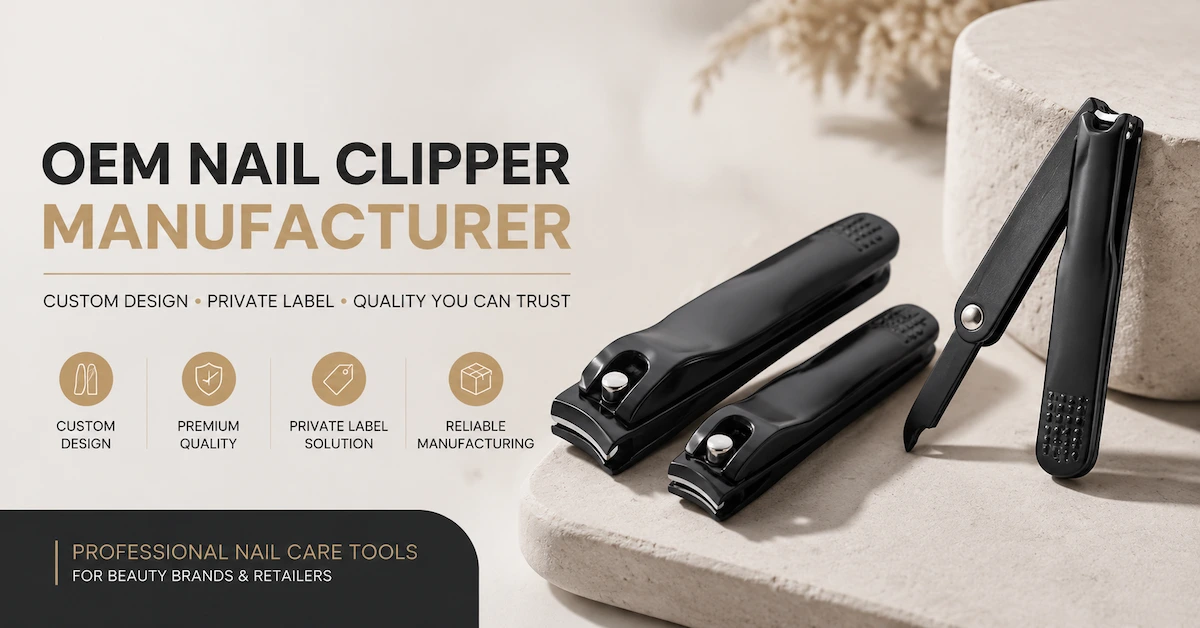
| Nail clipper | Blade alignment and lever action | Clean, repeatable cutting |
| Cuticle nipper | Jaw alignment and spring response | Precision and control |
| Tweezer | Tip alignment and tension | Reliable gripping |
| Eyelash curler | Frame movement and pad position | Controlled lash contact |
| Eyebrow razor | Blade condition and assembly | Grooming performance |
| Foot file | Abrasive surface consistency | Predictable filing action |
| Manicure set | Individual tool quality and completeness | Consistent kit value |
Nail Clippers Require More Than a Sharp Edge
For a nail clipper, buyers should examine:
- Blade alignment
- Cutting-edge consistency
- Lever movement
- Pivot stability
- Surface finishing
- Product symmetry
A polished nail clipper can still perform poorly if the two cutting edges do not meet correctly.
Tweezers Depend on Tip Contact
For tweezers, critical details include:
- Tip alignment
- Contact area
- Closing tension
- Elastic response
- Grip comfort
A minor tip offset may be difficult to see in a product photo but immediately noticeable during use.
Multi-Tool Sets Multiply the QC Challenge
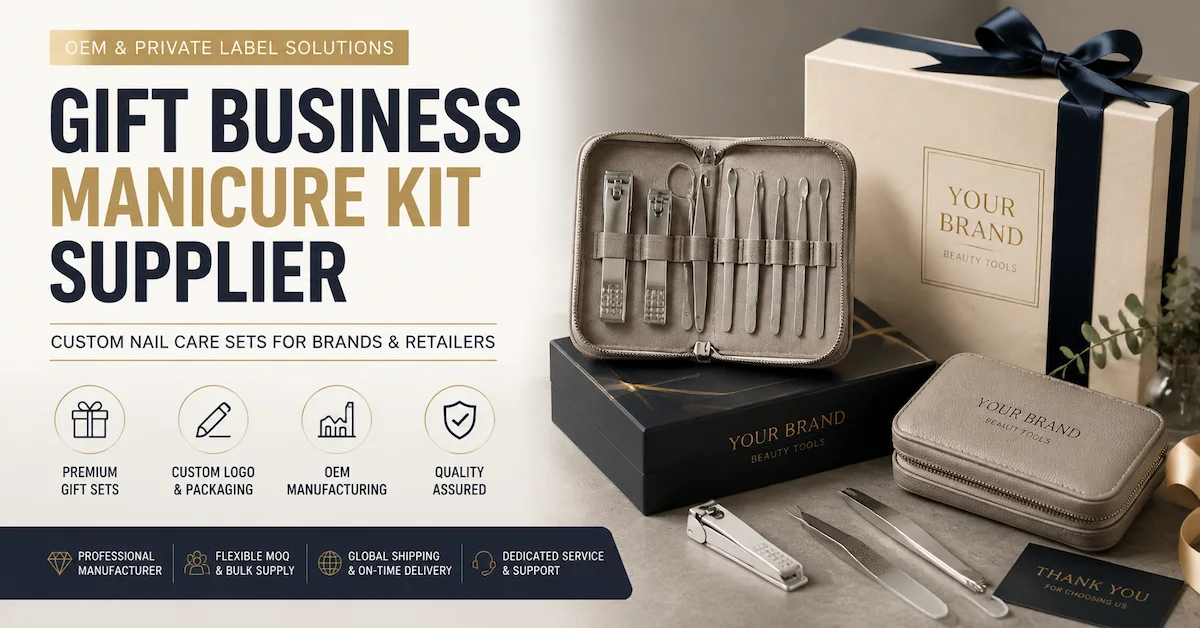
A manicure set may contain nail clippers, scissors, tweezers, files, nippers, and other tools.
The buyer therefore needs to inspect:
each tool individually + the entire set as one finished retail product.
This is one reason product-category experience matters when selecting a manufacturer.
Check 2: Can the Manufacturer Support the Products Your Brand Actually Needs?
A custom program should begin with the target customer, not with the supplier's existing catalog.
Before selecting products, define:
- Who will buy the tools?
- Where will they be sold?
- What problem does the collection solve?
- Is the positioning professional, retail, travel, gift, or value-focused?
- Will the buyer launch one SKU or a complete product family?
For Beauty Brands
A brand may want:
- Coordinated finishes
- Consistent logo placement
- Related product categories
- Matching packaging
- A clear visual identity
For Ecommerce Sellers
Priorities may include:
- Visually differentiated products
- Compact packaging
- Easy-to-understand product benefits
- Product bundles
- Strong presentation in photography
For Salon Supply Buyers
Function may matter more than decorative packaging.
The focus may shift toward:
- Grip
- Precision
- Durability
- Repeatable performance
- Practical storage
OLIMOR buyers can review the full product range before deciding whether the project should focus on a single product, such as tweezers or nail clippers, or a coordinated grooming collection.
Check 3: What Can Actually Be Customized?
“Custom” can mean very different things from one manufacturer to another.
Buyers should separate customization into four levels.
Product Configuration
Depending on the selected model and project, customization discussions may involve:
- Product type
- Tool combination
- Size
- Shape
- Handle style
- Functional configuration
Not every model supports the same changes, so specific options should be confirmed before quoting.
Surface Appearance
Appearance-related requirements may include:
- Finish
- Color
- Polishing style
- Decorative treatment
These details are important for brands that want multiple SKUs to look like one coherent collection.
Logo and Brand Identity
Private-label requirements may include:
- Product marking
- Logo placement
- Packaging branding
- Instruction or insert cards
The exact logo process should be confirmed for the selected product rather than assumed across every category.
Packaging
Packaging can often become one of the strongest points of differentiation.
Options may include:
- Retail boxes
- Pouches
- Cases
- Gift packaging
- Product inserts
- Barcode labels
- Multi-tool kits
For private-label beauty tools, packaging must do two jobs at once:
protect the product and communicate the brand.
Check 4: Does the Supplier Understand Precision and Functional QC?
A buyer should be cautious when a supplier describes quality only with terms such as:
“premium,” “high quality,” or “professional.”
Those words are difficult to inspect.
A better OEM project converts quality into identifiable checkpoints.
For Nail Clippers
Check:
- Do the blades meet evenly?
- Is the cutting action consistent?
- Does the lever move smoothly?
- Is the pivot stable?
For Cuticle Nippers
Check:
- Do the jaws align correctly?
- Is the working edge properly finished?
- Does the spring reopen consistently?
- Does the handle provide controlled resistance?
For Tweezers
Check:
- Do the tips meet correctly?
- Is closing pressure consistent?
- Does the tool grip where intended?
- Is the finish smooth?
For Eyelash Curlers
Check:
- Does the frame open and close smoothly?
- Is the pad positioned correctly?
- Is pressure reasonably distributed?
- Are moving parts properly assembled?
For Foot Files
Check:
- Is the filing surface uniform?
- Is the handle secure?
- Are exposed edges properly finished?
- Does the abrasive surface match the intended application?
These technical entities give buyers a much clearer basis for evaluating samples and production batches.
Check 5: Is There a Clear Sample Approval Process?
For custom beauty tools, sample approval should be treated as a production control step rather than a formality.
A useful approved sample should confirm:
- Product model
- Dimensions where relevant
- Function
- Surface finish
- Color
- Logo position
- Tool combination
- Packaging structure
- Labeling details
Do Not Approve Appearance Alone
A sample may photograph well but still have:
- Poor blade contact
- Excessive tension
- Loose movement
- Rough edges
- Weak internal packaging
Functional approval should therefore be completed before the sample becomes the bulk-production reference.
Keep a Defined Reference
The buyer and manufacturer should be able to identify what specification was approved.
This is especially valuable for repeat orders because the question becomes:
Does the new production match the agreed reference?
rather than:
Does this batch look acceptable?
Check 6: How Does the Manufacturer Control Batch Consistency?
For B2B buyers, the real quality challenge is rarely one sample.
It is producing many pieces that behave and look sufficiently alike.
Important batch considerations include:
- Functional consistency
- Dimension consistency
- Surface appearance
- Logo placement
- Color consistency
- Packaging accuracy
- Set completeness
For buyers using formal acceptance sampling, ISO 2859-1:2026 provides internationally recognized sampling procedures for inspection by attributes and sampling plans indexed by acceptance quality limit (AQL). The exact inspection plan should be selected according to the buyer's quality system and contractual requirements rather than treated as a universal default.
Why Batch Consistency Matters for Brands
Inconsistent production can create:
- Customer complaints
- Returns
- Packaging rework
- Additional inspections
- Review problems
- Difficulty reproducing successful SKUs
For this reason, repeatability can be more commercially valuable than a visually impressive first sample.
Check 7: Can the Manufacturer Support a Complete Private Label Product Line?
A private-label buyer may begin with one tool but expand later.
For example:
Nail Care Collection
Could include:
- Nail clippers
- Cuticle nippers
- Nail files
- Nail care tools
- Manicure sets
Lash & Brow Collection
Could include:
- Tweezers
- Eyelash curlers
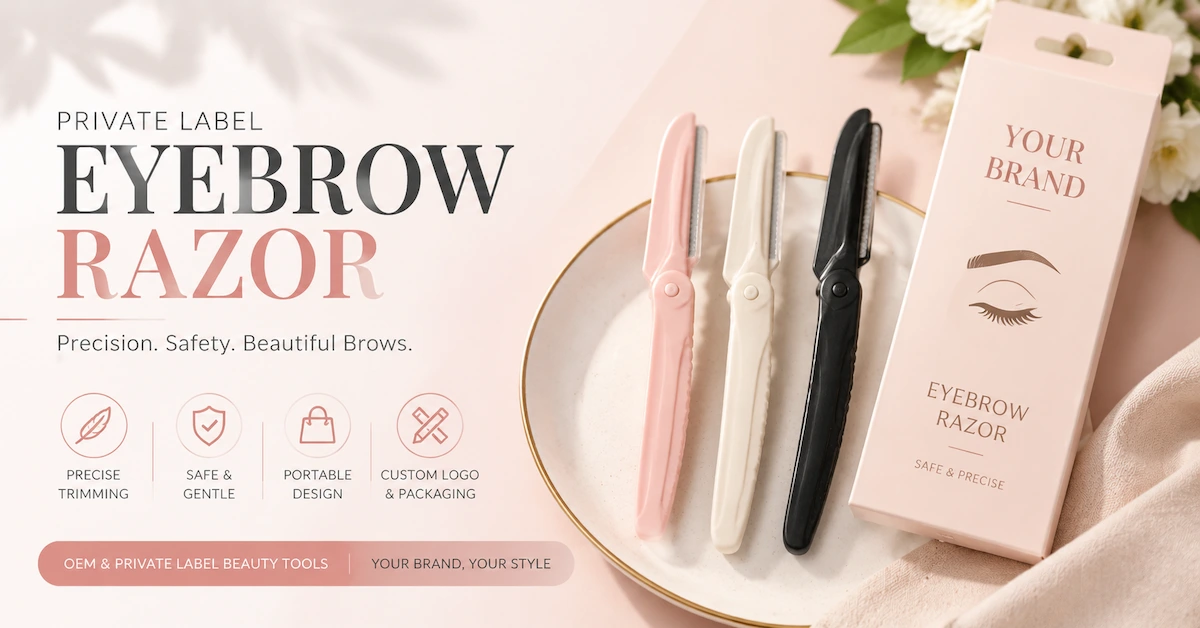
- Eyebrow razors
- Beauty scissors
Foot Care Collection
Could include:
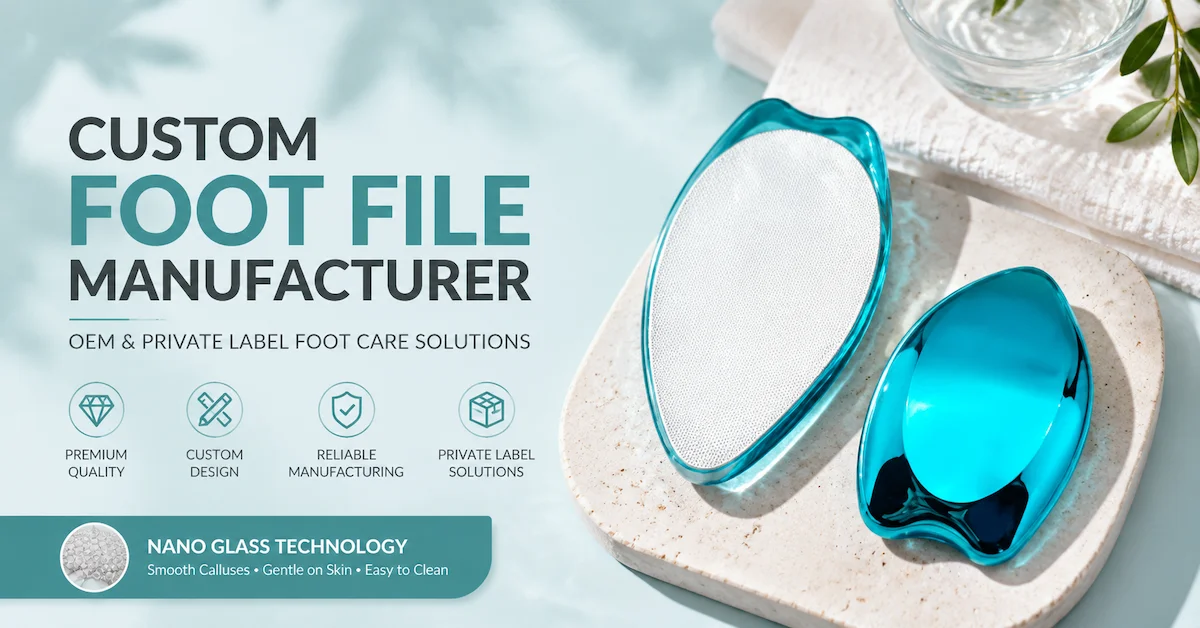
- Nano glass foot files
- Pedicure tools
- Related foot-care accessories
A manufacturer with a broader beauty-tool portfolio can make it easier to maintain a consistent visual and packaging direction across multiple categories.
This is particularly relevant for:
- Beauty brands
- Private-label businesses
- Ecommerce sellers
- Retail chains
- Distributors
- Gift companies
OLIMOR's current product structure allows buyers to review multiple categories through the OLIMOR Products page.
Check 8: Does Packaging Match the Sales Channel?
The same tool may require completely different packaging depending on where it will be sold.
| Sales Channel | Packaging Priority |
| Retail store | Shelf presentation and clear product communication |
| Ecommerce | Protection, compact shipping and visual presentation |
| Gift business | Perceived value and presentation |
| Salon supply | Practical protection and identification |
| Distributor | Efficiency, consistency and labeling |
| Private label brand | Brand identity and customer experience |
Ecommerce Packaging
Ecommerce sellers should consider whether products can move through fulfillment without:
- scratching;
- moving excessively inside the package;
- arriving with damaged presentation surfaces.
Gift Packaging
For manicure sets and beauty collections, packaging may become part of the reason the customer buys the product.
Professional Packaging
Professional buyers may prioritize:
- easy storage;
- tool protection;
- quick product identification
over decorative presentation.
The manufacturer should therefore understand the target sales channel before recommending packaging.
Check 9: Does the Commercial Offer Include the Real Project Requirements?
Two quotations are not comparable if they include different specifications.
Before comparing prices, confirm whether each quotation covers the same:
- Product model
- Material specification
- Finish
- Logo
- Packaging
- Set configuration
- Inspection requirements
- Quantity
Do Not Compare Unit Price in Isolation
A lower unit price may be less attractive if it creates additional costs through:
- inspection;
- rework;
- returns;
- replacement stock;
- packaging changes;
- communication delays.
The more useful question is:
What product specification and service scope are included in this quotation?
rather than simply:
What is the lowest price?
MOQ, lead time, sample timing, and production capacity should also be confirmed for the actual project. These values can change according to product category, customization, packaging, and order quantity and should not be assumed from generic supplier claims.
Custom Beauty Tools Manufacturer vs General Trading Supplier
A manufacturer and a trading supplier can both be useful, but they serve different buying requirements.
| Factor | Custom Manufacturer | General Trading Supplier |
| Production communication | More direct | Usually through another factory |
| Product customization | Often more flexible | Depends on upstream supplier |
| Technical discussion | Manufacturing-focused | Sourcing-focused |
| Sample revision | More direct | Additional coordination layer |
| Multi-factory sourcing | Usually narrower | Can be broader |
| Existing-product sourcing | Suitable | Often highly suitable |
| Long-term OEM development | Strong fit | Depends on supplier model |
A trading supplier is not automatically a poor choice. It can be useful for buyers who need a broad range of ready-made goods from multiple factories.
However, buyers developing long-term OEM products often benefit from more direct communication with the manufacturing process.
Common Risks in Custom Beauty Tool Projects
Unclear Specifications
Saying:
“Make it premium.”
is not a measurable specification.
Instead, define the actual details:
- finish;
- function;
- tool configuration;
- logo;
- packaging;
- critical QC points.
Over-Customizing the First Order
New brands sometimes try to customize every possible feature.
This can increase:
- development complexity;
- sample revisions;
- packaging work;
- inventory exposure.
A more practical approach may be to customize the features customers notice most and expand after market validation.
Approving Only One Cosmetic Sample
Appearance should never replace functional testing.
Ignoring Repeat Orders
Before launching a successful SKU, ask:
- Can this specification be reproduced?
- Will packaging files be retained?
- How will future changes be documented?
A Practical RFQ Checklist for Custom Beauty Tools
Before contacting a manufacturer, prepare:
- Product category
- Product reference or preferred model
- Target market
- Sales channel
- Estimated quantity
- Required customization
- Logo artwork
- Preferred packaging
- Target positioning
- Required sample
- Critical quality expectations
- Delivery destination
Providing this information helps the manufacturer respond with a solution instead of only a generic quotation.
How OLIMOR Supports Custom Beauty Tool Projects
OLIMOR BEAUTY focuses on professional beauty and personal-care tools for B2B buyers.
Its current product categories include:
- Beauty Scissors
- Nail Clippers
- Nippers
- Tweezers
- Eyelash Curlers
- Eyebrow Razors
- Manicure Sets
- Foot Files
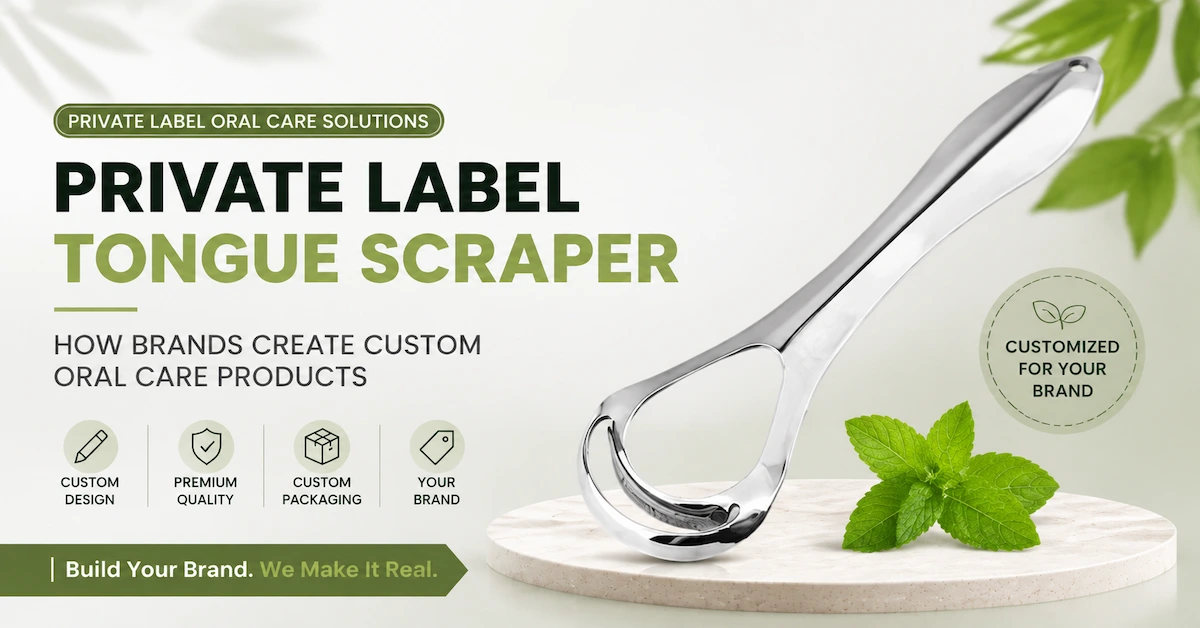
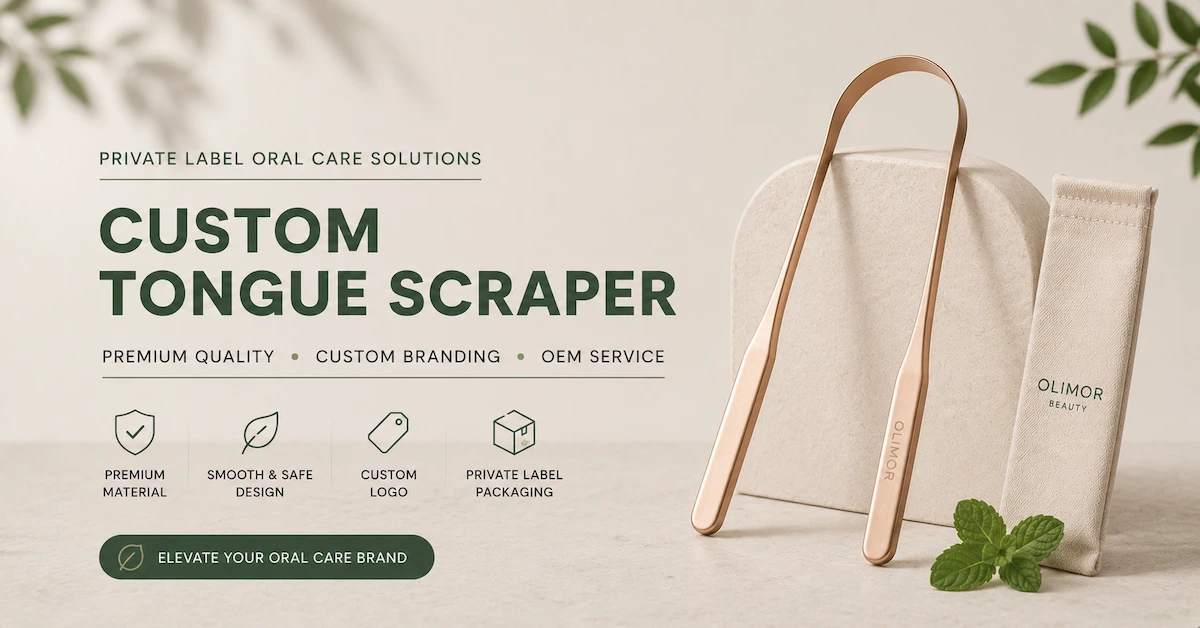
- Tongue Scrapers
- Facial Tools
- Nail Care Tools
- Nail Files
Buyers can use this portfolio to develop individual products or coordinated collections for:
- Retail
- Ecommerce
- Salons
- Distribution
- Private label
- Gift programs
According to OLIMOR's company information, quality inspection is integrated from raw materials through final packaging, making functional and packaging checks important parts of the company's manufacturing positioning.
Learn more about OLIMOR BEAUTY, explore the product range, or send project requirements through the contact page.
FAQ About Custom Beauty Tools Manufacturers
What does a custom beauty tools manufacturer do?
A custom beauty tools manufacturer produces beauty and grooming tools according to buyer requirements and may support product selection, customization, branding, packaging, production, and quality inspection.
What beauty tools can be customized?
Depending on the manufacturer and specific model, customizable categories may include nail clippers, nippers, tweezers, eyelash curlers, eyebrow razors, manicure sets, foot files, scissors, and other grooming tools.
Can I add my own logo to beauty tools?
Many private-label projects support branding, but the suitable logo process depends on the product material, surface, size, and design. Confirm the exact method during sampling.
Can beauty tool packaging be customized?
Yes, depending on the project. Packaging may include retail boxes, pouches, cases, inserts, gift packaging, or other brand-oriented formats.
What is the difference between OEM and private label beauty tools?
OEM generally refers to manufacturing according to buyer requirements. Private label focuses on selling products under the buyer's own brand. In practice, many projects combine both approaches.
How should buyers inspect custom beauty tool samples?
Check both appearance and function. Relevant checks may include blade or tip alignment, tension, movement, finish, logo accuracy, dimensions, and packaging.
Can several beauty tools be combined into one custom kit?
Yes, where supported by the supplier. Manicure, brow, travel, foot-care, and grooming sets are common product-development directions.
How can I reduce risk before mass production?
Define specifications clearly, approve representative samples, document branding and packaging, identify critical quality checkpoints, and agree on how bulk production will be evaluated.
How do I choose between a manufacturer and a trading supplier?
Choose according to the project. General sourcing may benefit from a trading company's broader factory network, while long-term OEM development may benefit from more direct manufacturing communication and process control.
What information should I send when requesting a quotation?
Provide the product type, preferred model, target market, expected quantity, branding, packaging, quality requirements, and destination so the supplier can prepare a more relevant proposal.
Conclusion
Choosing a custom beauty tools manufacturer should be a product-development decision, not simply a price comparison.
For private-label buyers, the strongest manufacturing partner is one that can clearly control the factors customers actually experience:
- Product function
- Precision
- Surface finish
- Branding
- Packaging
- Batch consistency
By defining these requirements before mass production, beauty brands can reduce sourcing uncertainty and build product lines that are easier to reproduce, expand, and position in the market.
OLIMOR BEAUTY supports B2B buyers across nail care, lash and brow, foot care, manicure, and personal grooming categories. Explore the OLIMOR product portfolio or contact OLIMOR BEAUTY with your target products, quantity, customization requirements, and packaging needs.