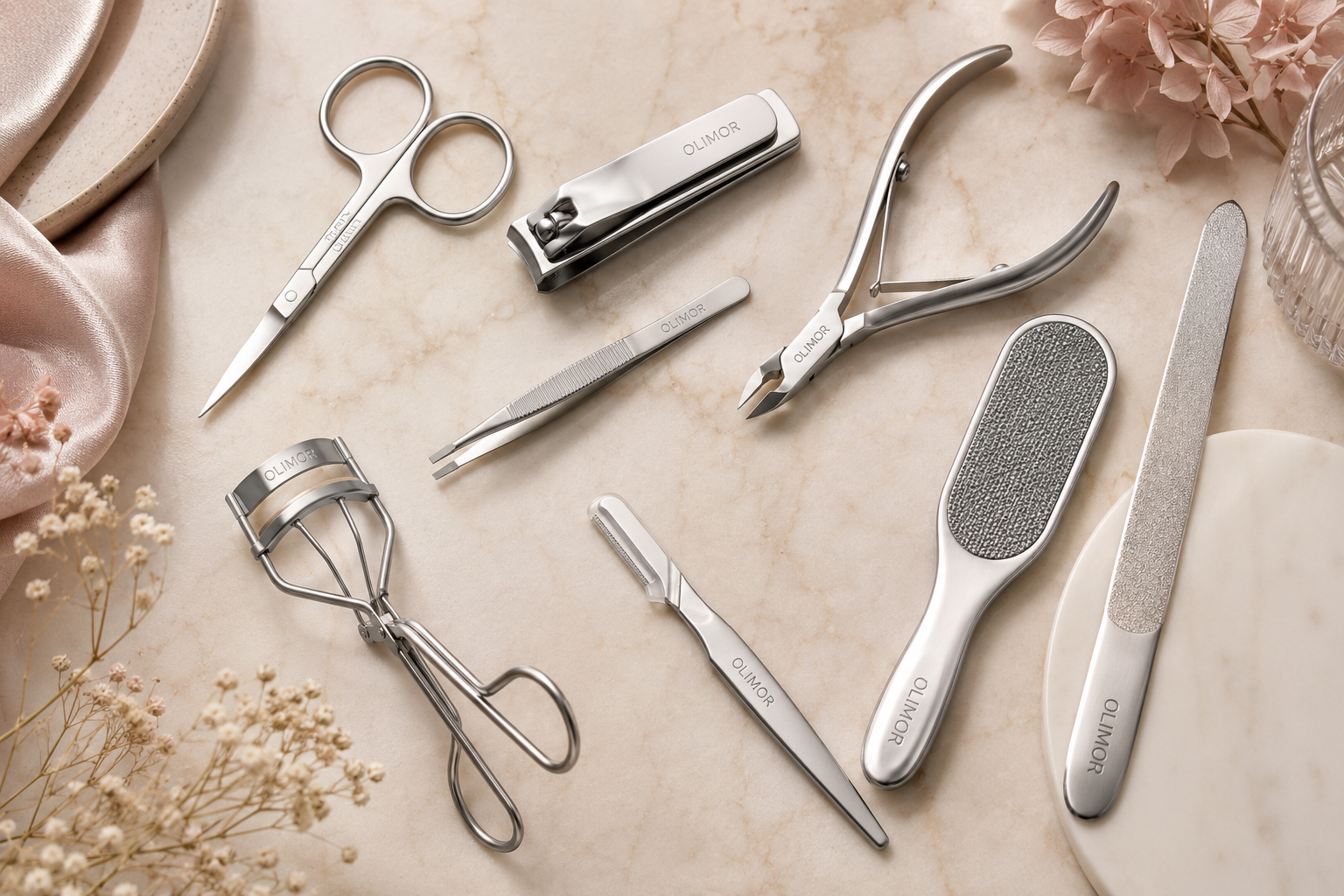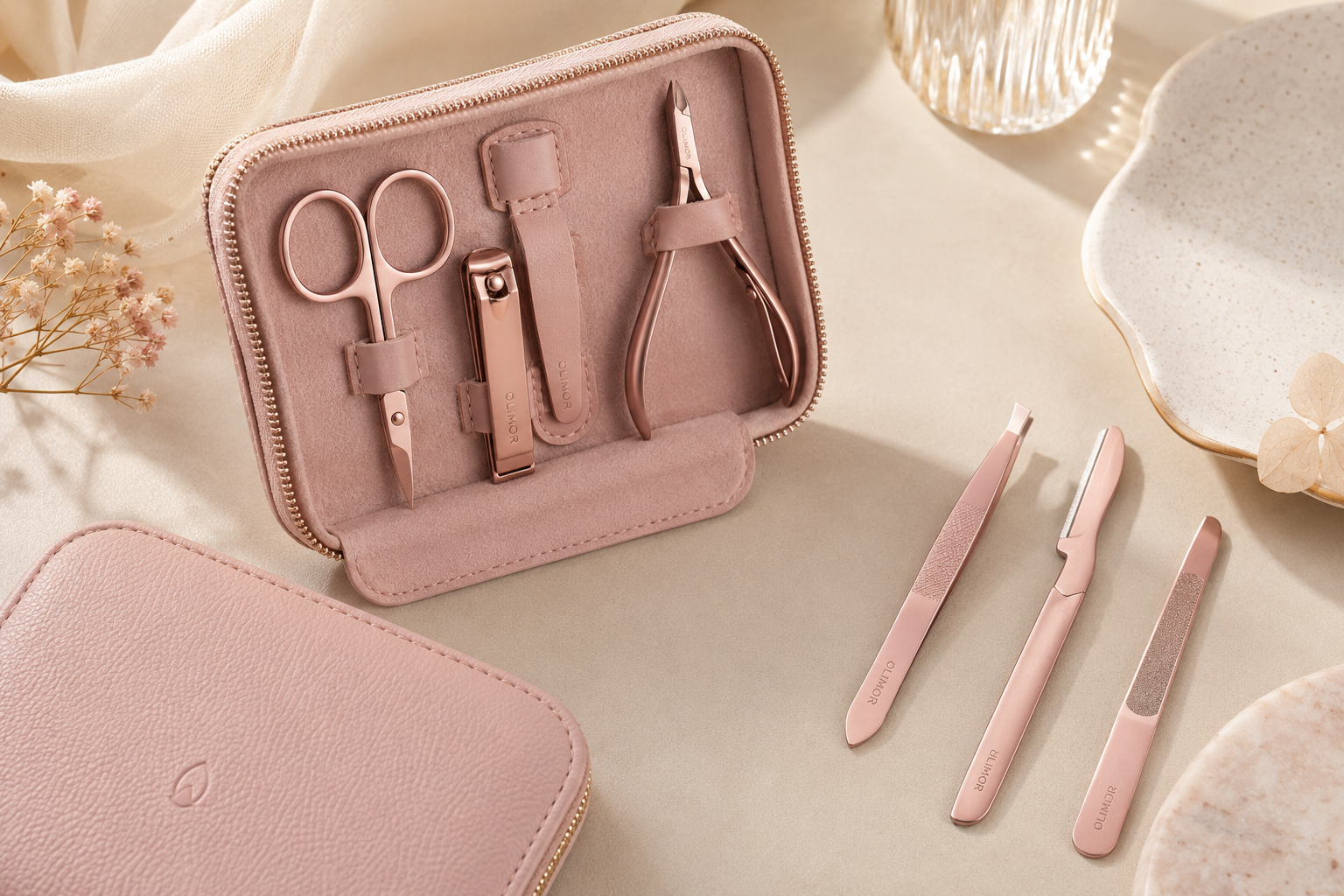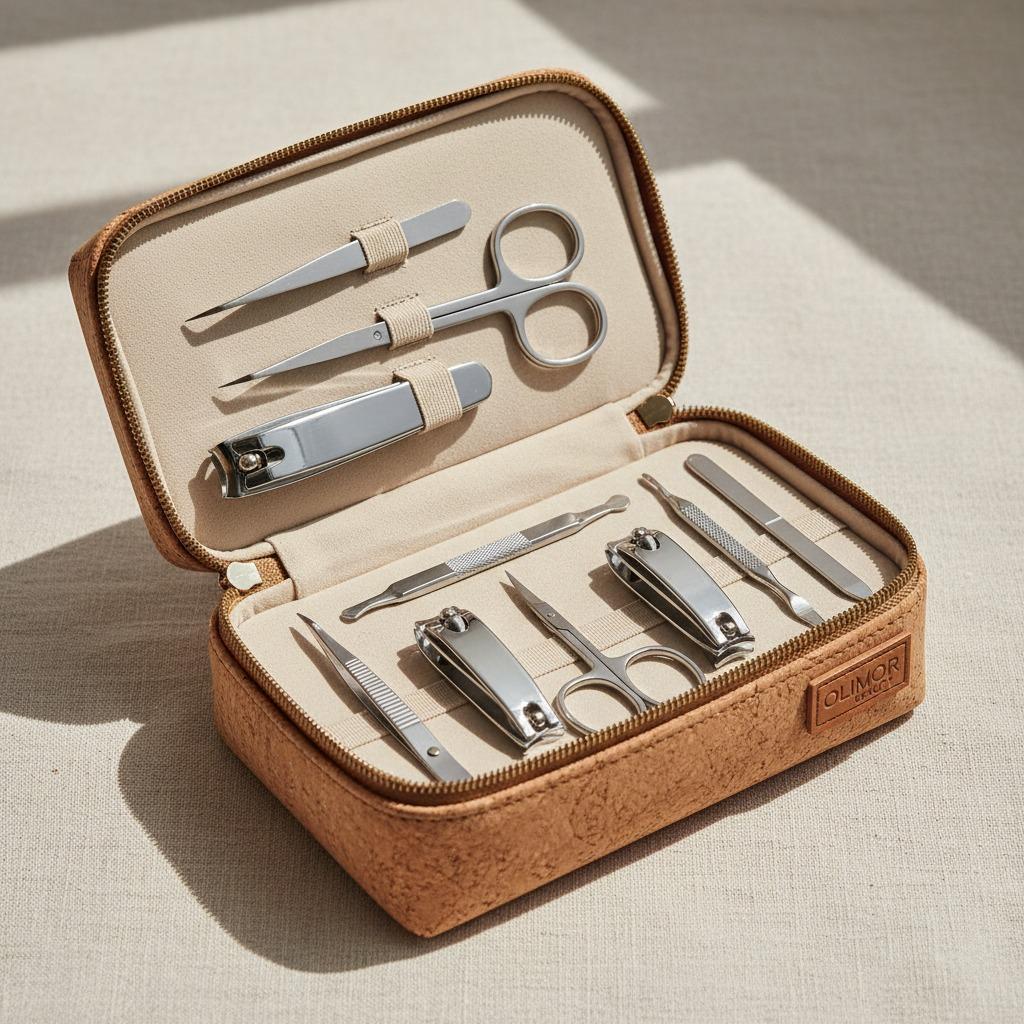











A professional nail clipper should cut cleanly, feel stable in the hand and help the user finish the nail edge without unnecessary tearing or crushing. Whether the tool is used in a salon retail kit, a personal manicure pouch, a travel grooming set or a gift assortment, the main job is the same: remove the nail tip with control and leave an edge that is easy to refine.
Olimor Beauty’s stainless steel nail clipper set is built around that practical need. It combines a stainless steel cutting structure, smooth lever action, wooden handle styling and an included finely abrasive nail file. For buyers comparing beauty tool products, the useful question is not simply whether a clipper looks premium. The better question is whether the tool supports reliable trimming, comfortable handling, easy finishing and a product presentation that fits the intended sales channel.
This guide explains how to evaluate a stainless steel nail clipper with wooden handles from a user, retail and sourcing perspective. It covers cutting performance, inspection points, use technique, care, cost factors and supplier questions without relying on exaggerated claims.
What Makes a Nail Clipper Suitable for Professional-Style Grooming?
A nail clipper becomes suitable for professional-style grooming when it helps the user make controlled cuts with minimal effort. Nails differ in thickness, curvature, moisture level and brittleness. A poorly aligned clipper can squeeze or bend the nail before cutting through it, leaving a rough edge or forcing the user to make repeated corrective cuts.
For salon-style use, grooming kits and retail assortments, quality is judged through practical details. The cutting edges should meet evenly. The lever should press smoothly without feeling loose or unstable. The body should feel solid enough for regular use. The handle should support accurate placement instead of slipping or forcing an awkward grip.
Stainless steel is commonly chosen for nail clippers because it supports a durable cutting structure in a compact tool. However, buyers should still evaluate the finished product, not just the material name. A stainless steel clipper with uneven jaws or poor lever feel may disappoint users, while a well-finished one can make ordinary nail care feel more precise and repeatable.
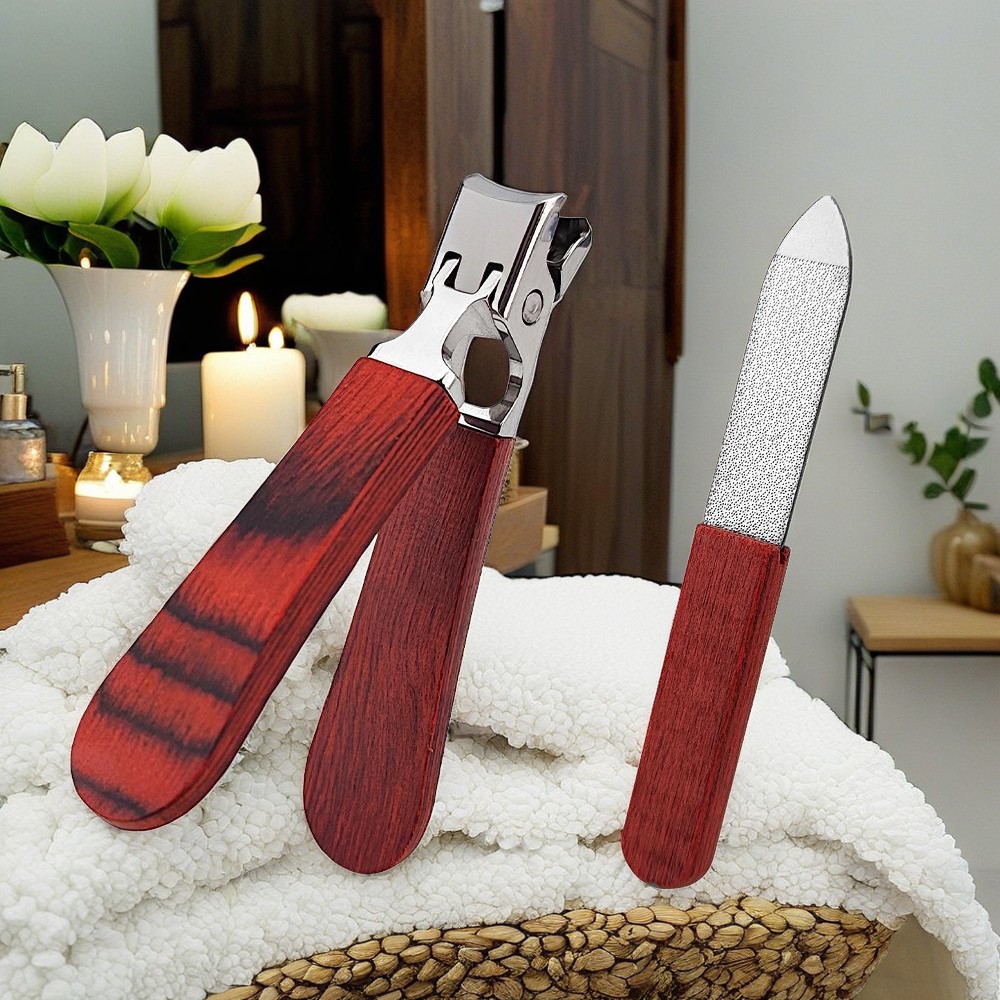
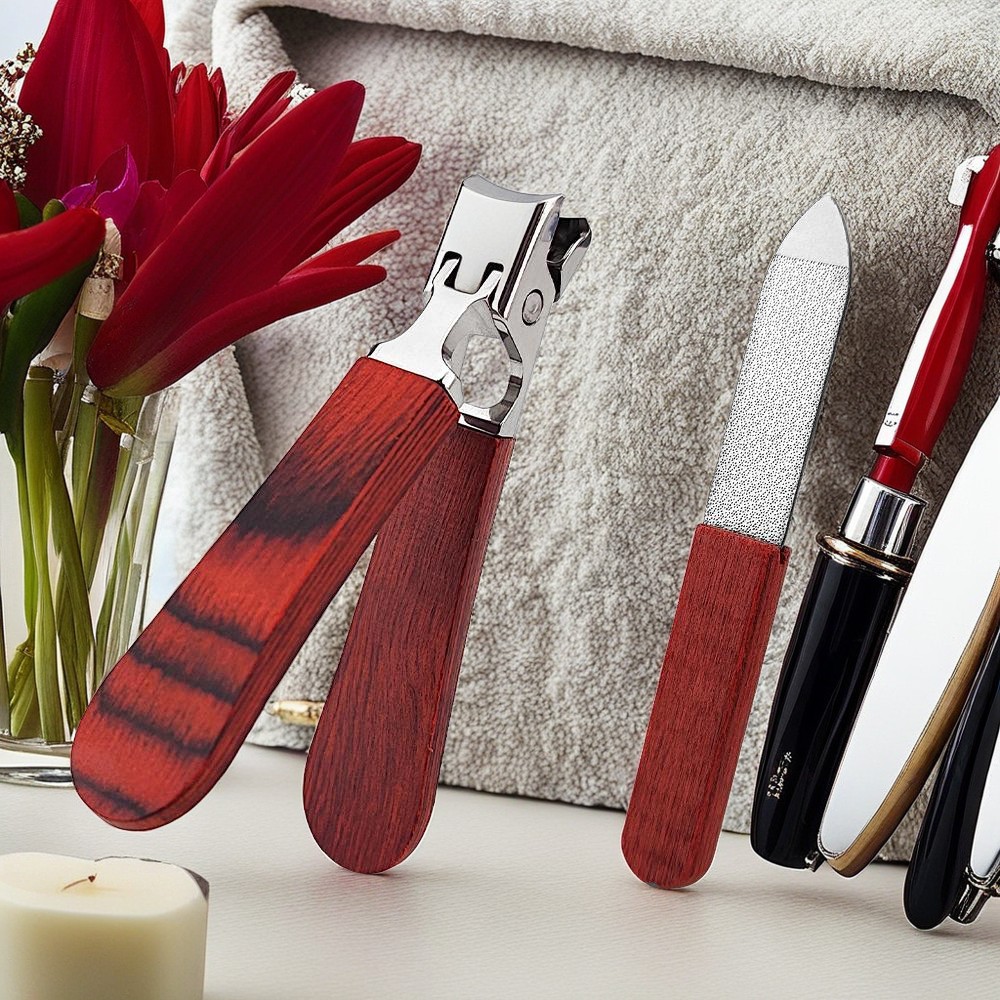
The wooden handle detail on this Olimor nail clipper set adds another useful layer. It gives the tool a warmer, more refined appearance than a plain metal clipper and can improve the way the clipper feels in a grooming kit or gift set. The original product concept highlights exotic wooden handles and polished mahogany-style presentation, making the clipper relevant for buyers who need both function and visual appeal.
Key Product Features to Evaluate Before Buying
The strongest nail clipper choice is usually the one that balances cutting performance, comfort, finishing support and market fit. For this stainless steel nail clipper set, the important features are simple but meaningful.
- Stainless steel cutting structure: supports the core trimming function and helps the clipper maintain a practical, durable tool feel.
- Smooth lever action: allows the user to apply pressure in a controlled way, reducing the need to force the cut.
- Wooden handle styling: adds grip comfort and a premium visual detail suitable for grooming assortments and gift-focused sets.
- Finely abrasive nail file: helps refine the nail after trimming, smoothing corners and small uneven sections.
- Flexible use case: suitable for personal manicures, travel grooming, men’s grooming kits, everyday nail care and retail beauty tool assortments.
The included file is especially important because trimming alone rarely creates the final nail shape. Even a clean cut can leave tiny points at the corners or a slightly uneven line. A file gives users a simple finishing step and makes the set more complete than a clipper sold on its own.
Nail Clipper Selection Checklist for Retail and Professional Buyers
Business buyers should inspect more than the product image. A clipper may look attractive in packaging but still fail on alignment, edge consistency or grip comfort. The table below can be used when comparing samples or evaluating a product for inclusion in a broader grooming category.
| Evaluation Point | What to Check | Why It Matters |
|---|---|---|
| Cutting edge alignment | Look at whether the two cutting edges meet evenly across the full width. | Good alignment helps reduce tearing, crushing and repeated cuts. |
| Lever movement | Press the lever several times and check for smooth, stable motion. | A controlled lever improves comfort during repeated grooming. |
| Jaw opening | Check whether the opening is practical for the intended nail type and user group. | The clipper must be easy to position before the cut is made. |
| Handle finish | Inspect the wooden handle for comfort, smooth edges and consistent appearance. | The handle affects grip, perceived value and gift presentation. |
| File usefulness | Test whether the abrasive surface smooths the edge effectively. | A useful file turns the clipper into a more complete grooming set. |
| Cleaning access | Check whether nail dust and clippings can be removed easily. | Easy cleaning supports better maintenance and user satisfaction. |
| Packaging fit | Review whether the set presentation matches retail, travel, salon or gift positioning. | Packaging influences customer expectation and commercial fit. |
For buyers building a full grooming range, compare this type of product alongside other items in Olimor’s beauty tool collection. This helps determine whether the clipper should be positioned as an everyday essential, a premium grooming detail, a travel accessory or part of a coordinated manicure set.
How to Use a Professional Nail Clipper for a Cleaner Result
Technique has a major effect on the final result. A strong clipper can still leave rough edges if the user cuts too much nail at once, clips too deeply at the sides or ignores the natural nail shape. The goal is a controlled trim followed by light finishing.
- Clean and dry the nail area. Remove visible dirt, lotion or residue so the clipper sits flat against the nail edge.
- Check the nail condition. Nails should be dry enough to cut predictably. Some users prefer trimming after washing and drying, when nails may feel slightly more flexible but not overly soft.
- Position before pressing. Align the cutting edge with only the section of nail you intend to remove.
- Use small cuts. Trim across the nail gradually rather than forcing one large cut.
- Follow the natural shape. For fingernails, many users prefer a rounded or squoval edge. For toenails, a straighter trim is often easier to manage.
- Inspect the edge. Look for sharp corners, points or uneven areas that may catch on fabric.
- Finish with the file. Use the included finely abrasive file to smooth the final edge.
Users should avoid cutting into the skin or trimming too deeply at the nail sides. If a user has nail pain, infection, diabetes-related foot concerns or another medical issue, ordinary grooming advice is not a substitute for professional medical guidance.
Stainless Steel, Wooden Handles and Maintenance Considerations
The main material combination in this set is stainless steel with wooden handle styling. Each part has a different care requirement. Stainless steel is selected for a durable cutting structure, but the tool should still be wiped clean and stored dry. Wood details should not be soaked or left in damp pouches because moisture can affect appearance and comfort over time.
After each use, remove visible nail fragments and fine dust from the cutting area. Wipe the clipper with a clean, dry cloth before storage. If the tool is used in a professional environment, follow the sanitation rules that apply in the local market. Nail salons and grooming businesses may be subject to state cosmetology boards, health departments or similar public authorities depending on location.
For products sold into the European Union, general consumer product safety obligations may fall under the EU General Product Safety Regulation. Buyers should verify current requirements, product documentation and labeling responsibilities with qualified compliance support. Mentioning a regulator or rule does not mean the clipper has been certified or approved; it simply reminds buyers to confirm the current obligations for their destination market.
The nail file also needs routine care. Files collect fine nail dust, so they should be tapped, brushed or otherwise cleaned according to the intended use environment. If the abrasive surface becomes worn and no longer smooths the nail edge effectively, it should be replaced or paired with a fresh file.
Choosing Between Basic, Premium and Set-Based Nail Clippers
Many buyers compare nail clippers only by price or appearance. A better comparison looks at the end user, the channel and the product promise. A basic clipper may be sufficient for low-cost utility assortments, but a clipper with wooden handle styling and an included file can support a more considered grooming experience.
A plain metal clipper usually communicates function first. A stainless steel clipper with wooden handle detail can communicate function plus presentation. That matters for men’s grooming kits, travel sets, seasonal gift assortments, salon counter displays and personal care bundles where the customer expects the tool to feel more intentional.
Set-based value is also important. A clipper and file combination helps customers complete the trimming process without needing a separate finishing accessory. For retailers, that can simplify merchandising. For brand owners, it can support a clearer product story: trim first, then smooth and shape.
Cost Factors Without Guesswork
Exact pricing depends on product specification, order details, packaging, customization, destination requirements and supplier discussion. Instead of asking only for the lowest unit price, B2B buyers should identify which elements create value and which elements add cost.
- Material and construction: stainless steel structure, handle detail and overall finish all influence product positioning.
- Edge finishing and alignment control: better inspection and finishing can affect consistency.
- Handle appearance: wooden handle styling, surface smoothness and visual consistency matter for premium presentation.
- Included accessories: the nail file adds usefulness and may affect packaging format.
- Packaging requirements: retail boxes, travel pouches, gift packaging or private-label presentation can change the total project cost.
- Customization: branding, assortment planning and market-specific labeling may require additional confirmation.
- Compliance documentation: destination-market labeling and product safety expectations should be reviewed before ordering.
Buyers can request a quotation through Olimor’s inquiry page with the intended product format, packaging preference and market destination. Clear information at the beginning helps the supplier recommend a more suitable option and avoid unnecessary back-and-forth.
Supplier Evaluation Questions for Nail Clipper Sourcing
Supplier selection should focus on whether the product can be produced and delivered consistently for the intended market. The best conversation is specific: how the clipper will be used, how it will be packaged, what level of customization is needed and what documents are required for the destination channel.
Use the following questions when discussing a professional nail clipper project:
- Can samples be provided for inspection of edge alignment, lever action, wooden handle finish and nail file performance?
- What packaging options are available for retail, travel, salon or gift use?
- Can branding or private-label presentation be discussed for the clipper, file or packaging?
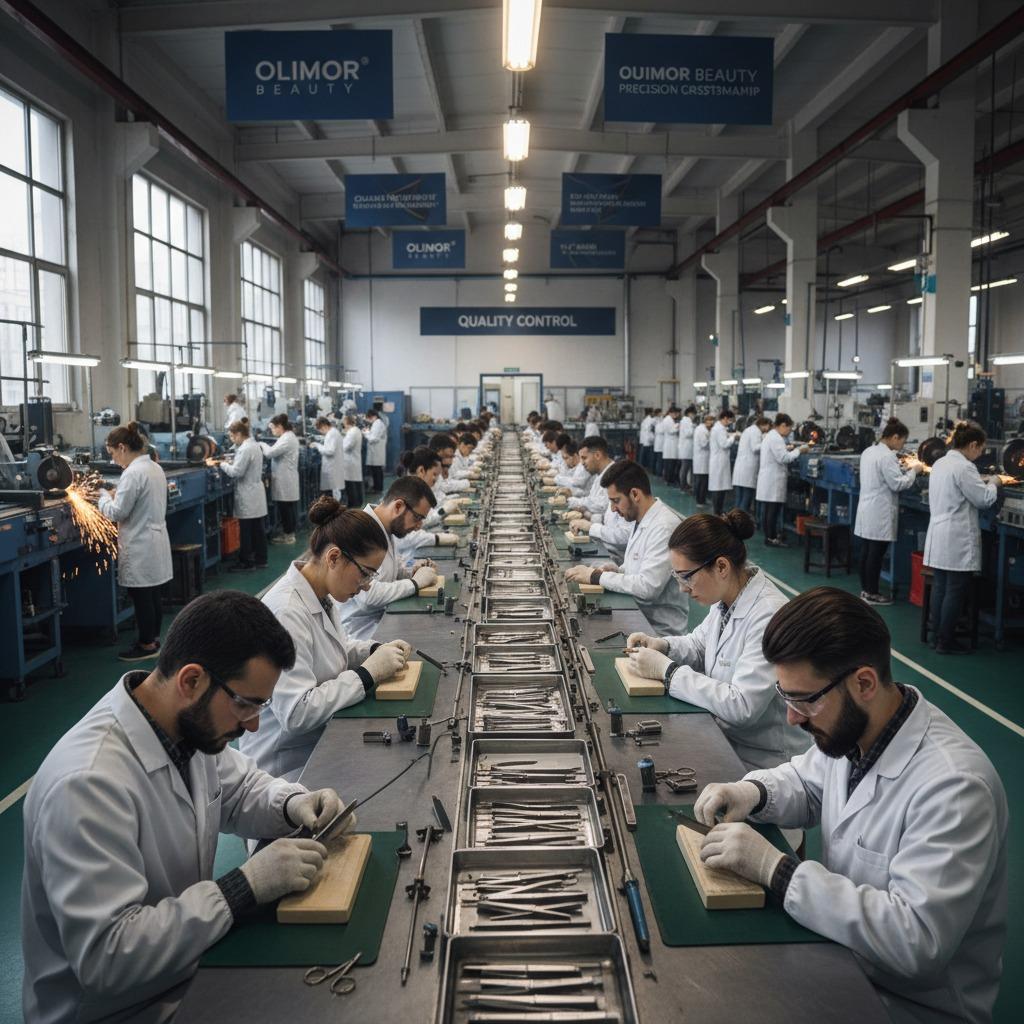
- What inspection steps are used to check cutting edge alignment, lever movement and visual finish?
- What product information, labeling details or supplier documents can be provided for the target market?
- How should the clipper and file be cleaned, stored and described in customer-facing instructions?
- What order, sampling and delivery details should be confirmed before production planning?
For a project-specific discussion, buyers may contact Olimor Beauty with details about the intended assortment, audience and sales channel. A restrained but complete brief is more useful than a general request for a “best nail clipper.”
FAQ
Can I request samples before placing a nail clipper order?
Sample availability should be confirmed directly with Olimor. For evaluation, inspect the cutting edge alignment, lever action, wooden handle finish, packaging presentation and the usefulness of the included nail file.
Is there a fixed MOQ for this stainless steel nail clipper set?
MOQ may depend on product configuration, packaging, customization and current production planning. Buyers should confirm the applicable MOQ during inquiry rather than assuming a standard quantity.
Can the nail clipper set be customized for retail or private-label use?
Customization may be possible depending on the requested branding, packaging and product presentation. Share the target market, retail channel and design expectations so the supplier can advise what is practical.
How should quality be checked before bulk ordering?
Review samples for clean cutting, even jaw contact, stable lever movement, comfortable wooden handle finish and file performance. Also confirm packaging, labeling and any documents needed for the destination market.
Final Buying Guidance
The best nail clipper for professional-style grooming is not defined by one feature alone. It should cut cleanly, feel comfortable, support simple maintenance and fit the way the buyer plans to sell or use it. Olimor’s stainless steel nail clipper set with wooden handle styling and an included finely abrasive nail file addresses both sides of the decision: reliable daily nail care and a refined product presentation.
For personal users, the set offers a practical trimming and finishing routine. For salons, retailers and brand owners, it provides a focused grooming tool that can fit travel kits, men’s grooming assortments, manicure sets and gift-oriented product ranges. The most important next step is to evaluate the tool in context: who will use it, how it will be packaged, what quality checks are required and what market rules apply.