










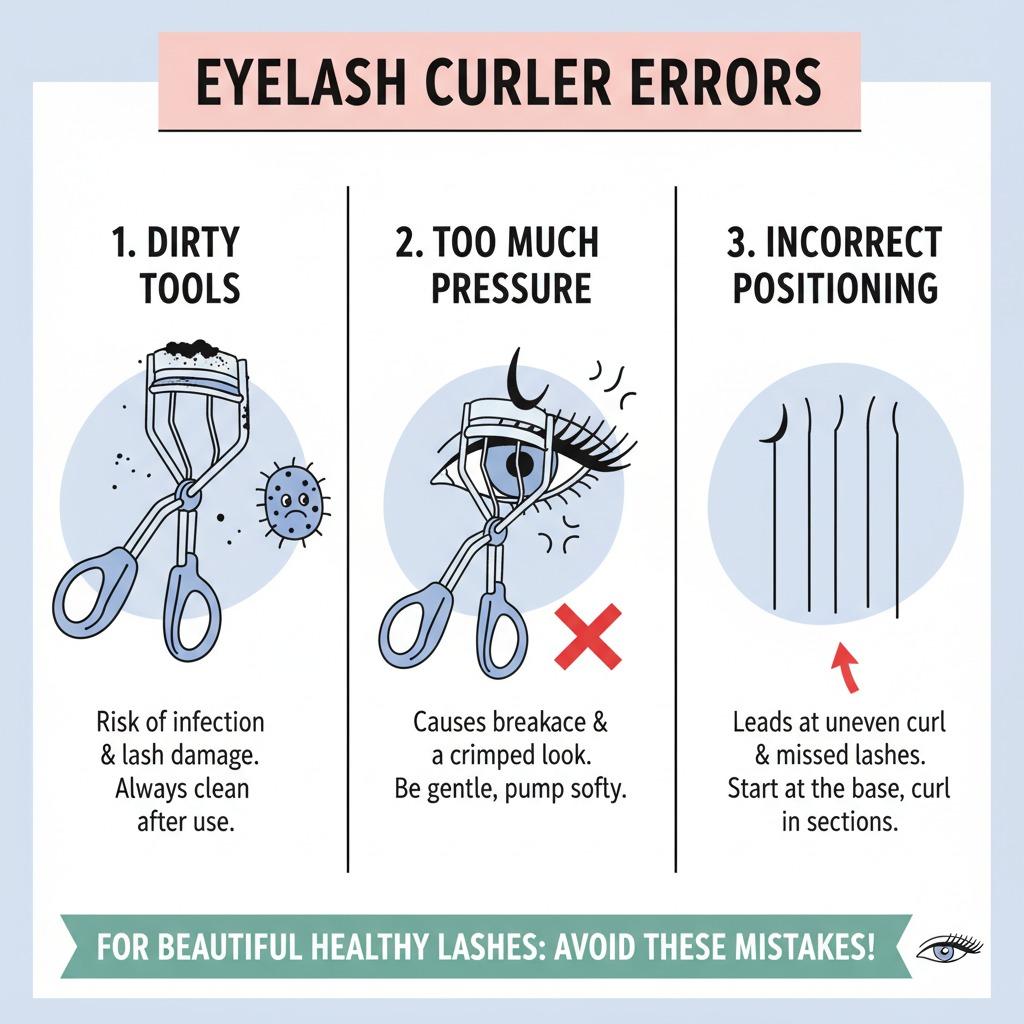
An eyelash curler should lift lashes smoothly, not pinch the eyelid, fold the hairs into a sharp angle, or leave customers wondering whether the tool is safe to use every day. Most poor results come from a small set of avoidable issues: curling after mascara, squeezing too hard, using a worn pad, placing the curler too far from the lash root, or choosing a frame that does not feel controlled around the eye.
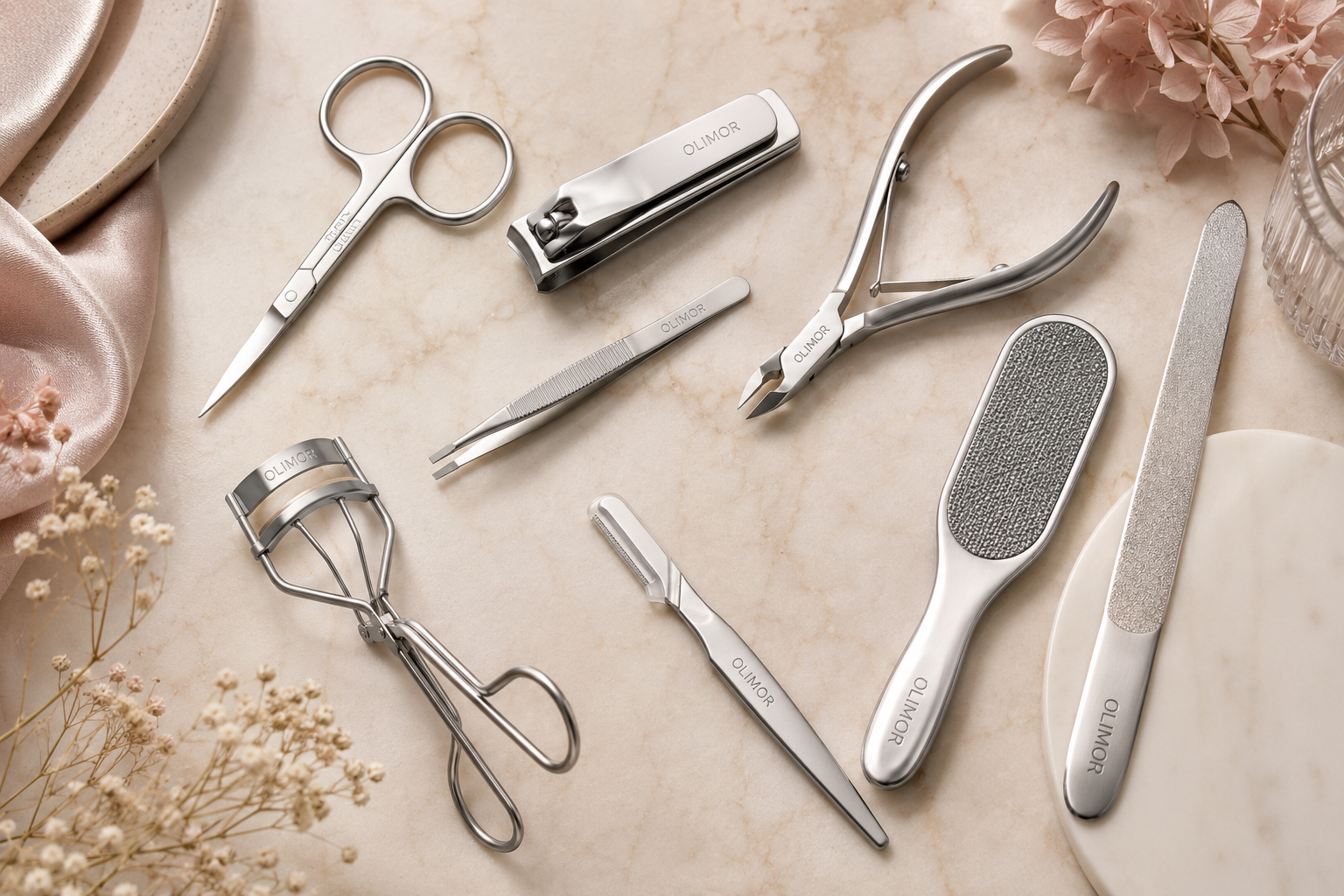
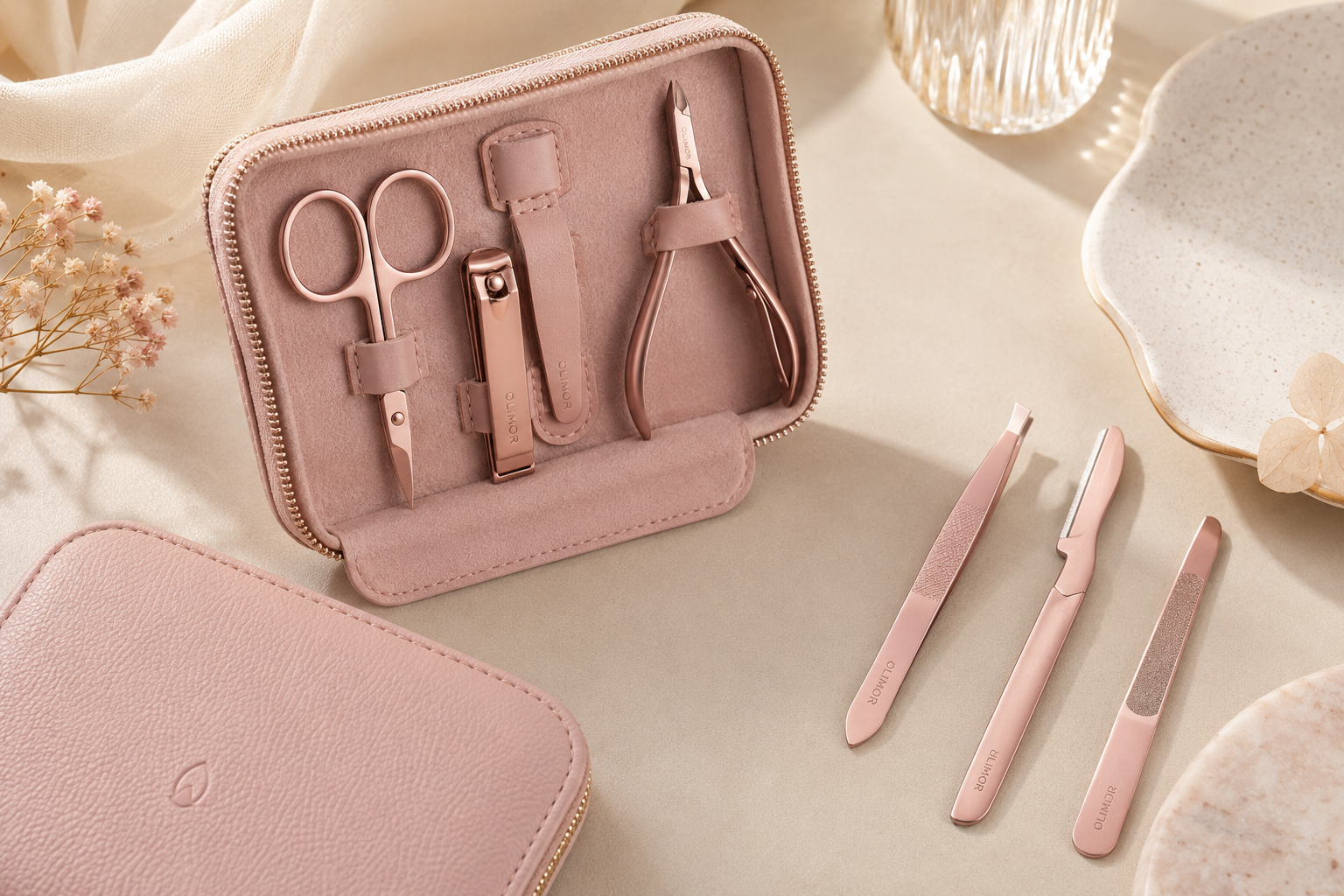
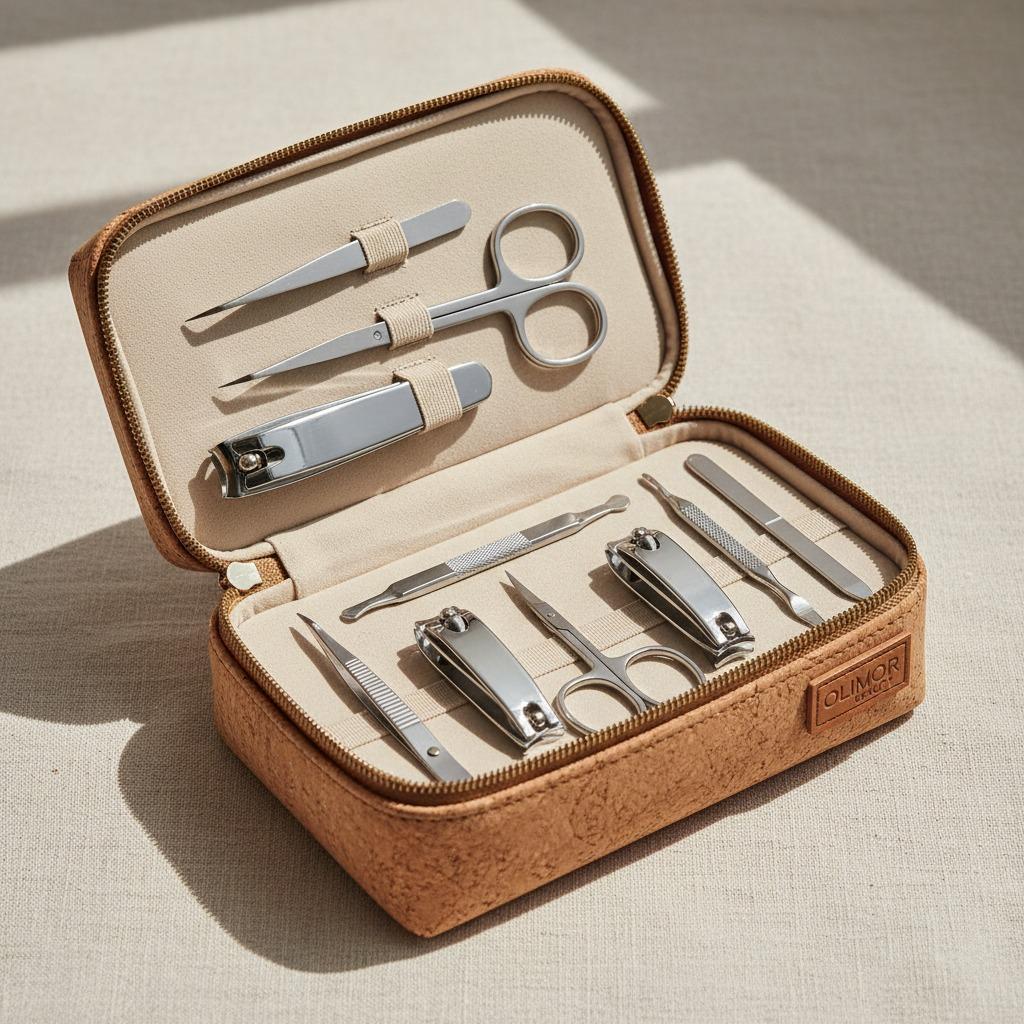
This guide explains how to use an eyelash curler correctly, how to recognize tool-related problems, and how retailers, salons, distributors, and private-label buyers can evaluate eyelash curlers for a beauty tool assortment. Olimor Beauty offers beauty tool products for practical daily routines, including an eyelash curler described with a sleek black design, comfortable grip, soft golden pad, and stainless steel construction.
What an Eyelash Curler Is Supposed to Do
An eyelash curler is a mechanical beauty tool that gently bends natural lashes upward before mascara is applied. The goal is not to crush the lashes into a dramatic corner shape. A good curl is gradual: lifted at the root, rounded through the middle, and softly directed at the tips.
The tool works through three main parts. The upper metal bar guides the shape, the lower cushioned pad distributes pressure, and the handles control how much force reaches the lashes. When these parts align correctly and the user presses gently, the lashes are supported rather than pinched between hard edges.
For personal users, the main search intent is usually simple: how to get better lift without discomfort or damage. For business buyers, the questions are broader. They need to know which design details affect user satisfaction, how pad quality influences repeat use, what inspection points matter before purchasing, and how to discuss customization, packaging, samples, and quality expectations with a supplier.
Common Eyelash Curler Mistakes and How to Fix Them
If lashes look shorter, bent, uneven, or clumped after curling, the problem is often technique rather than lash type. The table below connects common symptoms with likely causes and practical corrections.
| Problem | Likely cause | Better approach |
|---|---|---|
| Sharp crimp near the root | Too much pressure or one hard clamp | Use several light presses from root to mid-length instead of one forceful squeeze. |
| Lashes stick to the pad | Curling after mascara or using a dirty pad | Curl clean, dry lashes first, then apply mascara. Wipe the pad after use. |
| Eyelid pinching | Curler is too close to skin, off-center, or closed too quickly | Look downward, position slowly, check the corners, and close gently. |
| Only center lashes curl | Inner and outer corners are not captured evenly | Reposition before pressing and confirm the full lash line sits inside the opening. |
| Uneven or weak lift | Worn pad, bent frame, or slippery lashes | Inspect the pad and frame; curl only when lashes are dry and free of skincare residue. |
| Lash breakage over time | Repeated stress from mascara curling, damaged pad, or excessive force | Stop curling over mascara, replace worn pads, and reduce pressure. |
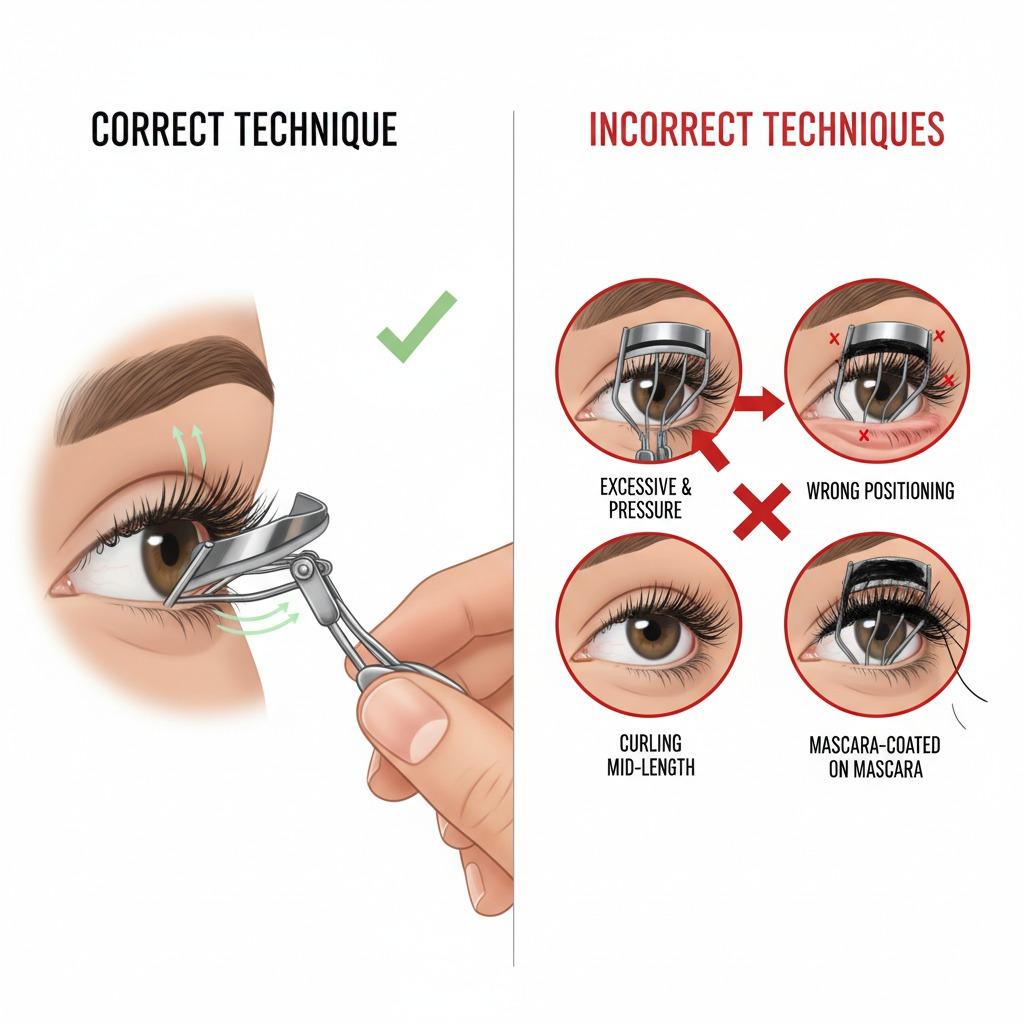
The most important habit change is to curl before mascara. Mascara-coated lashes become stiffer and can adhere to the pad, increasing the chance of pulling or snapping. Clean lashes remain more flexible, which allows the curler to shape them with less force.
Step-by-Step Technique for a Cleaner Curl
A better curl comes from placement and control, not strength. Work slowly, especially if the tool is new or the user has sensitive eyes. The following method suits most daily makeup routines.
- Start with clean, dry lashes. Remove oil, old mascara, and skincare residue from the lash area. If eye cream has just been applied, wait until the lashes are no longer slippery.
- Look slightly downward into a mirror. This exposes the lash line while helping the eyelid stay relaxed.
- Open the curler fully. Bring the tool toward the eye without rushing. Do not attempt to curl while walking, riding in a vehicle, or looking away from the mirror.
- Place the pad near the lash roots. Get close enough to lift from the base, but do not trap the eyelid skin.
- Check both corners. Inner and outer lashes often escape the opening. Reposition before pressing if the lash line is not centered.
- Press gently for a short hold. The pad should cushion the lashes. If the user feels pinching, stop and reposition.
- Move slightly outward and repeat. A light press at the middle of the lashes creates a rounded curve. A final soft press near the tips can prevent a straight-up, folded look.
- Apply mascara after curling. Mascara helps define and hold the lifted shape; it should not be used as a base for the curler.
For many people, three light presses give a more natural result than one long clamp. Straight or downward-pointing lashes may need careful root placement. Fine lashes usually require very light pressure. Dense lashes need extra attention to capture the full lash line rather than only the center section.
Choosing an Eyelash Curler: Features That Matter
Appearance matters in beauty retail, but performance depends on physical details. Olimor Beauty’s eyelash curler is presented with a sleek black design, comfortable grip, soft golden pad, and stainless steel construction. Those details are useful because the frame, pad, and handle all affect how the tool feels during daily use.
When comparing eyelash curlers across beauty tool products, evaluate the tool as a complete system rather than judging one feature alone.
Frame alignment
The upper bar and lower pad should meet evenly from end to end. If the frame twists or closes unevenly, pressure may concentrate on one section of the lash line, leading to a patchy curl or discomfort.
Pad cushioning
A soft pad helps distribute pressure and reduce harsh creasing. The pad should sit securely in place and provide enough bounce to protect lashes during repeated gentle presses. A pad that is cracked, deeply grooved, sticky, flattened, or loose should not be ignored.
Grip comfort
A comfortable grip supports controlled pressure. This is especially important for daily users and for retail customers who may be new to eyelash curlers. If the handles feel unstable, users may squeeze harder than needed.
Opening and access
The curler should open enough for easy placement around the lash line. Users should be able to position the tool without scraping the lid, folding the lashes, or struggling to see whether the corners are inside the opening.
Cleanability
Because the tool is used close to the eye area, the pad and frame should be easy to wipe. Stainless steel construction is valued in beauty tools because it supports a firm frame and routine cleaning, but buyers should still inspect finish quality and care instructions.
Maintenance: Cleaning, Pad Inspection and Storage
Maintenance is one of the simplest ways to prevent eyelash curler problems. Makeup residue, oil, dust, and loose powder can collect on the pad and frame. This buildup reduces control and may transfer old product back to the lashes.
After use, wipe the pad and the metal areas that contact lashes with a clean, soft cloth. If residue remains, use a gentle cleaning method suitable for the tool and allow it to dry completely before storage. Avoid soaking parts unless the supplier’s care guidance allows it.
Pad inspection should become routine. Look under good light and check for deep grooves, cracks, hard edges, stickiness, loss of bounce, or separation from the holder. Do not use the curler if the pad is missing or damaged. Lashes should not be pressed directly between hard metal surfaces.
Storage also affects performance. Keep the curler away from damp sinks, loose powders, and crowded makeup bags where the frame can be bent. If the frame no longer closes evenly, the tool may create an uneven curl even when the technique is correct.
Retail and Sourcing Considerations for B2B Buyers
For retailers, salons, beauty distributors, and private-label buyers, an eyelash curler is a small item with a large influence on customer trust. Shoppers judge it by comfort, finish, ease of use, and whether the first result looks smooth. Sourcing decisions should therefore include both cosmetic presentation and practical inspection.
Before adding an eyelash curler to an assortment, use this checklist:
- Does the frame close evenly across the full pad?
- Does the grip allow steady control without forcing heavy pressure?
- Is the pad soft enough to cushion lashes and stable enough to stay seated?
- Is the finish consistent with the intended retail positioning?
- Can the pad and frame be wiped easily after contact with eye-area products?
- Are packaging, labeling, and care instructions appropriate for the sales channel?
- Can the supplier explain available customization options without making unsupported performance claims?
- Are sample review, pre-shipment inspection, and defect communication processes clear?
Cost is usually influenced by factors such as material choice, finish, pad design, packaging, order requirements, customization, inspection expectations, and shipping terms. Buyers should avoid evaluating only the unit price. A low-cost tool that feels uncomfortable, has unstable pad fit, or arrives with inconsistent frame alignment can create more problems than it solves.
For assortment planning, compare eyelash curlers with related items in beauty tool collections. They can work as everyday retail essentials, add-on items for eye makeup categories, salon counter products, or components in beauty accessory sets. The best positioning depends on the customer, packaging style, and expected use frequency.
Quality, Compliance and Supplier Evaluation
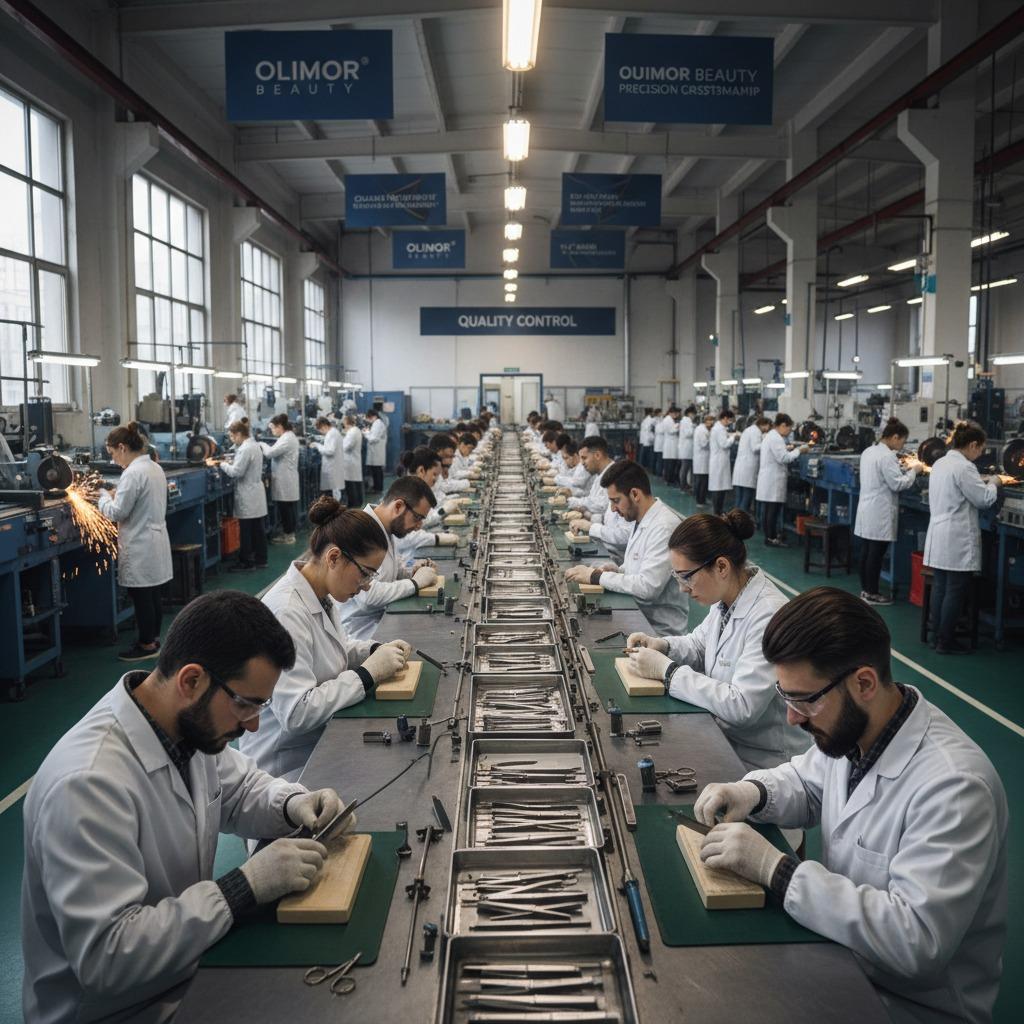
Because eyelash curlers are used near the eyes, buyers should treat them as precision beauty tools, not only as fashion accessories. Quality review should include appearance, function, packaging, and documentation.
During sample review, open and close the curler repeatedly by hand. Check whether the closing action feels smooth, whether the pad stays in position, whether the frame meets evenly, and whether any edges feel rough. Inspect the finish under good light. Confirm that the grip is comfortable and that the tool can be cleaned without awkward gaps trapping residue.
For regulated markets, buyers should verify current requirements that apply to beauty tools, packaging, labeling, and consumer product safety. Public bodies such as the U.S. Consumer Product Safety Commission and the European Commission provide product safety information that may be relevant depending on the destination market. Requirements can change, so confirm current versions and request supplier documents rather than relying on assumptions. Do not treat a supplier’s general product description as proof of certification unless valid documents are provided.
When discussing a project with a supplier, ask specific questions: What materials and finishes are available? What pad options are offered? How are samples handled? What customization is possible for color, packaging, or branding? What inspection steps are used before shipment? These questions help buyers compare suppliers on practical capability instead of vague claims.
When to Stop Using an Eyelash Curler
Users should stop and reassess whenever curling causes pain, pulling, or visible lash stress. Occasional adjustment is normal, but discomfort should not be treated as part of the process. The curler may be placed incorrectly, the lashes may be coated with mascara, or the pad may be worn.
Do not use an eyelash curler if the pad is cracked, missing, loose, or deeply grooved. Do not continue using a frame that is bent or closes unevenly. Do not share a dirty curler between users in a retail, salon, or makeup service environment. If the eye area is irritated or watering, wait until it is comfortable before using any tool near the lashes.
For business buyers, customer complaints about pinching or crimping should be investigated carefully. Review whether the issue comes from technique education, pad wear, frame alignment, packaging damage, or unclear instructions. Clear use and care guidance can reduce returns and improve customer satisfaction.
Practical CTA for Buyers
If you are comparing eyelash curlers for retail, salon, promotional, or private-label use, prepare your target market, packaging preference, customization needs, and inspection expectations before contacting a supplier. You can send an eyelash curler inquiry or contact Olimor Beauty to discuss suitable beauty tool options.
FAQ
Can I request samples before placing a larger order?
Sample availability depends on the product and project requirements. Business buyers should ask which sample options are available, whether customization samples are possible, and what costs or shipping arrangements apply.
Is there a minimum order quantity for eyelash curlers?
MOQ can vary by product, packaging, customization, and production arrangement. Confirm the current requirement directly with the supplier before planning retail pricing or launch quantities.
Can the eyelash curler be customized?
Customization may include elements such as color, packaging, or branding depending on the selected product and production feasibility. Buyers should provide clear artwork, packaging requirements, and market expectations for review.
How should quality be checked before shipment?
Quality checks should cover frame alignment, pad fit, closing action, surface finish, packaging condition, and consistency against the approved sample. Buyers should agree on inspection expectations and documentation before production.
How long does production or delivery take?
Lead time depends on order details, customization, packaging, production schedule, and shipping method. Ask for a current estimate based on the confirmed specification rather than relying on a general timeline.
Key Takeaway
The safest and most consistent eyelash curl comes from clean lashes, gentle pressure, correct placement, and a well-maintained tool. Curl before mascara, use several light presses, inspect the pad often, and replace worn or damaged parts promptly. For business buyers, the same principles translate into better sourcing: evaluate comfort, pad cushioning, frame alignment, cleanability, packaging, documentation, and supplier communication before making a purchasing decision.