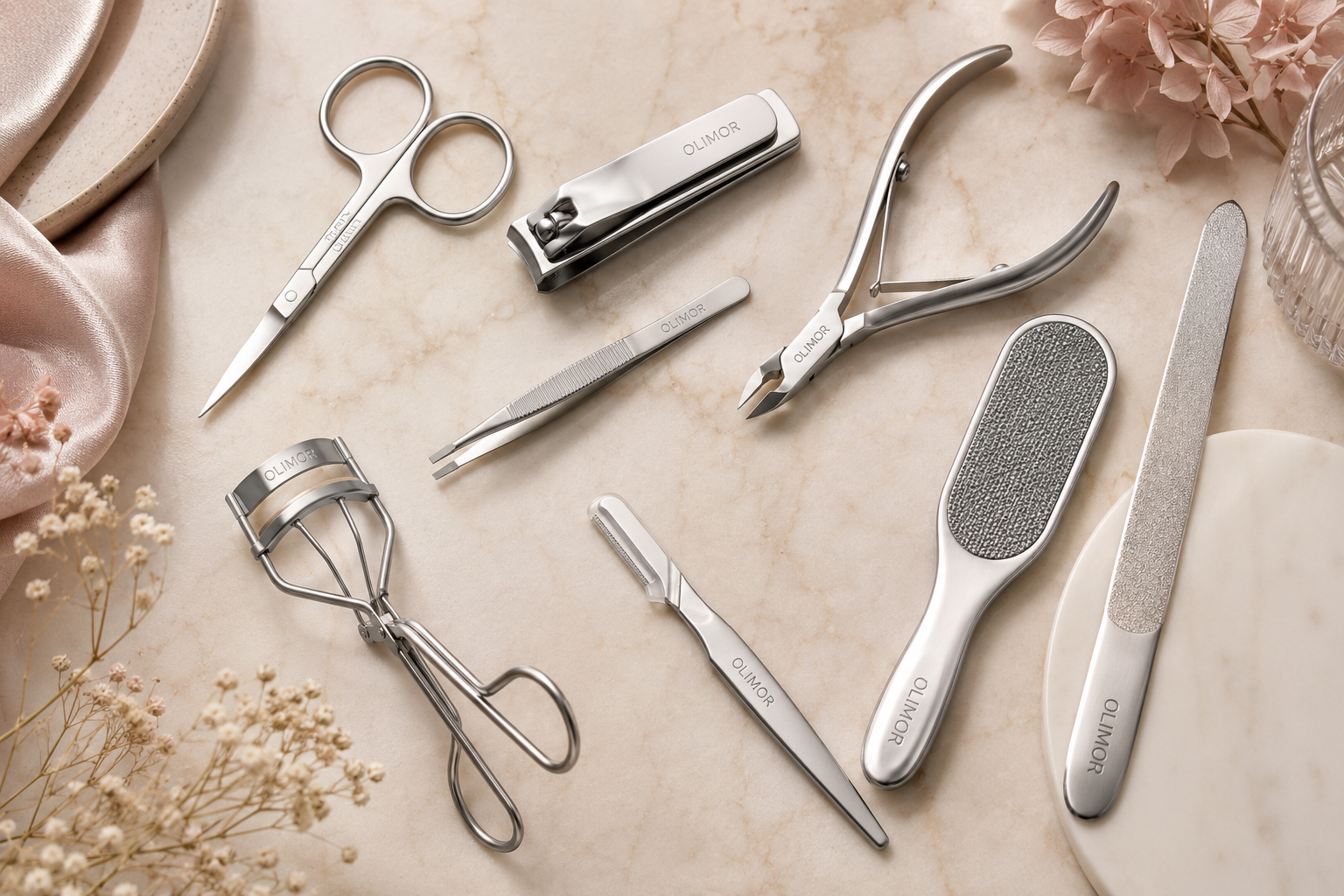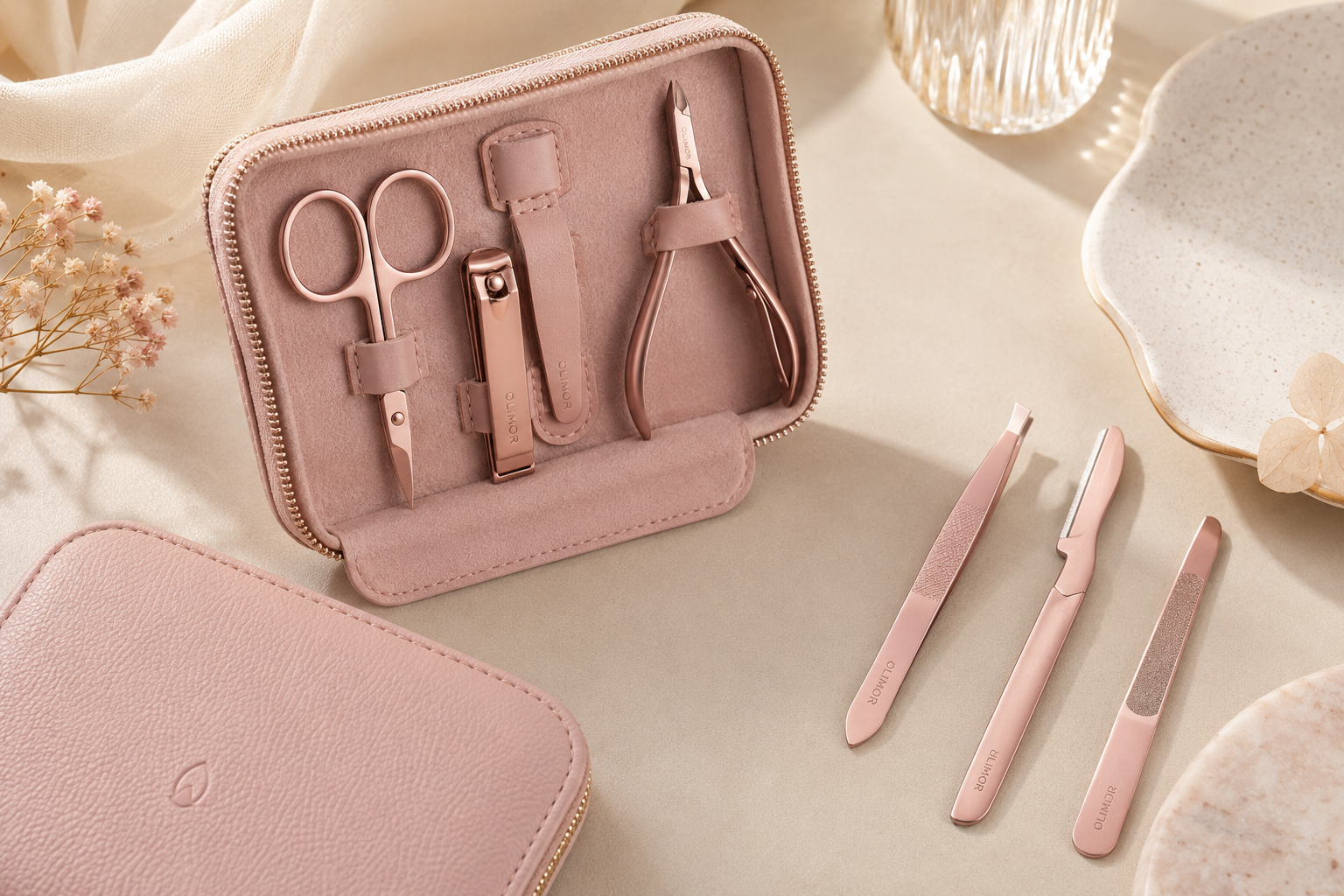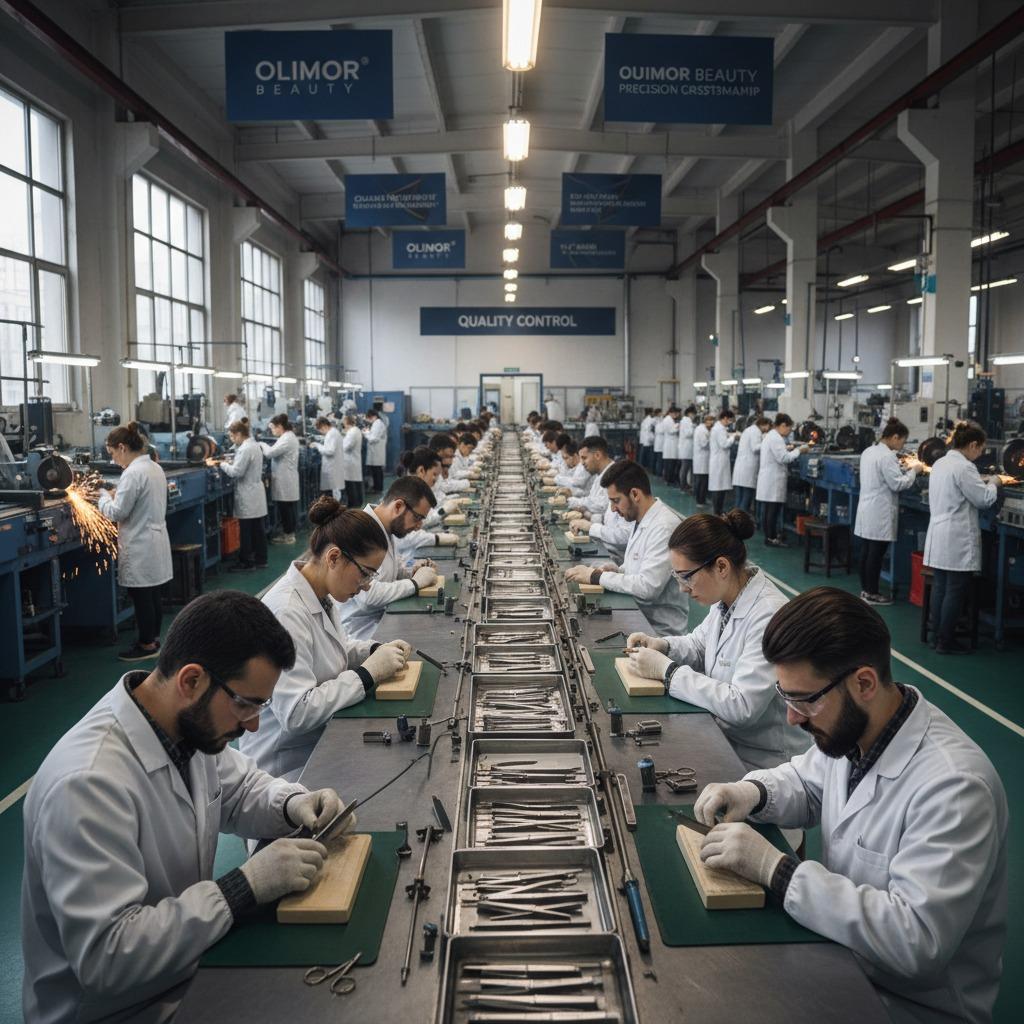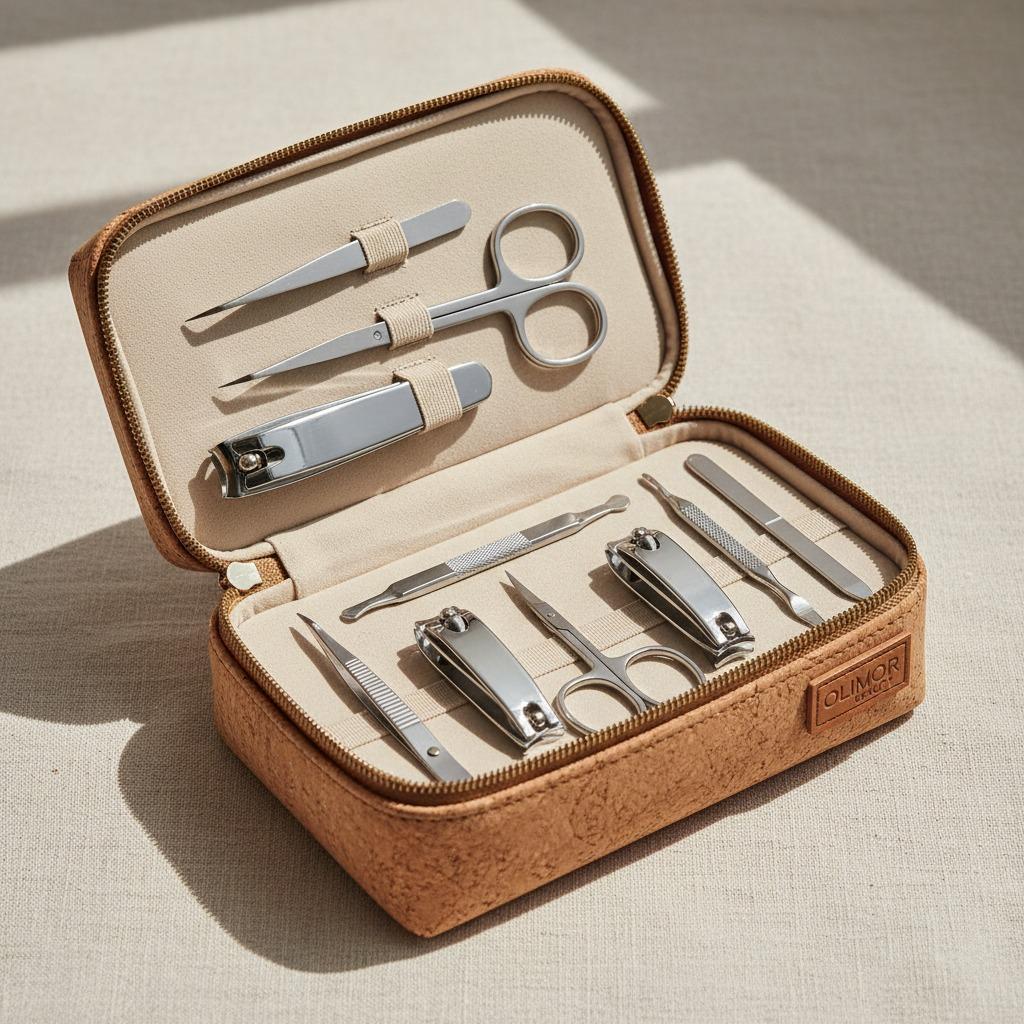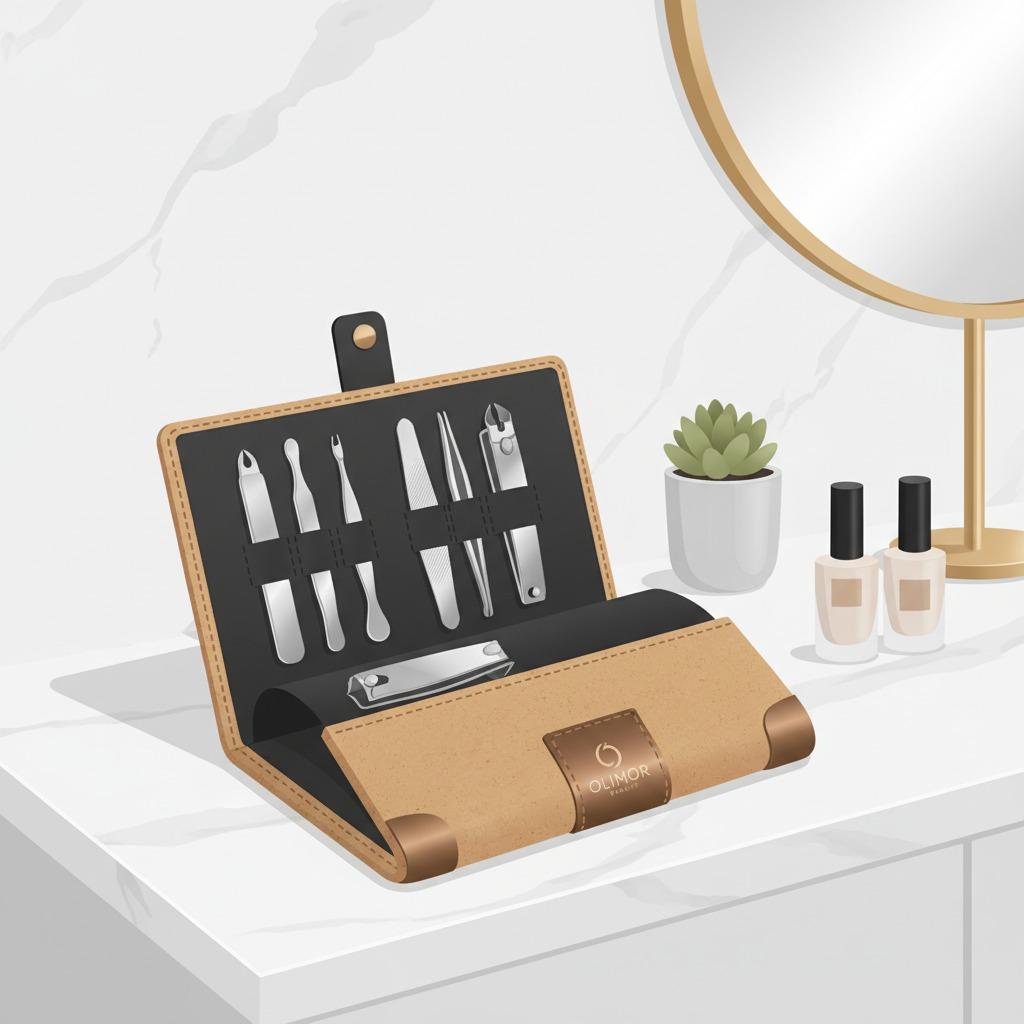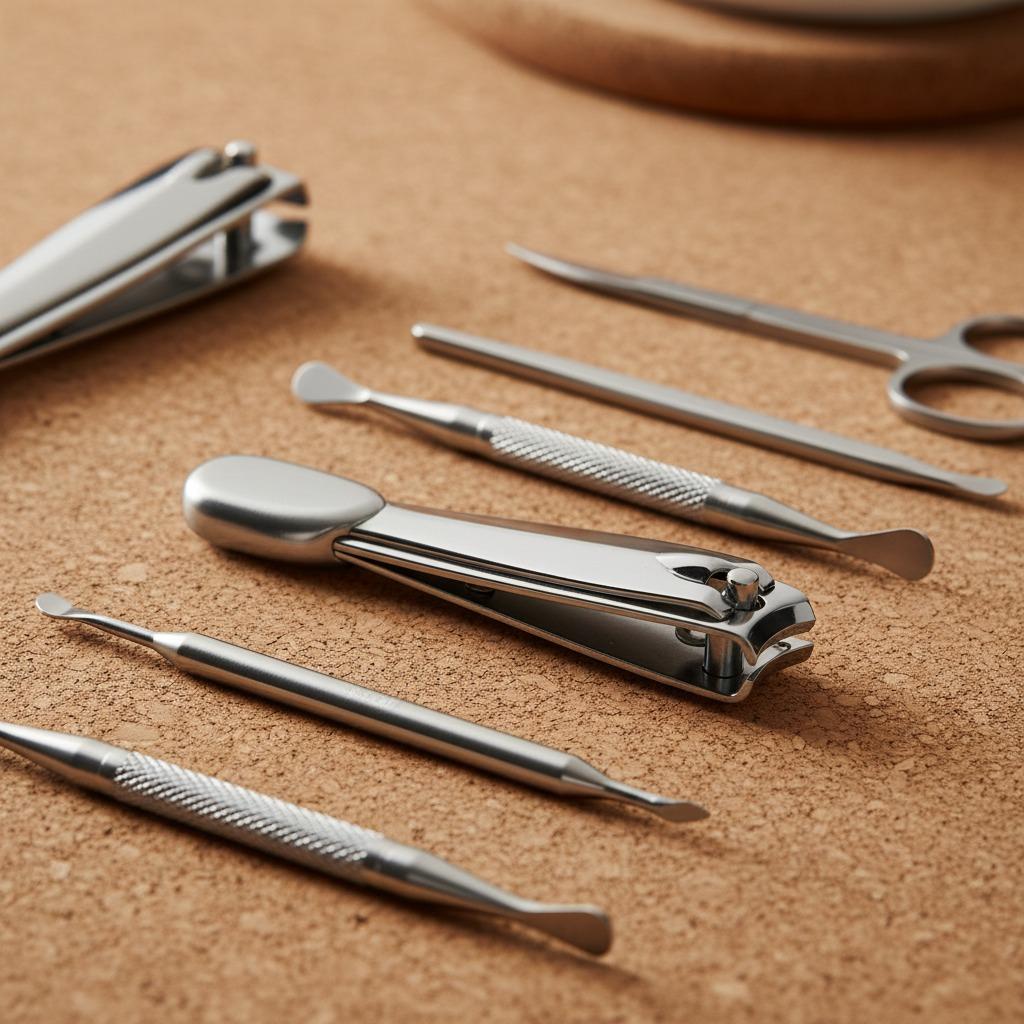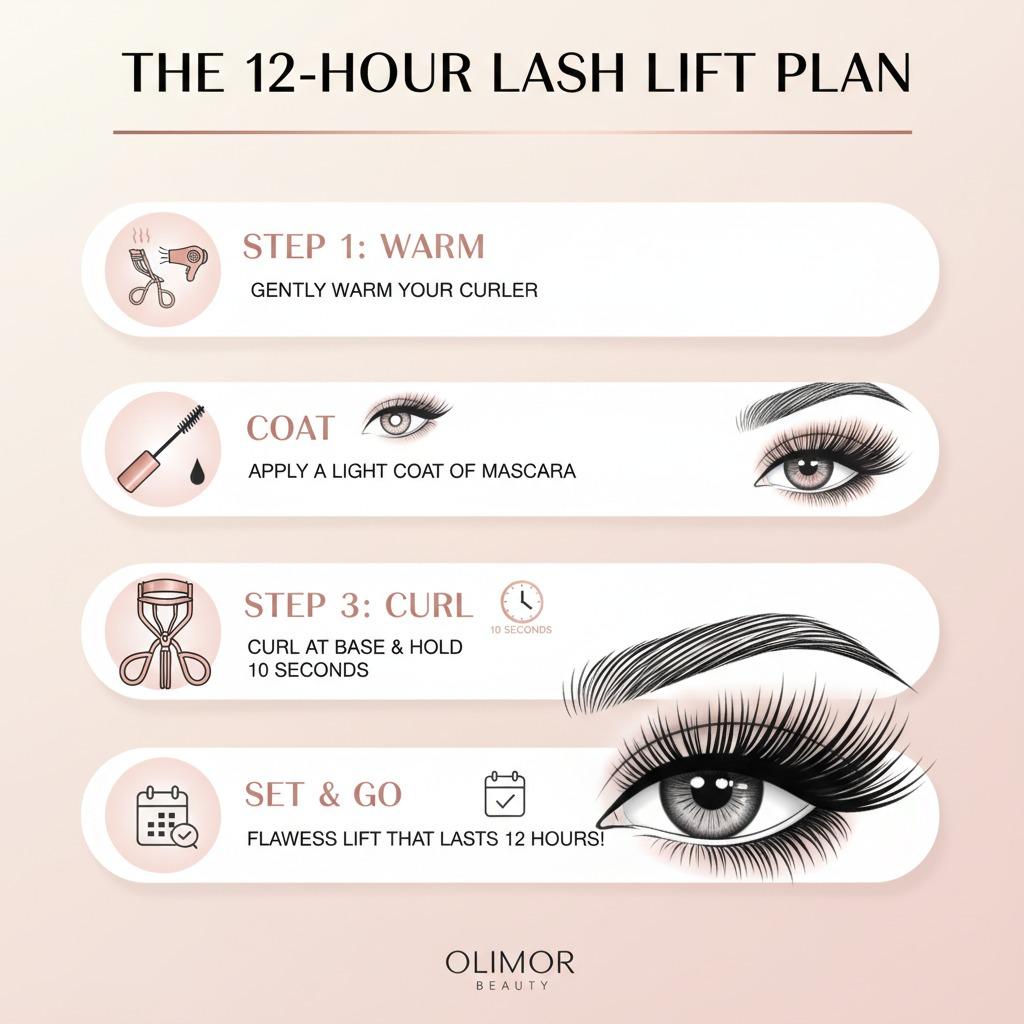

Fine lashes can look longer and more open with the right eyelash curler routine, but they also need a lighter touch than dense or coarse lashes. The most useful approach is not a chemical lash lift and not an aggressive squeeze at the lash line. It is a repeatable daily method: start with clean, dry lashes, curl in controlled stages, apply lightweight eye makeup, protect the curl during the day and remove product without pulling at night.
This guide is for two audiences. Consumers and salon retail teams can use it to teach a safer, more comfortable curling routine for fine, straight or downward-pointing lashes. Beauty-tool buyers, distributors and private-label teams can use it to evaluate eyelash curler construction, retail suitability, inspection points and supplier questions. Olimor Beauty offers beauty tool solutions for lash, brow and grooming routines, and related categories can be reviewed through the beauty tool products page when building a complete assortment.
What a Mechanical Lash Curl Can Realistically Do
A mechanical eyelash curler temporarily changes the visible shape of the lashes by pressing them against a cushioned pad. For fine lashes, the effect can appear quickly because the hairs are light. The challenge is durability: moisture, skin oil, heavy mascara, eye rubbing, humidity and poor removal habits can cause the curl to soften or the lashes to look uneven before the day is over.
A realistic 12-hour lash curl plan aims to keep lift looking clean through a normal day, but it cannot permanently change lash structure. It also cannot compensate for a curler that does not fit the eye shape, a flattened pad, heavy product buildup or repeated clamping over dry mascara. The goal is comfort, visible lift and lash preservation, not maximum force.
Fine lashes often benefit from three principles: less pressure, better placement and lighter product. A rounded curl usually looks more natural than a sharp bend. To create that curve, the user should press near the base, then the middle, then the tips with full release between each position. This spreads the bend along the lash instead of folding it in one place.
How to Choose an Eyelash Curler for Fine Lashes
The useful details in an eyelash curler are simple but important. Olimor Beauty’s eyelash curler information highlights a stainless steel frame and a red cushioned pad. A firm frame can help the tool close evenly, while a cushioned pad softens the contact point against the lashes. For fine lashes, those details matter because the user needs control rather than force.
When selecting a curler, the first question is fit. The curve of the curler should follow the eyelid closely enough to reach inner and outer lashes without pinching the skin. No single curve fits every eye shape perfectly, so buyers should test the tool with the intended market in mind. A curler that works well for rounder eyes may not feel the same on flatter or deeper-set eyes.
The second question is pad resilience. The pad should compress slightly when the curler closes and then return to shape. If the pad is too hard, cracked, loose or flattened, it may create a sharp crease instead of a smooth curl. A visibly worn pad is one of the most common reasons a previously comfortable curler starts to feel harsh.
The third question is control. Handles should allow gradual pressure. If a tool forces the user to squeeze suddenly, fine lashes may be pinched at the base or bent in one area. The frame should close evenly from left to right, and the upper bar should align cleanly with the lower pad. Uneven closure can make the center curl strongly while the outer lashes remain straight.
Morning Routine: The Gentle 12-Hour Curl Method
The best time to curl fine lashes is after skincare has settled and before mascara. Lashes should be clean and dry. If sunscreen, eye cream or facial oil has migrated to the lash line, blot gently and wait before curling. Wet or oily lashes may curl at first but lose shape faster.
- Inspect the curler. Check that the pad is seated in the channel, free from old mascara and not split or flattened. Wipe the metal contact areas if needed.
- Start at the base. Open the curler, look slightly downward into a mirror and place the lashes between the bars as close to the root as comfortable. Do not catch eyelid skin.
- Apply light, gradual pressure. Close the curler gently and hold for a short moment. Fine lashes usually respond better to steady pressure than to a strong squeeze.
- Release completely. Do not drag the curler along the lashes while closed. Open fully before moving to the next position.
- Curl the middle. Move the curler slightly outward along the lashes and press again with lighter pressure. This helps form a rounded curve.
- Finish the tips carefully. A very soft press near the tips can lift downward-pointing ends, but too much pressure here can make lashes look crimped.
- Apply mascara selectively. Use a lightweight coat, working from the roots first. Avoid loading the tips with wet product, which can pull fine lashes down.
Some users warm a curler slightly with clean hands or brief warm air, then test it against the inside of the wrist before using it near the eye. Heat is optional and must remain mild. A curler should never feel hot. For fine lashes, consistent placement and clean pads are usually more important than temperature.
Keeping Curl Longer Without Weighing Down Fine Lashes
Most curl failure happens after the morning routine. Fine lashes may drop when exposed to creamy eye products, excess mascara, watery eyes, humid conditions, facial oil or repeated touching. A strong morning curl will not last if the rest of the routine keeps adding weight or moisture to the lash line.
Mascara choice is a key factor. Heavy volumizing formulas can coat each hair thickly and make fine lashes fall forward. A lighter lengthening or defining formula may be more suitable for daily wear. Waterproof mascara can help some users hold curl, but it often requires more careful removal. If removal causes tugging or rubbing, the benefit may not be worth it for delicate lashes.
During the day, avoid pressing lashes with fingers, tissues, sleep masks, caps or eyeglass lenses. If the curl relaxes, avoid heavy re-curling over dry mascara. Dry product can make lashes stiff, and clamping too hard may create bends or increase breakage risk. If a touch-up is necessary, use the cleanest possible tool and the lightest possible pressure, but most fine-lash users get better results by improving the first curl and using lighter makeup.
Fine Lash Protection: Problems and Better Habits
Fine lashes are not automatically weak, but damage is more visible because there is less density to hide uneven sections. A few bent or missing lashes can make the lash line look sparse. The safest routine reduces stress at every stage: curling, product application, wear time and removal.
| Common issue | Likely cause | Better habit |
|---|---|---|
| Sharp L-shaped bend | Too much pressure in one position | Curl in base, middle and tip stages with full release between each press. |
| Curl drops by midday | Heavy mascara, oil or moisture near lash line | Let skincare settle, blot excess oil and use lighter eye makeup. |
| Pinching at the eyelid | Poor curve fit or rushed placement | Reposition before pressing and choose a curler shape that suits the eye. |
| Lashes look crimped | Hard, cracked or flattened pad | Inspect the cushion regularly and replace the pad or tool when worn. |
| Lash fallout during removal | Rubbing or pulling off resistant mascara | Soften makeup with suitable remover, pause, then wipe gently downward. |
| Product buildup on tool | Curler stored or reused without cleaning | Wipe pad and frame after use and store the tool in a clean, dry place. |
Eye-area hygiene should be treated seriously. A lash curler touches skin oils, makeup residue and the area close to the eye. Do not share personal eye tools without appropriate cleaning. If the eye is irritated, infected or recovering from a procedure, avoid using a curler until it is appropriate to resume. For eye cosmetics used with the curler, readers can consult public guidance from regulators such as the U.S. Food and Drug Administration and verify current recommendations for safe eye-area cosmetic use.
Cleaning, Storage and Maintenance for Eyelash Curlers
A curler that looks simple still needs regular care. After use, wipe the cushion and metal contact surfaces with a clean tissue or soft cloth to remove mascara, powder and skin oil. If a deeper clean is needed, use a method compatible with the tool materials and allow the curler to dry fully before storage. Do not soak parts unless the supplier’s care instructions say it is suitable.
Storage affects performance. A curler left loose in a makeup bag can collect dust, press against sharp items or deform the pad. Store it in a clean area where the cushion is not compressed. Retail sets should include clear use and cleaning instructions so customers understand how to protect both the tool and their lashes.
Inspection is equally important. Check for pad wear, loose cushion fit, uneven frame closure, rough edges, corrosion, squeaking or handle instability. Any tool used near the eye should feel smooth and controlled. If the frame no longer closes evenly or the pad surface is damaged, the user should replace the worn component or the tool according to the product design and supplier guidance.
B2B Selection Checklist for Retailers and Beauty Brands
For retailers, distributors and beauty brands, an eyelash curler is a small item with high user sensitivity. Customers may not describe frame alignment or pad compression in technical language, but they will notice pinching, uneven curl, a stiff handle or a cushion that wears quickly. A structured evaluation helps buyers compare samples more effectively.
Product evaluation checklist
- Eye-shape fit: Test whether the curler reaches inner, center and outer lashes without uncomfortable pressure on the eyelid.
- Frame stability: Check whether the stainless steel frame closes evenly and feels firm during repeated opening and closing.
- Pad feel: Review cushion softness, rebound, seating in the channel and surface smoothness.
- Handle comfort: Confirm that the grip allows controlled pressure for different hand sizes.
- Finish quality: Inspect for rough edges, burrs, scratches, discoloration or residue on contact areas.
- Cleaning access: Make sure makeup residue can be removed from the pad and frame without difficulty.
- Packaging suitability: Consider whether instructions, warnings, replacement-pad information and retail display needs are clear.
- Branding options: Discuss finish, color, logo placement and packaging customization before confirming a program.
Commercial buyers should also review applicable market requirements for materials, coatings, packaging and labeling. Depending on the sales region and product configuration, regulations or frameworks such as EU REACH may be relevant to restricted substances in materials or finishes. Requirements can change, so buyers should verify current versions and request supplier documents that match the intended market. This is a due-diligence step, not a substitute for legal or compliance review.
Cost Factors and Supplier Evaluation
The cost of an eyelash curler program depends on more than the tool shape. Materials, finish, pad quality, packaging, inspection expectations, customization, order quantity, logistics and documentation can all affect the final quotation. Buyers should avoid judging only by the lowest unit price because a poor pad or uneven closure can lead to returns, complaints and weak repeat sales.
When discussing a project with a supplier, provide practical details: target customer, retail channel, preferred finish, packaging format, branding needs, quality expectations and any market-specific documentation. If the product will be part of a lash and brow kit, clarify how it should fit with tweezers, brow tools or makeup accessories. Related categories can be explored through Olimor’s beauty tool collections when planning a coordinated range.
Sample review should be hands-on. Open and close the curler repeatedly, inspect the pad after compression, test cleaning access, check the frame from multiple angles and evaluate packaging readability. If several samples are being compared, use the same checklist for each one. Consistent evaluation helps separate appearance preferences from functional performance.
When an Eyelash Curler Is the Right Product for a Program
An eyelash curler is a strong fit for beauty assortments focused on everyday makeup tools, lash care, travel grooming, gift sets, brow and lash kits, or entry-level beauty accessories. It is easy to explain at retail, but it must feel safe and comfortable in use. For fine-lash customers, education is especially important because over-squeezing and worn pads are common causes of poor results.
Retail content should avoid unrealistic promises. A good product page or packaging panel can explain that results vary with lash texture, humidity, mascara and technique. It can also recommend clean, dry lashes, gentle pressure and regular pad inspection. This type of instruction reduces misuse and supports customer satisfaction.
Olimor Beauty can discuss eyelash curler options and related beauty-tool planning for buyers who need a practical product conversation. To share requirements, use the contact Olimor page or send project details through the product inquiry form.
FAQ: Samples, MOQ, Customization, Quality and Lead Time
Can buyers request samples before placing an eyelash curler order?
Yes. Samples are a practical way to check curve fit, frame closure, pad feel, finish quality and packaging direction before confirming a larger order. Sample availability and arrangements should be confirmed directly with Olimor Beauty.
Is there a fixed MOQ for eyelash curlers?
MOQ can depend on the product style, customization level, packaging and production arrangement. Buyers should share the target order plan and market requirements so the supplier can respond with current project-specific details.
Can the eyelash curler be customized?
Customization may involve finish, color, branding or packaging, depending on the selected item and production feasibility. Confirm artwork, logo placement, packaging structure and inspection expectations before production approval.
How should quality be checked before shipment?
Useful checks include frame alignment, smooth opening and closing, pad seating, cushion surface condition, finish consistency, cleanliness, packaging accuracy and instruction clarity. Buyers should agree on inspection criteria and required documents in advance.
What affects lead time for a beauty-tool order?
Lead time can be influenced by sample approval, customization, packaging development, order quantity, production scheduling, inspection and shipping method. Confirm the current schedule with the supplier for each project.
Key Takeaway
A 12-hour lash curl for fine lashes is best achieved through careful technique, not force. Use a clean curler with a stable frame and cushioned pad, curl in gentle stages, avoid heavy products that weigh lashes down and remove makeup without pulling. For B2B buyers, the same principles translate into product selection: check fit, pad resilience, frame alignment, cleaning access, packaging clarity and supplier communication. A small tool can create strong customer loyalty when it feels comfortable, performs consistently and is supported by honest instructions.