











The best eyebrow tweezers are not defined by appearance alone. They should grip short and fine brow hairs cleanly, close evenly at the tips, feel controlled in the hand, and remain easy to clean after regular use. For consumers, that means fewer repeated pulls and better control over brow shape. For salons, beauty retailers, private-label buyers, and distributors, it means fewer product complaints and a tool that can be explained clearly at the point of sale.
Eyebrow tweezers are small tools, but they are performance products. A slight gap at the tip, uneven tension, rough finishing, or poor packaging protection can make a pair difficult to use before the customer even understands why. This guide explains how to compare tweezer styles, inspect quality, support end users, and ask better sourcing questions when building an eyebrow grooming range.
What Makes Eyebrow Tweezers Different from General Tweezers?
Eyebrow grooming requires more precision than many everyday pulling or picking tasks. Users are often removing one hair at a time close to a visible brow line. The wrong pull can create a gap, disturb symmetry, or break the hair instead of removing it from the root. General tweezers may be acceptable for occasional household tasks, but brow tweezers need better tip control, visibility, and hand feel.
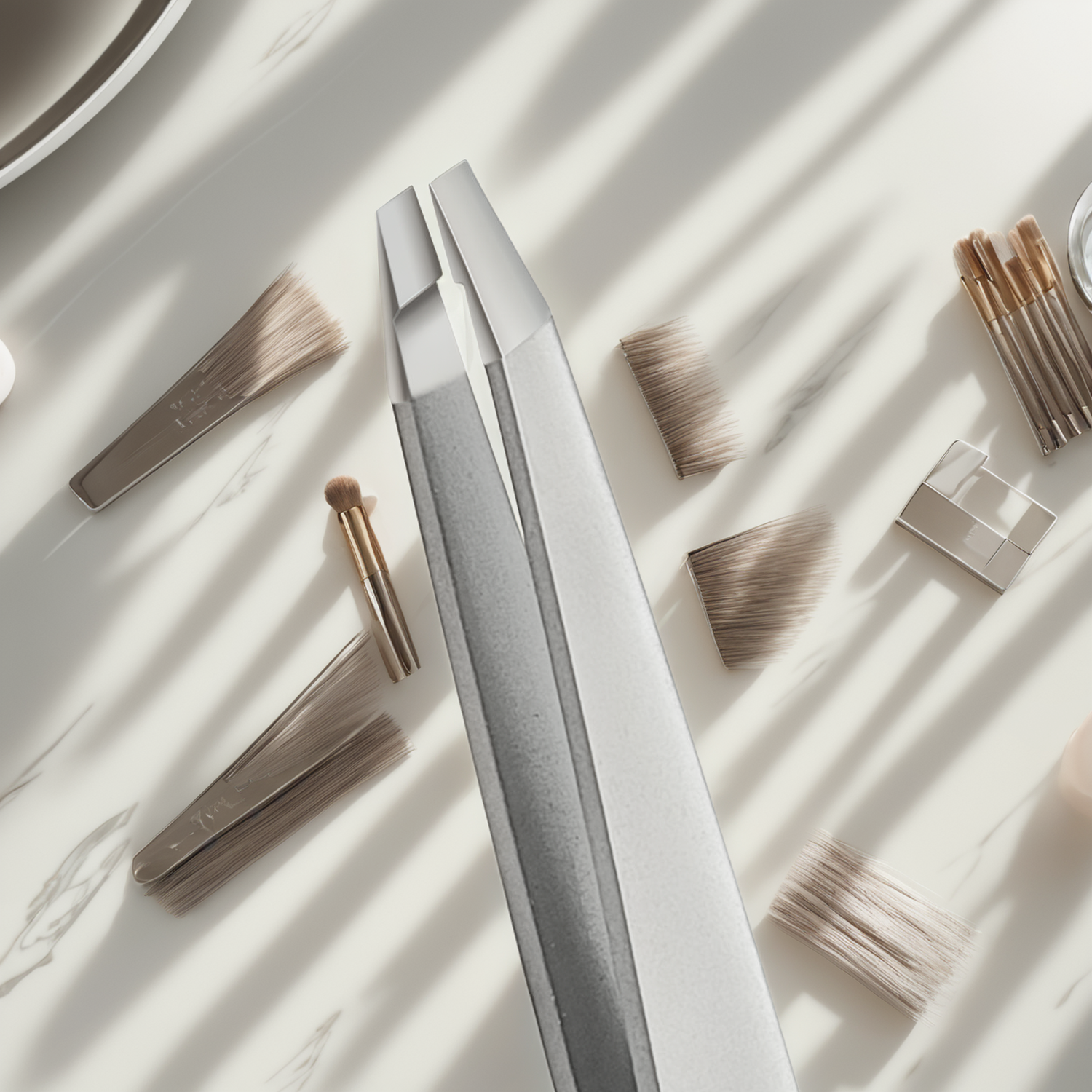
The most important difference is the contact point. When the tweezer closes, the gripping edges should meet evenly. If only one corner touches, the tool may slide off fine hairs. If the edges are too blunt, the user may press into the skin instead of isolating the hair. If the tips are overly sharp or poorly finished, they may cut the hair or feel uncomfortable during detailed work.
For commercial buyers, this matters because customers judge tweezers quickly. A shopper may not know the technical reason for poor performance, but they will notice when a tweezer misses hair, requires too much pressure, or feels unstable. A well-selected eyebrow tweezer should make the grooming task feel simple, not force the user to compensate for the tool.
Compare Eyebrow Tweezer Tip Shapes Before You Choose
Tip shape determines how the tool approaches the hair, how much visibility the user has, and how forgiving the tweezer feels for different skill levels. No single tip style is best for every user. The right choice depends on the customer group, brow maintenance habit, and whether the tool is sold for everyday grooming, professional detail work, travel, or a gift set.
| Tip style | Best use | Strengths | Selection notes |
|---|---|---|---|
| Slanted tip | Everyday eyebrow shaping and routine cleanup | Good visibility, practical angle, suitable for many users | A strong core option for retail assortments and general brow kits |
| Pointed tip | Very fine, short, or isolated hairs | Precise contact point for detailed work | Better for careful or experienced users; packaging should communicate safe handling |
| Flat tip | Gripping broader sections or coarser hairs | Wide contact area and straightforward closing edge | Less ideal for delicate brow shaping where single-hair accuracy is important |
| Pointed-slant tip | Detail work with some everyday flexibility | Combines an angled approach with a narrower gripping area | Performance depends strongly on tip alignment and finishing quality |
For most eyebrow-focused assortments, slanted tweezers are a practical starting point because they cover the widest range of users. The angled edge can be placed along the skin for visibility while still allowing the user to grip one hair at a time. Pointed tweezers are useful as a specialist option, but they should not be positioned as the easiest beginner tool unless the product education is clear.
Material, Finish, and Alignment: The Quality Details That Matter
Stainless steel is commonly used for eyebrow tweezers because it is durable, suitable for repeated cleaning, and can support a precise working edge when manufactured and finished properly. However, buyers should not rely only on the material name. Two stainless steel tweezers can look similar in a photo but perform very differently in hand.
Tip alignment is the first quality point to inspect. Hold the tweezer closed and look for visible gaps at the gripping edge. The tips should meet cleanly without one side crossing, twisting, or touching only at a corner. Open and close the tool several times to feel whether the movement is smooth. A gritty sensation, uneven spring feel, or arms that flex sideways can indicate inconsistent finishing or poor control.
The surface finish also affects use. Edges should feel smooth enough that they do not scratch the skin, while the gripping area should still catch hair effectively. A polished tweezer may look attractive, but the handle should not become slippery during use. A textured or contoured grip can help some users maintain control, especially when shaping near the arch or under the brow.
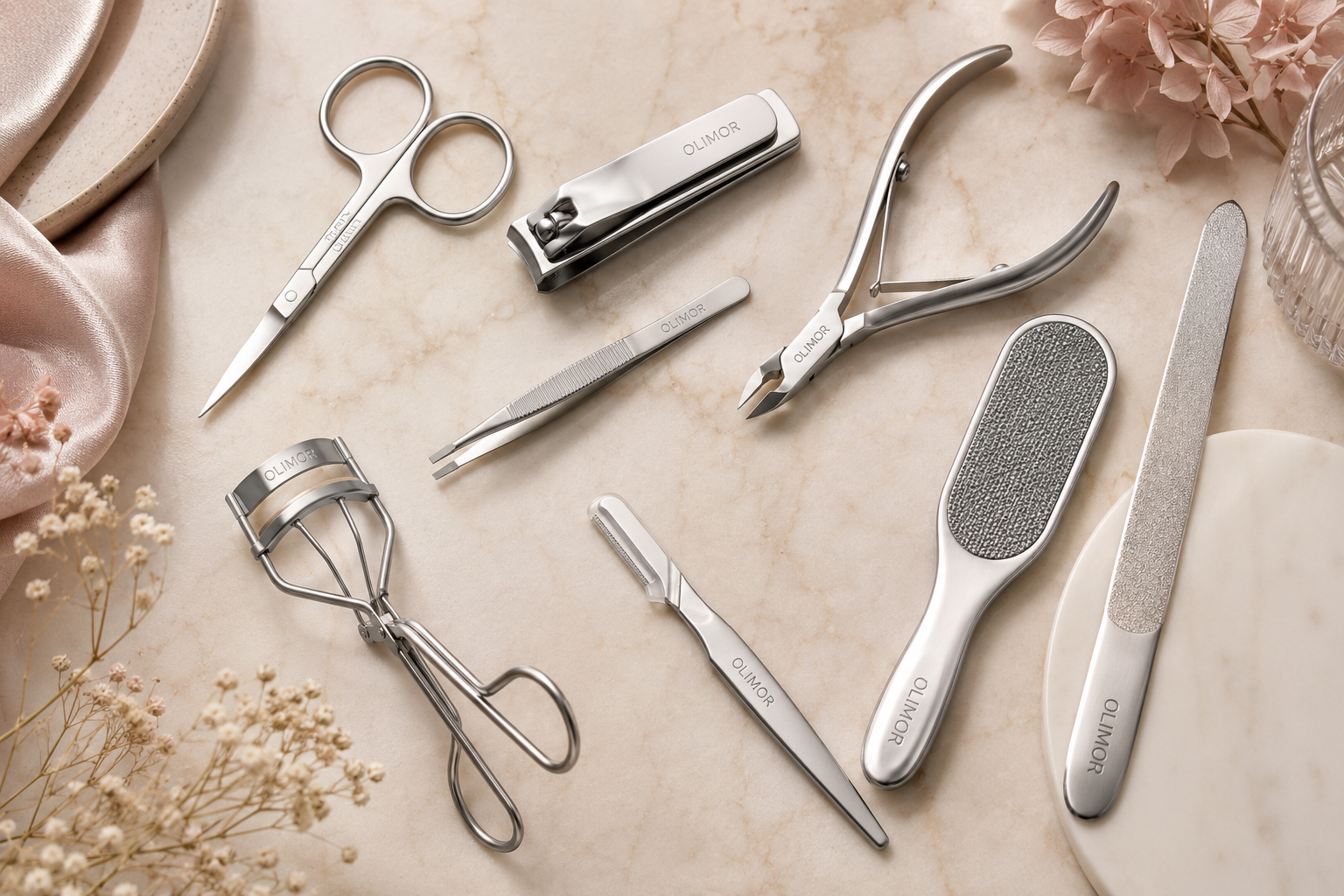
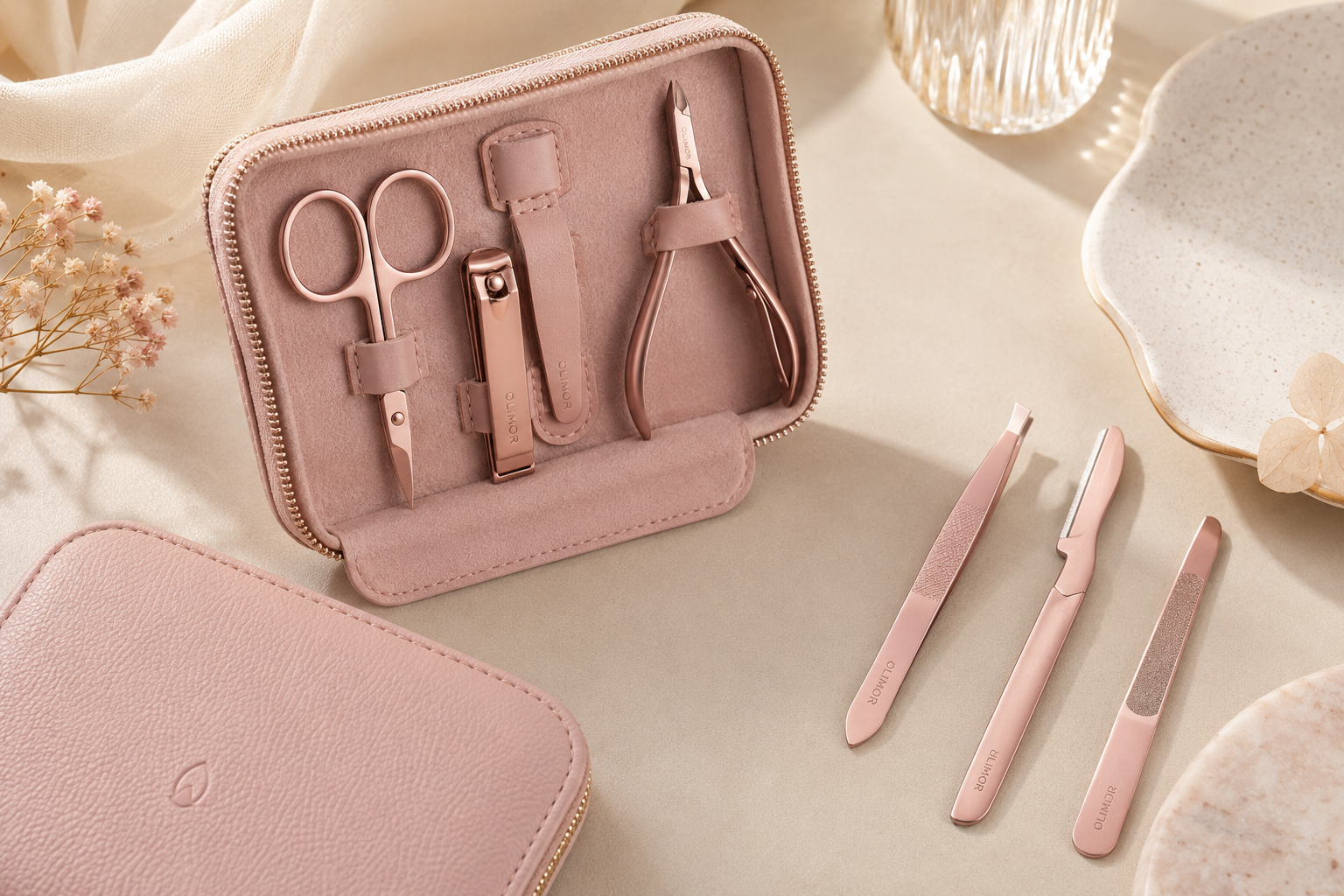
Olimor Beauty focuses on precision beauty tools where manufacturing consistency affects the user experience. When comparing beauty tool products, request clear product images and evaluate samples under real grooming conditions, not only under showroom lighting. Product appearance matters for retail, but grip performance determines whether the customer keeps using the tool.
Comfort and Control Are Commercial Features, Not Extras
Comfort may seem secondary because eyebrow tweezing often takes only a few minutes, but users notice hand feel immediately. If the arms are too stiff, the user must squeeze harder and may lose accuracy. If they are too flexible, the tips may not apply enough pressure to grip short hairs. A good tweezer should close with controlled resistance and return smoothly when released.
Handle width, balance, and surface texture all influence control. A wider grip area may feel more stable for beginners. A slim shape can feel precise, but it should not be difficult to hold. Surface finish should match the intended market: polished tools can suit premium retail presentation, while a slightly textured grip may be easier for detailed brow maintenance.
For salons and retailers, comfort becomes part of product differentiation. Customers may compare several tweezers at once, and the tool that feels steady, aligned, and confident often has an advantage even before technical details are explained. If you are building a range, compare multiple sample units rather than relying on one piece. Consistency across samples is important for repeat customer satisfaction.
How to Inspect Eyebrow Tweezers Before Buying or Sourcing
A simple inspection routine can prevent many avoidable quality issues. This is useful for retail buyers reviewing samples, salons choosing professional tools, and brands preparing product specifications for a supplier. The goal is not to create laboratory claims, but to confirm whether the tweezer works for its intended task.
Practical eyebrow tweezer inspection checklist
- Check tip meeting. Close the tweezer gently and confirm the tips meet evenly across the gripping edge.
- Look for visible gaps. Hold the closed tips toward a light source to see whether one side fails to contact.
- Feel the squeeze. Open and close the arms several times. The movement should be smooth and controlled.
- Test grip on fine hair. Evaluate whether the tweezer catches short or fine brow hairs without repeated attempts.
- Inspect finishing. Run a careful visual and touch check for rough edges, burrs, or uncomfortable areas.
- Assess handle control. Confirm the surface does not feel slippery or unstable in normal use.
- Review packaging protection. Make sure the tips are protected during shipping, storage, and shelf display.
- Confirm care guidance. End users should understand cleaning, drying, and storage basics.
For B2B sourcing, ask whether alignment and finishing are checked before packaging. You do not need exaggerated claims; you need a supplier that can explain the process, provide samples, and discuss how the product is intended to be used. If you are planning an assortment that includes related brow or grooming items, review Olimor’s beauty tool collections to consider how tweezers fit within a broader category.
How End Users Can Get Cleaner Brow Results
Even a well-made tweezer performs better when used correctly. Many poor results come from rushing, pulling against the natural direction, or removing too many hairs before checking the brow shape. Clear usage guidance can improve customer satisfaction and reduce complaints for retailers.
- Clean the brow area and tweezer tips. Remove makeup, oil, or skincare residue before grooming.
- Use good lighting. Bright, even light helps the user identify stray hairs without over-plucking.
- Brush brows into place. This reveals the natural brow line and separates hairs that should stay.
- Grip one hair near the root. Place the tips close to the skin without pinching the skin.
- Pull in the direction of growth. This can help remove the hair more cleanly and reduce breakage.
- Pause often. Step back and check symmetry before removing more hairs.
- Clean and dry after use. Wipe away residue and store the tool in a dry place.
This type of guidance is especially helpful on retail product pages, packaging inserts, or salon aftercare recommendations. It does not need to be long; it simply needs to help users avoid the most common mistakes.
Maintenance, Hygiene, and Storage Considerations
Eyebrow tweezers are often stored in makeup bags, bathrooms, salon drawers, or travel kits. These environments can expose the tool to moisture, cosmetic residue, and impact damage. Proper storage helps preserve both hygiene and tip alignment.
Users should wipe the tips before and after use, dry the tweezer completely before storage, and avoid dropping it. Fine tips can bend or misalign if they hit a hard surface. Pointed or precision styles should be stored with a protective cap or packaging when possible. Eyebrow tweezers should also not be used for hard non-beauty tasks such as opening packaging, scraping surfaces, or pulling metal parts, because those uses can damage the tips.
Professional environments may have additional hygiene expectations. Salons and service providers should follow local health authority requirements and verify current rules for tool cleaning in their market. For product safety and market access, commercial buyers should also check applicable regulations such as the European Union General Product Safety Regulation where relevant, and verify current versions and supplier documents rather than relying on assumptions.
Cost Factors in Eyebrow Tweezer Sourcing
The cost of eyebrow tweezers is influenced by more than material. Buyers comparing quotations should look at the full product and service package. A lower unit cost may not be the best value if tip alignment is inconsistent, packaging does not protect the product, or the finish does not match the retail position.
Common cost factors include tip style, finishing complexity, handle design, packaging structure, inspection requirements, customization needs, and order specifications. A pointed or pointed-slant tweezer may require more careful finishing than a simple broad gripping surface. Decorative finishes or custom packaging may change the overall cost. Additional inspection expectations can also affect production planning.
For a balanced sourcing decision, compare sample performance, retail presentation, and supplier communication together. A reliable supplier should be able to discuss intended use, available customization options, packaging needs, and quality expectations without making unsupported performance claims. If you need product-specific information for your market, you can send a sourcing inquiry with your target customer, packaging direction, and required product type.
Supplier Evaluation Questions for Beauty Brands and Distributors
Eyebrow tweezer sourcing works best when buyers ask practical questions. This keeps the conversation focused on product performance and avoids vague descriptions such as premium quality or professional grade without supporting detail.
- Which tip shape is most suitable for the intended user: beginner, salon professional, travel customer, or gift set buyer?
- How are tip alignment and surface finishing checked before packaging?
- Can samples be evaluated for grip, tension, and handle comfort before confirming a larger order?
- What packaging options help protect the tips during transport and display?
- Can the tool or packaging be customized, and what artwork or specification details are required?
- What care instructions should be included for end users?
- Which supplier documents are available for review for the intended market?
These questions help buyers compare suppliers on usable details instead of relying only on catalogue photos. For custom requirements, private-label planning, or range development, contact Olimor with the application, target sales channel, and any packaging or branding needs.
Choosing the Right Eyebrow Tweezers Comes Down to Fit for Purpose
The right eyebrow tweezer combines an appropriate tip shape, accurate alignment, comfortable tension, smooth finishing, and practical packaging protection. For everyday consumers, this means cleaner grooming and fewer missed hairs. For beauty businesses, it means a product that can be sampled, explained, maintained, and sold with confidence.
Start with the intended user and task. Choose slanted tips for broad everyday appeal, pointed tips for careful detail work, flat tips for broader gripping needs, and pointed-slant tips when you want a more specialized balance. Then inspect the details that determine real performance: how the tips meet, how the arms close, how the handle feels, and how the tool is protected before it reaches the customer.
FAQ
Can I request samples before choosing eyebrow tweezers for a product line?
Yes. Sample review is recommended because alignment, tension, grip feel, and finish quality are best judged in hand. Share the intended user, tip style, packaging direction, and any customization needs when making a sample request.
Is there a fixed MOQ for customized eyebrow tweezers?
MOQ can depend on the product style, customization method, packaging, and production plan. Confirm the current requirement directly with the supplier for the specific tweezer and branding option you want.
What customization options should buyers ask about?
Common discussion points include tweezer finish, handle appearance, logo placement, packaging structure, care instructions, and assortment planning. Availability depends on the selected product and order details.
How should quality be checked before confirming an order?
Review samples for tip alignment, smooth closing action, grip on fine hair, comfortable handle feel, surface finishing, and packaging protection. Also ask what inspection steps are used before the tweezers are packed.
How can lead time be confirmed?
Lead time depends on order details, customization, packaging, and production scheduling. Confirm current timing with the supplier after the product specification and artwork requirements are clear.