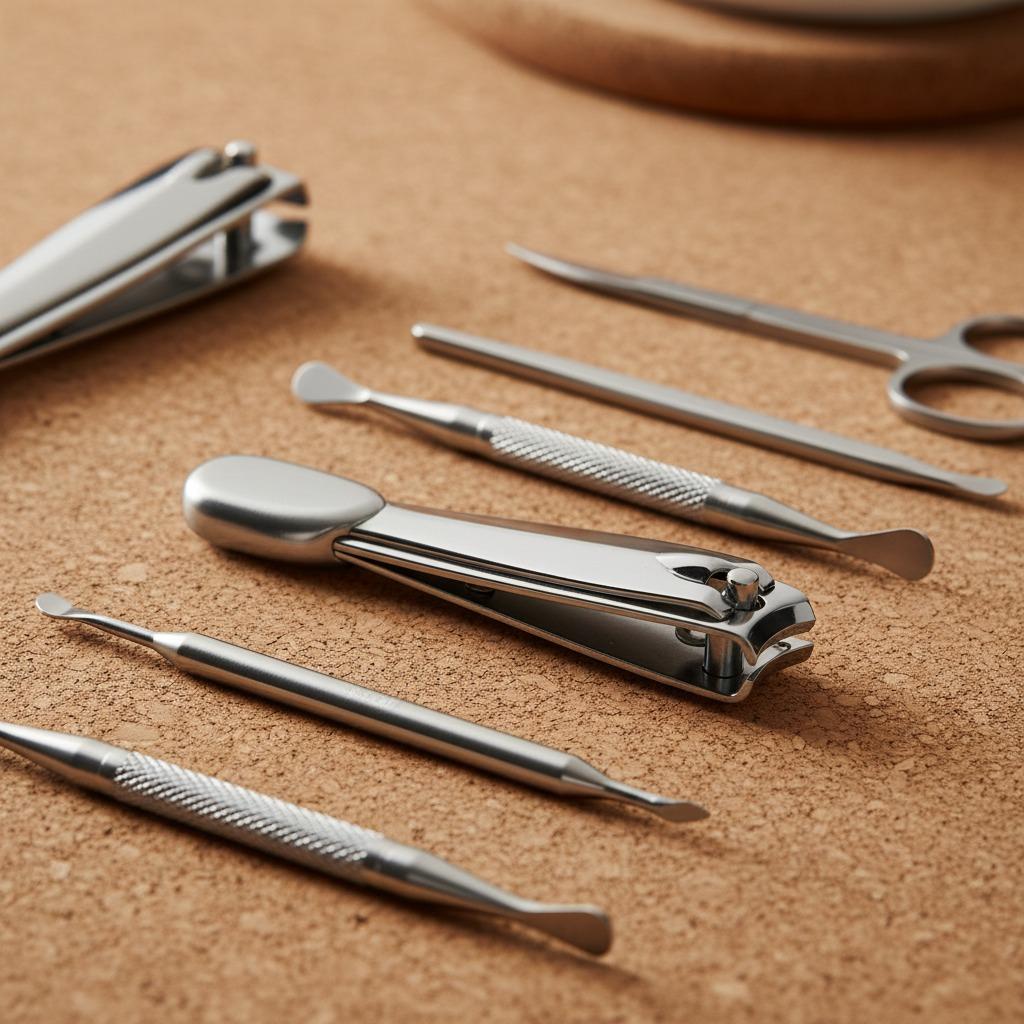











Women’s nail clippers are small tools, but they have to solve several practical problems at once: cut cleanly, feel controlled in the hand, resist rough handling in a pouch or kit, and remain easy to clean after repeated use. For beauty retailers, salon resale programs, travel kit suppliers, and private-label personal care brands, the best clipper is not simply the smallest, shiniest, or most decorative option. It is the tool whose blade profile, lever action, finish, and packaging fit the intended user and selling channel.
A well-selected women’s nail clipper helps the user trim in small, controlled cuts instead of squeezing hard and tearing the nail. That matters for natural fingernails, short manicures, toenail maintenance, and thicker nails that need more leverage. This guide explains how to compare clipper types, inspect samples, discuss manufacturing details with a supplier, and maintain the tool for better long-term performance without relying on unsupported claims or unnecessary complexity.
Start With the Use Case: Fingernails, Toenails, Travel, or Kits
The first sourcing decision is the job the clipper must perform. A compact handbag clipper has different priorities from a larger toenail clipper or a manicure set component. If the product will be sold as an everyday women’s grooming tool, it may need to balance attractive appearance with enough cutting strength for normal nail care. If it is part of a travel kit, compact size and blade protection may matter more. If it is included in a salon-adjacent retail kit, the feel of the lever, finish consistency, and hygiene-friendly design become more important.
For fingernails, many buyers prefer a curved blade because it follows the natural shape of the nail edge and supports rounded trimming. For toenails, a straighter or flatter cutting edge is often easier to control because it helps avoid cutting corners too deeply. For thicker nails, a wider jaw opening and stronger lever action may be needed. The goal is not to force one universal clipper into every use case, but to match the tool geometry to the trimming task.
- Daily fingernail care: look for a controlled curved blade, stable alignment, and a comfortable lever.
- Toenail trimming: consider a larger clipper with a straighter edge and enough leverage.
- Travel or handbag use: prioritize compact form, safe storage, and reliable blade closure.
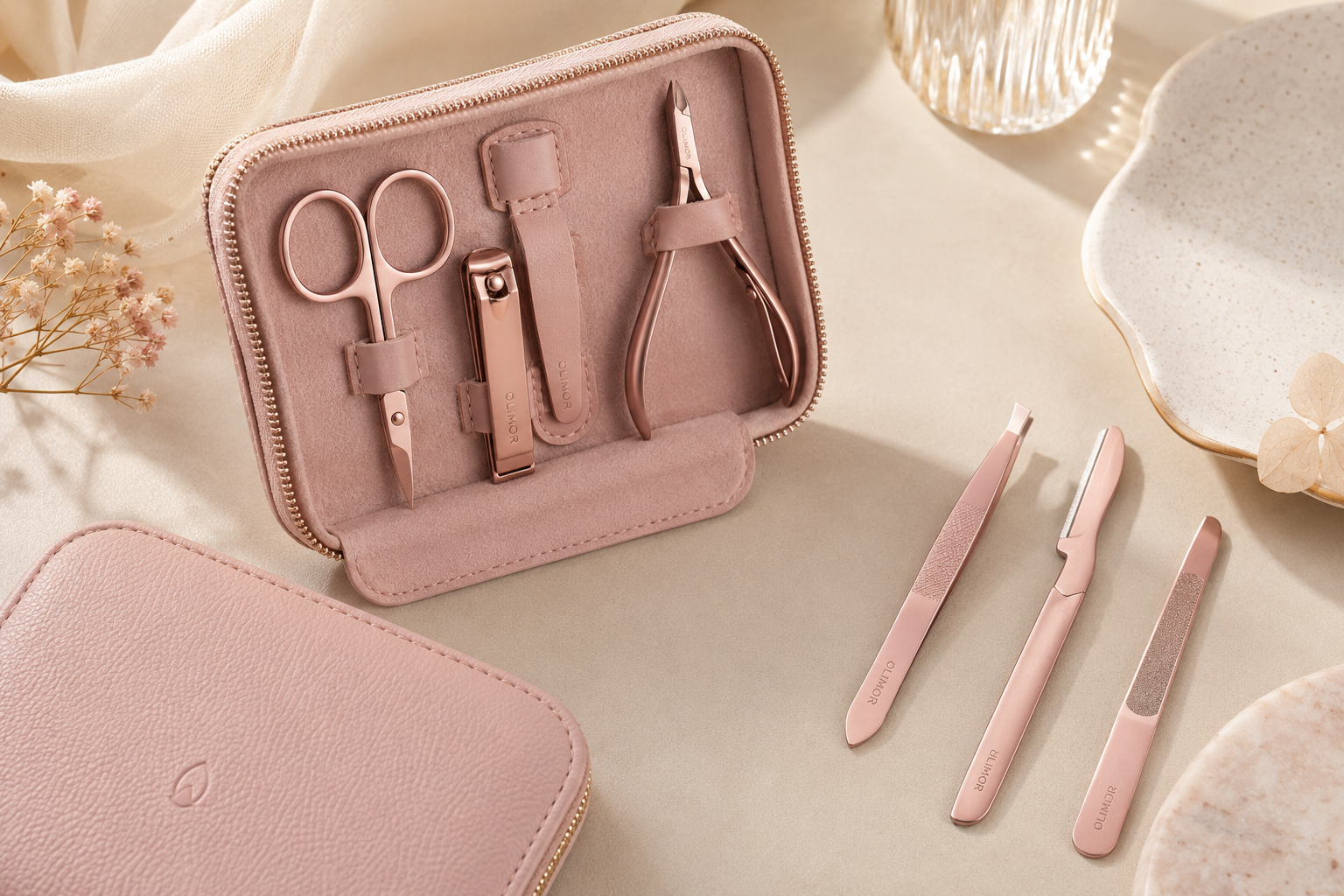
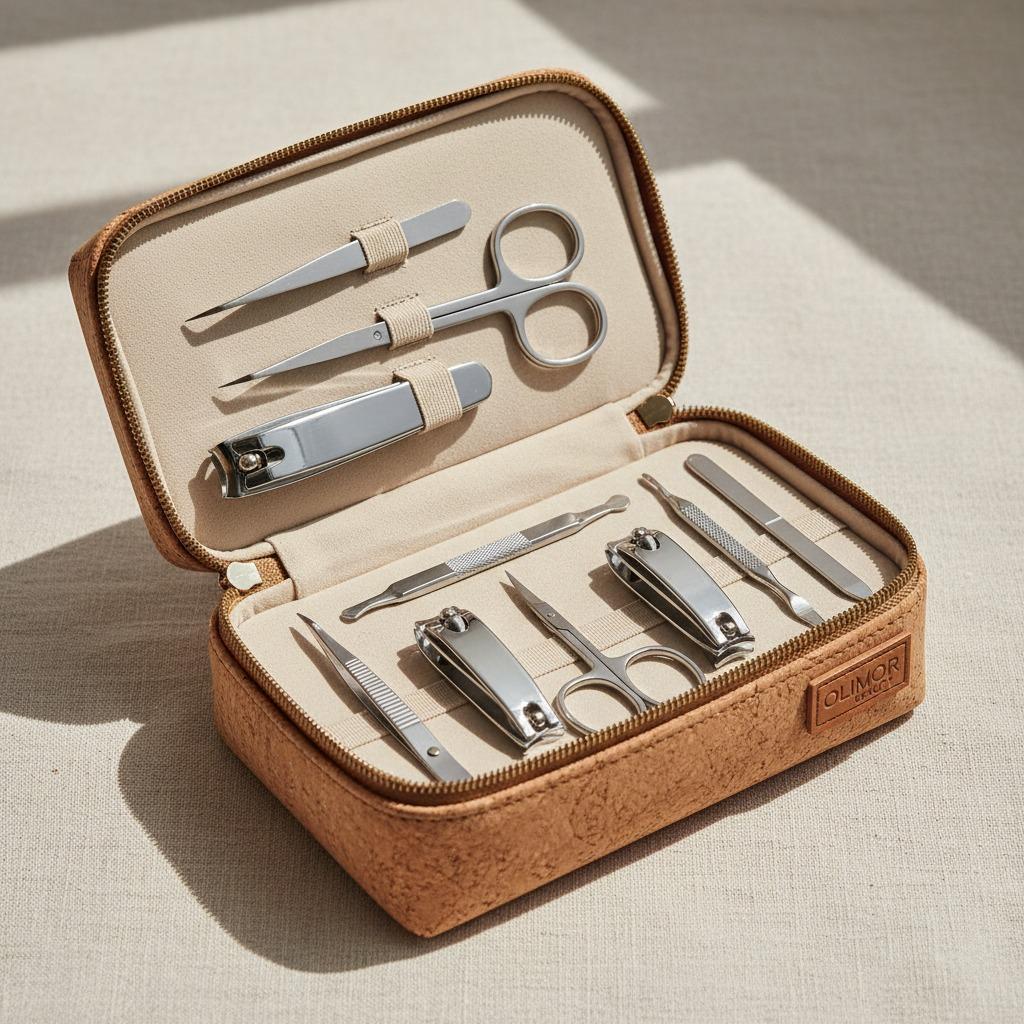
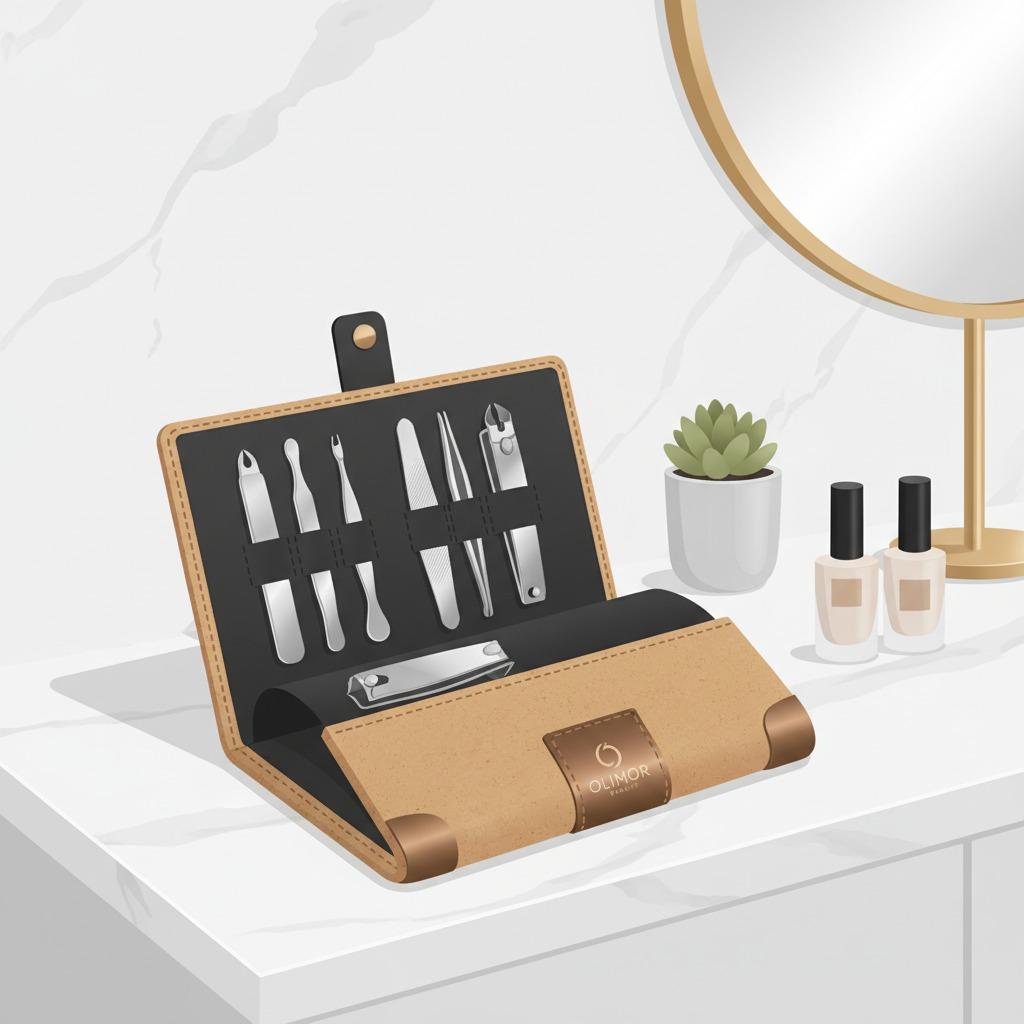
- Gift or manicure sets: combine complementary tools rather than relying on one decorative clipper.
- Retail refill or impulse items: check that packaging protects the jaw and communicates the intended use clearly.
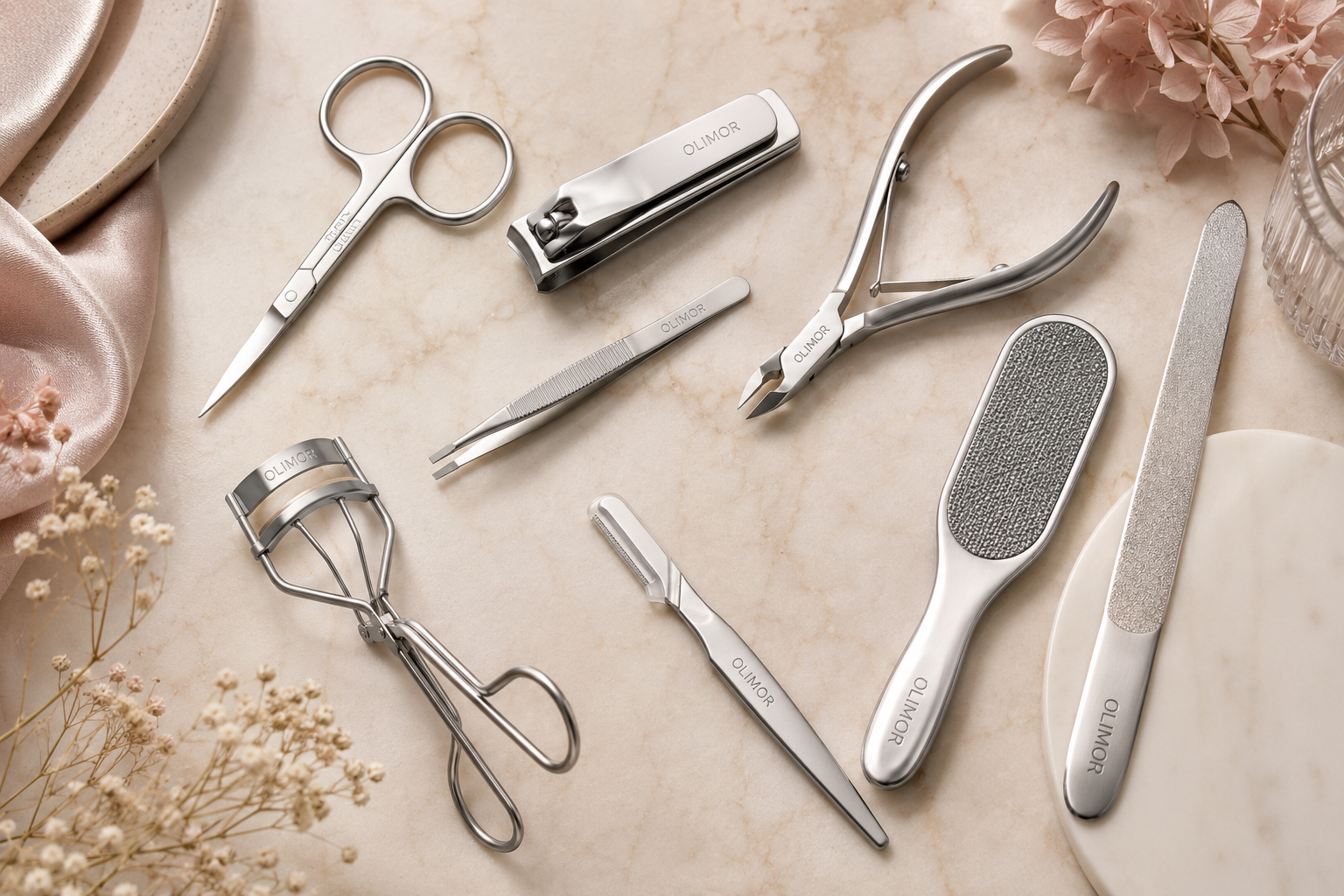
Businesses building a coordinated personal care range can compare formats across Olimor Beauty’s beauty tool products to see how clippers may sit alongside tweezers, scissors, nail files, or grooming accessories.
Blade Shape and Alignment Determine Cutting Quality
The blade is the most important performance area of a nail clipper. A sharp-looking edge is not enough if the two cutting sides do not meet evenly. Poor alignment can leave an uncut section, bend the nail before cutting, or require repeated pressure on the same spot. A better clipper closes smoothly and cuts through the nail with controlled force rather than crushing it.
Blade curvature should match the user’s trimming habit. A curved fingernail clipper can help create a soft rounded edge, especially when the user trims gradually from side to center. A straighter toenail clipper supports more direct trimming and may reduce the tendency to over-round the corners. Wide-jaw designs can be useful when more clearance is required, although the buyer should still check that wider jaws do not feel unstable or misaligned.
When reviewing samples, close the clipper slowly and look along the cutting edge. The edges should meet cleanly without visible gaps. Open and close the lever several times to feel whether the action is smooth, gritty, loose, or overly stiff. Then evaluate whether the clipper gives the user clear visibility of the nail edge. Bulky decorative features may look attractive in photos but can block the user’s view or make the tool harder to position accurately.
Materials, Surface Finish, and Hygiene Considerations
Stainless steel is widely used for personal care tools because it can provide corrosion resistance and a clean appearance when properly processed. However, buyers should not assume the exact material grade, hardness, or finish method from appearance alone. These details should be confirmed with supplier documentation during product development and sample approval.
Surface finishing affects both perceived quality and real handling comfort. A polished clipper can look refined, but every touch point still needs to be smooth: lever edges, side corners, file areas, keychain holes, and the underside of the handle. Rough finishing can make the tool uncomfortable to hold and may reduce confidence in the product. If a coating, color finish, or decorative surface is used, buyers should discuss how it will be handled during packaging and transport, because visible scratches can affect retail presentation.
Hygiene is another practical factor. Nail dust, skin oils, and moisture can collect around the jaw and lever. Designs with accessible surfaces are easier to wipe after use. If the clipper is sold in a pouch, travel case, or manicure kit, the storage component should help protect the cutting edge and keep the tool separated from other items that could scratch or contaminate it. For shared environments, cleaning procedures should match the setting in which the tool is used.
Regulatory expectations vary by market and product positioning. Nail clippers sold as consumer grooming tools are generally evaluated differently from medical devices, but consumer product safety rules may still apply. Buyers selling into the United States may need to consider current guidance from the U.S. Consumer Product Safety Commission, while suppliers selling into the European market should verify obligations under applicable EU product safety requirements. Always check the latest versions of public requirements and request current supplier documents rather than relying on outdated assumptions.
Ergonomics: Leverage, Grip, and Control
A nail clipper should feel stable before it cuts. Ergonomics are not limited to soft shapes or decorative handles; they include lever length, opening angle, resistance, grip texture, and how easily the user can see the nail. A small clipper is convenient for travel, but it may require more squeezing force. A larger lever can provide more mechanical advantage, which is useful for toenails or thicker nails, but it must still feel controlled.
Grip is especially important when hands are damp after washing or when lotion has been applied. A mirror-polished lever may look premium, but if it is too slippery the user may clip unevenly. Some designs use a raised pattern, shaped thumb area, matte finish, or subtle texture to improve control. The best choice depends on the target customer and the product’s visual direction.
Buyers should also consider users with smaller hands, reduced hand strength, or limited dexterity. A clipper that is too stiff can feel uncomfortable, while one that is too loose may seem unstable. Balanced spring-back and predictable closure allow the user to make several small cuts rather than one forceful cut. This is especially important for women who maintain short manicures or need careful trimming near the sidewall.
Comparison Table: Choosing the Right Clipper Format
The table below summarizes common women’s nail clipper formats and the sourcing questions that help separate a practical tool from a purely decorative item.
| Clipper Format | Best Fit | Key Quality Checks | Potential Trade-Offs |
|---|---|---|---|
| Small curved fingernail clipper | Daily fingernail trimming, handbags, travel pouches | Blade alignment, smooth lever action, comfortable thumb pressure | May have less leverage for thicker nails |
| Larger toenail clipper | Toenail care and users needing stronger cutting force | Jaw opening, straight or flatter edge, stable closure | Less compact for travel or small kits |
| Wide-jaw clipper | Thicker nails requiring more clearance | Even edge contact, strong lever, secure grip | Can feel bulky if not well balanced |
| Clipper in manicure set | Gift sets, retail beauty kits, private-label grooming ranges | Consistency with other tools, packaging fit, finish matching | Tool mix must be chosen carefully to avoid duplication |
| Decorative or color-finished clipper | Retail display, gifting, branded collections | Coating consistency, scratch visibility, smooth edges | Appearance should not compromise grip or visibility |
Sample Inspection Checklist for Retailers and Brands
Product photos rarely reveal how a nail clipper performs. Before placing a larger order or adding a clipper to a private-label range, review physical samples with a repeatable checklist. The aim is to evaluate consistency, not only whether one sample looks good at first glance.
- Check blade contact: close the clipper slowly and inspect whether both cutting edges meet evenly.
- Feel the lever action: open and close the tool several times; it should not grind, wobble, or require excessive force.
- Inspect touch points: run a finger carefully along the lever, sides, corners, and any file area to identify rough finishing.
- Review cutting control: the clipper should support gradual trimming rather than forcing one heavy cut.
- Assess visibility: confirm the user can see the nail edge clearly while holding the tool.
- Check packaging protection: the jaw area should be protected from impact and contamination during storage and shipment.
- Compare finish consistency: inspect multiple pieces for differences in polish, coating, marks, and surface smoothness.
- Confirm documentation: request current material, packaging, labeling, and compliance information relevant to the selling market.
If you are building a kit rather than sourcing a single item, review Olimor Beauty’s product collections to consider how clipper size, finish, and function can coordinate with related manicure or grooming tools.
Cost Factors Without Guessing the Price
The cost of women’s nail clippers can vary for practical reasons. Buyers should avoid comparing quotes only by unit price until they understand what is included. A low-cost clipper may appear attractive but can become unsuitable if the blade alignment is inconsistent, the finish feels rough, or the packaging does not protect the tool properly. A higher-cost design may be justified if it improves user comfort, retail presentation, or kit coherence, but those benefits should be confirmed through samples.
Common cost drivers include material selection, clipper size, jaw style, lever design, surface polishing, color finishing, decoration, packaging structure, and inspection requirements. Custom branding, special packaging, coordinated set development, or additional quality checks may also affect the final quotation. Instead of requesting a generic price, buyers should provide the target market, intended channel, product format, packaging direction, and any required documentation. This helps the supplier recommend a realistic construction rather than under-specifying the tool.
For commercially relevant comparison, ask whether the clipper is intended for basic retail, premium gift sets, salon resale, travel kits, or promotional distribution. Each channel has a different balance of price sensitivity, finish expectations, and packaging needs. The right supplier discussion should make these trade-offs visible before production decisions are made.
Maintenance and End-User Care Instructions
Clear care guidance improves the user experience and can reduce avoidable complaints. After trimming, the user should remove nail debris from the jaw area and wipe the clipper with a clean, dry cloth. If the tool becomes damp, it should be dried before being returned to a pouch, drawer, or travel case. Long exposure to moisture can affect the appearance and service life of metal personal care tools.
Users should avoid using nail clippers for non-nail tasks such as cutting wire, labels, hard plastic, or adhesive strips. These tasks can dull the edge or disturb jaw alignment. If the clipper starts folding the nail instead of cutting cleanly, the issue may be a dull edge, contamination at the hinge, or mechanical damage. For better trimming, nails can be cut after washing or bathing when they are slightly softened, then refined with a nail file rather than shaped entirely with large clips.
Personal clippers are easiest to manage hygienically when each user has a dedicated tool. In retail or professional environments where tools may be demonstrated, stored, or handled by multiple people, cleaning and handling procedures should match the use setting and current local requirements.
Supplier Evaluation Questions for B2B Buyers
A reliable nail clipper supplier should be able to discuss performance, finishing, packaging, and inspection in practical terms. Buyers do not need unsupported claims; they need clear answers, representative samples, and documentation that matches the market where the product will be sold.
- Which clipper formats are recommended for fingernail, toenail, travel, or kit use?
- What material and finish options are available, and what documentation can be provided for them?
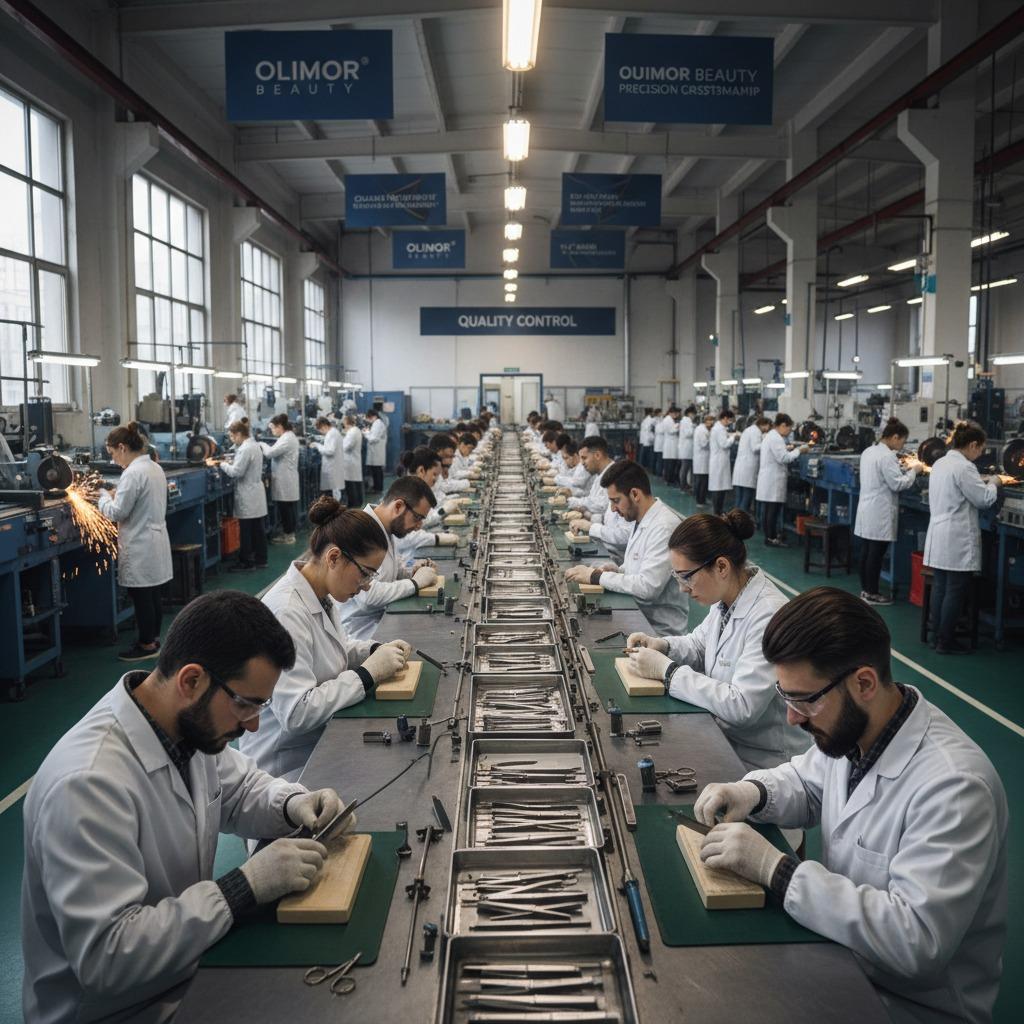
- How are blade alignment, lever action, surface finish, and packaging condition checked before shipment?
- Can the clipper be matched with other tools in a coordinated manicure or grooming set?
- What branding, packaging, and presentation options are suitable for the target channel?
- How should samples be requested and evaluated before confirming a specification?
For a more useful discussion, prepare reference photos, target retail positioning, preferred finish, packaging goals, and the intended selling market. You can send a project inquiry with those details so the clipper format and kit structure can be reviewed against the actual use case.
FAQ: Samples, MOQ, Customization, Quality, and Lead Time
Can I request samples before choosing women’s nail clippers for a retail range?
Yes. Sample review is the most practical way to check blade alignment, lever feel, finish quality, size, packaging fit, and overall user comfort. Provide the intended use and target market so the sample options are relevant.
Is there a standard MOQ for nail clippers?
MOQ depends on the clipper design, customization level, packaging, and production plan. Ask for the current MOQ based on the specific item and any branding or packaging requirements rather than assuming one number applies to every project.
Can nail clippers be customized for a private-label beauty kit?
Customization may include finish direction, branding, packaging, and coordination with other manicure tools, depending on the selected product structure. Confirm available options through samples and supplier documentation before final approval.
How should quality be checked before shipment?
Key checks should include blade alignment, opening and closing action, cutting control, smooth touch points, finish consistency, and packaging protection. Buyers should also verify current documents required for their selling market.
How is lead time determined?
Lead time depends on product selection, order details, customization, packaging, sampling, and production scheduling. Share complete project requirements early so timing can be discussed realistically.
Final Selection Advice
The best women’s nail clipper is the one that matches the user’s nail type, trimming habit, and buying context. A curved compact clipper may be ideal for everyday fingernail care, while a larger or straighter clipper may be better for toenails. For private-label sets, the clipper should coordinate with the rest of the tools while still performing its core job: clean, controlled trimming.
Olimor Beauty focuses on practical beauty tools where usability, finish, and sourcing details matter. If you need help comparing nail clipper options for a retail program, travel kit, manicure set, or custom grooming assortment, contact Olimor Beauty with your application details. A careful selection process helps create a tool that feels comfortable, trims cleanly, and supports better nail care over time.