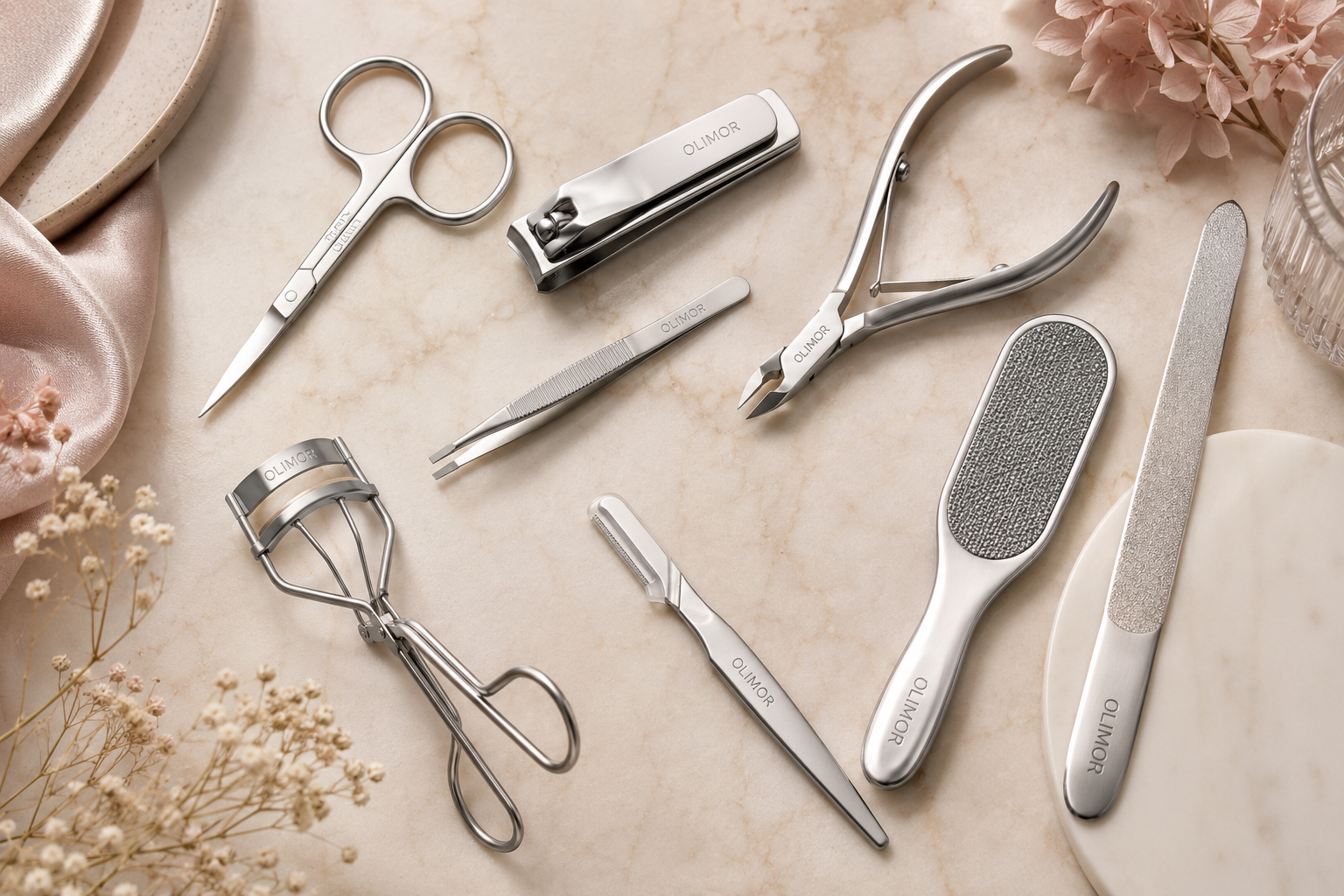











Women's nail clippers look simple, but the difference between a clean trim and a jagged edge often comes down to engineering details: blade alignment, cutting leverage, material quality and how the tool feels in the hand. For personal grooming, salon retail, travel kits or private-label beauty tool sourcing, the right clipper supports neat nails while reducing splitting, tearing and repeated filing.
This guide focuses on the practical criteria that matter when evaluating women's nail clippers, including stainless steel construction, ergonomic handling, hygiene, set composition and quality control. It is written for buyers and users who want a dependable grooming tool rather than a decorative accessory that performs poorly after a few uses.
Why a Dedicated Women's Nail Clipper Matters
Fingernails vary in thickness, curvature and length, and a clipper that feels too bulky can make controlled trimming difficult. A well-designed women's nail clipper should allow small, accurate cuts along the natural nail shape. This is especially important for users who maintain shorter manicures, rounded edges or carefully shaped nails that need only light trimming before filing.
A precision clipper also helps prevent common nail-care problems. Dull or misaligned blades can compress the nail before cutting, leaving a rough edge or creating small cracks near the free edge. If the lever is unstable, the user may apply uneven pressure and remove too much nail at once. A better tool encourages gradual trimming, cleaner edges and more predictable results.
Women's nail clippers are not only for beauty routines. They are practical personal-care tools for homes, salons, hotels, travel kits, gift sets and beauty retailers. For businesses comparing beauty tool products, the ideal clipper should feel precise, look clean, resist corrosion and remain easy to sanitize between uses.
Key Selection Criteria for Better Cutting Performance
The best way to evaluate a nail clipper is to look beyond the surface finish. A polished appearance may attract attention, but performance depends on the small mechanical details. Buyers should examine how the jaws meet, whether the lever moves smoothly and whether the cutting edge feels sharp without being unsafe.
- Blade alignment: The upper and lower cutting edges should meet evenly across the full curve. Gaps or uneven contact can leave partial cuts and ragged edges.
- Cutting curve: A gentle curve suits most fingernails because it follows the natural nail line. A very deep curve may remove too much nail at once.
- Lever control: The lever should provide enough pressure without requiring excessive force. Smooth resistance gives the user better control.
- Edge sharpness: Sharp blades cut cleanly instead of crushing the nail plate. This is essential for thin, flexible or layered nails.
- Size and reach: A compact clipper is convenient for hands and travel, while a larger clipper may be useful in a set for thicker toenails.
- Finish quality: Edges around the body and lever should feel smooth, with no burrs that can scratch the hand or catch on pouches.
For retail and sourcing teams, these criteria can be turned into an inspection checklist. Instead of judging only by product photos, compare physical samples by trimming test material or sample nails, checking repeated lever action and confirming that the cutting edge remains consistent across several units.
Material, Hygiene and Maintenance Considerations
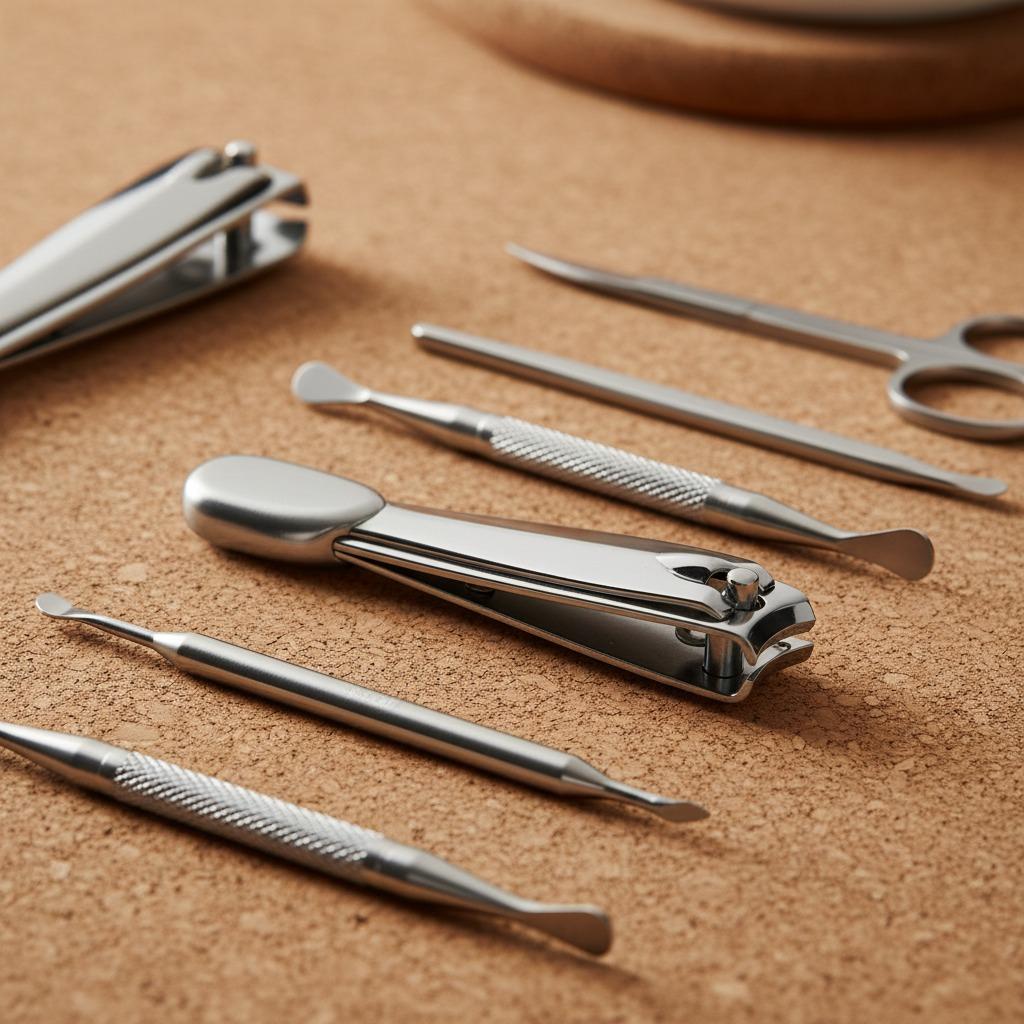
Material choice affects durability, cleaning and appearance. The original product positioning highlights surgical-grade stainless steel, which is valued in grooming tools because it offers strength and resistance to corrosion. For nail clippers, stainless steel helps maintain a clean surface and supports regular wiping or sanitizing after use.
Hygiene matters because nail tools come into direct contact with keratin, skin oils and sometimes moisture. A clipper should be easy to clean around the jaws, pivot and file area if one is included. Designs with fewer dirt-trapping gaps are easier to maintain, especially in shared household kits or salon-adjacent retail environments.
- Clean after trimming: Remove nail fragments from the jaws and pivot area with a dry brush or tissue.
- Wipe the surface: Use an appropriate disinfecting wipe or alcohol-based cleaning method suitable for stainless steel.
- Dry thoroughly: Moisture left near the hinge can affect movement over time, even on corrosion-resistant materials.
- Store separately: Keep the clipper in a dry pouch, case or grooming kit compartment to protect the blade edges.
- Avoid misuse: Do not use nail clippers to cut wire, plastic tags or other hard objects, as this can damage blade alignment.
Good maintenance extends the service life of the tool and improves user experience. A sharp, clean clipper requires less pressure, reduces the need for repeated cuts and makes filing easier afterward.
Ergonomics: Comfort Is a Performance Feature
Ergonomics should not be treated as an afterthought. A nail clipper that slips, pinches or feels unstable can lead to uneven trimming. Comfortable handling is especially important for users who trim nails slowly, manage delicate nail shapes or have reduced hand strength.
When assessing ergonomic design, start with the lever. It should be long enough to provide leverage but not so long that it feels awkward on a compact clipper. The top surface should give the thumb a stable contact point. If the tool has a textured or contoured lever, the texture should help grip without feeling rough.
The body should also feel balanced. A clipper that is too narrow may twist during use, while a clipper that is too heavy may feel less precise for small fingernail cuts. Rounded external edges improve comfort during repeated trimming and make the tool feel more refined in a cosmetic bag or manicure set.
Ergonomic benefits apply across grooming categories, including women's nail clippers and men's nail clippers, because control and clean cutting are universal requirements. The difference is usually in preferred size, cutting curve and set composition rather than in the need for precision itself.
Single Clipper or Nail Clipper Set: Which Is Better?
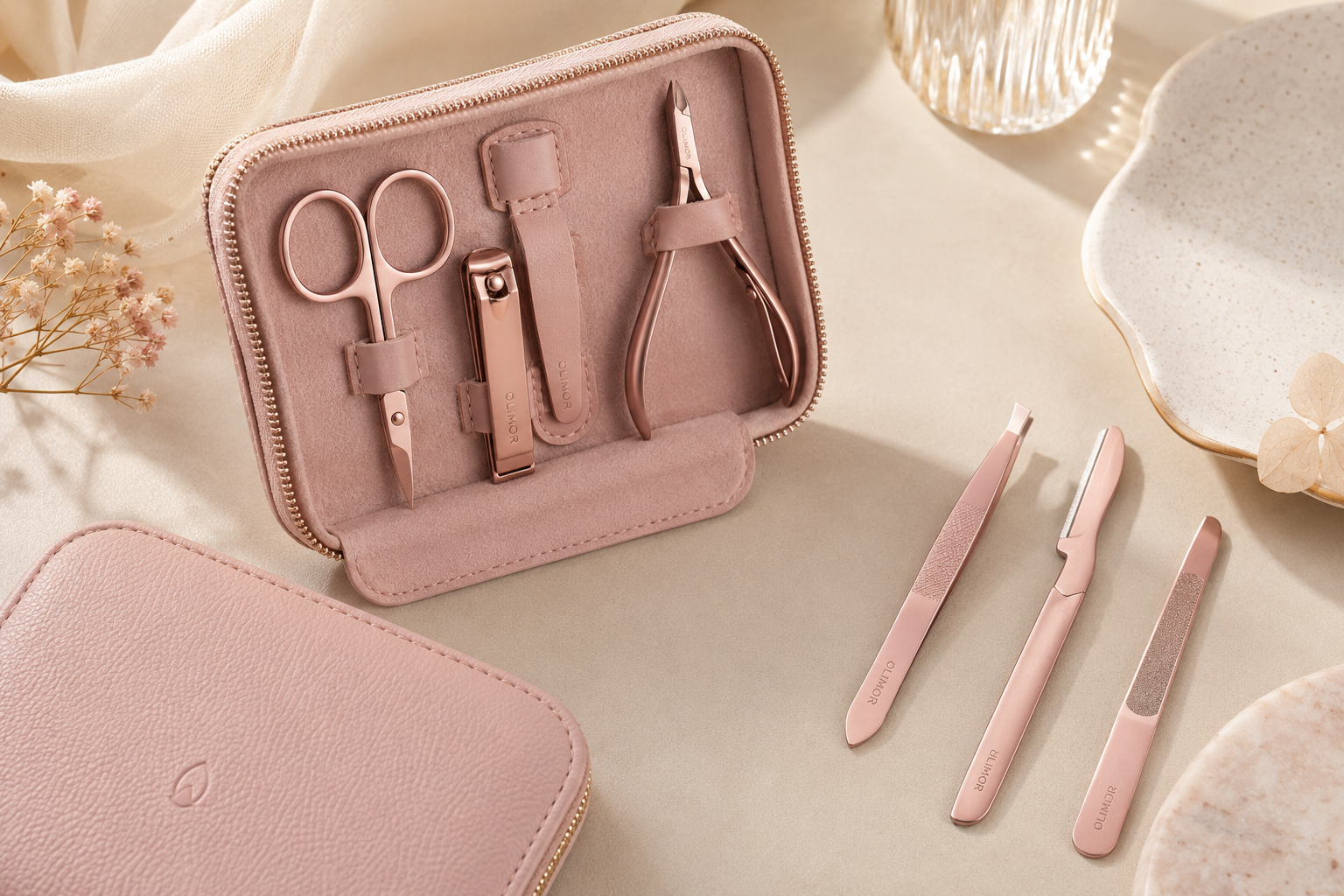
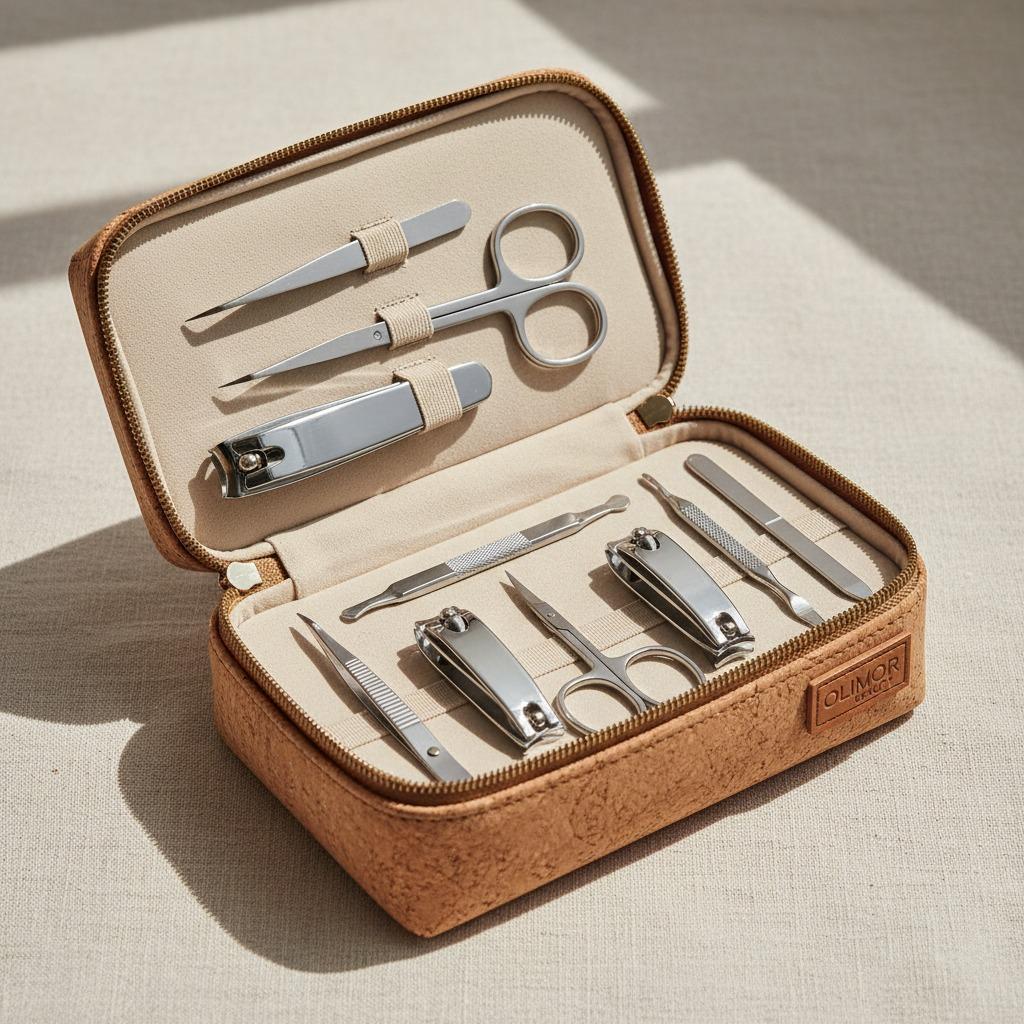
A standalone women's nail clipper works well when the goal is simple fingernail maintenance. However, a nail clipper set can be more useful when different nail thicknesses, travel needs or gift packaging are involved. Sets often combine tools for fingernails and toenails, giving users a dedicated option for each task and helping avoid cross-use.
| Option | Best For | What to Check |
|---|---|---|
| Single women's nail clipper | Daily fingernail trimming, travel, compact grooming kits | Blade alignment, hand feel, stainless steel finish, protective storage |
| Two-piece clipper set | Separating fingernail and toenail care | Different sizes, appropriate cutting curves, clear tool distinction |
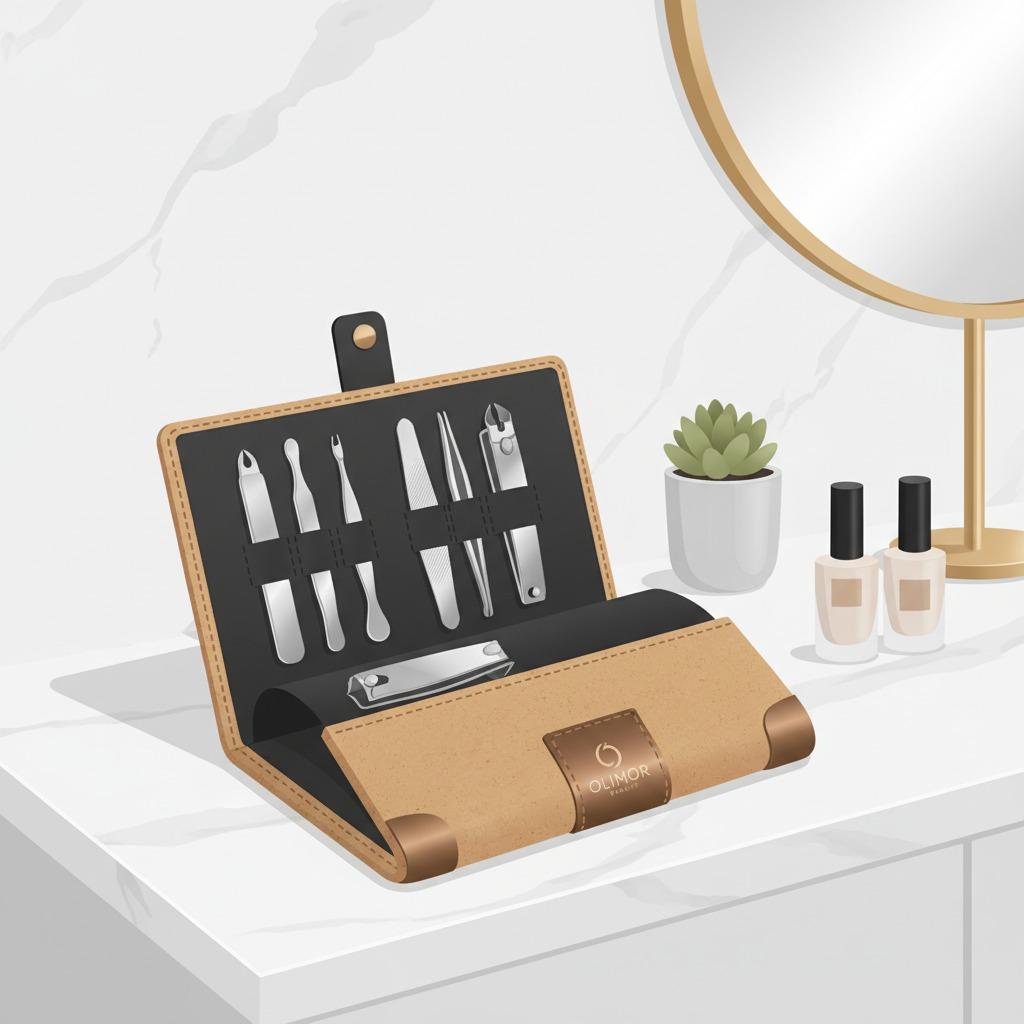
| Multi-tool manicure set | Gift sets, retail bundles, broader nail care routines | Tool relevance, case quality, consistent finish, easy cleaning |
For brands and retailers browsing product collections, the set decision should match the end user. A travel-focused customer may prefer one compact tool with a case. A salon retail customer may value a coordinated manicure set. A private-label buyer may prioritize consistent finish, packaging compatibility and inspection standards across all tools in the set.
Quality Control Questions for Sourcing Women's Nail Clippers
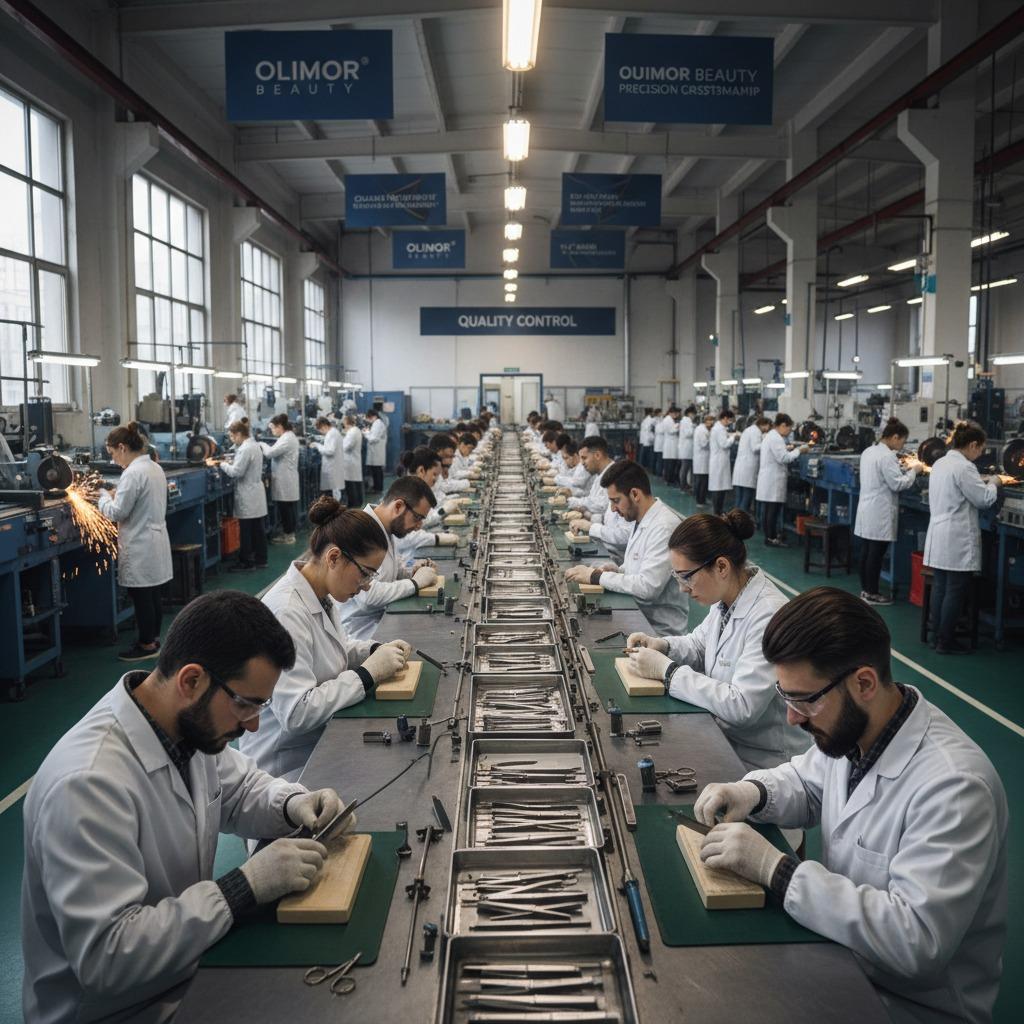
Olimor Beauty emphasizes internal quality control with inspections from raw materials to final packaging. For buyers, that kind of process orientation is important because nail clippers rely on small tolerances. A small change in jaw alignment, hinge pressure or blade finishing can significantly affect performance.
Before approving a nail clipper for retail or promotional use, create a practical quality review. Check whether samples from different cartons cut consistently. Compare the first and last units in a sample batch. Open and close the lever repeatedly to see whether movement remains smooth. Inspect the tool under bright light for burrs, uneven polishing, surface marks or gaps between cutting edges.
Packaging should also protect the clipper. If the cutting jaws rub against other metal tools during shipping, the edge can be affected before the customer ever uses it. For sets, each tool should sit securely in its case or tray, and the user should be able to remove it without forcing the lever or touching sharp edges.
If you are developing a product line or need to compare specifications for a private-label project, you can send an inquiry with your intended market, preferred set type and packaging requirements. For broader sourcing questions or support, contact Olimor to discuss suitable beauty tool options.
How to Use Women's Nail Clippers for a Cleaner Finish
Even a well-made clipper performs best with proper technique. Trim nails when they are clean and dry, unless the nails are unusually hard and need slight softening after washing. Make several small cuts instead of one aggressive cut across the entire nail. Follow the natural curve, leaving a small free edge if you plan to file afterward.
Avoid cutting deeply into the corners, as this can create discomfort or encourage uneven regrowth. After clipping, use a nail file to smooth the edge in one direction or with gentle strokes. Clean the clipper before storing it, especially if it is shared or kept in a humid bathroom.
The goal is not simply shorter nails. The goal is controlled trimming that protects the nail edge, keeps the tool hygienic and makes the finished manicure look neat with minimal correction.
Final Buying Perspective
Women's nail clippers should be judged by how reliably they cut, how comfortably they handle and how easily they can be cleaned. Surgical-grade stainless steel construction, precise blade alignment, ergonomic design and careful quality control all contribute to a tool that feels dependable over time.
Whether you are choosing one clipper for personal grooming or evaluating a nail clipper set for retail, focus on practical performance. A good clipper should cut cleanly without crushing, fit securely in the hand, resist corrosion and arrive with packaging that protects the tool. Those details create the difference between a disposable grooming item and a beauty tool customers will continue to use.