










False lash application depends on small details: how securely the tool holds the lash band, whether the tip angle matches the eyelid curve, how much control the hand has during placement and whether the tool remains comfortable through repeated use. For salons, retailers and beauty-tool distributors, choosing a tweezers supplier is not only about buying an accessory. It is a sourcing decision that affects client results, product returns, brand reputation and repeat purchases.
Olimor Beauty’s False Lash Tweezer is designed for lash placement work, with durable stainless steel construction, a polished finish, an ultra-fine curved tip and a textured grip. Those features make it relevant for professionals who apply strip lashes or individual lashes, as well as businesses that need a practical wholesale tweezer option for beauty counters, lash kits or private-label programs. This guide explains what to evaluate before sourcing false lash tweezers and how to compare options with a more professional eye.
What Makes a False Lash Tweezer Different from Standard Tweezers?
General-purpose tweezers are often made for plucking, picking or small cosmetic tasks. False lash tweezers need a different balance of precision and surface contact. The tool must hold a delicate lash band without crushing it, reach the lash line without blocking the user’s view and release the lash smoothly once it is positioned.
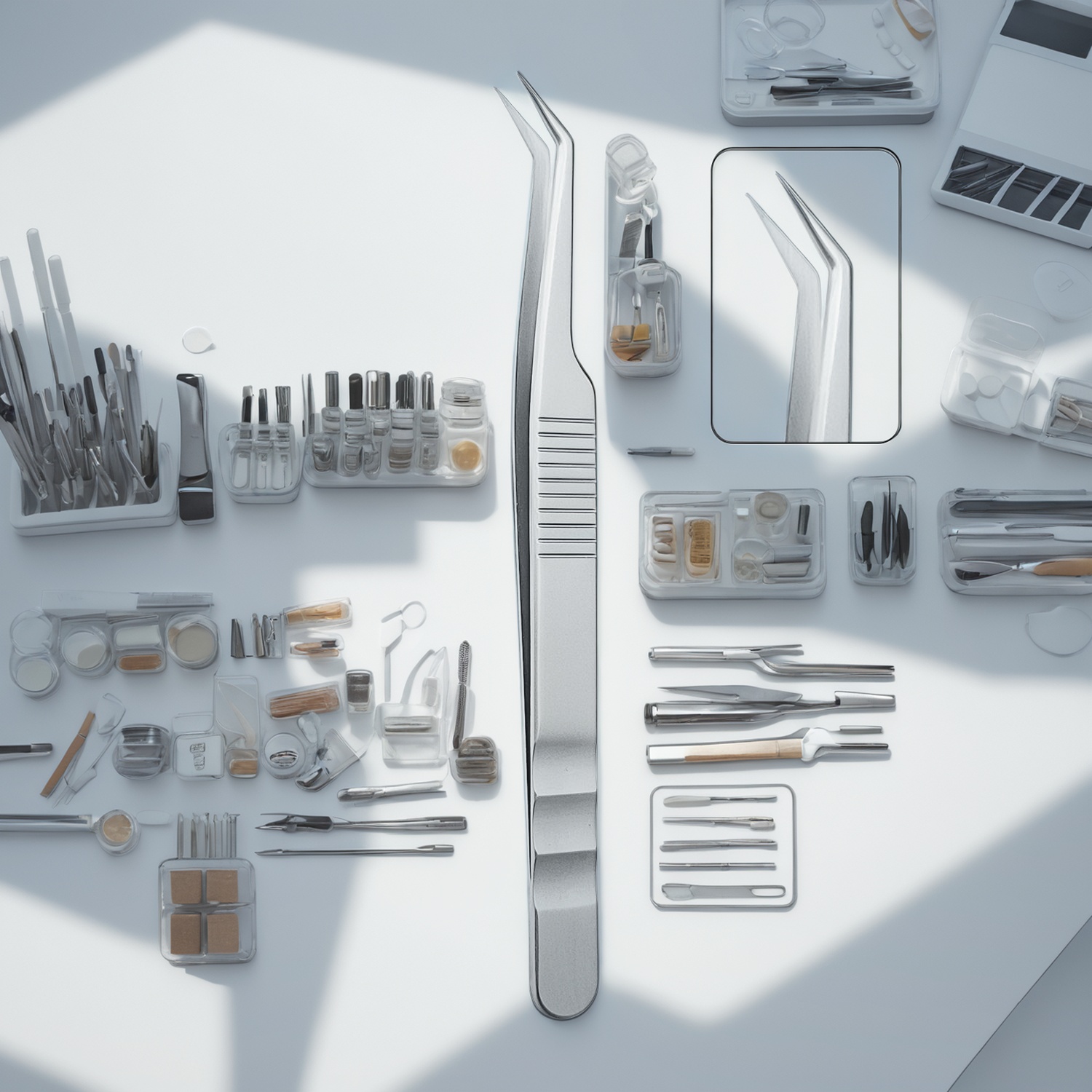
The curved tip on a false lash tweezer is especially useful because it follows the natural arc of the eyelid. This shape helps the user approach the lash line from a comfortable angle instead of forcing the wrist into an awkward position. For strip lashes, the curved tip can support the band during placement. For individual lashes, it can help isolate and position smaller sections with better visibility.
When comparing products from a tweezers factory or wholesaler, look beyond the basic product photo. A lash tweezer should be assessed as a working tool, not simply a metal item. Tip alignment, grip texture, tension and finish all influence the final application experience.
Key Features to Check Before Sourcing Lash Tweezers
Retailers and salon buyers often evaluate tweezers by appearance first, but the most important qualities are felt in the hand. A polished finish can support a clean retail presentation, while stainless steel gives the tool a durable, professional feel. However, the details below are what determine whether the tweezer is practical for lash work.
- Tip shape: An ultra-fine curved tip is suitable for reaching the lash line and placing lash bands with precision.
- Tip contact: The two sides should meet evenly so the tool can hold a lash without slipping or pinching only at one point.
- Grip control: A textured grip helps reduce slipping, especially during repeated applications or when the user is working under bright salon lighting.
- Hand comfort: The tweezer should have a weight and resistance level that feels stable without causing fatigue.
- Surface finish: A smooth polished finish should be free from rough edges that could catch on packaging, lashes or the user’s fingers.
- Application versatility: A well-designed false lash tweezer should support full strip placement and detail work with individual lashes.
For buyers comparing multiple beauty tool products, it is worth testing tweezers with actual lash bands rather than only squeezing the tool in the air. A lash tweezer may feel acceptable when empty but perform differently when holding a soft, curved lash strip.
How the Curved Tip Supports Cleaner Lash Placement
The curved tip is one of the most important design details in a false lash tweezer. During strip lash placement, the user often needs to position the center of the band first, then adjust the inner and outer corners. A curved tweezer can approach the band at an angle that keeps the user’s fingers away from the client’s eye area and gives a clearer view of the lash line.
For individual lashes, precision becomes even more important. The tool needs to pick up small lash pieces and place them close to the natural lashes without excessive pressure. An ultra-fine curved tip can help the user work in a controlled way, especially near the inner corner where space is limited.
Good tip design also affects release. If the tip is too blunt, it may block visibility. If it is too sharp or uneven, it may damage the lash band or feel risky near the eye area. The goal is a precise but usable tip that can grip, place and release smoothly.
Wholesale Buying Criteria for Salons, Retailers and Distributors
Wholesale tweezers should be judged by consistency as much as by the performance of a single sample. A salon may need several tools for different workstations, while a retailer may need products that look and feel consistent across a batch. Distributors also need items that can be presented clearly to different customer groups, from lash artists to beauty beginners.
Use this comparison table when reviewing a false lash tweezer sample or preparing a wholesale purchase:
| Evaluation Area | What to Look For | Why It Matters |
|---|---|---|
| Material feel | Durable stainless steel with a stable hand feel | Supports repeated use and a professional impression |
| Tip alignment | Even contact when the tweezer closes | Helps prevent slipping during lash placement |
| Tip angle | Curved shape suitable for the eyelid line | Improves visibility and placement control |
| Grip texture | Textured area that supports secure handling | Reduces hand slip during detailed work |
| Finish | Polished surface without rough edges | Improves comfort, presentation and packaging compatibility |
Before scaling a wholesale order, buyers should confirm what packaging style, labeling approach and inspection expectations fit the sales channel. A professional lash studio may prioritize tool feel and hygiene presentation, while a retail beauty kit may require stronger shelf appeal and clear usage instructions.
OEM and Private-Label Planning for Tweezers
For businesses developing their own beauty-tool range, tweezers OEM service can be valuable when the buyer wants brand presentation, packaging alignment or a coordinated product set. The best starting point is not simply a logo file. A practical OEM brief should describe how the tweezer will be sold and used.
Useful details to prepare include target customer, expected retail channel, packaging format, preferred color or finish direction, logo placement needs and any compliance or labeling requirements for the destination market. If the tweezer will be included in a lash kit, the buyer should also consider how it fits with lash trays, adhesive packaging or other tools in the set.
Olimor Beauty offers tweezers OEM services, making it a relevant partner for buyers who want to develop branded lash tools. To start a project discussion, buyers can send an inquiry with product goals, estimated use case and packaging expectations. Clear project information helps avoid vague sampling and makes it easier to compare options.
Quality Control Points That Matter in Daily Use
Quality control for false lash tweezers should focus on the way the tool performs in real application conditions. A tweezer can look attractive but still fail if the tips do not meet properly or if the grip is uncomfortable after repeated use. Businesses should build a simple inspection routine for samples and incoming products.
- Check closure: Open and close the tweezer several times to confirm smooth movement and consistent resistance.
- Inspect the tip: Look at the meeting point under good lighting to confirm even contact and a clean curved shape.
- Test with lashes: Pick up a lash strip and individual lash pieces to see whether the tool grips without crushing.
- Review the grip: Hold the tool for several minutes to judge comfort, slip resistance and hand fatigue.
- Examine the finish: Run a careful visual check for rough spots, uneven polish or edges that could affect handling.
These steps are simple, but they reveal the difference between a tweezer that looks acceptable and a tweezer that performs reliably in professional hands.
Care, Storage and Handling Tips for Lash Tweezers
Proper care helps preserve the working condition of a false lash tweezer. Users should avoid dropping the tool, because even a small impact can affect the fine tip alignment. After use, the tweezer should be cleaned according to the hygiene practices required by the business or local regulations, then dried before storage. Moisture left on metal tools can affect long-term appearance and usability.
Storage also matters. Fine tips should not be pressed against other metal tools in a crowded drawer. A protective sleeve, tool pouch or separated compartment can help prevent bending and surface scratches. For retail businesses, packaging should protect the tip during shipping and handling while still presenting the product clearly to customers.
Choosing Olimor Beauty as a Tweezers Supplier
Olimor Beauty’s False Lash Tweezer brings together the practical qualities buyers look for in a lash application tool: stainless steel construction, a polished finish, an ultra-fine curved tip and a textured grip for better control. These details make it suitable for beauty professionals, lash-focused retailers and wholesale buyers who need a dependable false lash tweezer option.
When sourcing, focus on real use: how the tool holds a lash, how it sits in the hand and how consistently it can be presented across a product line. Buyers exploring related tools can review Olimor’s product collections or contact Olimor to discuss sourcing requirements. A well-chosen lash tweezer may be small, but it has a direct impact on application speed, placement accuracy and customer confidence.