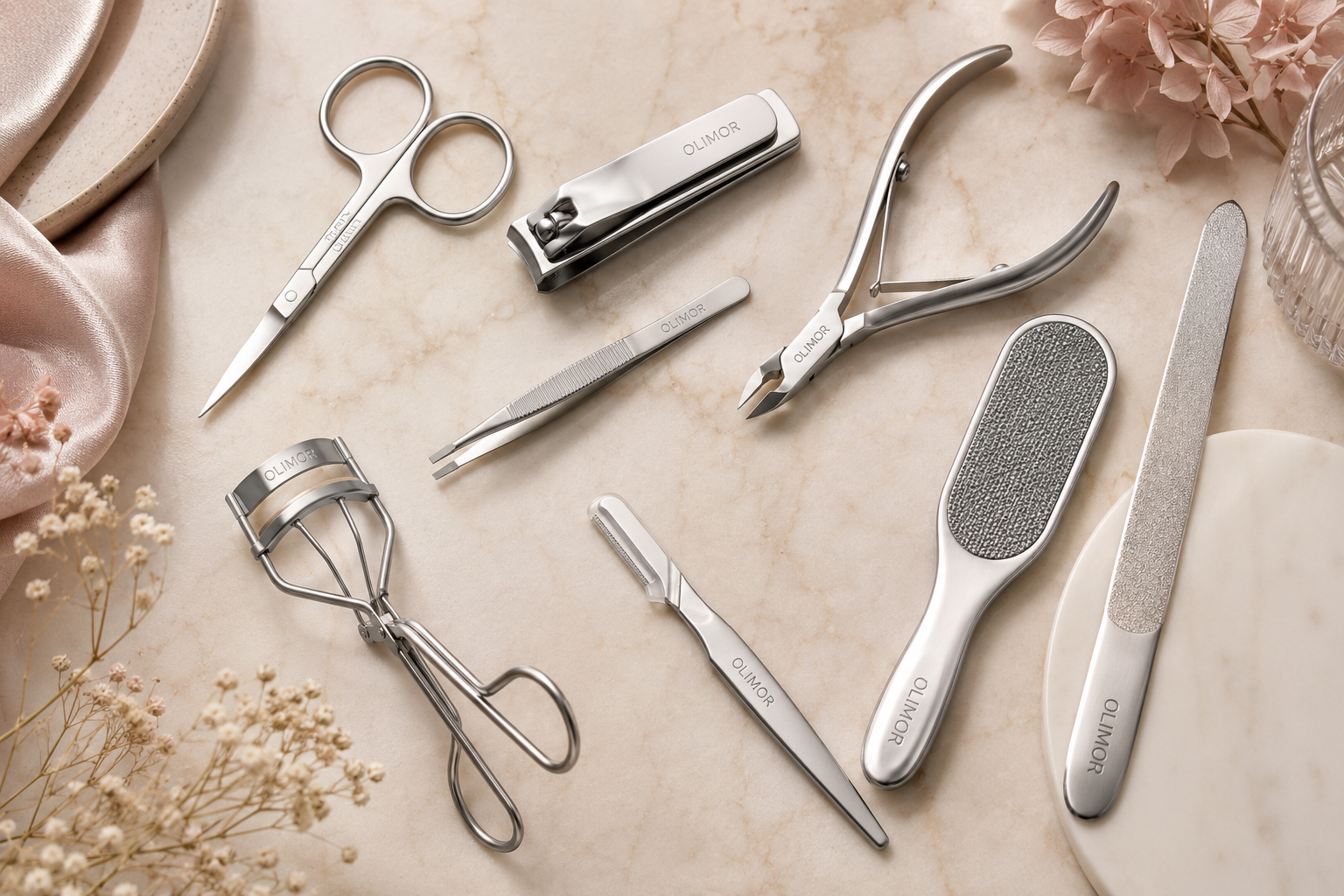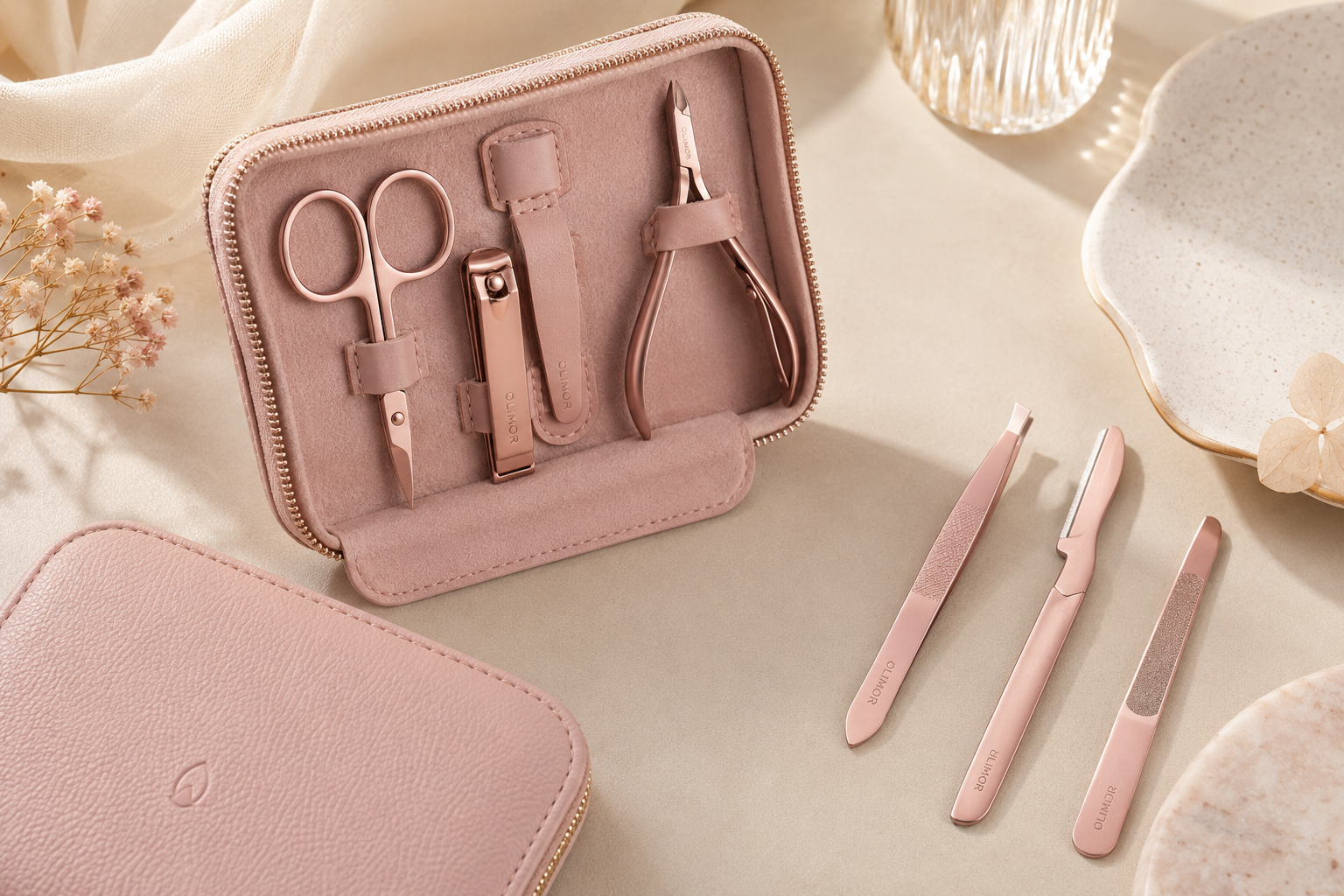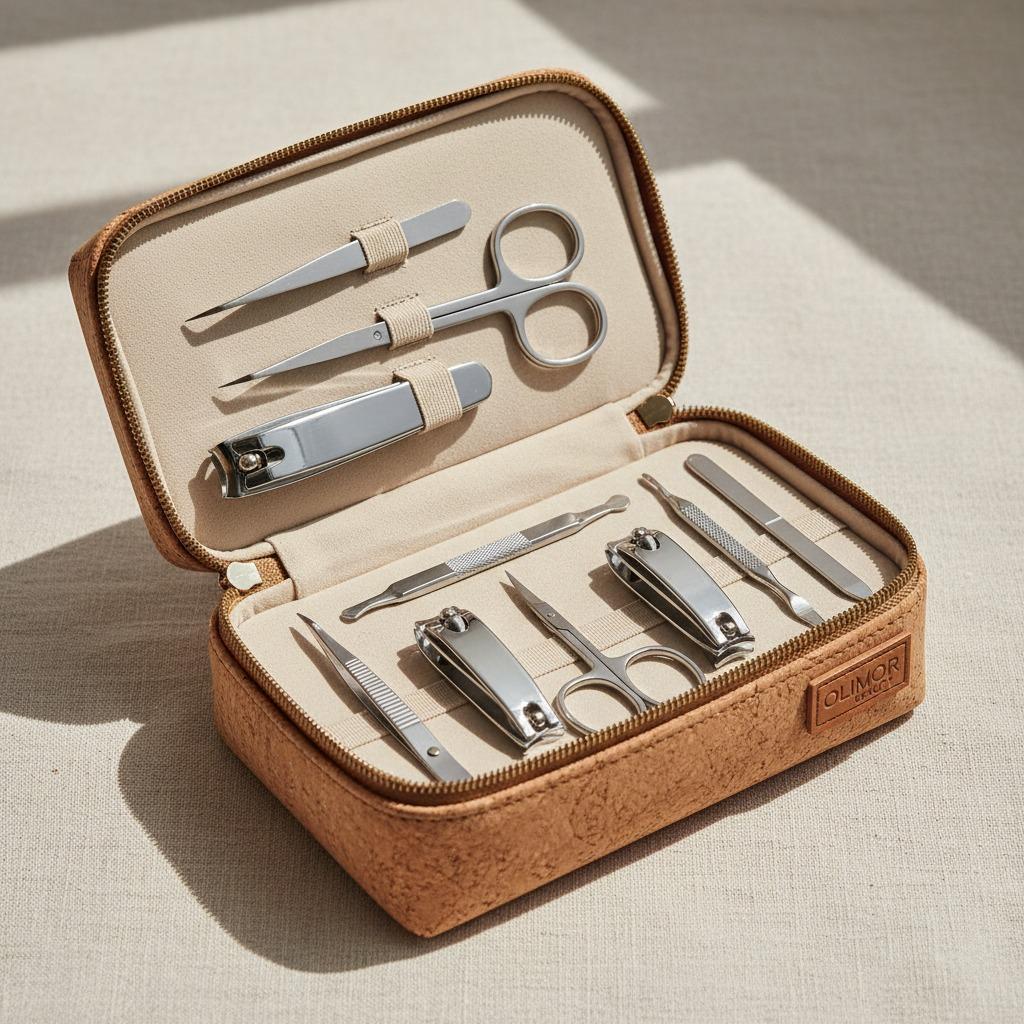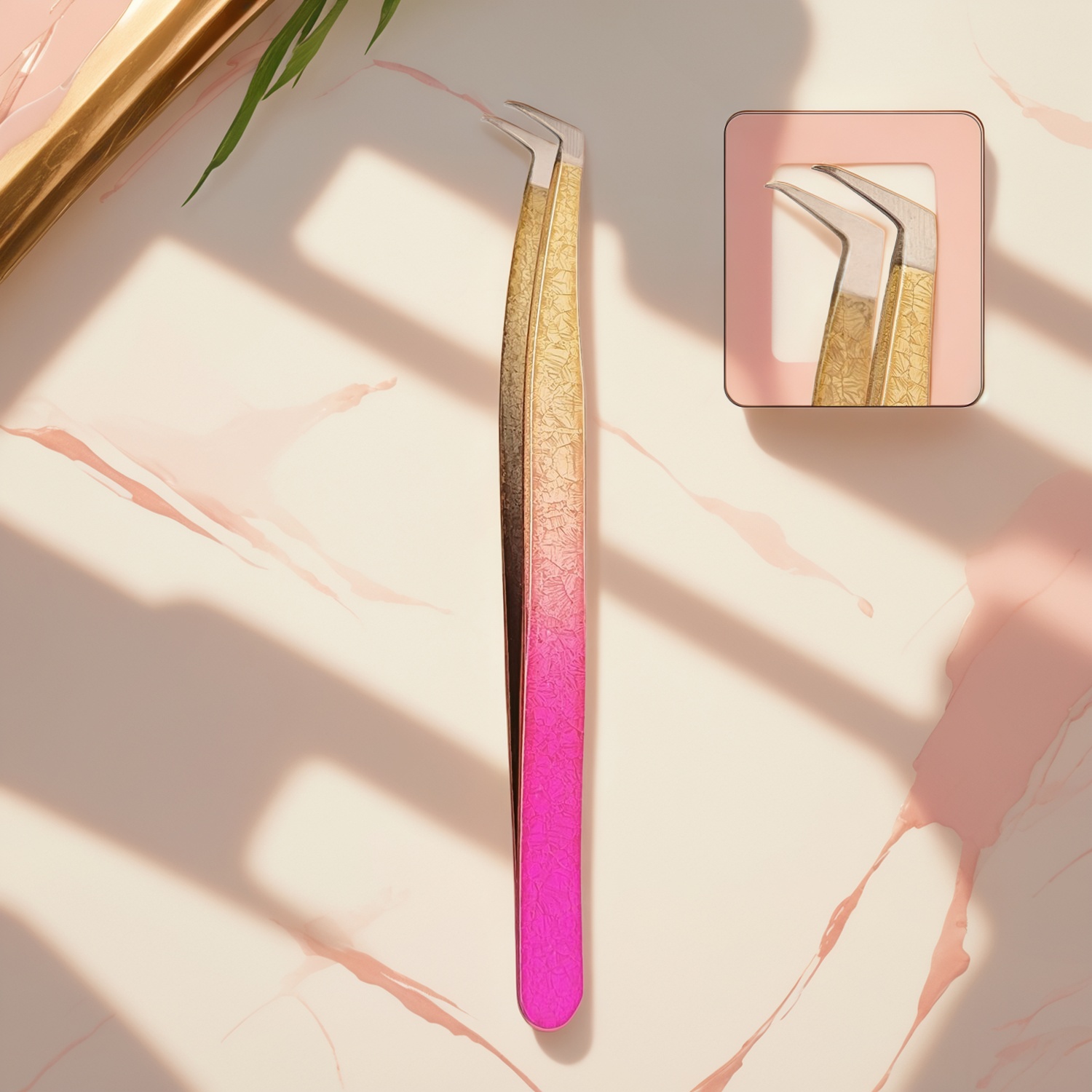
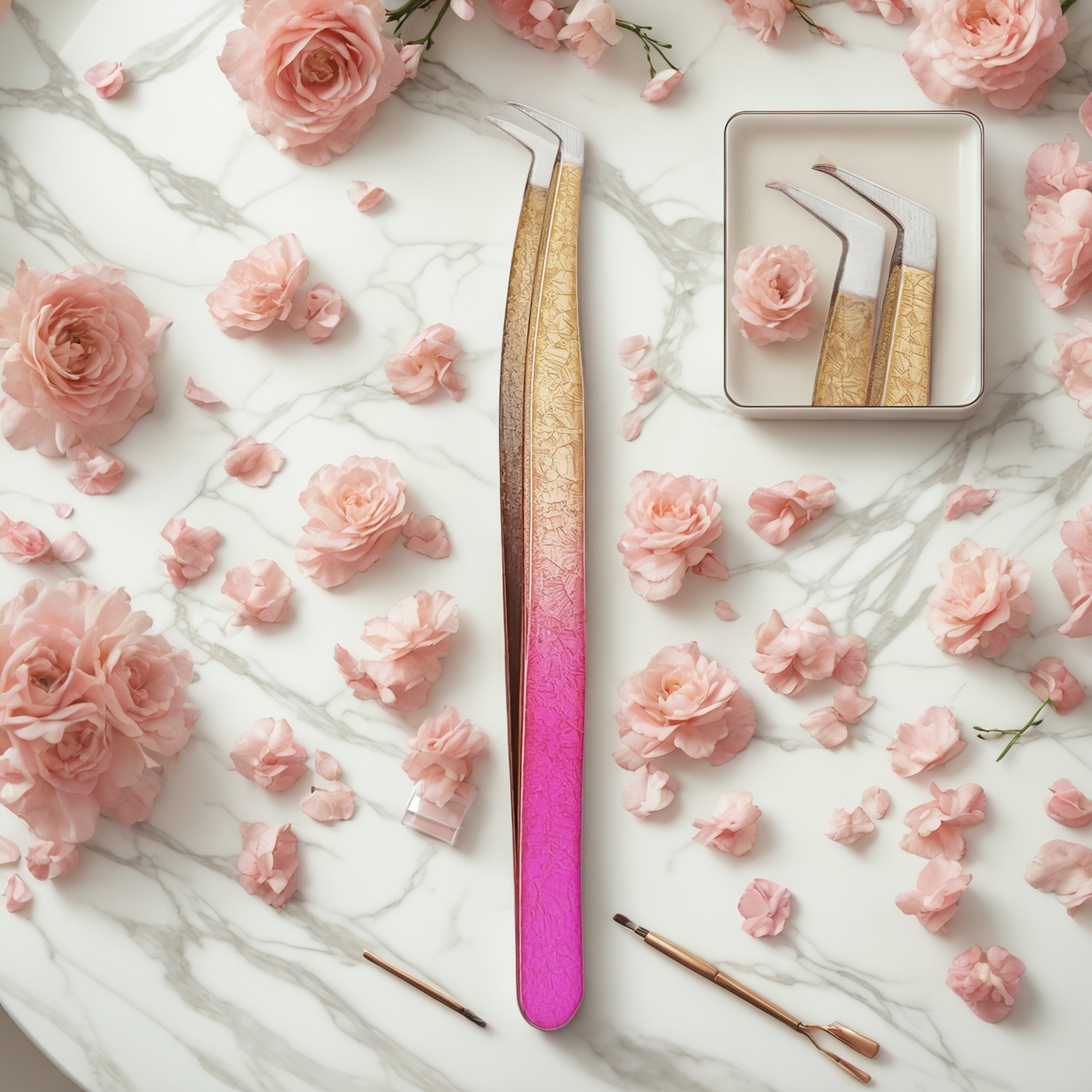
False lash tweezers matter because they help the user lift, place and release a lash strip or cluster without blocking the view of the lash line. For salons, makeup artists, retailers and private-label buyers, the best tool is the one that feels controlled, stays aligned and supports repeat use. Olimor Beauty Precision Curved-Tip Tweezers are made from premium stainless steel with finely honed curved tips and an ergonomic design, making them a practical option for lash placement, retail kits and B2B beauty-tool sourcing.
What a lash tweezer must do during application
A false lash tweezer is doing more than holding a strip of lashes. It has to lift the lash without bending the band, guide it into the correct angle and release it smoothly once the adhesive is ready. If any of those steps feels awkward, the user may spend extra time correcting the placement or starting over, which is frustrating in both salon and retail settings.
Fingertips can work for basic handling, but they often block the view of the eye area and make the inner and outer corners harder to control. A precision tweezer improves visibility, especially when the user needs to place the center of the lash first and then settle the ends into position. That is why this small tool can affect the speed, comfort and polish of the final result.
- Lift: The tool should pick up the lash cleanly without crushing the band.
- Place: The curve should help the user approach the lash line at a comfortable angle.
- Release: The tips should let go smoothly so the band does not shift.
Curved-tip vs straight-tip: which shape fits the job?
Many buyers compare curved-tip and straight-tip tools before choosing a lash accessory program. Straight tweezers can be useful for general handling, but a curved-tip design often gives better visibility during false lash placement. That improved sightline matters when the user is working close to the eye and needs to see exactly where the band meets the lash line.
Curved tips are especially helpful when the hand would otherwise sit directly in front of the application area. The shape can make it easier to work from above or slightly in front of the eye, which is useful for both lash technicians and experienced personal users. The right choice depends on the job, but for dedicated false lash application, a curved-tip tool is often the more practical option.
| Tool shape | Best use | Main strengths | Points to watch |
|---|---|---|---|
| Curved-tip tweezer | False lash placement, corner control, detailed eye-area work | Clearer visibility, easier approach angle, controlled release | Should still close evenly and feel balanced in hand |
| Straight-tip tweezer | General pickup, simple handling, some kit-based tasks | Simple feel, familiar shape, easy to store in sets | Can block the view during placement more easily |
For B2B buyers, the key question is not which shape looks best in packaging. It is which shape matches the final user’s workflow. If the product is going into a lash-focused retail kit, a curved-tip model usually supports a better first-use experience.
Construction details that affect grip and control
Not every curved tweezer performs the same way. The most important differences are often hidden in the construction: tip alignment, tension, surface finish and overall balance. Olimor Beauty’s Precision Curved-Tip Tweezers use premium stainless steel and finely honed curved tips, which are useful features for buyers who need a clean professional feel and dependable handling.
When reviewing samples or comparing supplier options, pay attention to how the tool closes and how it feels during repeated use. The squeeze should be controlled, not stiff. If the tension is too high, the hand may fatigue quickly. If it is too loose, the lash can slip before placement is complete.
- Tip alignment: Both sides should meet evenly so the user can grip a strip lash or cluster consistently.
- Curve geometry: The curve should support visibility near the lash line, especially at the inner and outer corners.
- Tension: The closing force should feel stable and predictable during repeated use.
- Finish: Smooth edges and a refined surface help the tool feel suitable for salon and retail programs.
- Balance: The handle should sit comfortably between the fingers so the tool does not feel awkward during delicate work.
Manufacturing quality matters because small defects are easy to feel in a precision tool. Uneven tips, rough edges or inconsistent closing pressure can reduce confidence even if the product looks good at first glance. For a lash range, that can affect the perceived quality of the entire kit.
How to inspect samples before you place an order
Sample review should be practical and hands-on. A lash tweezer may seem simple, but buyers should test it the same way the end user will. Olimor Beauty notes quality assurance from raw materials to final packaging, and that is exactly the kind of process B2B buyers should look for when comparing suppliers.
Start by checking whether the tips close evenly. Then pick up different lash formats, such as a full strip and a lighter segment, to see whether the grip remains steady. Look at the tool under good lighting so you can check the finish around the curved tip and handle. A reliable sample should feel consistent, not unpredictable.
- Open and close the tweezers several times to judge the tension.
- Test the grip with different lash styles to see whether the tips hold without slipping.
- Check whether the curve gives a clear view of the lash band during placement.
- Inspect the edges and surface finish for rough spots or uneven detail.
- Review the packaging to confirm the tips are protected from bending in transit.
If the product will be sold in a retail kit, packaging is part of the quality experience. A protective tray, pouch or insert can help preserve tip alignment during shipping and display. That matters because even a well-made tweezer can arrive damaged if it is not packed with care.
| Buyer check | What to look for | Why it matters |
|---|---|---|
| Grip test | Clean hold on lash strip and smaller segments | Shows whether the tweezer can handle real application tasks |
| Alignment test | Even closing at the tips | Supports clean pickup and controlled placement |
| Finish check | Smooth surface and tidy edges | Improves user comfort and presentation |
| Packaging check | Tip protection during storage and shipping | Helps preserve precision before the product reaches customers |
Which buyers need which version?
Different buyers have different priorities, even when they are looking at the same style of tweezer. A salon may care most about daily reliability and easy cleaning. A retail brand may care more about presentation and customer experience. A distributor or private-label buyer may need a balanced product that can fit several channels.
Use the table below to compare the main buying scenarios before you request samples or packaging quotes.
| Buyer type | Primary priority | What to ask the supplier | Why it matters |
|---|---|---|---|
| Lash artists and salons | Stable handling and easy cleaning | How the tips are finished and how the tool should be maintained | Professional users need repeatable control across many appointments |
| Retail beauty brands | Presentation and first-use confidence | Packaging options, branding choices and sample protection | The tool must look polished and work well out of the box |
| Private-label programs | Balanced function and brand identity | Customization options for finish, logo application and pack-out | The product should support the brand without weakening performance |
| Distributors and wholesalers | Consistency across batches | How quality is checked from raw material to final packaging | Large-channel buyers need reliable repeat supply |
For buyers comparing wider ranges, it can help to review related beauty tool options and organize them by user type. A lash tweezer may sit beside other eye and brow tools in a cohesive assortment, or be offered as a standalone professional accessory. If you are building a broader kit, the collection overview can help you plan a cleaner product story.
Maintenance, hygiene, and storage
Good maintenance keeps a lash tweezer working the way it should. Adhesive residue can build up on the tips and reduce grip accuracy, so users should remove residue carefully after application. The tool should then be dried fully before it is returned to a pouch, tray or kit. Storing it loosely with heavy tools can lead to bent tips or a change in tension.
For salon use, cleaning routines should follow the business’s hygiene procedures and the requirements of the local market. Where relevant, buyers should also confirm current material documentation against REACH requirements for EU-bound products and verify supplier declarations rather than relying on assumptions. If a brand sells into more than one market, the safest approach is to keep cleaning and handling instructions aligned with current local guidance and supplier documents.
- Remove adhesive residue after use.
- Dry the tweezer completely before storage.
- Keep the tips protected from knocks and pressure.
- Inspect the alignment and closing action regularly.
- Include simple care instructions when the product is sold in a kit.
These small habits help the tool stay consistent for both professional and retail users. They also reduce the chance that a good first sample performs poorly later because it was stored or handled badly.
Customization and supplier evaluation
Customization can be useful, but function should stay first. A custom made tweezer can support a salon brand, a private-label lash kit or a distributor program, yet the branding should never interfere with the core job of clean lash handling. If a product looks premium but grips poorly, it will not support repeat orders.
When speaking with a supplier, ask about the points that affect both performance and presentation. These usually include the finish, the packaging style, the print or branding method, the sample review process and how consistency is checked across production and final pack-out. It is also helpful to confirm whether the supplier can support the same shape and feel across future orders, since consistency matters as much as appearance.
- How is the tip alignment checked before shipment?
- What customization options are available for branding and packaging?
- Can samples be reviewed before committing to a larger order?
- What documentation is available for material or compliance questions?
- How are final packaging and tip protection handled for transport?
For direct sourcing discussions, you can send an inquiry with the intended use case, packaging goals and target customer. If you prefer a more general conversation first, use the contact page to describe your project and ask which lash-tweezer format best fits your range.
FAQ
Can I request samples before placing a larger order?
Yes, and sample review is one of the best ways to judge a lash tweezer. Use the sample to check tip alignment, grip tension, finish and packaging protection before you decide whether the product suits your program.
How should I think about MOQ for custom lash tweezers?
MOQ depends on the customization scope, packaging choice and production setup. Ask the supplier for the current options tied to your specific request rather than assuming one standard answer.
What customization options are usually worth asking for?
Focus first on branding, surface finish and packaging. Those details affect presentation without changing the core function of the tool. If you are building a retail kit, packaging protection is especially important.
How do I judge quality in a sample?
Test the tool the way the end user will. Open and close it repeatedly, pick up different lash formats, look for smooth edges and check whether the curved tips help you see the lash line clearly.
What affects lead time?
Lead time can change based on sample approval, customization needs, packaging complexity, order volume and the supplier’s production schedule. Confirm timing directly during sourcing so your launch plan stays realistic.
For B2B buyers, the best tweezers for false lash application are the ones that combine accurate curved tips, dependable stainless-steel construction and a comfortable feel in use. Olimor Beauty Precision Curved-Tip Tweezers are built for that kind of practical performance, making them suitable for salons, beauty retailers and custom sourcing programs that need a focused lash tool. If you are comparing options now, start with a sample, verify the details that affect real use and build the final assortment around the user’s workflow rather than around appearance alone.