










False lash application is a precision task. The tweezer must lift a strip lash from its tray, hold the band without crushing the fibers, place the lash close to the natural lash line and help adjust the inner and outer corners without blocking the user’s view. For beauty enthusiasts, makeup artists, salons, retailers and distributors, the right tweezer is a practical tool rather than a decorative accessory.
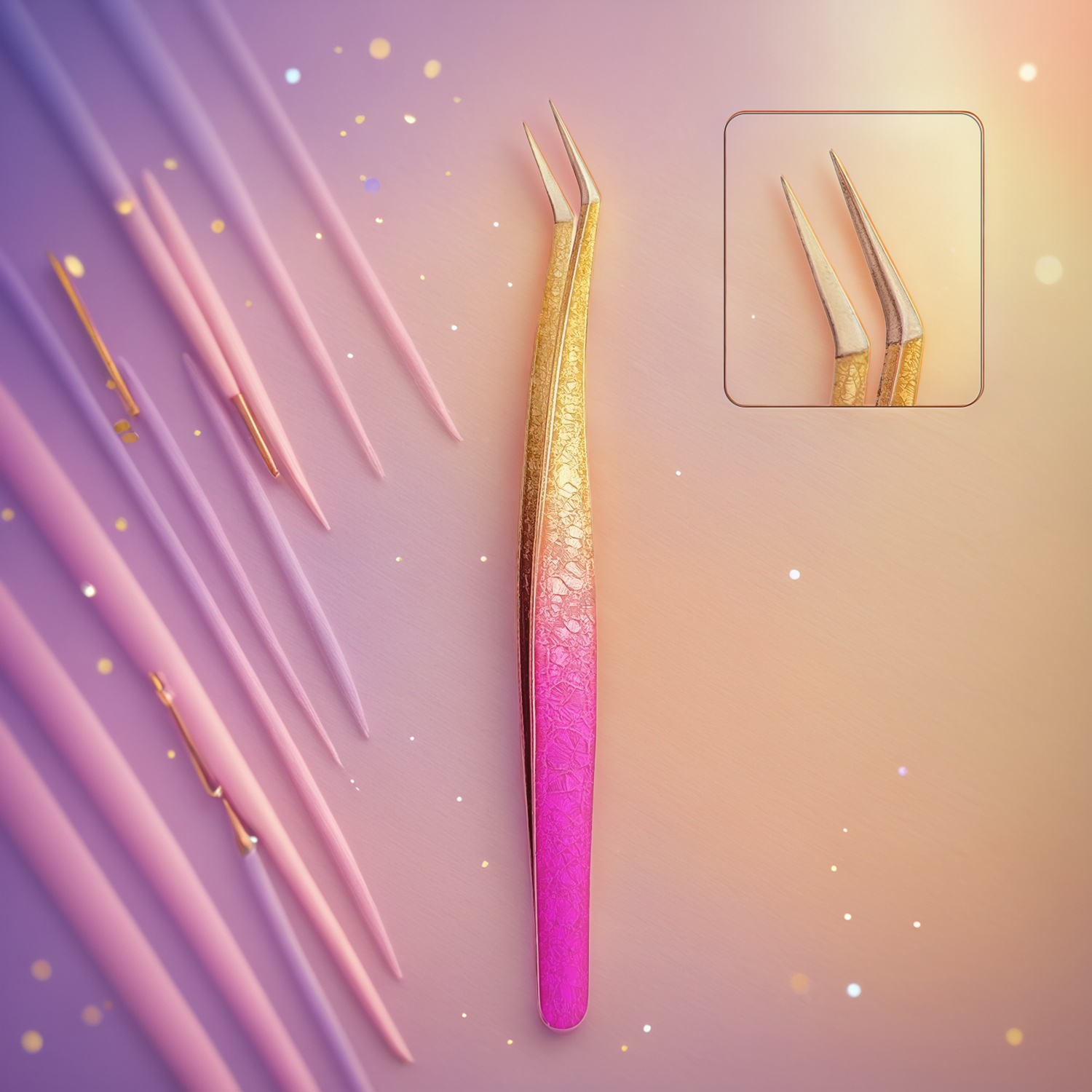
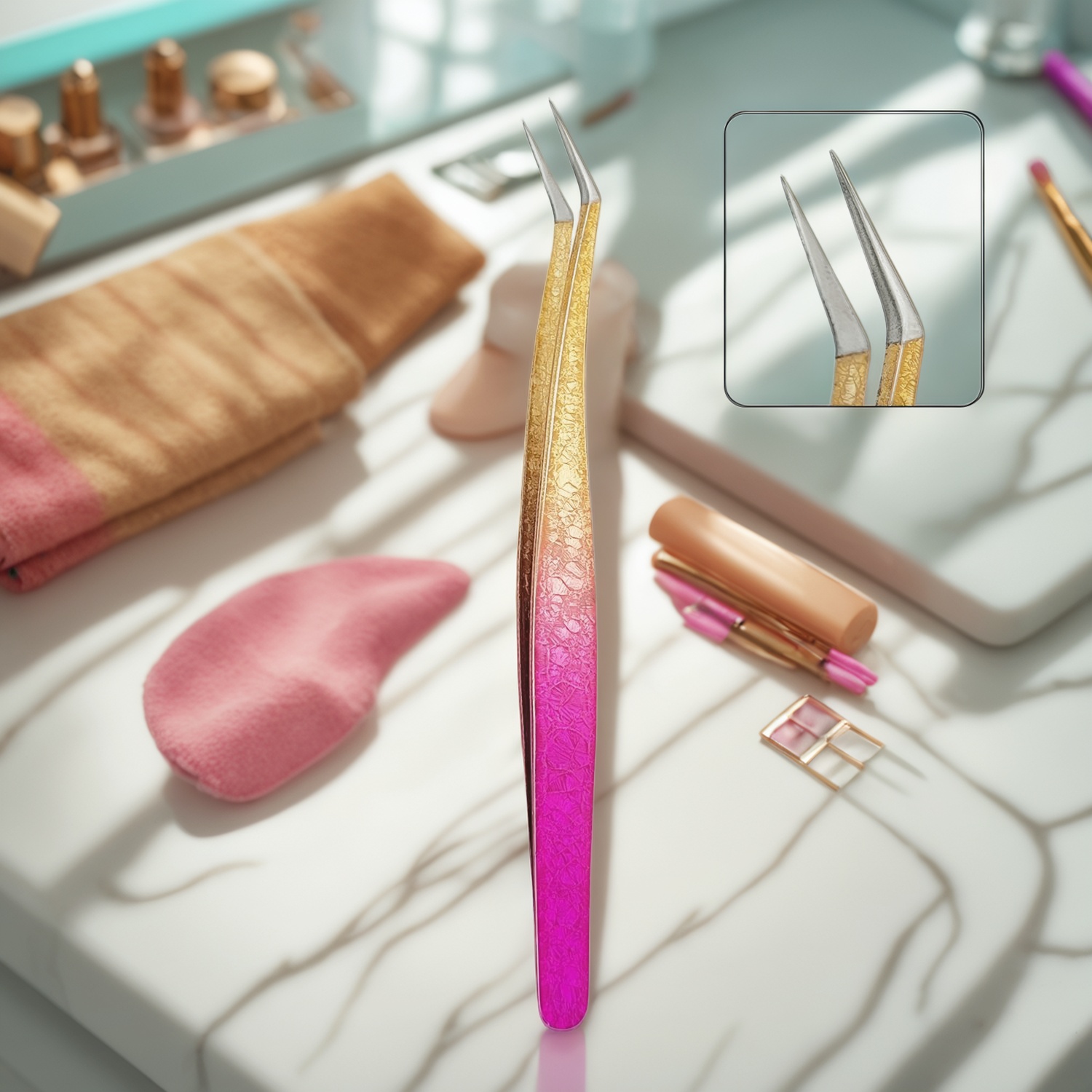
This guide explains how to evaluate tweezers for false lash application from both a user and B2B buying perspective. It covers tip alignment, grip, hand comfort, material, finish, packaging, maintenance and supplier questions. The LuxiGrip Dual-Tone Precision Tweezers from Olimor Beauty are used as a product example because they combine fine aligned tips, ergonomic contours, surgical-grade stainless steel and a gold-to-magenta gradient finish for lash work and retail presentation.
Why False Lash Tweezers Need a Dedicated Design
False lashes are light, flexible and easy to deform. A strip lash may look simple in its tray, but application depends on small, controlled movements. The user needs to hold the lash band securely while keeping the eyelid visible. Fingers can work for some users, but they often block the view, transfer adhesive, bend the band or make corner placement more difficult. General brow tweezers may also be too sharp, too bulky or shaped for hair removal rather than lash placement.
A dedicated false lash tweezer should help the user grip the band, not the delicate lash fibers. It should also allow the user to approach the eyelid at a comfortable angle. When the tips are too thick, the tool may hide the lash line. When the tips do not meet evenly, the strip can slide at the moment it needs to be placed. When the body tension is too stiff, repeated use can tire the hand; when it is too loose, the user may lose control.
For professional artists, these details affect speed and consistency. For retailers, they influence customer satisfaction and repeat purchase potential. For distributors and private-label buyers, they affect whether the tool can be positioned as a credible lash accessory rather than a generic tweezer with a beauty finish.
Core Features to Check Before Buying or Sourcing
The best way to judge lash tweezers is to consider the real application process: bright lighting, adhesive on the band, close work near the eye and repeated small adjustments. A visually attractive finish can support retail appeal, but it should never replace functional inspection.
- Tip alignment: The two tips should meet cleanly and consistently. Misaligned tips can grip only one side of a lash band or allow the strip to slip.
- Tip shape: Fine tips support placement at the inner and outer corners, where accuracy is most important and mistakes are most visible.
- Grip security: The tweezer should hold a lash band firmly enough for placement while avoiding crushing, twisting or marking the lashes.
- Hand comfort: Ergonomic contours can reduce finger strain and help the user maintain steadier control during repeated use.
- Material suitability: Stainless steel is widely valued in beauty tools because it is durable and suitable for routine cleaning when handled properly.
- Finish consistency: Decorative finishes should look even and professional, especially for retail displays, salon kits and giftable beauty sets.
- Packaging protection: Fine tips should be protected during transport, shelf display and storage so the tool reaches the user in usable condition.
The LuxiGrip Dual-Tone Precision Tweezers are described with meticulously aligned fine tips, surgical-grade stainless steel, ergonomic contours and a dual-tone gold-to-magenta finish. Those details are relevant because lash placement depends on tactile feedback and visibility, while B2B buyers also need a product that looks polished in a beauty-tool assortment.
How the LuxiGrip Dual-Tone Precision Tweezers Support Lash Application
The LuxiGrip Dual-Tone Precision Tweezers are designed for controlled false lash placement. The fine tips allow the user to pick up a strip lash near the band rather than pulling from the lash ends. This helps preserve the shape of the lash before adhesive is applied and reduces the risk of distorting the fibers during handling.
During application, the user can hold the center of the band, place it close to the natural lash base and then use the tips to adjust each corner. This is where alignment matters most. A tweezer that meets evenly can help the user make small corrections without repeatedly releasing and re-gripping the lash.
The ergonomic contour supports a steady hand position. False lash application often requires the wrist and fingers to hover while the user checks symmetry. A comfortable tool helps reduce unnecessary squeezing, which is useful for personal makeup routines and for professionals who apply lashes during bridal, event, editorial or salon services.
The gold-to-magenta gradient finish gives the tool a strong visual identity. For B2B buyers reviewing Olimor beauty tool products, this matters because lash tweezers are often sold online, displayed in retail fixtures or included in beauty kits. A distinctive finish can help the product stand out, provided the functional details are still correct.
False Lash Tweezer Comparison: What Matters by Use Case
Different buyers need the same tool to perform in different environments. A salon may care most about comfort, repeatability and hygiene routines. A retailer may focus on presentation, product education and customer-friendly packaging. A distributor may prioritize consistency, tip protection and clear specifications for repeat orders. The following table can be used as a practical buying checklist.
| Use case | Most important tweezer features | Questions to ask before purchase |
|---|---|---|
| Personal false lash application | Fine aligned tips, easy grip, comfortable tension, simple cleaning | Can the user place the band close to the lash line without blocking visibility? |
| Professional makeup artist or salon | Consistent grip, ergonomic contours, reliable tip alignment, easy maintenance | Will the tool remain comfortable during repeated appointments and touch-ups? |
| Retail beauty assortment | Clear product purpose, attractive finish, protective packaging, easy explanation | Will shoppers understand that the tweezer is intended for false lash placement? |
| Distributor or wholesale buyer | Repeatable quality, protected tips, consistent finish, suitable presentation | Can the supplier explain inspection, packing and product consistency expectations? |
| Private-label or custom beauty set | Functional base design, finish direction, logo or packaging discussion, channel fit | Does customization support the target user rather than only changing appearance? |
This comparison helps buyers avoid a common sourcing mistake: choosing a lash tweezer only because it looks fashionable. Visual appeal matters in beauty, but it should be supported by function, inspection and suitable packaging.
Step-by-Step Use: Better Control During Strip Lash Application
A good tweezer works best when the user follows a controlled method. The steps below are useful for consumer education, salon training and product-page content for lash accessories.
- Remove the lash by the band: Lift the strip from the tray gently. Avoid pulling from the lash fibers, which can change the lash shape.
- Check the fit before adhesive: Hold the strip near the eyelid to confirm length and shape. If trimming is needed, trim according to the lash style and user preference.
- Apply adhesive evenly: Use a thin, even line on the band and follow the adhesive manufacturer’s instructions for tack time and safe use.
- Grip the center of the band: Hold the lash with the tweezer near the center so it can be positioned close to the natural lash line.
- Place the center first: Set the center of the band, then adjust the inner and outer corners with the tweezer tips.
- Press gently into place: Use light pressure to help the band settle. Avoid squeezing the lash fibers or dragging the band across eye makeup.
- Check both corners: The inner and outer corners are the areas most likely to lift, so confirm they are seated neatly before the adhesive fully sets.
These steps show why the tool’s shape is so important. The user needs visibility, control and a reliable grip at the same time. If the tips are misaligned or too bulky, every step becomes harder.
Maintenance, Hygiene and Safe Handling
False lash tweezers are used close to the eye, so cleaning and storage habits matter. After use, adhesive residue should be removed from the tips before it hardens. A soft cloth or appropriate cleaning wipe can help keep the gripping area clear. The tool should be dried after cleaning and stored so the tips are protected from impact.
Users should avoid dropping precision tweezers onto hard surfaces. Fine tips can lose alignment if bent or damaged, and a misaligned tool may no longer grip lash bands reliably. Lash tweezers should also not be used for heavy-force tasks such as opening packages, prying objects apart or handling hard materials. Those uses can damage the tip geometry and reduce tool life.
Professional users should follow the hygiene practices required by their workplace and local rules for tools used near the eye area. Beauty businesses selling into consumer channels should also review applicable product safety obligations. Depending on market and product presentation, public bodies such as the U.S. Consumer Product Safety Commission and requirements such as the EU General Product Safety Regulation may be relevant. Always verify current versions, local obligations and supplier documents rather than relying on general guidance.
B2B Sourcing Criteria for Retailers, Salons and Distributors
Commercial buyers need to evaluate more than one sample demonstration. A false lash tweezer must fit the channel, customer expectation and handling process. When comparing products across beauty tool collections, buyers should look at the full path from sourcing to end-user experience.
Product fit
Clarify whether the tweezer is intended mainly for strip lashes, individual lashes, brow grooming, general beauty kits or a multi-use accessory set. A product that tries to serve every use may not be ideal for precise false lash placement. For lash-focused assortments, prioritize fine aligned tips and comfortable handling.
Inspection points
Ask how the supplier checks tip alignment, finish appearance and packaging condition. No buyer should rely only on photos when the tool’s value depends on how the tips meet. Samples are useful because they allow the buying team to test grip, tension, comfort and visibility under realistic lighting.
Packaging and retail presentation
Packaging should protect the tips and clearly communicate the product purpose. For online retail, images and descriptions should show the tip shape and explain use. For salon kits, packaging may need to be practical and protective rather than overly decorative. For displays, finish consistency and color direction can affect perceived value.
Cost factors
Cost is influenced by material, finishing process, packaging style, customization requirements, order quantity, inspection needs and shipping method. A lower unit cost may not be beneficial if tips arrive damaged, packaging does not protect the tool or customers cannot identify the product’s purpose. Evaluate total suitability, not only quoted price.
Supplier communication
A strong supplier discussion should cover intended users, sales channel, finish direction, packaging needs, sampling, quality expectations and documentation. If your team is comparing standard and custom made tweezers, prepare a concise brief before requesting options through Olimor inquiry support.
When Custom Made Tweezers Make Sense
Custom made tweezers can be useful for private-label beauty lines, salon starter kits, promotional lash sets and retailers building a coordinated tool range. Customization may include discussion of finish direction, branding approach or packaging style, but it should begin with function. A custom color or logo will not solve poor tip alignment, uncomfortable tension or weak packaging protection.
Before discussing customization, define the target user. A professional lash artist may want a tool that feels stable through repeated applications. A beginner-focused retail kit may need clear instructions and packaging that explains the tool’s role. A distributor may need a design that can be ordered consistently across multiple assortments. These priorities help decide whether a standard tool such as the LuxiGrip Dual-Tone Precision Tweezers is suitable or whether a custom direction is worth exploring.
Buyers should also prepare realistic approval steps. Review samples, check tip alignment, test the grip on actual lash bands, inspect finish consistency and confirm packaging protection. For businesses developing a beauty-tool range, contact Olimor Beauty to discuss suitable product directions without assuming unsupported specifications or certifications.
Practical Buyer Checklist
Use this checklist when evaluating false lash tweezers for wholesale, retail, salon or private-label use.
- Confirm the tweezer is intended for false lash placement, not only general grooming.
- Inspect whether the tips meet evenly and grip a thin lash band without slipping.
- Check whether the tips are fine enough for inner and outer corner adjustment.
- Test hand comfort during repeated opening and closing motions.
- Review whether stainless steel construction and cleaning practices suit the intended use.
- Inspect decorative finish consistency across samples.
- Confirm that packaging protects fine tips during shipping and storage.
- Ask what product information, images or instructions will help end users understand proper use.
- Review customization only after the base tool performs well.
- Verify current regulatory obligations, market requirements and supplier documents for your sales region.
FAQ for B2B Buyers
Can buyers request samples before placing a larger order?
Sample discussions are recommended for precision beauty tools because tip alignment, grip feel and hand comfort are difficult to judge from images alone. Contact Olimor with the intended channel and product requirements to discuss available sample options.
Is there a fixed MOQ for false lash tweezers?
MOQ can depend on product type, packaging, customization and order plan. Buyers should request current MOQ information directly rather than relying on assumptions, especially for private-label or special packaging projects.
Can the finish, logo or packaging be customized?
Customization may be discussed when there is a clear business requirement, such as a private-label line, coordinated beauty set or retail packaging direction. Functional details such as tip alignment and grip should be approved before finalizing decorative elements.
How should buyers evaluate quality before approval?
Check tip alignment, grip security, comfort, finish consistency and packaging protection. Test the tweezer with actual strip lashes and review whether the tool supports placement without crushing fibers or blocking visibility.
How is lead time confirmed?
Lead time depends on the selected product, packaging, customization needs and order details. Buyers should confirm current timing with Olimor during quotation and sample approval discussions.
A Precise Tool for a Precise Beauty Task
Tweezers for false lash application should make delicate work easier. The right tool provides a clean grip on the lash band, better visibility near the eyelid and enough comfort for careful adjustment. The LuxiGrip Dual-Tone Precision Tweezers bring together fine aligned tips, surgical-grade stainless steel, ergonomic contours and a gold-to-magenta gradient finish, making them a practical option for beauty users and B2B buyers who need both function and presentation.
For any lash tweezer purchase, keep the selection process grounded: inspect the tips, test the grip, evaluate comfort, review maintenance needs and confirm packaging suitability. When those details are handled well, a false lash tweezer becomes a dependable everyday beauty tool rather than just another accessory.