










Mini tweezers look simple, but small differences in tip alignment, spring tension, surface finish and packaging can decide whether a customer keeps using them or replaces them after a few attempts. For beauty retailers, private-label buyers, salon distributors and grooming-kit brands, sourcing from a tweezers factory direct partner can make product evaluation more practical because decisions are closer to manufacturing: materials, tip finishing, color treatment, inspection and packing can be discussed as part of one process.
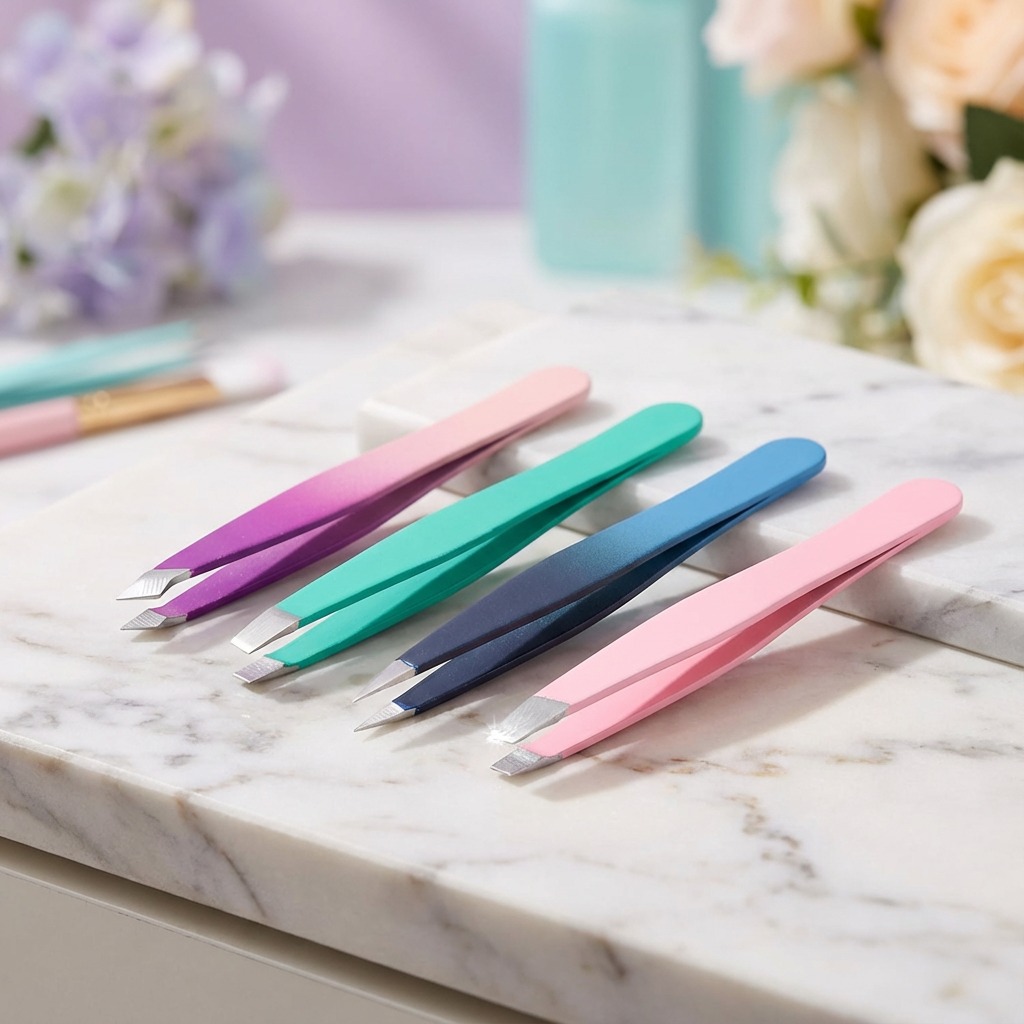
Olimor Beauty offers factory direct beauty tools including mini tweezers designed for brow shaping, removing fine strays, handling thicker hairs and addressing ingrown hairs with appropriate care. The range described here includes stainless steel tools with ergonomic handling, pointed and slanted tips, and a four-color gradient palette featuring purple, green, navy blue and pastel pink. This guide explains how to assess those features in a buyer-focused way, so your assortment is built around usability rather than only appearance.
Why Factory Direct Sourcing Matters for Tweezers
Tweezers are precision tools. A pair can have an attractive color and still perform poorly if the tips do not meet evenly. Factory direct sourcing helps buyers review the parts of the product that affect daily use: the way the arms flex, the finishing at the gripping edge, the consistency of the tip shape and the condition of the surface after coloring or polishing. Instead of treating tweezers as generic accessories, a direct sourcing approach makes them easier to compare across production batches and intended retail channels.
For importers and wholesalers, factory direct communication can also reduce ambiguity. You can define whether the product is intended for a travel kit, brow set, impulse retail display, salon resale, gift set or online beauty bundle. Each use case places different pressure on the product. A travel tweezer needs compactness and safe packing. A brow-focused tweezer needs clean hair capture. A fashion-led mini tweezer needs finish consistency because color is part of the purchase decision. Explore more categories through Olimor beauty tool products when building a coordinated assortment.
Mini Tweezers: Best Uses and Buyer Positioning
Mini tweezers are popular because they are compact, easy to add to grooming kits and suitable for daily carry. Their smaller size can work well for consumers who want a practical tool in a handbag, travel pouch, desk drawer or brow maintenance set. They are also useful for retailers that need a low-space beauty tool with strong visual appeal.
However, compact does not mean casual. A mini tweezer still needs controlled pressure and accurate tips. If the arms are too soft, users may struggle with thicker hairs. If the arms are too stiff, the tool may feel tiring or imprecise. If the tips are not finished cleanly, fine hairs can slip. When assessing mini tweezers, buyers should look beyond size and ask how the tool performs in the most common grooming tasks: isolating a single hair, gripping without cutting, and releasing smoothly after removal.
The Olimor Beauty mini tweezer direction combines useful grooming function with a fashion-forward gradient finish. The purple, green, navy blue and pastel pink palette can suit beauty sets, seasonal retail displays or color-coded product lines. The key is to match color with performance expectations, not to let the finish become the only selling point.
Choosing Between Slanted and Pointed Tips
Tip shape is one of the most important decisions in a tweezer assortment. A slanted tip is often chosen for brow shaping because it offers a wider gripping edge while still allowing the user to approach hair at an angle. A pointed tip is more suitable for very precise tasks where the user needs to isolate a small area, such as targeting a fine stray or working carefully around an ingrown hair. Because pointed tips require more care in use and packing, they should be positioned clearly and protected properly.
| Tip style | Typical use | Buyer considerations |
|---|---|---|
| Slanted tip | Brow shaping, general hair removal, daily grooming | Check edge alignment, grip consistency and comfort during repeated use. |
| Pointed tip | Fine strays, detailed work, careful handling around ingrowns | Review point protection, packaging safety and clear user guidance. |
| Mini format | Travel kits, retail add-ons, compact beauty sets | Balance portability with enough arm length for controlled pressure. |
A strong product line may include both slanted and pointed options because they serve different grooming habits. For online retail, make the distinction clear in product copy and images. For physical retail, consider packaging icons or short usage notes that prevent customers from choosing a pointed tweezer when they actually want an everyday brow tool.
Stainless Steel, Grip and Ergonomics
The original product direction highlights stainless steel tools and high-grip stainless steel tips. Stainless steel is widely used for beauty tools because it supports durability, clean finishing and repeated handling. For buyers, the practical question is not simply whether the tool is stainless steel, but whether the working edge is finished in a way that grips hair reliably without roughness.
Ergonomics also matter. A tweezer should sit naturally between the fingers, allow controlled pressure and return smoothly after each squeeze. Mini tweezers need special attention because the shorter body gives the user less leverage than a full-size tool. If the arms are shaped well, the compact size remains convenient. If not, the user may over-squeeze and lose precision.
- Tip contact: The two tips should meet evenly, without visible gaps at the gripping edge.
- Spring feel: The arms should flex smoothly and return without sticking.
- Surface comfort: Edges should not feel sharp against the fingers during normal use.
- Grip performance: Test on fine and thicker hairs to check whether the tweezer holds without slipping.
- Finish consistency: Gradient colors should appear clean and suitable for the intended retail presentation.
- Packing protection: Pointed or finely finished tips should be protected from damage in transit and storage.
Color and Finish: How to Use the Gradient Palette Well
Color can help a tweezer stand out, especially in mini formats where the tool may be sold as part of a set or displayed near other accessories. The four-color gradient palette of purple, green, navy blue and pastel pink gives buyers several merchandising possibilities. A soft pastel direction can suit beauty gift sets, while deeper navy or green tones may fit a more refined grooming-kit look.
When using colored tweezers in a retail program, consistency is important. A gradient effect should look intentional from piece to piece. Buyers should review whether the finish complements packaging, whether color names are easy for customers to understand, and whether product photography accurately represents the real item. For marketplace listings, avoid over-editing images; color disappointment can lead to returns even when the tool performs well.
Color selection should also consider audience. A salon resale counter may prefer a clean, professional presentation. A youth-oriented beauty retailer may favor brighter or softer color stories. A travel kit brand may use color as a way to make small tools easier to find inside a pouch. Visit Olimor product collections for assortment planning ideas across related beauty tools.
Quality Checks Before Wholesale or Import Orders
Before placing a wholesale or import order, buyers should create a simple evaluation routine. This does not need to be complicated, but it should be consistent. Compare samples from the same angle, under the same lighting and with the same use tests. If several team members evaluate samples, give them the same checklist so feedback is not based only on personal preference.
- Inspect the tips visually. Look for alignment, clean edges and suitable point protection where relevant.
- Test hair capture. Try fine hair and thicker hair to judge whether the tweezer grips without sliding.
- Check repeated squeezing. Use the tool several times to assess hand comfort and spring response.
- Review the finish. Confirm that the gradient color is even enough for your retail standard.
- Evaluate packaging fit. Make sure the product is secure, presentable and appropriate for the tip style.
- Confirm assortment logic. Decide whether slanted, pointed or both tip types best match your customer base.
This checklist is especially useful for buyers comparing factory direct tweezers with open-market alternatives. A lower upfront unit cost may not create value if alignment is inconsistent or the finish causes customer complaints. The best sourcing decision balances cost, performance, presentation and repeatability.
Building a Retail-Ready Tweezer Assortment
A practical tweezer assortment usually includes a clear everyday option and a more precise option. Slanted mini tweezers can cover brow maintenance and general grooming, while pointed mini tweezers can be positioned for detail work. Color variants can then support merchandising rather than confuse the selection. For example, one retailer may group all colors under one mini tweezer listing, while another may use color to separate gift sets or seasonal displays.
Product copy should be honest and specific. Instead of making broad claims, describe the tip type, compact format, stainless steel construction, ergonomic handling and intended uses. If the tool is pointed, include safe-use language. If it is slanted, explain why the angle helps with brow shaping. Good content reduces mismatched expectations and supports organic search because it answers the questions buyers and end users actually have.
For wholesale discussions, prepare your intended channel, approximate assortment plan, packaging preference and target customer profile before you send an inquiry. If you are developing a broader beauty-tool program, you can also contact Olimor to discuss suitable product directions without relying on generic catalog choices.
Care, Handling and Customer Education
Even well-made tweezers need proper care. Retailers and brands can reduce complaints by including simple usage and maintenance guidance. Customers should keep tips clean, dry the tool after cleaning, store it with the tips protected and avoid dropping it on hard surfaces. A damaged tip can lose alignment, and even a slight bend can affect grip.
For mini tweezers, storage advice is particularly valuable because they are often carried loose in bags or travel pouches. A small sleeve, cap or secure package helps preserve the working edge. If the tweezer is used around ingrown hairs, customers should be reminded to work carefully, keep the tool clean and avoid aggressive digging into skin.
Factory direct mini tweezers from Olimor Beauty are best evaluated as both grooming tools and retail products. The right choice combines tip accuracy, comfortable handling, stainless steel construction, attractive gradient color and packaging that protects the tool until it reaches the customer. By reviewing these details before ordering, beauty buyers can build a tweezer program that looks appealing on the shelf and performs reliably in daily use.