










For beauty retailers, salon distributors, brow studios, and private-label buyers, tweezers are small products with a large impact. A pair that grips poorly, feels uneven, loses alignment, or looks inconsistent on the shelf can quickly weaken customer trust in a beauty tool range. Factory direct sourcing helps buyers look beyond catalog images and focus on the details that shape real performance: material choice, tip geometry, finishing, inspection, packaging readiness, and communication.
Olimor Beauty supplies beauty tools including tweezers, and this kind of sourcing conversation is especially useful when your goal is repeatable quality rather than a one-time low price. If you are comparing a tweezers supplier for wholesale or private label use, the key question is simple: does the manufacturer understand how the tool will be used, checked, packed, and sold in your market?
What factory direct sourcing should actually give you
In beauty tools, factory direct should mean more than a shorter purchasing chain. It should give you a clearer view of how a tweezer is made, how defects are controlled, and how changes are handled before production starts. That matters because tweezers may look simple, but performance depends on very small details.
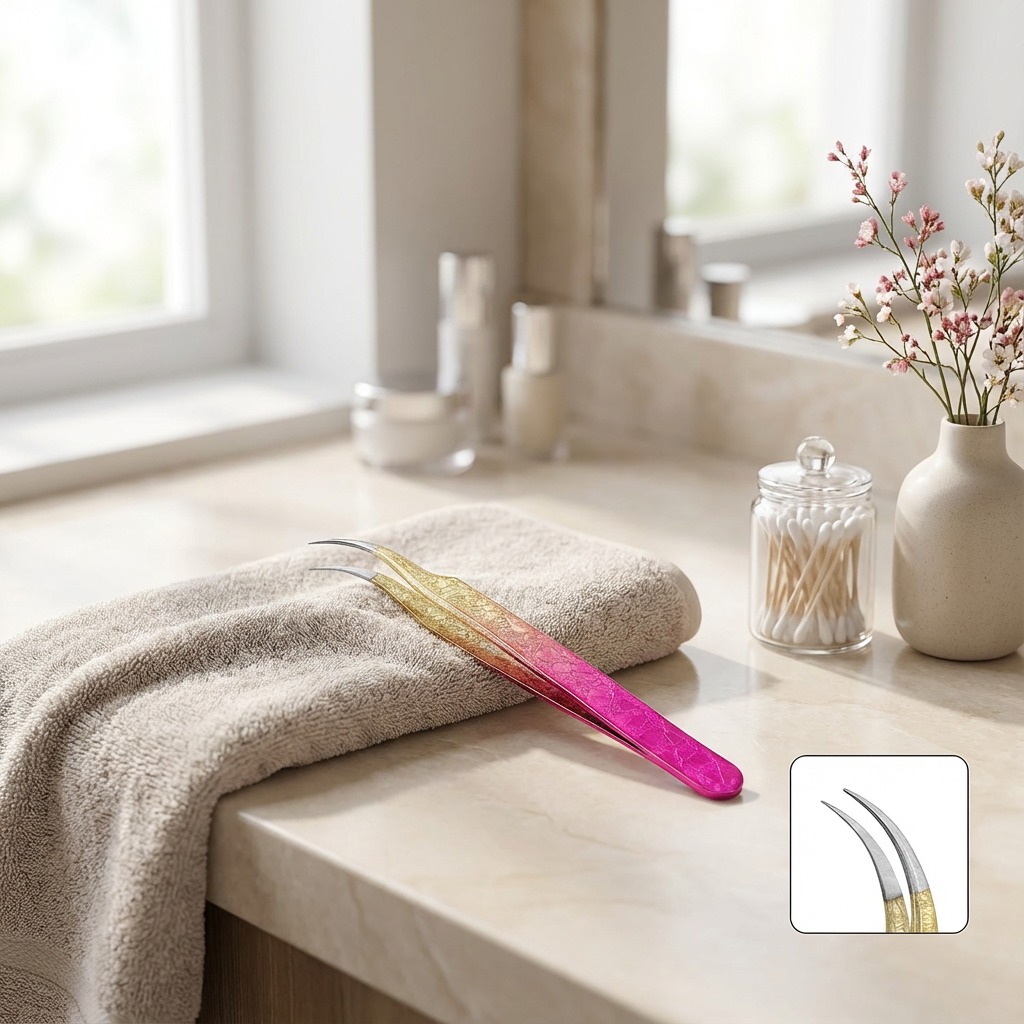
A direct manufacturing conversation can help you clarify whether the product is intended for brow grooming, lash work, facial hair removal, general personal care, travel kits, or gift sets. Each use case may need different tip shapes, tension, surface finish, handle comfort, and packaging. For example, a gradient-handle curved-tip design may look appealing in retail, but buyers still need to confirm that the grip and alignment suit the intended task.
If you are building a broader beauty tool range, it can also help to browse precision beauty tools alongside tweezers so your assortment feels coordinated across use cases and packaging styles.
The product details that determine tweezer performance
Many wholesale tweezers look similar in photos, yet perform very differently in use. The buyer should test samples carefully and compare several pieces from the same batch, not just one attractive unit. That is especially important for salon buyers and distributors who need consistency across customer orders.
Tip alignment
The two tips should meet evenly without visible gaps. Poor alignment makes it harder to grip short or fine hairs and can create a slipping feel during use. When samples arrive, inspect the tips in good light and check more than one unit.
Tip shape and use case
Slanted, pointed, curved, and specialty shapes each serve different grooming tasks. The best shape depends on the target user, not on appearance alone. Brow shaping, for example, often needs precise contact and control, while general grooming buyers may prefer a balanced all-purpose shape.
Tension and hand feel
The arms should close with controlled resistance. If the tension is too weak, grip suffers. If it is too stiff, users may feel hand fatigue. Good tweezers should feel stable in the hand and responsive during repeated use.
Surface finish and coating
Polished, coated, colored, or gradient finishes can improve shelf appeal, but they should also be checked for uniform appearance and visible marks. Buyers should look for scratches, uneven polishing, stains, burrs, and obvious rubbing on decorative areas.
Handle comfort and grip
Embossed, textured, shaped, or coated handles may improve control, especially in humid salon environments or for users who handle the tool often. Comfort matters because a well-balanced tweezer can reduce strain and improve control over time.
How to compare tweezers suppliers and manufacturers
Choosing the right tweezers manufacturer is not only about product quality. It is also about process reliability. A beautiful sample is not enough if communication is unclear, inspection expectations are vague, or packaging details are not agreed in advance.
Use a structured comparison so the decision is based on evidence, not only catalog images or sales language. The table below can help buyers, importers, and product managers compare factory direct options in a practical way.
| Evaluation area | What to check | Why it matters |
|---|---|---|
| Sample consistency | Compare several units for alignment, tension, finish, and decoration | Shows whether performance is repeatable across production |
| Use-case fit | Match tip style and handle design to brow, lash, salon, retail, or travel needs | Prevents buying a product that looks suitable but performs poorly |
| Finishing quality | Review surface smoothness, coating uniformity, and visible marks | Shapes customer perception and handling comfort |
| Inspection discipline | Ask how tip closure, burrs, scratches, and packaging damage are checked | Protects consistency before shipment |
| Packaging readiness | Confirm boxes, cards, pouches, labels, inserts, and barcode needs | Reduces delays before retail sale |
| Communication process | Document specs, approval samples, and change requests | Helps prevent misunderstandings in wholesale orders |
If you are planning a coordinated assortment, you can also review related product collections to see how tweezers may fit into a larger beauty tool program with consistent visual direction.
Questions to settle before wholesale production
Clear requirements lead to fewer surprises. Even when a supplier works directly with the factory, vague instructions can still create mismatched expectations. Before you approve production, define the following points in writing.
- Target user: Decide whether the tweezer is for professional brow shaping, everyday home grooming, lash application, travel kits, or giftable retail sets.
- Tip type: Select slanted, pointed, curved, or another shape based on the actual grooming task.
- Finish direction: If you want a metallic look, colored surface, or gradient handle, clarify the approved color range and acceptable variation.
- Packaging components: List the box, card, pouch, tip cover, insert, label, and barcode placement if needed.
- Inspection priorities: Identify the most important checks, such as tip closure, alignment, tension, scratches, coating defects, and packaging cleanliness.
- Sample approval: Keep one approved reference sample so both sides can compare production output against the same standard.
What quality checks a reliable factory should discuss
A dependable tweezers supplier should be able to explain how quality is reviewed before packing. Buyers do not need elaborate promises; they need practical control points. Common checks include raw material inspection, tip alignment review, final appearance checks, and packaging protection checks.
Stainless steel is a common material choice for beauty tweezers because it supports durability and a clean appearance. Even so, the material name alone does not guarantee usable performance. Forming, polishing, alignment, and final inspection all influence the result. Two tweezers described as stainless steel may still feel very different in use.
For buyers selling into regulated markets, it is sensible to ask which documentation the supplier can provide and which applicable standards or regulations matter for your destination market. If a supplier mentions an ISO 9001-based process or REACH-related material controls, verify the applicable version, scope, and paperwork rather than assuming coverage. The same applies to local customs or consumer-product rules: always confirm the documents your market requires.
How different buying channels should think about tweezers
Factory direct sourcing works best when the supplier understands the commercial context. A salon, a retailer, and a private-label buyer may all want tweezers, but they evaluate them differently.
- Salons and brow studios: Prioritize precise tip contact, stable tension, and comfortable handling for repeated use.
- Retailers: Balance performance with shelf appeal, packaging clarity, and visual consistency across units.
- Private-label buyers: Focus on customization options, packaging readiness, and the ability to keep a repeatable standard.
- Travel or gift sets: Pay attention to compact packing, tip protection, and presentation.
That channel-based thinking helps you avoid over-specifying features that your customer does not need, or under-specifying the details that affect satisfaction. For broader sourcing discussions, you can speak with Olimor about beauty tool options and compare how different tweezer styles fit your assortment strategy.
What to ask a tweezers factory before you place an order
Use short, direct questions. A useful factory conversation should reveal how the supplier thinks about consistency and packaging, not just whether a product photo looks attractive.
- What stainless steel and finish options are available for this tweezer style?
- How is tip alignment checked before packing?
- Which defects are screened during inspection?
- How are tips protected during storage and shipping?
- What packaging formats are available for wholesale or retail use?
- How are customization requests handled for finish, packaging, or label placement?
These questions help buyers compare suppliers on practical capability rather than vague claims. They are also useful when you want to evaluate a source partner for a private-label or repeated wholesale program.
How Olimor can fit a factory direct sourcing plan
Olimor Beauty focuses on precision beauty tools, including tweezers for grooming and beauty use. For buyers who want a sourcing conversation grounded in real product details, the value is in discussing performance, packaging, and use case before moving forward. That makes it easier to determine whether a design suits brow shaping, fine hair removal, or inclusion in a broader beauty kit.
If you are reviewing assortment strategy, packaging ideas, or customization questions, use the product range as a reference point and then confirm the exact specifications you need for your market. When you are ready to discuss your requirements, send a direct sourcing inquiry with your target user, preferred finish, packaging idea, and quality-check priorities.
A good partner should help you think through the order from sample to shipment: what to approve, what to inspect, and what to keep consistent across repeat runs. That is the real advantage of factory direct sourcing for tweezers.
FAQ
Can I request samples before placing a wholesale order?
Yes. Sample review is one of the most important steps in tweezers sourcing. Ask to inspect alignment, tension, finish, and packaging fit before approving production.
What is the most important quality check for tweezers?
Tip alignment is one of the first things to check, but buyers should also review tension, finish quality, and packaging protection. A strong sample should perform well across all of them.
Can tweezers be customized for retail or private label use?
Often yes, but the available options depend on the supplier and product structure. Ask about finish, packaging, labels, inserts, and visual presentation before you commit.
How should I evaluate a supplier besides the product sample?
Look at communication clarity, approval process, inspection steps, and whether the factory can explain how it controls consistency from sample to shipment.
How long does tweezers production take?
Lead time depends on the model, customization, order size, and current production schedule. Ask the supplier directly for a quoted timeline based on your exact requirements.