Good tweezers do one job extremely well: they grip fine hairs cleanly and let the user control each pull. For eyebrow grooming, that matters more than decoration or novelty. A reliable pair should feel steady in the hand, close evenly at the tips and remove stray hairs without repeated pinching. Olimor Beauty focuses on practical grooming tools, including stainless steel tweezers designed for eyebrow shaping and other small precision tasks.
This guide is for buyers and users who want a clearer way to evaluate precision tweezers before choosing a retail item, salon tool or private-label addition. It covers the differences between tip styles, the practical checks that matter most, how stainless steel contributes to everyday use, and what to ask a supplier when you compare options.
For related grooming tools, you can also browse our beauty tool selection or review matching tool collections when planning a coordinated assortment.
Why precision matters in eyebrow tweezers
Eyebrow grooming is a detail task. The tool has to work close to delicate skin, pick up short and fine hairs, and keep the user in control while shaping the brow line. A tweezer that looks acceptable but misses hairs or slips during use quickly becomes frustrating.
The most common problems come from poor tip alignment, uneven tension or a finish that feels rough in the hand. If the tips do not meet accurately, fine hairs can slide out before they are removed. If the tool feels too stiff, the user may over-squeeze and lose control. If it feels too loose, the pull may be weak and inconsistent.
That is why precision tweezers are usually judged less by appearance and more by handling. Buyers should think about the end user first: someone maintaining brows at home, a makeup artist preparing a client, or a retailer building a compact grooming kit. Each group needs the same core performance, but the preferred shape and presentation may differ.
Choose the right tip style for the task
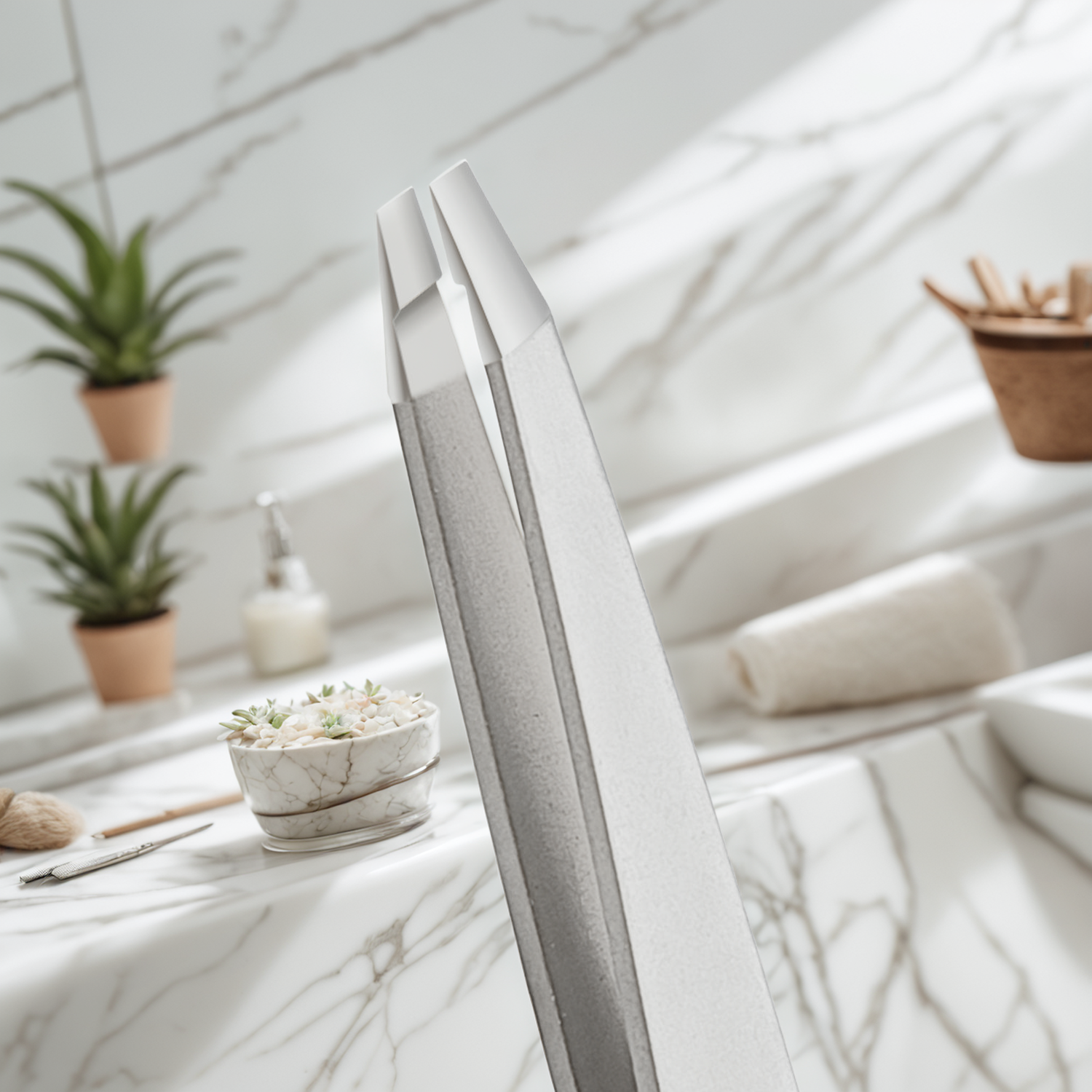
Slanted-tip tweezers are the most practical choice for general eyebrow shaping because they balance control and versatility. The angled edge can grip longer hairs with the wider portion of the tip, while the corner can target shorter or isolated hairs. That makes them well suited to arch cleanup, stray-hair removal and maintenance between grooming sessions.
Pointed tweezers have a narrower contact area and can be useful for very small precision tasks, but they may feel too sharp for everyday brow shaping. Straight tips are less common for detailed eyebrow work, though some users like them for broad gripping on larger hairs. For most beauty buyers, slanted stainless steel tweezers offer the clearest mix of usability and broad appeal.
| Tip style | Best use | Main advantage | Tradeoff |
|---|---|---|---|
| Slanted | Eyebrow shaping, stray-hair cleanup, daily grooming | Balanced control and precise gripping | Not as specialized as a needle-point tool |
| Pointed | Very small precision tasks, specialist hair removal | Targets tiny or isolated hairs | Can feel too sharp for general brow use |
| Straight | Basic gripping where a broad edge is preferred | Simple shape and easy handling | Less natural for angled brow work |
When the goal is clean eyebrow grooming, slanted tips are usually the safest starting point for buyers evaluating a practical assortment.
What to inspect before you buy
For precision tweezers, small details reveal most of the product quality. Look closely at the contact point between the two tips, the feel of the arms, the surface finish and the overall consistency from one piece to the next. These checks matter whether you are buying a single tool or sourcing for a broader beauty line.
- Tip alignment: The two tips should meet evenly without gaps that let fine hairs slip.
- Grip tension: The arms should close smoothly with controlled resistance, not excessive force.
- Edge quality: The slanted edge should feel precise, not rough or scratchy against skin.
- Surface finish: The body should be smooth, clean and easy to wipe after use.
- Comfort in hand: The shape should support stable handling near the tip as well as lower on the body.
- Packaging protection: The tips should be protected from bending during storage and shipping.
- Unit-to-unit consistency: Sample pieces should behave similarly, especially at the tip closure point.
Olimor Beauty notes that its tools undergo inspections for reliability. For sourcing teams, inspection consistency is especially important in tweezers because the product is judged by the accuracy of a very small contact surface. A tiny deviation can change how the tool performs in the hand.
Why stainless steel is the practical material choice
Stainless steel is widely used for grooming tools because it supports durability, is easy to clean and suits products that come into regular contact with skin. For tweezers, the material should feel firm without being awkwardly stiff. The right balance helps the user maintain control while shaping brows or removing fine hairs.
Material alone does not guarantee performance. Buyers should also consider how the metal is formed and finished. A well-made stainless steel tweezer should have clean edges, a consistent appearance and a construction that stays true during normal handling. If the finish is rough or the tool flexes too easily, the user experience suffers even if the material is correct on paper.
Hygiene is another practical reason stainless steel remains popular. Tweezers should be cleaned before and after use, especially in salons or product demonstration settings. A smooth finish helps make that routine easier. For retail assortments, it also gives the product a more polished presentation when customers open the package.
How to judge cost factors without overpaying for features you do not need
Price is not just about the metal itself. In precision tweezers, cost is usually shaped by the accuracy of the tips, the quality of the finish, the inspection process, the packaging and any customization needed for retail or private-label use. Understanding those drivers helps buyers compare quotes more intelligently.
For example, a simple slanted tweezer for everyday grooming may be easier to position than a more specialized variant designed for a particular use case or packaged as part of a coordinated kit. Additional packaging protection, branded presentation and custom labeling can also influence the final offer. That does not make a product better by default; it simply means the buyer should know what is included.
If you are sourcing for a retail shelf, ask suppliers to separate the tool itself from the packaging and branding options so you can compare value clearly. If you are building a salon or travel kit, think about whether a matching finish, secure storage and a consistent look across the assortment are more important than extra styling details.
A practical checklist for sourcing and supplier evaluation
When comparing suppliers, ask questions that reveal whether the product is genuinely suitable for eyebrow grooming and long-term use. A clear specification prevents misunderstandings later.
| What to ask | Why it matters |
|---|---|
| What tip style is used? | Confirms whether the tweezer suits eyebrow shaping or a more specialized task. |
| How are tips inspected? | Shows whether closure and alignment are checked for consistency. |
| What material is used? | Helps confirm stainless steel construction and expected cleaning behavior. |
| Is the finish smooth and easy to clean? | Supports hygiene and a better user experience. |
| Can packaging protect the tips? | Reduces the chance of bent or damaged tweezers in transit or storage. |
| Can the design be tailored for a retail line or kit? | Helps buyers align the product with the intended channel and presentation. |
For business buyers, it is wise to request supplier documentation that confirms the tool specification, finishing approach and inspection process. If your market has particular hygiene or labeling expectations, verify the current requirements with your own compliance team or local authority before launch.
When you are ready to discuss a specific grooming assortment, you can send details through our product inquiry form or contact the team directly for a more focused discussion.
How to use slanted tweezers for cleaner eyebrow results
Even a well-made tweezer needs good technique. Clean skin, bright light and steady handling make a noticeable difference. The goal is not to remove as many hairs as possible; it is to remove only the hairs that fall outside the intended brow shape.
- Brush the brows upward or outward so the natural line is easy to see.
- Identify only the stray hairs that sit outside the shape you want to keep.
- Hold the tweezer near the working end for better control.
- Place the slanted edge close to the hair root rather than at the end of the hair shaft.
- Pull in the direction of hair growth using one steady motion.
- Pause often and compare both brows before removing the next few hairs.
A few habits help prevent irritation. Do not repeatedly pinch the same area if the hair is too short to grip. Do not dig into the skin with the tip. And do not rush the process in poor light. For the cleanest result, step back from the mirror occasionally and check symmetry.
These use instructions are also helpful for retail packaging inserts, online product pages and salon training notes because they reduce misuse and set realistic expectations for the tool.
Cleaning, maintenance and storage for longer tool life
Maintenance is simple, but it affects performance. After use, wipe the tips to remove skin residue, oils or cosmetic product. If the tweezers are used in a professional setting, follow the hygiene routine required by that environment. For everyday personal use, keeping the tool clean and dry is usually enough to preserve regular performance.
Storage matters because the working tips are small and easy to damage. Tweezers can lose accuracy if they are dropped, pressed against hard objects or left loose in a crowded makeup bag. A sleeve, cap or protected compartment helps preserve alignment. It is also better not to use eyebrow tweezers as a household tool for opening packages or gripping hard objects, since that can damage the fine contact surface.
If the tool starts missing hairs, inspect the tips under good light. Sometimes residue is the problem, and a careful cleaning restores the grip. If the tips are bent or no longer meet evenly, replacement is usually the better option than forcing the tool to keep working.
Where precision tweezers fit in a broader beauty assortment
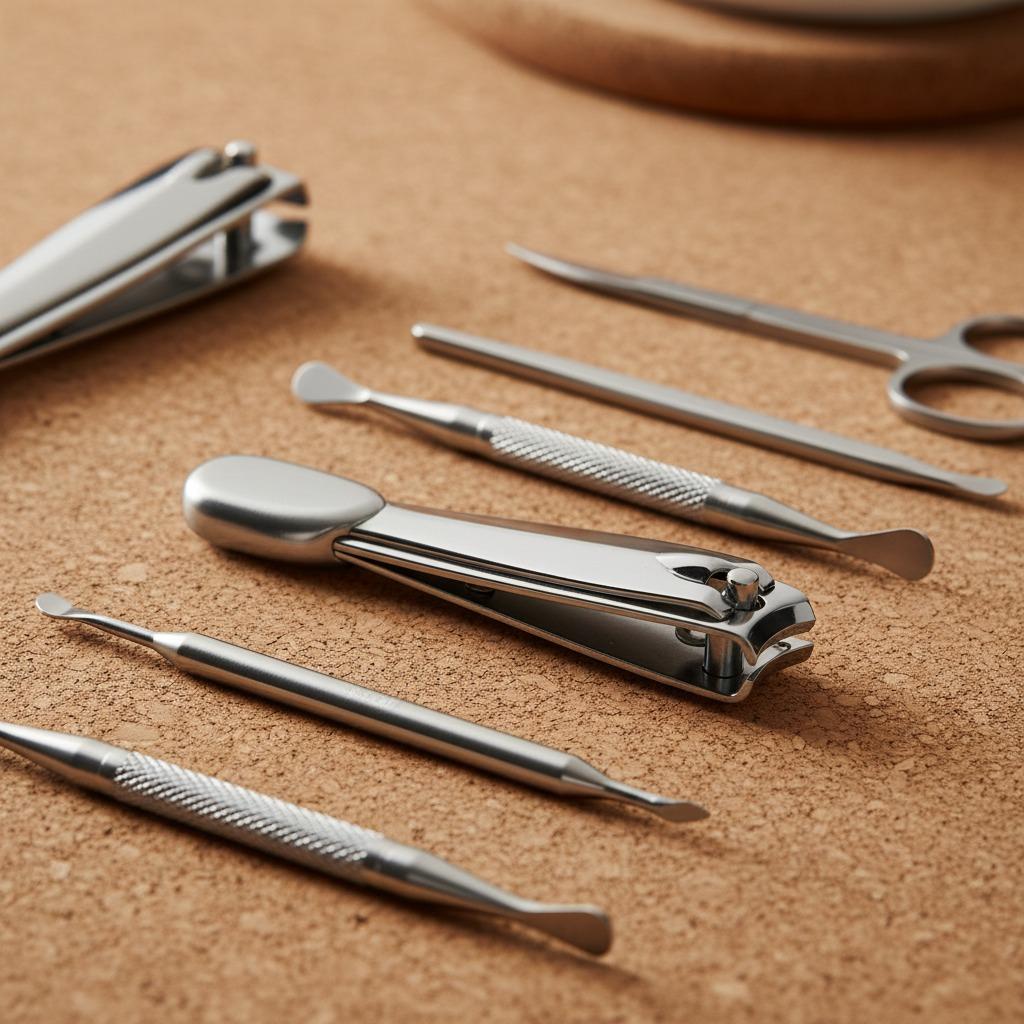
Precision tweezers are useful on their own, but they also fit naturally into a wider grooming range. They can be paired with eyebrow scissors, lash accessories, manicure tools or travel care kits. That makes them a versatile item for retailers, salons and private-label buyers who want practical tools with broad customer appeal.
Olimor Beauty offers a wider range of beauty tools for buyers comparing grooming accessories, and related assortments can help you plan a coordinated presentation across multiple items. When building a line, it often helps to think in terms of use cases: daily brow maintenance, compact travel grooming, professional makeup preparation or entry-level personal care.
The best assortments stay focused. A slanted stainless steel tweezer that works reliably for eyebrow shaping usually creates more value than a highly decorated tool with weak grip or unclear purpose.
FAQ
Can I request samples before placing a larger order?
In many sourcing discussions, samples are the best way to confirm tip alignment, grip feel and finish before moving forward. Use them to check the actual user experience rather than relying only on descriptions.
Can the tweezers be customized for retail or private-label use?
Customization may be possible depending on the project. Ask about the available packaging, branding and assortment options so you can match the tool to your sales channel.
What should I check first when comparing quality?
Start with tip closure, tension and surface finish. Those three factors usually have the biggest impact on how well the tweezers grip fine hairs and how comfortable they feel in use.
How should I confirm lead time?
Lead time should be discussed directly with the supplier and confirmed in writing after the final specification is agreed. It can vary depending on packaging, customization and order details.
What if the tweezers miss fine hairs?
Check for residue on the tips first, then inspect whether the tips meet evenly. If alignment is off, cleaning may not be enough and the tool may need to be replaced.
Final takeaways for buyers and users
The best precision tweezers for eyebrow grooming are the ones that feel accurate, comfortable and easy to maintain. For most users, a slanted stainless steel design offers the clearest balance of control and versatility. For buyers, the most useful checks are practical: tip alignment, grip tension, finish quality, packaging protection and inspection consistency.
If you are sourcing for retail, a salon or a private-label beauty line, focus on the details that affect real use rather than decorative claims. A well-made tweezer should remove fine hairs cleanly, hold its shape during normal handling and support simple cleaning after use. That is what customers notice, and it is what keeps a small grooming tool from becoming a complaint.
To compare options or discuss a grooming assortment, explore our current tool range or reach out with your requirements.