










Choosing a tweezer manufacturer is not only about finding a low-cost tool. For beauty brands, salon suppliers, wholesalers, and OEM buyers, a tweezer must feel controlled in the hand, grip accurately at the tip, resist daily wear, and arrive with consistent quality across repeat orders. A small tool can create a large impression: if the arms are uneven, the finish is rough, or the pointed tip does not meet cleanly, the user notices immediately.
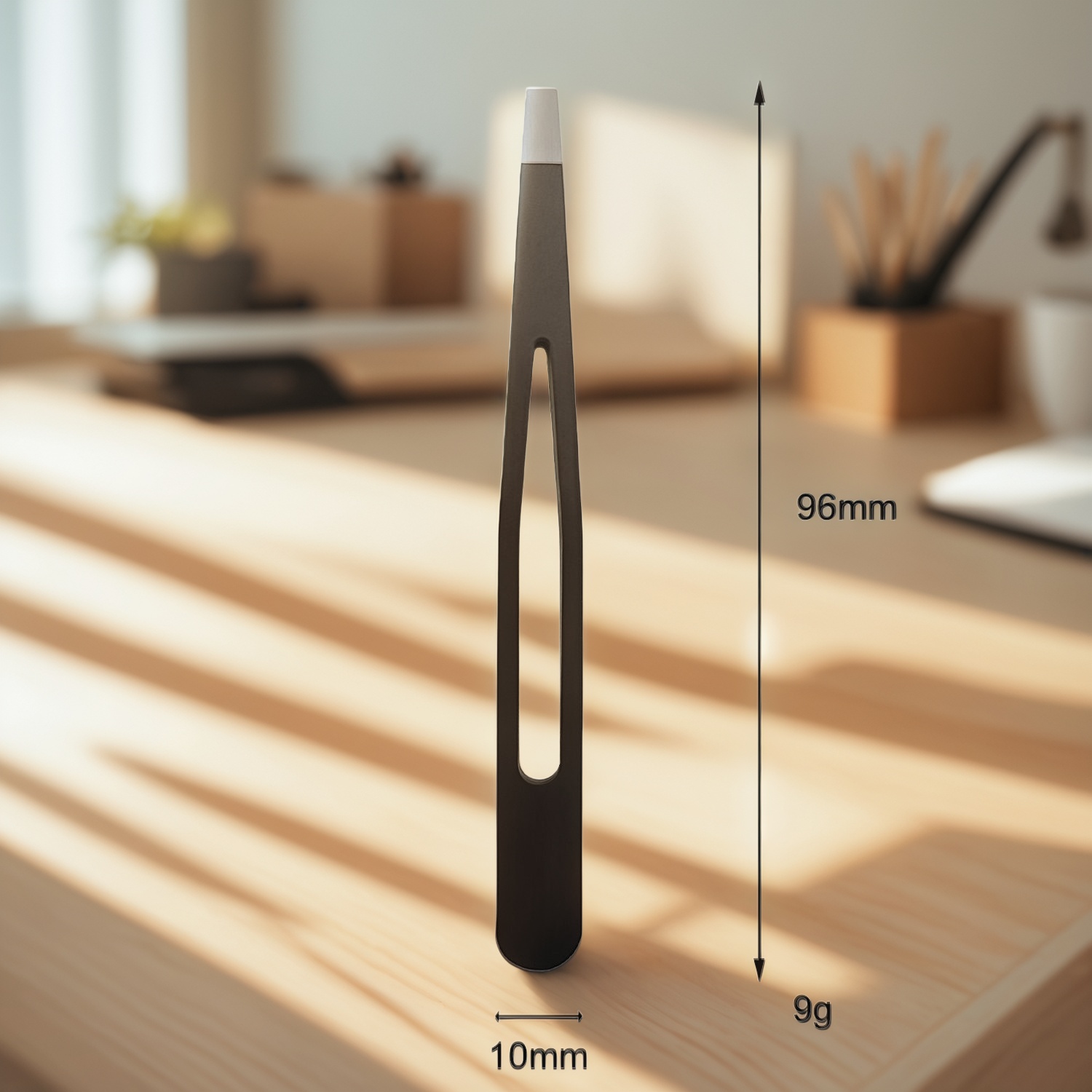
Olimor Beauty produces precision beauty tools for buyers who need dependable sourcing, including tweezers for personal grooming, professional salon use, and fine detail work. The Minoq Precision Tweezer is an example of a compact, stainless steel tool designed for accurate handling. It is listed with a 96mm length and 9g weight, with a pointed tip and anti-slip grip for controlled use in tasks such as hair removal or fine assembly work. These details matter because tweezer performance depends on both manufacturing discipline and practical user comfort.
What Makes a Quality Tweezer Manufacturer Different?
A reliable tweezer manufacturer understands that precision is created through a sequence of small decisions. Material selection, forming, alignment, surface finishing, cleaning, inspection, and packaging all influence the final tool. Buyers often focus on appearance first, but the most important performance point is the tip. A pointed tweezer must close evenly and hold fine hair or small components without excessive pressure.
For beauty applications, the tool should also be comfortable enough for repeated use. The Minoq Precision Tweezer is described as lightweight at 9g and 96mm long, which supports controlled handling without making the tool feel bulky. Weight and length should match the intended audience. A retail beauty tweezer may prioritize portability and neat presentation, while a professional or technical tweezer may place more emphasis on sustained grip, repeatable closure, and point stability.
When comparing suppliers, buyers should look beyond a sample that performs well once. The real test is whether the manufacturer can maintain the same alignment, finish, and grip across production batches. Consistency is what separates a sourcing partner from a one-time vendor.
Stainless Steel, Tip Geometry, and Grip: Key Selection Criteria
The original product information highlights stainless steel, a pointed tip, and an anti-slip grip. These are practical features for a precision tweezer, but buyers should understand how to evaluate them. Stainless steel is widely used because it can provide strength, a clean surface, and resistance to routine moisture exposure. The exact performance still depends on the grade, finishing process, and production control, so procurement teams should define the expected use before approving an order.
Tip geometry is equally important. A pointed tip is useful for isolating fine hairs, removing ingrown hairs with care, positioning delicate decorative items, or handling small parts. However, pointed tweezers should not feel sharp in an uncontrolled way. The tip needs accurate meeting points, clean edges, and a finish suitable for its intended beauty or detail-use environment.
An anti-slip grip can help users maintain control, especially when hands are slightly damp or when the task requires steady pressure. For salons, brow artists, lash technicians, or retail beauty customers, grip texture can reduce hand strain and improve confidence during detailed work.
| Feature to Check | Why It Matters | Buyer Evaluation Method |
|---|---|---|
| Tip alignment | Determines whether the tweezer can grip fine hair or small parts accurately | Close the arms slowly and check whether both points meet evenly |
| Material finish | Affects comfort, cleaning, and perceived quality | Inspect for burrs, rough edges, staining, or uneven polishing |
| Spring tension | Controls hand fatigue during repeated use | Open and close the tweezer several times to assess resistance |
| Grip surface | Improves control during precise movements | Test handling with dry hands and under realistic use conditions |
| Packaging readiness | Supports retail, wholesale, or OEM presentation | Confirm labeling, protection, and packing method before production |
Inside Tweezer Factory Operations: From Material to Final Inspection
In a tweezer factory, small tolerances shape the customer experience. The process typically begins with metal selection and blank forming, followed by shaping, grinding, alignment, finishing, and inspection. For a pointed stainless steel tweezer, the shaping and alignment stages are especially important because any asymmetry can reduce precision.
Factory control should not rely only on final inspection. It is more effective when checks happen at several points: after material preparation, after shaping, after tip finishing, and before packing. This reduces the risk of discovering defects only after the full order is complete. For buyers, the goal is not to demand unnecessary complexity; it is to ensure that the supplier has a repeatable method for controlling the features that matter most.
Useful inspection points include tip closure, surface cleanliness, arm symmetry, grip consistency, weight and length confirmation when specified, and packaging condition. For a product like the Minoq Precision Tweezer, the stated 96mm length and 9g weight can be used as reference points during product approval. If the order involves OEM adjustments, buyers should confirm which dimensions or finishes are fixed and which are customizable.
Supplier, Wholesaler, Exporter, or OEM Partner: Which Do You Need?
The term tweezer manufacturer is often used broadly, but buyers may have different needs. A brand developing a private label line may need OEM support. A distributor may need repeat wholesale supply. A salon-focused buyer may need stable quality and packaging suitable for professional resale. Understanding the role you need helps avoid unclear communication at the quotation stage.
- Tweezer supplier: Suitable when the priority is sourcing existing products with dependable delivery and quality control.
- Tweezer wholesaler: Useful for buyers who need products in bulk for retail, salon supply, or distribution channels.
- Tweezer OEM partner: Important when the buyer needs customized design details, finish, packaging, or branding based on agreed requirements.
- Tweezer exporter: Relevant when documentation, packing, and international shipment coordination are part of the purchasing process.
Olimor Beauty supports beauty tool buyers across product sourcing and customization discussions. Buyers reviewing tweezers can also explore related beauty tool products to compare how different grooming tools fit into a broader retail or professional assortment. For companies planning a more complete product range, the product collections page can help organize sourcing decisions by category and use case.
How to Evaluate Samples Before Placing a Bulk Tweezer Order
Sample approval should be structured. A tweezer may look acceptable in a product photo but perform differently in hand. Before approving a bulk order, test samples with the same use cases expected from your customers. If the product is for eyebrow grooming, test whether it can isolate single hairs. If it is for fine assembly or decorative work, test the ability to pick up and place small items without slipping.
- Check first impression: Inspect surface finish, shape, color consistency, and whether the tool feels balanced.
- Test tip meeting: Close the tweezer under good lighting and confirm that the pointed tip meets cleanly.
- Assess grip and tension: Use the tweezer repeatedly for several minutes to identify fatigue or slipping.
- Review safety and comfort: Ensure edges are finished cleanly and do not scratch the hand during normal handling.
- Confirm packaging needs: Decide whether the item needs retail packaging, protective sleeves, barcode space, or private label presentation.
- Document the approved standard: Keep a reference sample and written notes so later production can be compared objectively.
This approach helps purchasing teams reduce subjective decisions. Instead of simply saying a tweezer feels good, the buyer can define what “good” means: aligned pointed tips, clean stainless steel finish, stable grip, comfortable tension, and packaging suitable for the sales channel.
OEM Customization Questions for Precision Tweezers
OEM tweezer projects should begin with function. Aesthetic choices matter, but they should not compromise the tool’s working edge. For example, a custom finish or grip texture should still allow accurate control and comfortable pressure. Packaging should protect the pointed tip during transport and storage, especially when the product is intended for retail display.
Before moving from sample to order, prepare a clear specification sheet. Include the intended use, target customer, required dimensions if fixed, finish preference, grip expectations, packaging format, and any labeling requirements. If the Minoq Precision Tweezer is being used as a reference, note the 96mm length, 9g weight, pointed tip, anti-slip grip, and stainless steel construction as the known comparison points, then identify which features need to remain unchanged and which may be adapted.
Buyers can send an inquiry with product goals, packaging expectations, and estimated purchasing plan. For questions that need direct coordination, such as comparing available options or preparing a new sourcing brief, it is also practical to contact Olimor.
Maintenance Guidance for End Users and Retail Education
A strong product page or retail package should include simple care guidance. Even a well-made stainless steel tweezer benefits from proper handling. Users should wipe the tip after use, keep the tweezer dry before storage, and protect pointed ends from impact. Dropping a pointed tweezer can bend or misalign the tip, reducing its precision.
For salon and professional environments, cleaning routines should match local hygiene practices and the materials used in the tool. For consumer education, avoid overcomplicating the message. Short, clear instructions help extend product life and reduce misuse-related complaints.
- Store the tweezer in a dry place after cleaning.
- Use a protective cover or pouch when carrying a pointed tweezer.
- Avoid using precision tweezers as prying tools or general hardware tools.
- Check the tip periodically for bending, dullness, or alignment changes.
- Keep the grip area clean so the anti-slip surface remains effective.
Building a Better Tweezer Sourcing Decision
A precision tweezer is a small product with little room for error. The best sourcing decisions combine clear use-case planning with practical factory evaluation. Look for stainless steel quality appropriate to the application, accurate pointed-tip alignment, comfortable spring tension, anti-slip handling, and a documented inspection standard. For wholesale and OEM buyers, also consider packaging, repeat-order consistency, and communication quality.
Olimor Beauty’s role as a tweezer supplier, manufacturer, wholesaler, and OEM partner is most valuable when buyers provide clear requirements and evaluate samples carefully. By focusing on measurable features instead of vague claims, beauty brands and professional suppliers can choose tweezers that perform reliably for their customers and fit naturally into a broader beauty tool assortment.