










Choosing a tweezers supplier is not only about finding a low unit cost. For beauty brands, lash studios, distributors, and retailers, the right supplier affects product consistency, customer reviews, repeat orders, and the confidence of the professionals who use the tool every day. False lash tweezers require controlled tip geometry, comfortable handling, and dependable finishing because even small inconsistencies can make lash placement more difficult.
Olimor Beauty supplies beauty tools for buyers who need practical, professional-grade sourcing options, including False Lash Tweezers made with stainless steel, a fine-tipped curved design, and an ergonomic ribbed handle for a non-slip grip. This guide explains how to evaluate false lash tweezers for wholesale and OEM projects, what to look for in production quality, and how to prepare a clearer inquiry before placing an order.
Why False Lash Tweezers Need More Careful Sourcing
False lash tweezers are precision tools. Unlike general grooming tweezers, they are often used to pick up, position, separate, and adjust delicate lash segments. A buyer may focus first on appearance, but the working end of the tool matters most. If the tips do not meet evenly, if the curve is awkward, or if the handle feels unstable, users may struggle with placement and control.
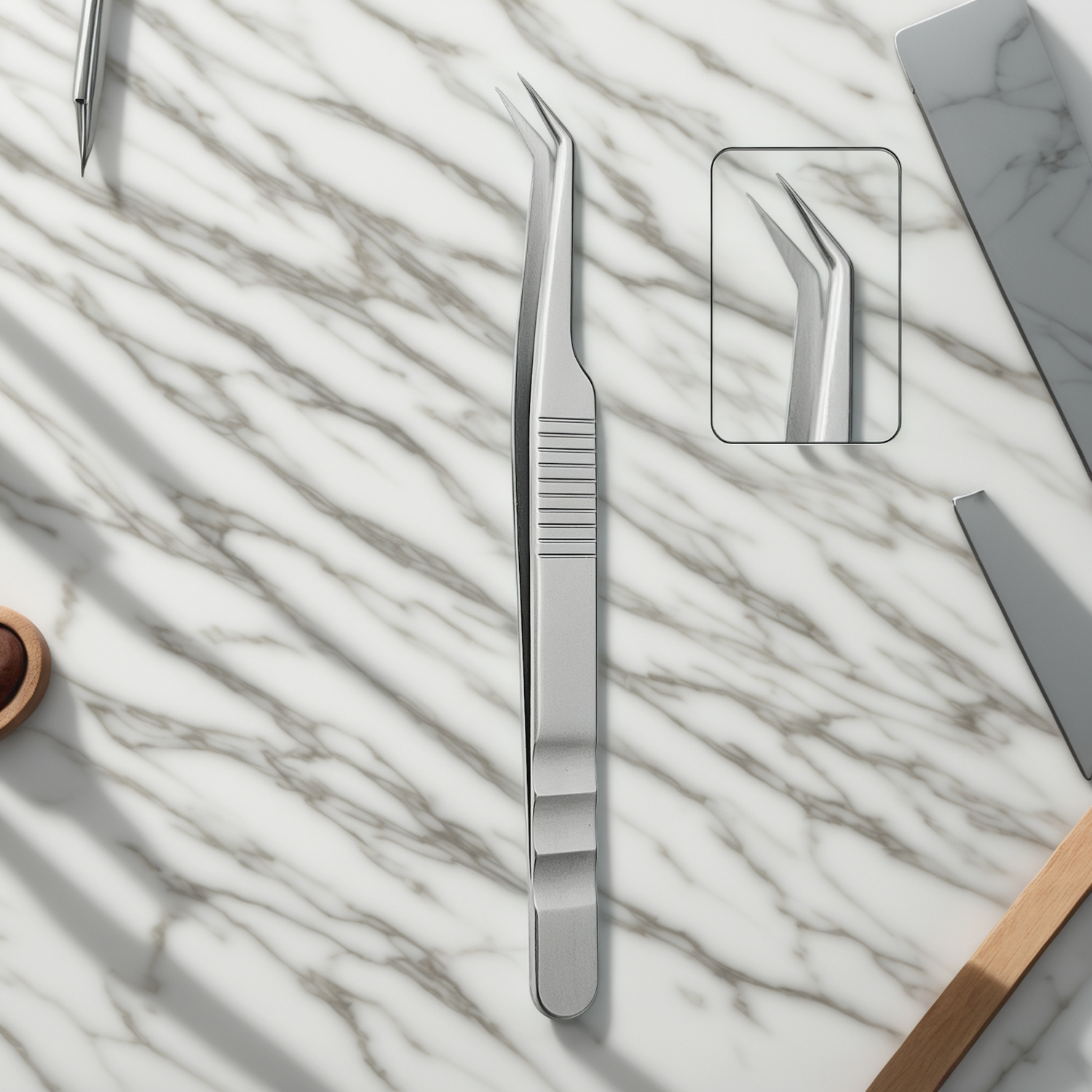
The supplied Olimor Beauty False Lash Tweezers are designed around a fine-tipped, curved shape. This form is especially useful where access and visibility are important, such as applying strip lashes, handling lash clusters, or making detailed adjustments near the lash line. The curved profile can help keep the hand from blocking the working area, while the fine tips support more accurate positioning.
For wholesale buyers, this precision requirement has a direct commercial impact. A tweezer that looks acceptable in a product photo may still fail in daily use if the tip alignment, gripping surface, or handle comfort is inconsistent across batches. When comparing suppliers, it is worth evaluating the tool as a professional instrument rather than a simple accessory.
Key Product Features to Evaluate Before Buying
The original product information highlights several useful features: stainless steel construction, a ribbed handle for a non-slip grip, and a fine-tipped curved design. Each of these should be assessed carefully during sampling and order confirmation.
- Tip alignment: The tips should close cleanly and evenly. For lash work, the contact point must feel controlled, not loose or uneven.
- Curved tip shape: The curve should support visibility and access without making the tool feel unstable in the hand.
- Stainless steel body: Stainless steel is valued in beauty tools because it supports durability and a clean, professional appearance.
- Ribbed handle grip: A textured or ribbed handle helps reduce slipping, especially during detailed lash application.
- Spring tension: The resistance should be comfortable. Too much tension can fatigue the hand; too little can reduce control.
- Edge finishing: Surfaces should be smooth enough for safe handling, with no rough burrs or sharp unfinished areas outside the intended tips.
- Visual consistency: Wholesale orders should maintain consistent shape, finish, and feel from piece to piece.
When you review beauty tool products, consider how the tweezer will be used by your end customer. A professional lash artist may prioritize control and repeat performance, while a retail customer may also care about packaging, product instructions, and storage.
What a Reliable Tweezers Factory Should Control
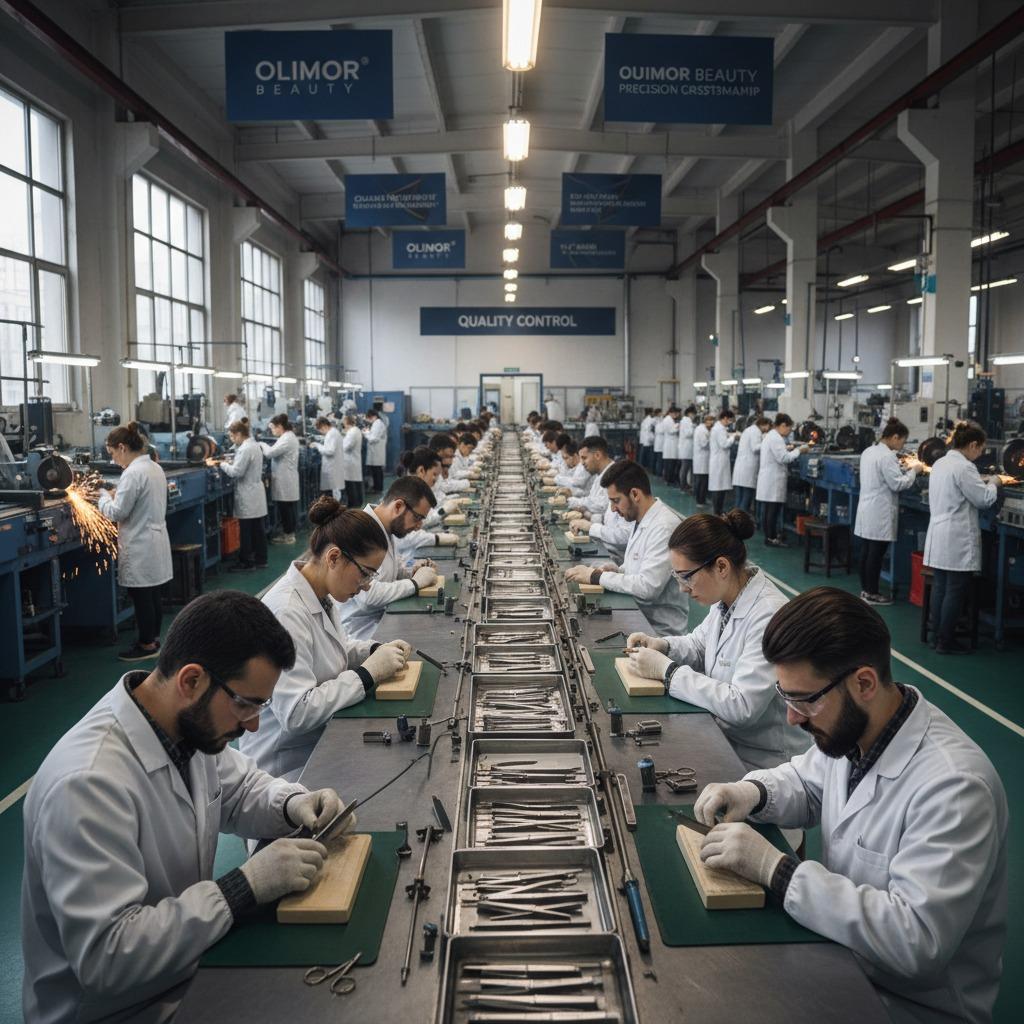
A capable tweezers factory should control more than the final appearance. False lash tweezers depend on a sequence of manufacturing and finishing steps that influence performance. The supplied article notes that Olimor Beauty oversees a production process where technical precision is important and that products undergo quality checks. For buyers, this means the conversation should move beyond basic catalog selection into practical quality expectations.
Useful factory control points include material handling, shaping accuracy, polishing, tip finishing, cleaning, inspection, and packing. For a stainless steel tweezer, the finish should be consistent and appropriate for the intended market. The handle texture should be uniform, especially where the ribbed grip is part of the product’s functional value.
Tip quality deserves special attention. With lash tweezers, a small difference at the tip can change how easily the tool lifts and positions lashes. During sample approval, check several pieces rather than relying on only one perfect sample. Open and close each tweezer repeatedly, inspect the point where the tips meet, and test whether the tool can hold a fine lash or similar lightweight item without crushing or slipping.
Buyers sourcing from a China tweezers manufacturer may also need documentation that supports their own import, retail, or brand compliance process. Because requirements differ by market, it is better to prepare your requested documents early, along with packaging, labeling, and inspection expectations.
Wholesale and OEM Buying Questions That Matter
For distributors and private-label brands, wholesale tweezers are not just finished tools; they are part of a larger product program. Before confirming a purchase, clarify how the product will be sold, who will use it, and what your brand needs to communicate. Olimor Beauty can be considered for wholesale and OEM sourcing, but a successful project still depends on precise buyer input.
| Buying Area | What to Clarify | Why It Matters |
|---|---|---|
| Product use | Strip lashes, clusters, salon use, retail kits, or general beauty use | Use case affects the preferred curve, tip feel, and packaging message |
| Finish and appearance | Surface finish, color direction if applicable, and visual tolerance | Consistent presentation supports retail quality and brand trust |
| OEM requirements | Logo placement, packaging format, labeling, and instructions | Brand details should be confirmed before production artwork is finalized |
| Inspection | Tip alignment, grip texture, surface finishing, and packing condition | Clear inspection points reduce misunderstandings at shipment stage |
If you are building a broader range, compare these tweezers with other product collections to keep your assortment coherent. A lash-focused set may combine tweezers with other application tools, while a general beauty range may position the tweezer as a precision accessory.
How to Assess Samples Like a Professional Buyer
Sample review should be structured. Many buyers look at the sample briefly, approve the appearance, and only discover usability issues after the product is in customer hands. A more disciplined evaluation can prevent avoidable problems.
- Inspect the tips under good lighting. Check that both sides meet evenly and that the fine points are not visibly bent or mismatched.
- Test the closing action. Open and close the tweezer several times. The motion should feel controlled and consistent.
- Check hand comfort. Hold the tool as an end user would during lash application. The ribbed handle should support a secure grip without feeling harsh.
- Try a realistic task. Pick up and place a lightweight lash sample or similar fine item to evaluate control.
- Review finishing details. Look for rough edges, uneven polishing, scratches, or inconsistent texture.
- Compare multiple pieces. Consistency across samples is more important than one excellent unit.
For OEM buyers, sample approval should also include packaging mockups and labeling details. A good tool can still create customer dissatisfaction if the packaging does not protect the tips, if product information is unclear, or if the retail presentation does not match the intended price point.
Care and Handling Guidance for End Users
Providing basic care guidance can reduce complaints and help customers get better performance from their false lash tweezers. Stainless steel is a practical material for beauty tools, but proper handling still matters. Tweezers should be kept clean and dry after use, stored with the tips protected when possible, and handled carefully to avoid dropping or bending the fine curved tips.
Retail brands can include a short care card or printed instruction line in the package. Keep the language simple: wipe the tool after use, avoid harsh impact on the tips, and store it away from loose items that may damage the point. For salon buyers, include reminders about following the hygiene procedures required by their workplace or local regulations.
These small details improve the customer experience and help preserve the precision that makes the tool useful. They also show that your brand understands how lash tools are used in real situations, not just how they appear in a catalog.
Building a Clear Inquiry for Olimor Beauty
A clear inquiry saves time and leads to better recommendations. Before you send an inquiry, prepare the intended order purpose, target market, desired packaging format, logo or OEM needs, and any inspection requirements that are important to your company. If you are comparing several beauty tools, note whether the false lash tweezers will be sold individually, in a kit, or as part of a wider lash care range.
You can also contact Olimor to discuss the product direction and confirm what information is needed for your sourcing process. Instead of asking only for a price, share how the tool will be used and what quality points matter most to your buyers. This makes it easier to align the product, packaging, and wholesale or OEM expectations from the beginning.
False lash tweezers are small tools, but they carry a large quality signal for a beauty brand. By focusing on tip precision, stainless steel construction, non-slip grip, production consistency, and practical packaging, wholesale and OEM buyers can source a product that feels reliable in daily use and supports long-term customer confidence.