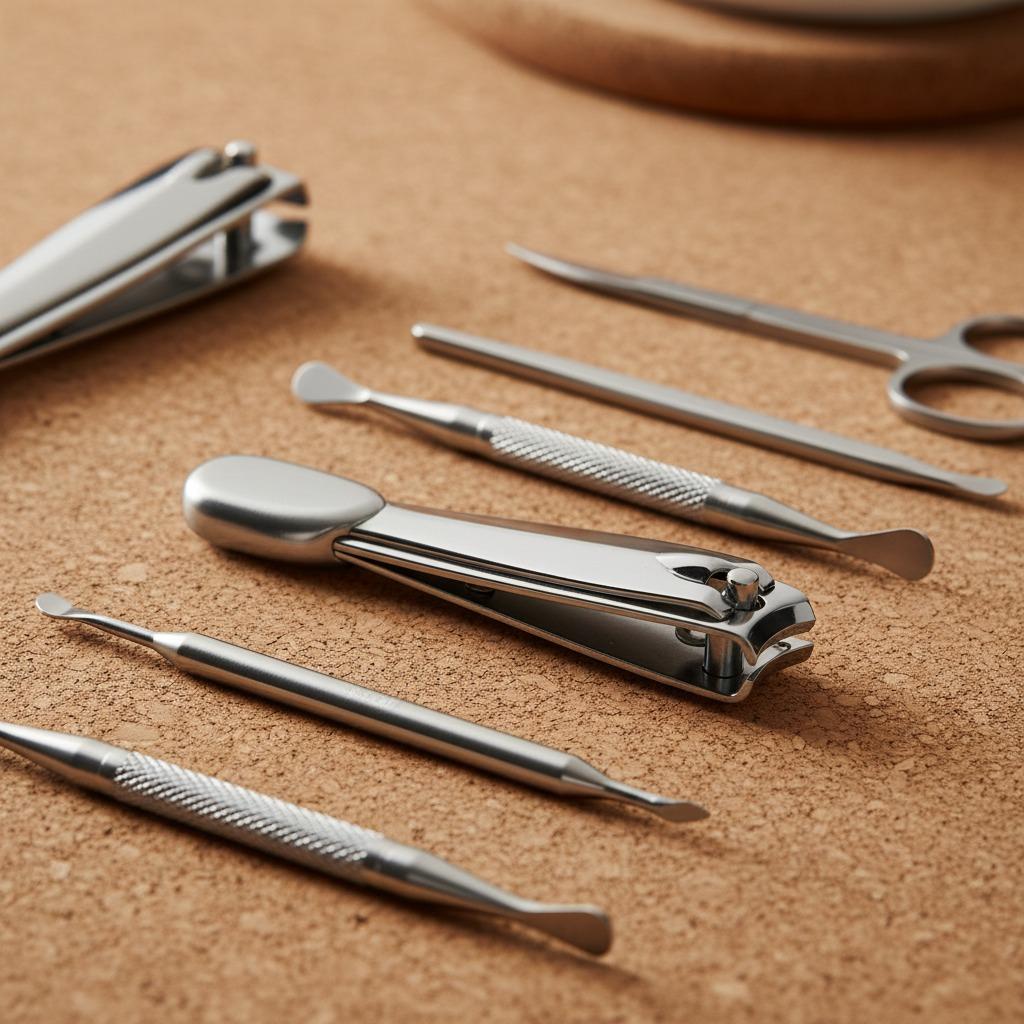











Anti-splash nail clippers are designed to solve a small but persistent grooming problem: nail fragments flying away during trimming. For end users, the benefit is a cleaner sink, desk, bathroom floor or travel space. For beauty tool buyers, the value depends on whether the catcher, blades, lever and cleaning access work together as a practical tool rather than a decorative feature.
This guide explains how anti-splash nail clippers control clippings, what design details affect performance, and how sourcing teams can evaluate samples before adding them to retail ranges, travel kits, promotional sets or personal care assortments. It is written for buyers comparing beauty tool products, but it also answers common user questions about cleaning, maintenance and everyday use.
What an anti-splash nail clipper is meant to do
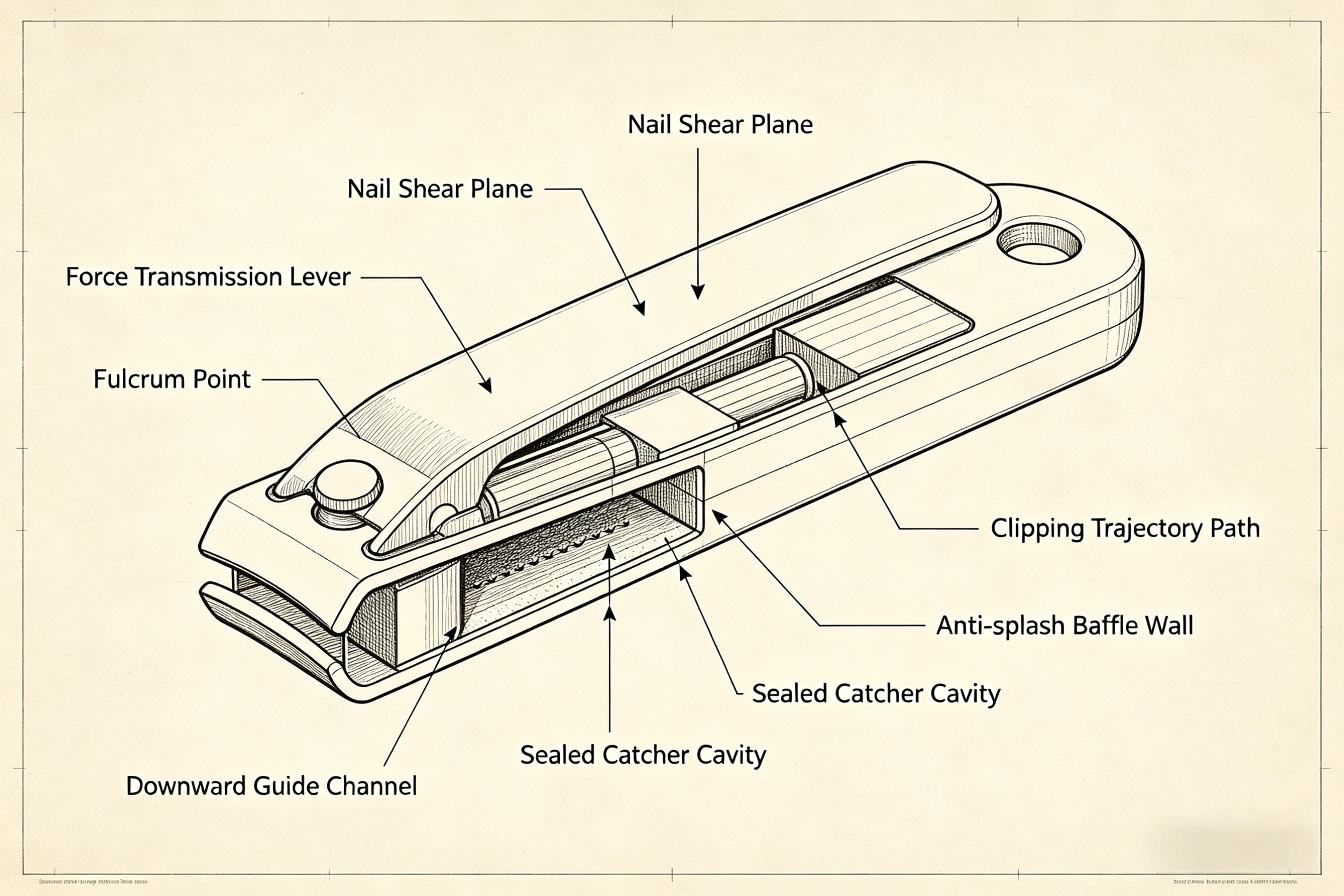
An anti-splash nail clipper uses a guard, catcher or semi-enclosed structure near the cutting head to intercept nail fragments as they separate from the nail. The goal is not to change the basic trimming action. The tool still relies on a lever, pivot and upper and lower blades. The difference is that the design manages the path of the clipping immediately after the cut.
When a nail is clipped, the keratin bends slightly and then fractures under the pressure of the blades. That release can send the separated piece outward, especially if the nail angle, blade alignment or cutting force directs it away from the tool. A well-positioned catcher places a physical barrier close enough to the shear area that fragments are stopped before they travel across the room.
For B2B buyers, the main search intent is usually practical: will the product really reduce mess, feel comfortable, cut cleanly and be easy to maintain? The answer depends on the complete structure. A clipper with a catcher that traps debris but blocks visibility may frustrate users. A clipper with sharp-looking blades but poor alignment may crush nails and scatter fragments. A useful design balances containment with normal trimming posture.
Core components that affect clipping control
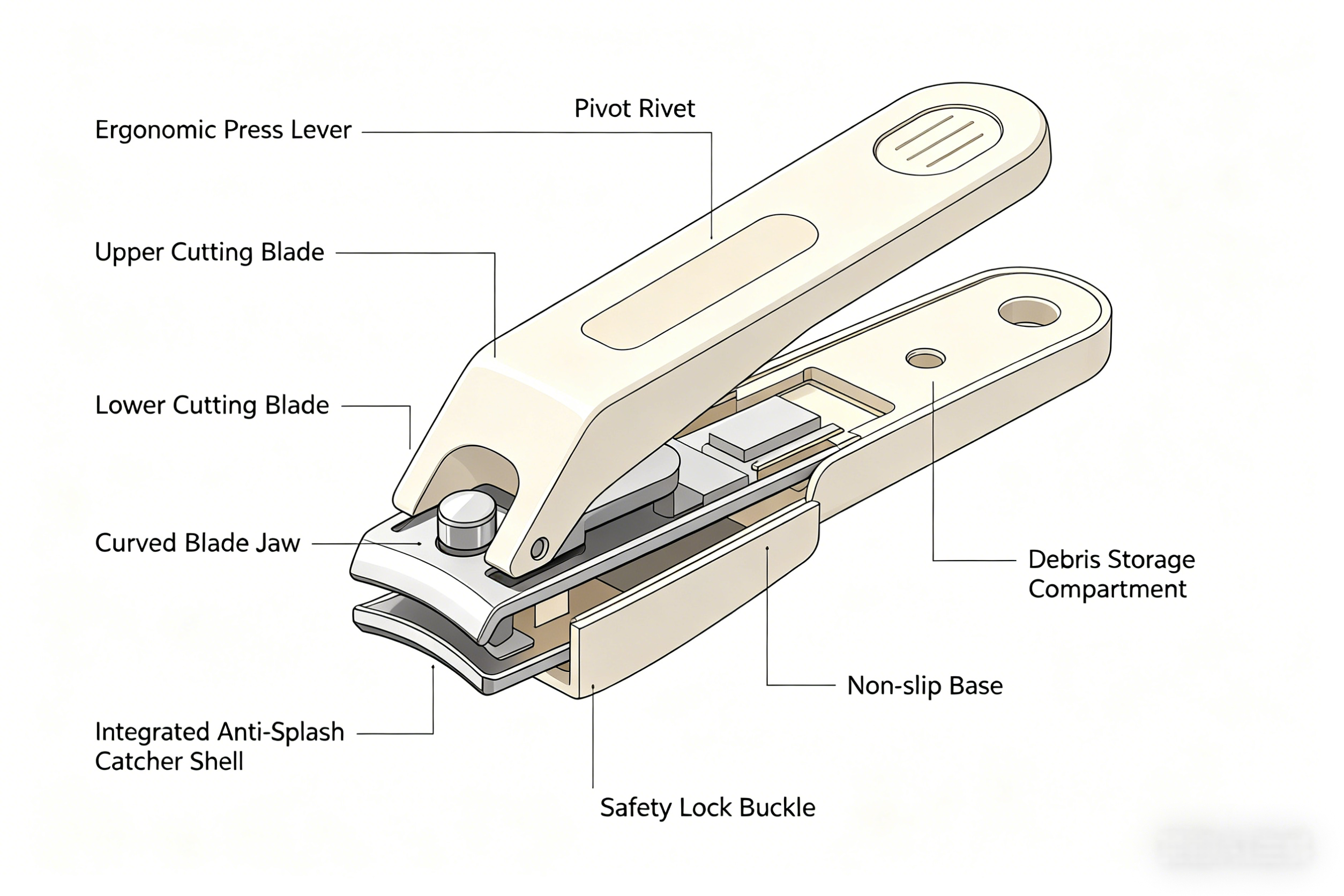
Most anti-splash nail clippers share the same fundamental mechanical layout as standard clippers. The difference lies in how the cutting head and surrounding structure are shaped. Buyers should evaluate the tool as a small engineered product, not only as a metal accessory.
Catcher or guard
The catcher should cover the main direction of clipping travel without making it difficult for the nail to enter the cutting area. Some designs use an integrated side guard; others use a more enclosed chamber or removable cover. The best choice depends on the intended user, packaging format and cleaning expectations.
Blade geometry
Curved blades can follow the natural arc of many fingernails, while wider jaws may be useful for larger nails when the clipper is designed for that purpose. Wider is not automatically better. A narrower, well-aligned blade can feel more precise than a wide blade with uneven contact.
Blade alignment and edge finish
The upper and lower cutting edges should meet evenly. If one side contacts before the other, the nail may bend, split or tear before it separates. Alignment also affects where the clipping travels. Rough edges, burrs or poorly finished non-cutting surfaces can reduce perceived quality and user comfort.
Lever and pivot stability
The lever must provide enough mechanical advantage for comfortable cutting. A stable pivot helps the blades meet consistently. Side wobble, uneven resistance or a lever that feels loose can make the cutting action less predictable, especially on thicker nails.
Cleaning access
A catcher is only useful if it can be emptied easily. Buyers should check whether clippings can be removed without shaking the tool aggressively, touching sharp fragments or forcing a cover. Internal corners that trap debris may create a poor user experience even if the product looks neat in photos.
How catcher placement changes real-world performance
Catcher placement is the defining design issue in an anti-splash nail clipper. If the guard sits too far from the cutting edge, fragments may escape before they reach the chamber. If it sits too close, it may interfere with nail positioning or make cleaning difficult. The ideal structure leaves enough open space for a natural trimming angle while intercepting the most likely clipping path.
During sample review, buyers should not test only one straight cut at the center of the blade. Users trim nails from different angles: straight across, slightly diagonal, from the left corner and from the right corner. A catcher that works only when the nail is placed perfectly may fail in ordinary use. Testing from several positions reveals whether the guard covers realistic clipping directions.
Visibility also matters. If the guard hides the cutting edge, users may over-trim or cut unevenly. Transparent or open-view designs can help, but material clarity alone does not guarantee usability. The shape must still allow the user to see the nail edge, position the blades and empty the chamber.
For retail buyers, this is where product photos can be misleading. A large guard may look protective but feel awkward. A slim guard may look elegant but leave side gaps. The most reliable approach is hands-on sample testing with several nail thicknesses and trimming angles.
Blade design, material and finishing considerations
Clean cutting starts with the blade. Stainless steel is widely used for nail clippers because it offers durability and corrosion resistance for tools often stored in bathrooms, toiletry bags or salon drawers. However, the phrase stainless steel is not enough to judge quality. The specific grade, edge forming, heat treatment, polishing and finishing should be confirmed through supplier documents and physical samples rather than assumed from a listing.
The cutting edges should shear the nail instead of crushing it. Crushing often produces ragged edges and unpredictable fragment movement. Buyers can identify problems by checking whether the tool cuts smoothly through the center and both sides of the blade, whether the lever pressure feels even, and whether nails are left with splits or rough ridges.
Surface finishing is also part of quality. Non-cutting edges should not feel sharp against the fingers. Stamped or formed areas should be free from obvious burrs. If the anti-splash catcher is made from a separate piece, the joint should feel secure and should not create debris-trapping gaps that are difficult to clean.
Where regulatory requirements apply, buyers should verify current obligations for the sales market. For example, general consumer product safety expectations may be overseen by bodies such as the U.S. Consumer Product Safety Commission, while products sold in the European Union may need to be assessed against applicable General Product Safety Regulation responsibilities. These references are not product certifications. Buyers should confirm the latest requirements, supplier declarations and testing documents for their own market and product claims.
Comparison table: standard vs anti-splash nail clippers
| Evaluation point | Standard nail clipper | Anti-splash nail clipper | Buyer note |
|---|---|---|---|
| Clipping control | Fragments may fly outward depending on cut angle and blade alignment. | Catcher or guard is intended to intercept fragments near the blade. | Test normal trimming angles, not only ideal center cuts. |
| Cleaning | Tool itself is simple, but surrounding area may need cleanup. | Captured clippings must be emptied from the guard or chamber. | Check whether the chamber clears easily without forcing. |
| Visibility | Cutting edge is usually open and easy to see. | Guard may improve containment but can block the view if poorly shaped. | Balance containment with precise nail positioning. |
| Packaging fit | Flat profile often fits many trays, pouches or cards. | Catcher may change thickness, shape or orientation. | Confirm fit with planned packaging and grooming sets. |
| User perception | Familiar and simple. | Seen as cleaner and more controlled when it works well. | Feature must be functional, not only cosmetic. |
Best use cases for anti-splash nail clippers
Anti-splash nail clippers are useful wherever cleanup matters. In shared bathrooms, they reduce the chance of nail fragments landing on sinks, towels or floors. In travel kits, they help users trim nails in small hotel rooms or temporary spaces. For older users or people who prefer less cleanup after grooming, a catcher can make the task feel more controlled.
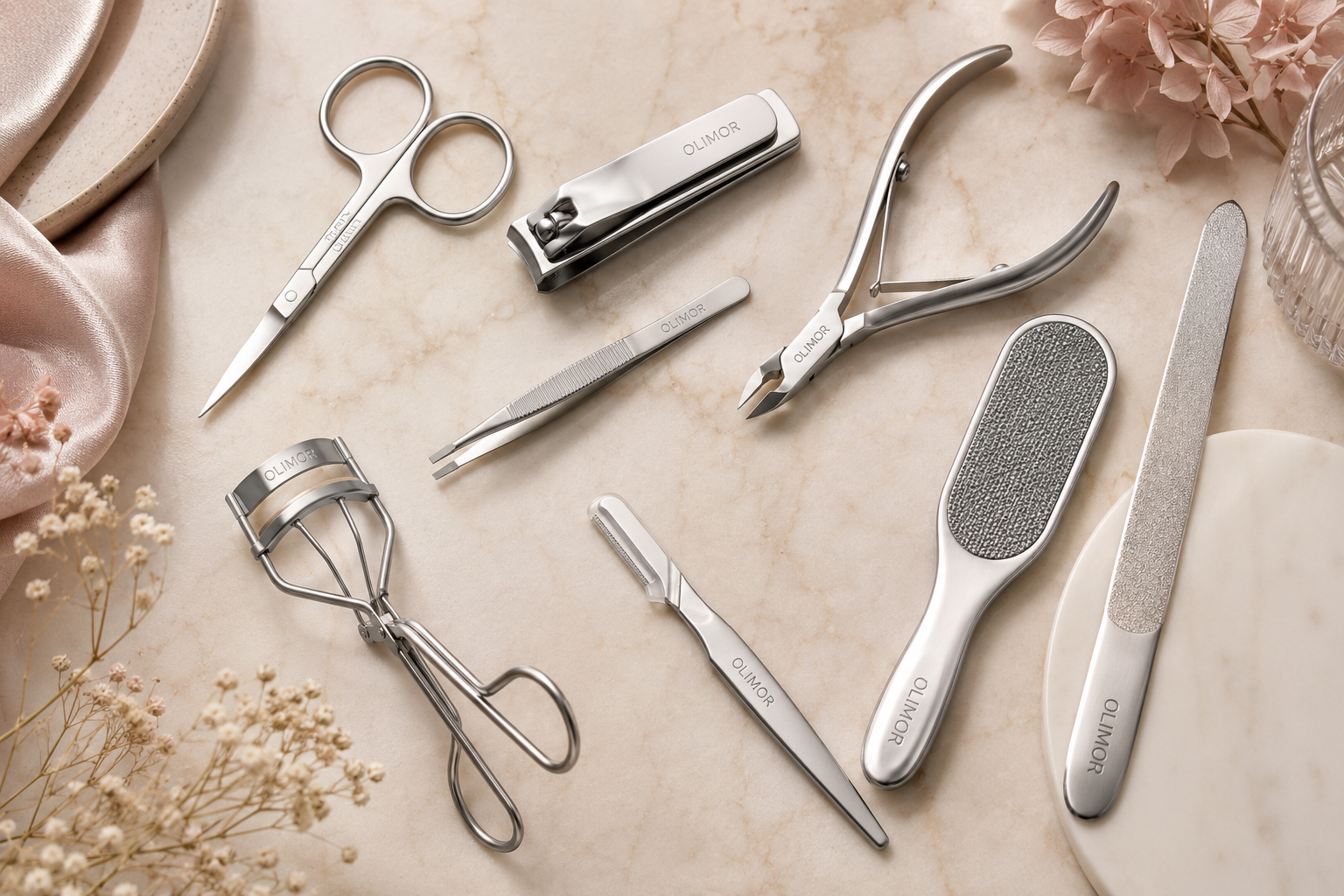
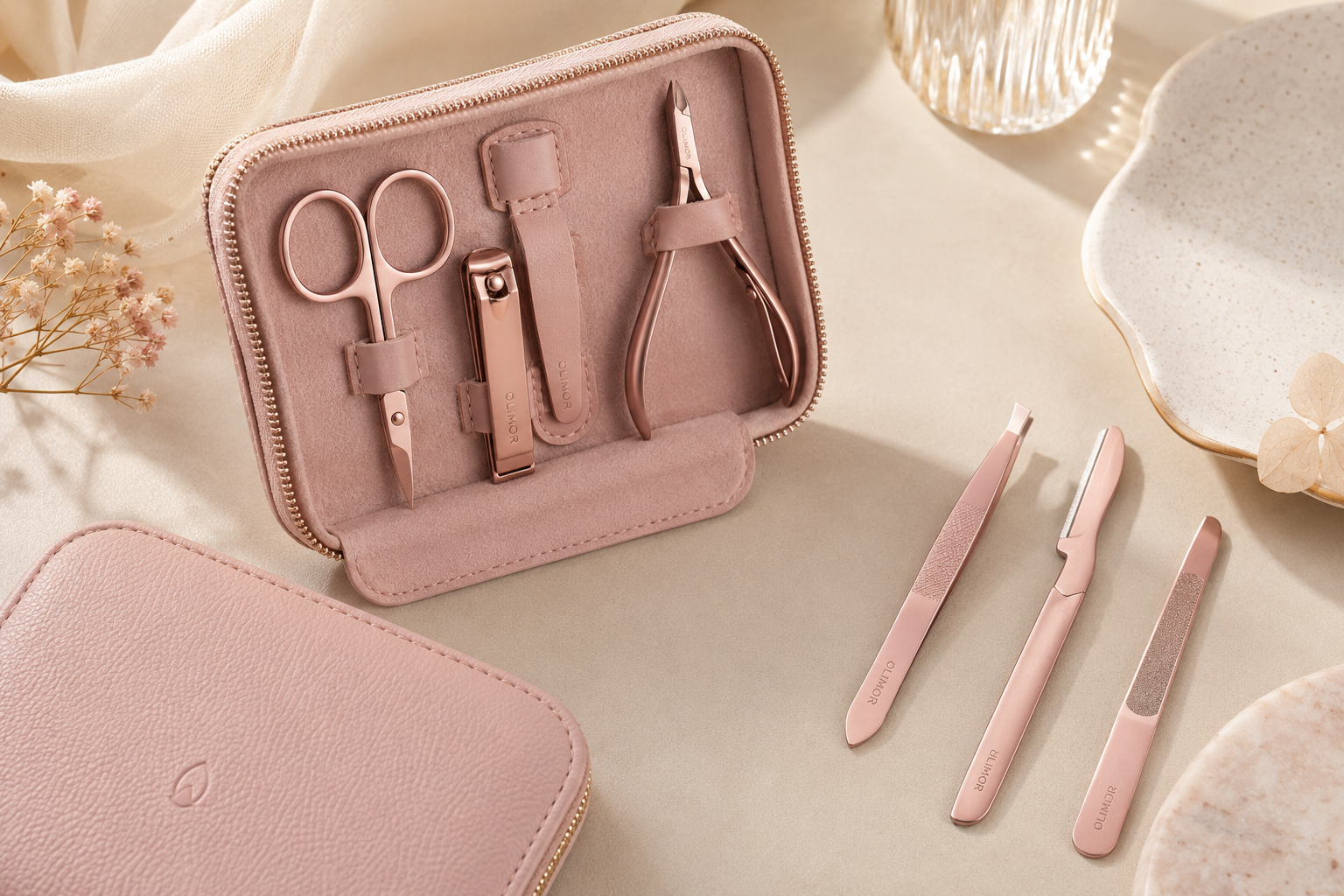
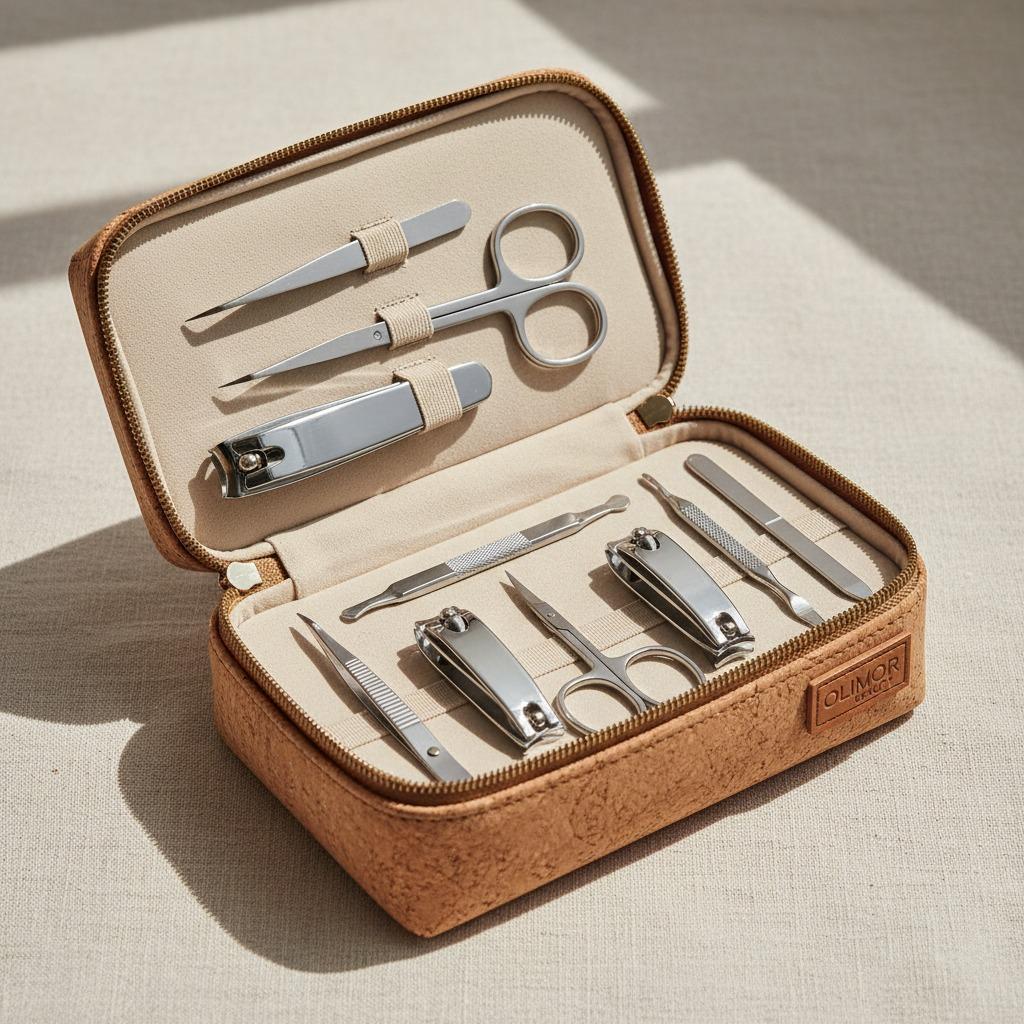
They are also suitable for hygiene-focused grooming sets. A clipper with a catcher can be paired with nail files, tweezers, scissors and other tools in curated beauty tool collections. For this kind of set, the buyer should consider visual consistency, finish, hand feel and packaging arrangement in addition to clipping control.
Commercially, anti-splash clippers can serve several product positions. A basic version may fit everyday retail. A more refined version with smoother finishing and better packaging may suit gift sets or travel assortments. A compact design may be important for promotional kits. In each case, the design should match the channel: a feature that is hard to explain or maintain may not perform well even if it appears innovative.
Sample inspection checklist for sourcing teams
Before approving an anti-splash nail clipper, sourcing teams should inspect both the mechanical function and the user experience. The following checklist can be used during sample comparison or supplier discussions.
- Cutting consistency: Trim from the center, left side and right side of the blade to check whether the cut remains smooth.
- Containment behavior: Observe whether clippings stay inside the catcher during typical fingernail and toenail angles.
- Blade meeting line: Look closely at how the upper and lower edges contact each other when pressed.
- Lever feel: Check for smooth pressure, stable rebound and minimal side movement.
- Pivot condition: Inspect whether the pivot feels secure and whether movement remains stable after repeated use.
- Surface safety: Run fingers carefully along non-cutting contact areas to identify burrs or uncomfortable edges.
- Catcher access: Empty the chamber several times and check for trapped clippings in corners or joints.
- Storage and packaging fit: Confirm that the catcher and lever shape suit the intended tray, pouch, card or set box.
- Cleaning practicality: Wipe the cutting area and guard to see whether nail dust and fragments are easy to remove.
- Supplier documentation: Request product specifications, material information, quality control process details and any market-specific documents relevant to your sales region.
Cost factors buyers should understand
Anti-splash nail clippers can vary in cost for reasons beyond size or appearance. The catcher structure may require additional forming, assembly or finishing steps. A more precise blade and pivot system can require tighter process control. Surface finish, packaging, customization and inspection requirements may also affect cost.
Buyers should avoid evaluating price without understanding the specification. A lower-cost option may be acceptable for a simple promotional use if it still cuts safely and contains clippings reasonably. A retail product that relies on the anti-splash feature as a key selling point should be held to a higher standard for blade alignment, catcher usability and finish consistency.
Customization can also influence cost and development work. Branding on the lever, color treatment, packaging design, set configuration or instruction inserts may be possible depending on the product and supplier capability. Buyers should confirm which elements can be customized, what artwork files are required, and how changes affect sampling, approval and production planning. Do not assume minimum order quantity, price or lead time until the supplier has reviewed the exact request.
Cleaning, maintenance and user instructions
Clear user instructions help reduce complaints and improve the long-term value of the product. A catcher makes trimming cleaner, but it does not eliminate the need to empty and dry the tool. Nail fragments and fine nail dust can collect near the cutting head, especially if the tool is used frequently.
- Empty captured clippings after each trimming session.
- Wipe the cutting area and catcher with a dry cloth to remove fragments and fine dust.
- Keep the clipper dry before storage, especially after bathroom use.
- Check the pivot area occasionally for trapped debris or looseness.
- Store the clipper where loose items will not damage the cutting edge.
If the product includes a movable cover or chamber, users should open or clear it gently. Forcing a catcher can damage the mechanism or create gaps. Buyers preparing retail packaging may want to include a simple cleaning note so the anti-splash feature is understood and used correctly.
How to evaluate an anti-splash nail clipper supplier
A capable supplier should be able to discuss more than appearance. Buyers should ask how the catcher is positioned, how blade alignment is checked, how surface finishing is controlled and how samples should be evaluated. The supplier does not need to overstate performance; practical answers are more useful than broad claims.
Helpful supplier discussion points include intended use, target market, packaging style, branding needs, inspection criteria and quality expectations. If the clipper will be included in a larger set, share the other tools and packaging constraints early. If the item is for retail, discuss how the feature will be communicated to end users without making unsupported claims.
Buyers can also compare how suppliers handle sample feedback. If a sample catches clippings well but is difficult to empty, the supplier should be able to explain whether the chamber design can be adjusted or whether another model would be more suitable. If the lever feels unstable, the discussion should move to pivot quality and process control rather than only cosmetic changes.
For product planning, you can contact Olimor to discuss suitable grooming tool directions, or send an inquiry with your intended channel, packaging needs and sample evaluation priorities.
FAQ for B2B buyers
Can I request samples before placing an order?
Sample availability should be confirmed with the supplier based on the specific nail clipper model, customization requirements and destination. When reviewing samples, test cutting consistency, catcher performance, cleaning access and packaging fit.
Is there a fixed MOQ for anti-splash nail clippers?
MOQ depends on the selected product, customization, packaging and production arrangement. Buyers should share the intended order plan and branding requirements so the supplier can provide accurate information.
Can the clipper be customized for a retail or travel kit?
Customization may include branding, packaging, set configuration or visual finish depending on the model and project. Confirm artwork requirements, sample approval steps and any effect on cost or production planning before finalizing.
How should quality be checked before shipment?
Quality checks should cover blade alignment, cutting action, lever stability, catcher function, surface finish, cleanliness, packaging condition and agreed specifications. Buyers should also verify any market-specific documents required for their sales region.
What affects lead time?
Lead time can be affected by sample approval, customization, packaging materials, production schedule, inspection requirements and shipping method. Ask for a project-specific estimate after the final specification is confirmed.
Key takeaway
An anti-splash nail clipper is valuable when the catcher, blades, lever and cleaning path work as one system. The catcher should stop fragments without blocking natural trimming. The blades should cut cleanly rather than crush the nail. The lever and pivot should feel stable. The chamber should empty easily.
For buyers, the safest approach is to evaluate samples through real use rather than relying on appearance. Compare containment, cutting quality, comfort, cleaning and supplier support. When these details are handled well, an anti-splash nail clipper becomes a practical improvement to a familiar everyday grooming tool.