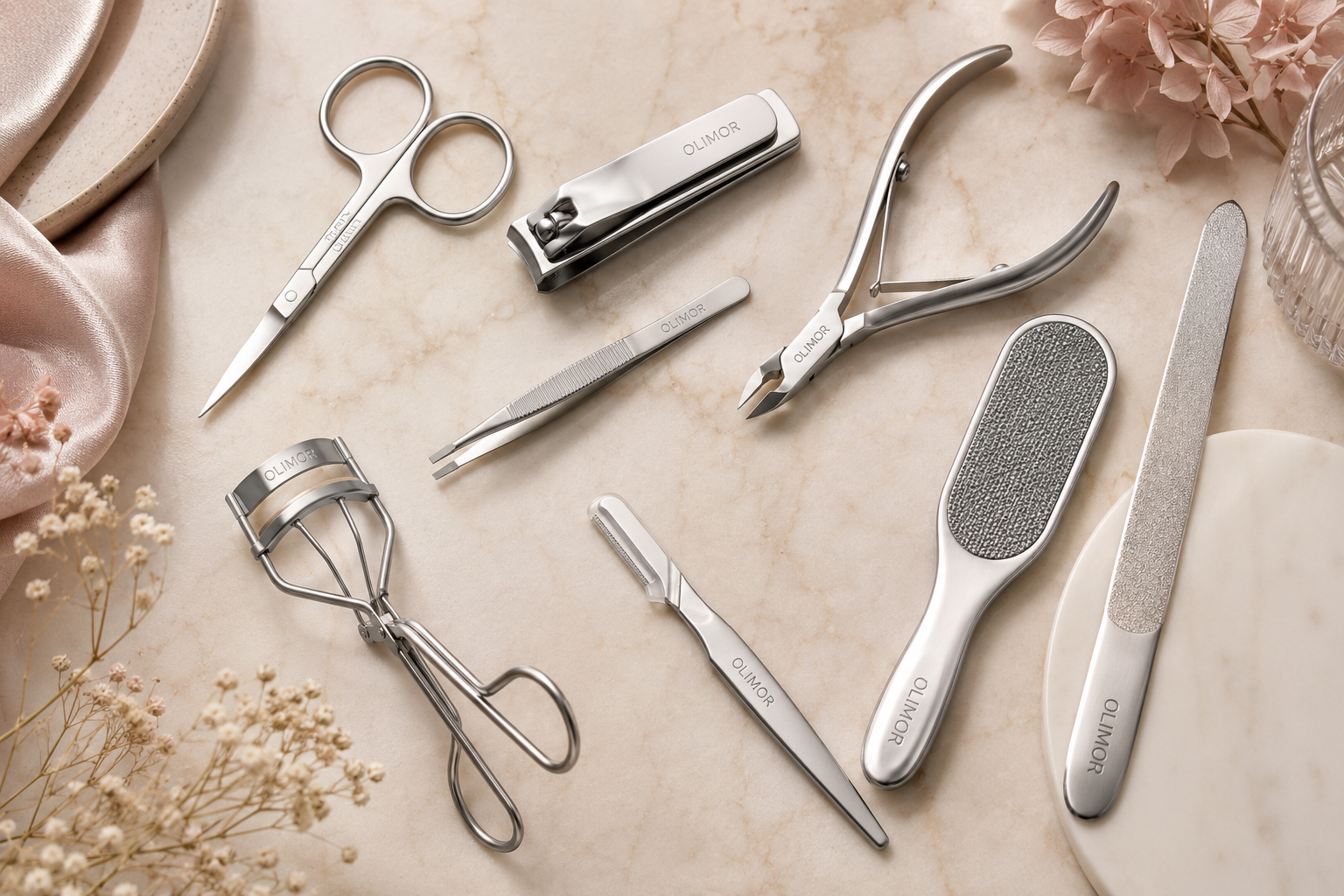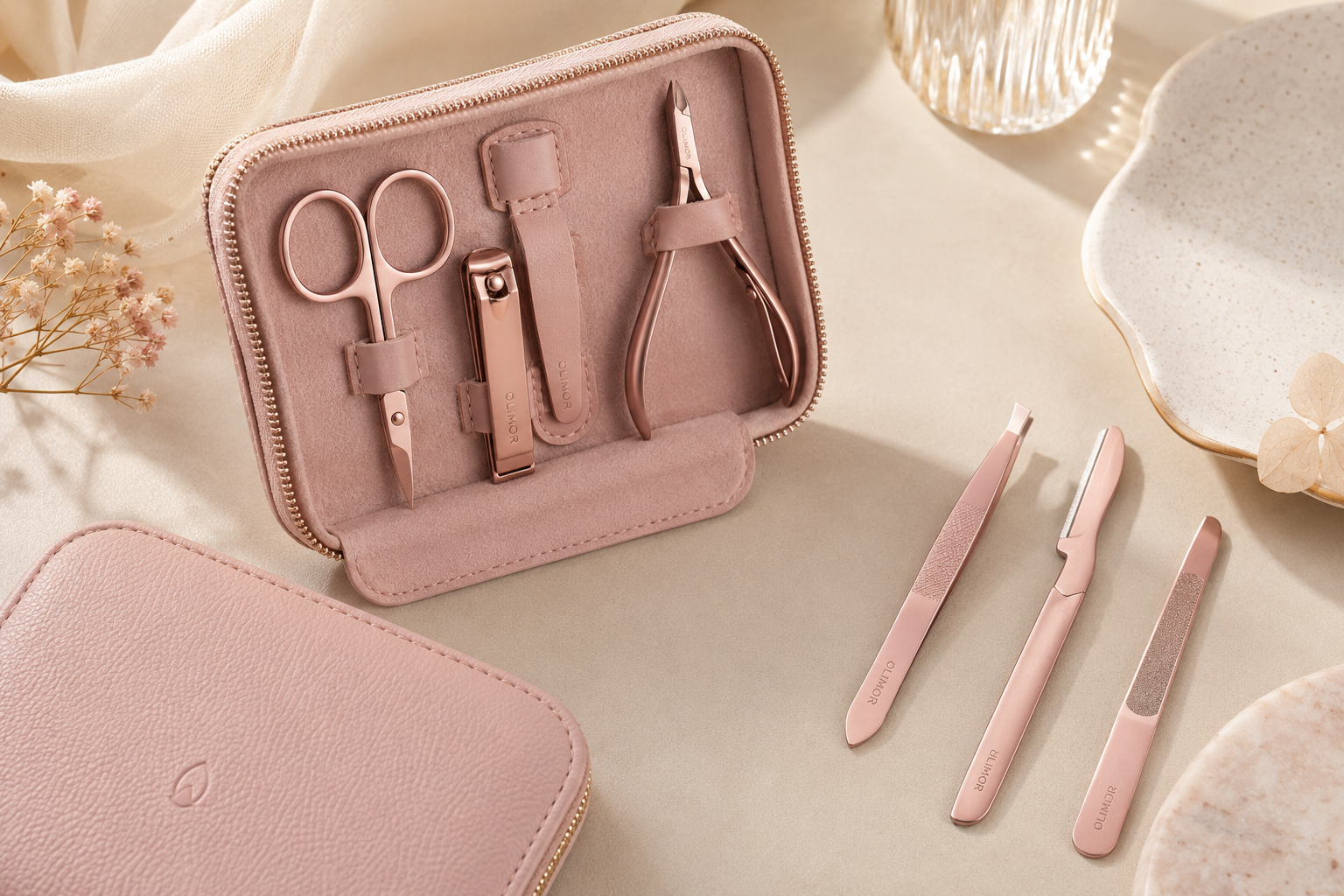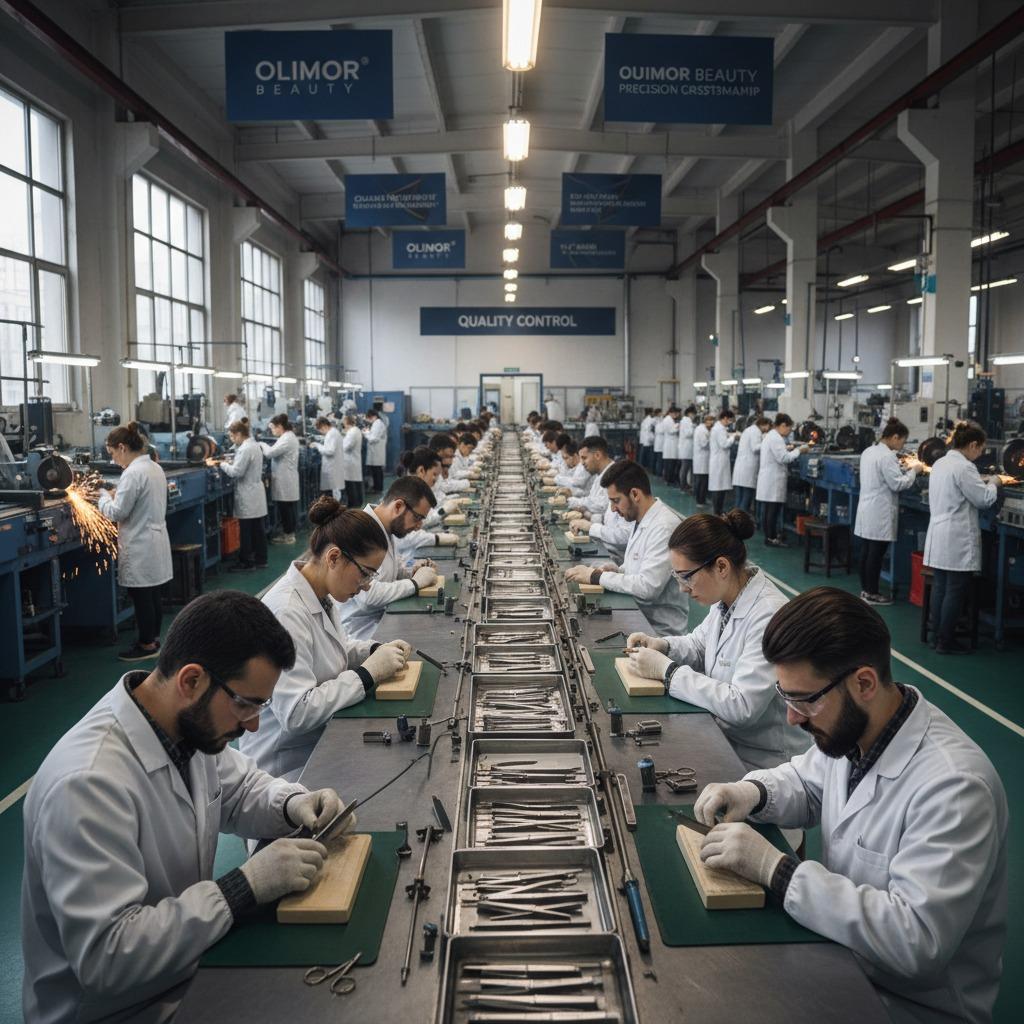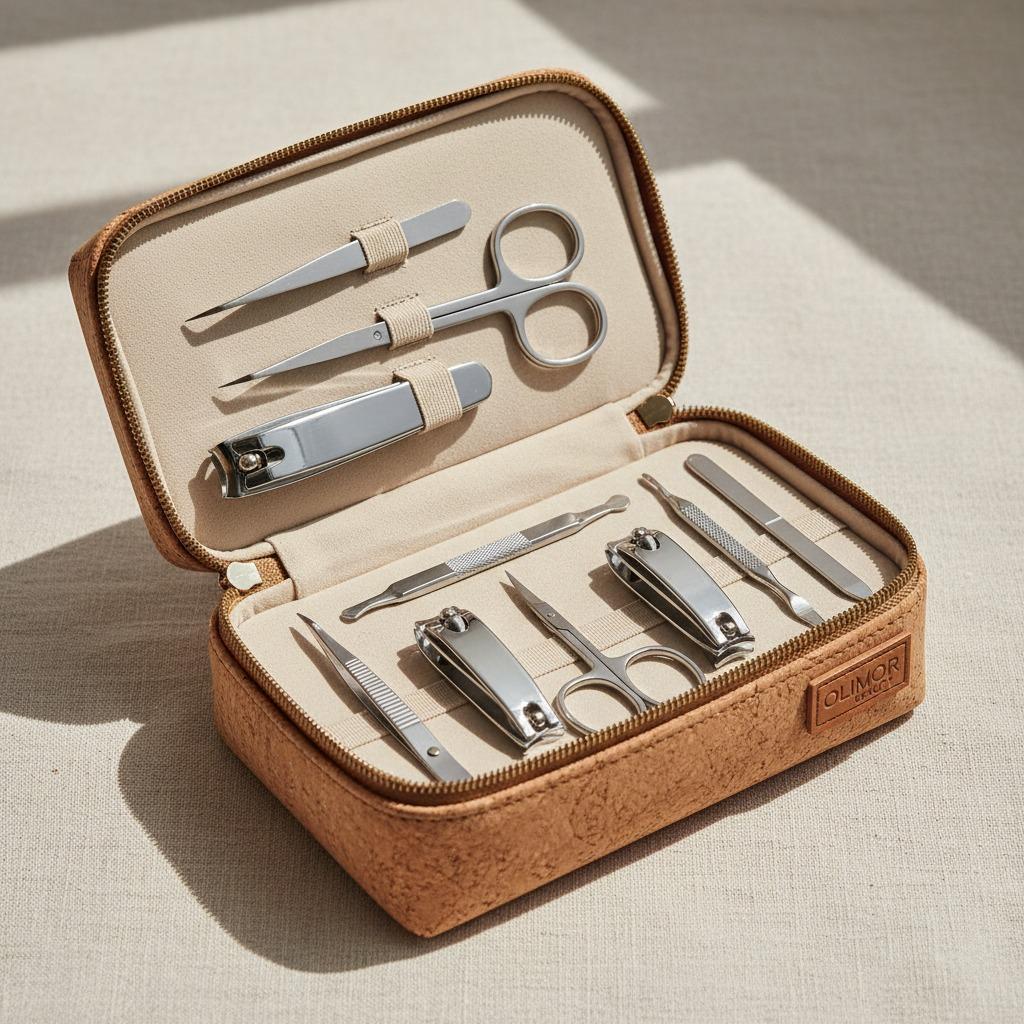











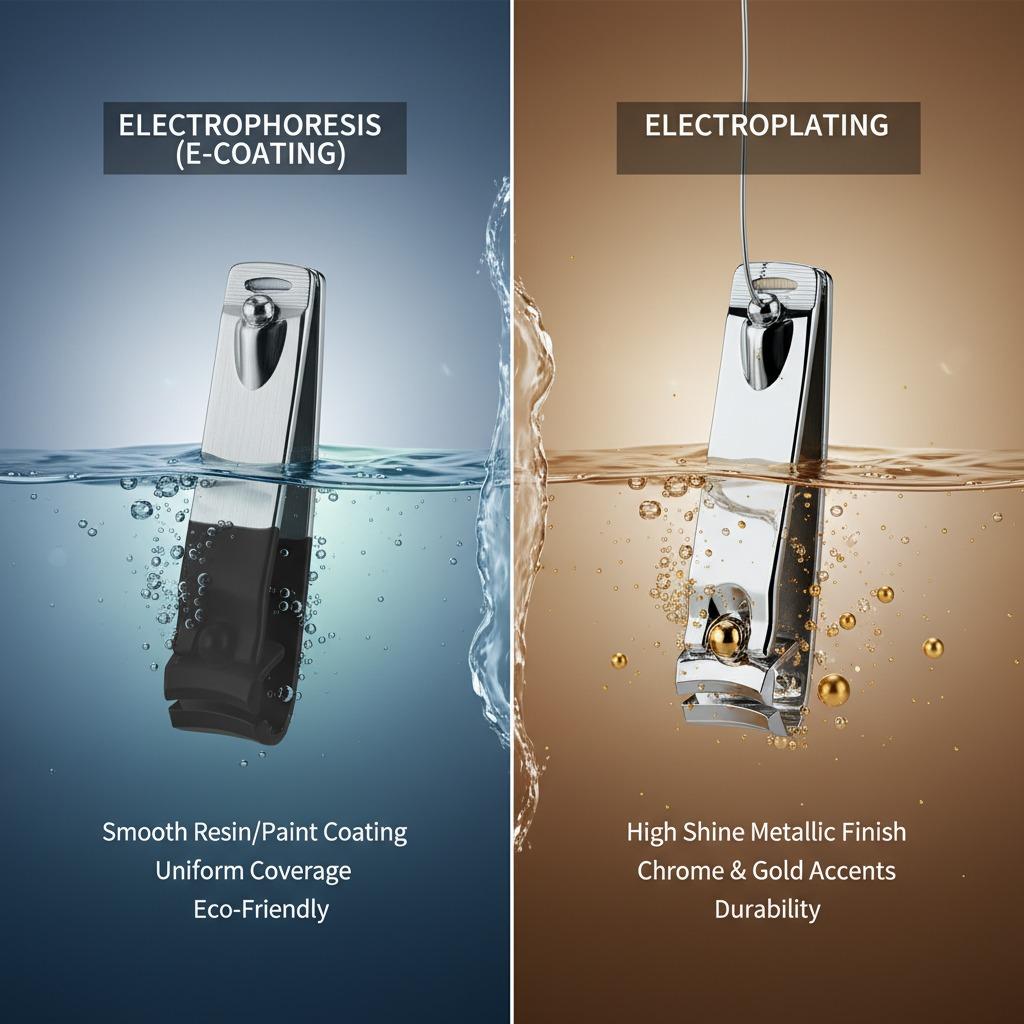
For nail clippers, the surface finish is not just a decorative detail. It affects how the tool looks on a retail shelf, how it resists bathroom humidity, how it feels in the hand, and how well it tolerates repeated contact with skin, nails, water, and cleaning products. Two common surface treatment protocols used for metal personal care tools are electrophoresis, also called electrophoretic deposition or E-coating, and electroplating.
Both can be suitable for nail clippers, but they solve different problems. Electroplating deposits a thin metallic layer such as nickel, chrome, zinc, or gold onto a conductive clipper surface. Electrophoresis deposits charged resin or paint particles from a water-based bath, then cures the coating into a protective polymer film. The right choice depends on the product position, expected finish, geometry, corrosion requirements, and manufacturing priorities. If you are comparing options for a new sourcing project, this guide will help you evaluate the trade-offs before reviewing beauty tool products or preparing a technical brief.
Why Surface Treatment Matters on Nail Clippers
A nail clipper has several demanding areas: the lever is touched frequently, the cutting jaws meet hard nail edges, the pivot area can trap moisture, and small recesses around the hinge may be difficult to dry after use. Even when the base metal is strong, the surface layer plays a major role in daily performance.
Buyers should evaluate a surface treatment by asking how it performs in four practical situations:
- Handling and appearance: Does the finish create a polished metallic look, a matte color, or a smooth coated appearance suitable for the target market?
- Moisture exposure: Will the clipper be stored in bathrooms, travel kits, salons, or humid retail environments?
- Mechanical wear: Will the surface face frequent friction from fingers, packaging, cleaning cloths, or other tools?
- Coverage of complex shapes: Can the treatment reach recesses, curves, and hinge-adjacent areas where rust often starts?
Surface treatment should also align with the product’s selling point. A giftable premium clipper may require a high-shine metallic finish. A daily-use clipper sold in larger volumes may need consistent corrosion protection and stable color options. A professional or travel-oriented design may require a balanced approach that avoids chipping, uneven coating, or premature discoloration.
How Electroplating Works and Where It Performs Best
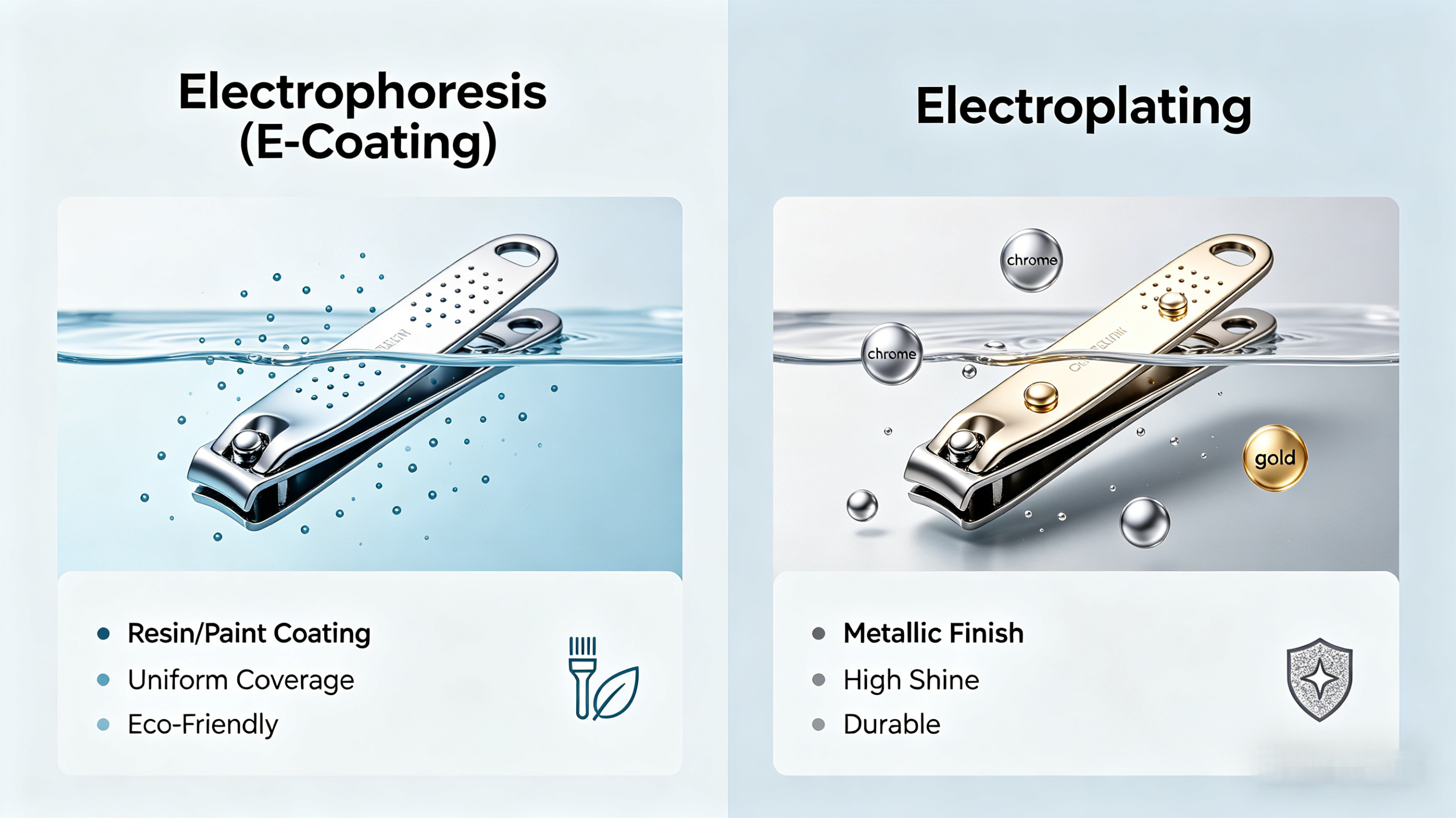
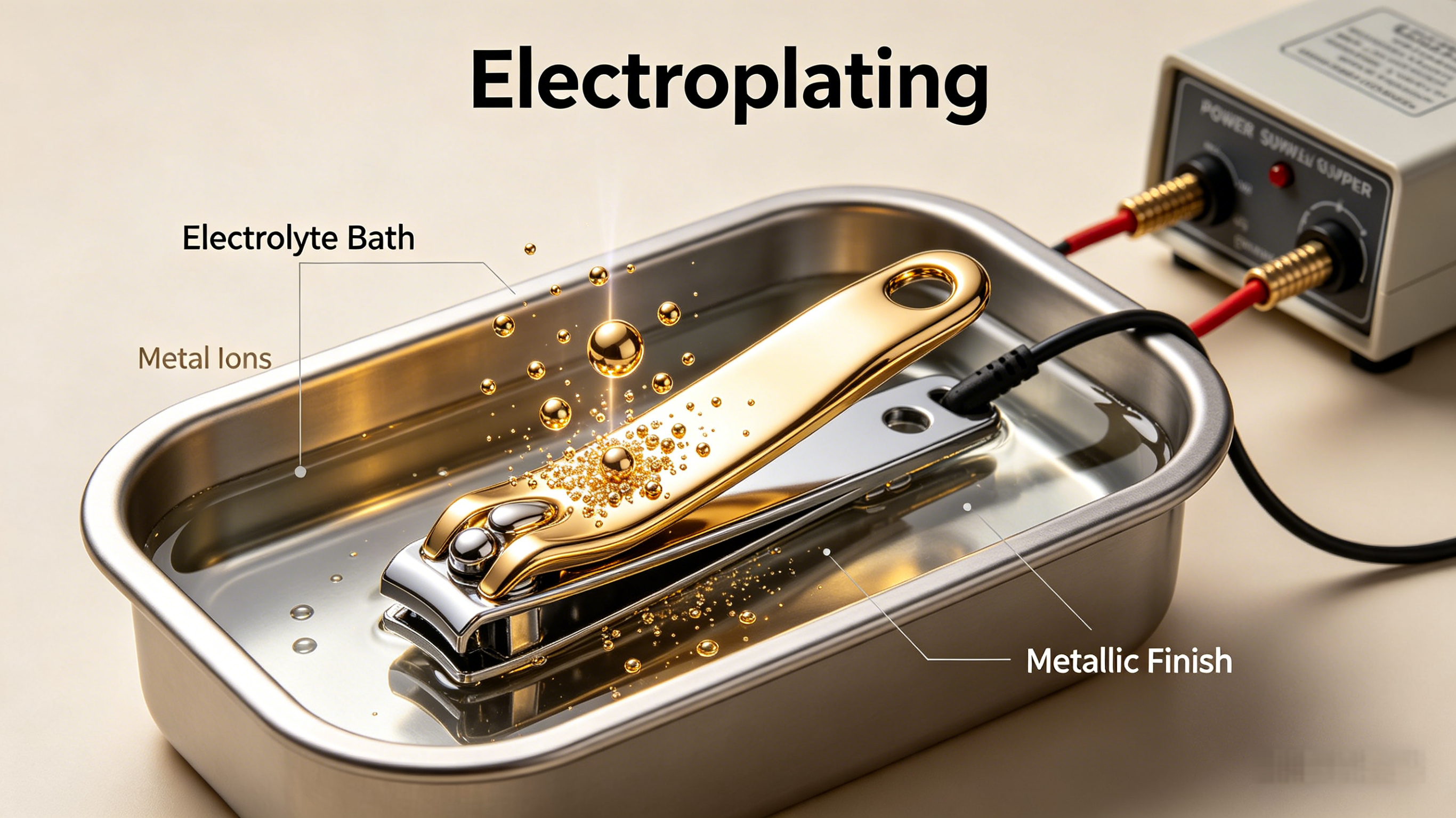
Electroplating uses electric current to deposit a thin layer of metal onto the conductive surface of the nail clipper. In a plating bath, the clipper acts as the cathode, while metal ions in the electrolyte solution reduce and bond to the surface. Common plated finishes can include nickel, chrome, zinc, or gold-toned metallic layers, depending on the required look and performance.
The main appeal of electroplating is its authentic metallic appearance. It can create the classic bright, reflective finish many buyers associate with premium grooming tools. A plated layer can also improve surface hardness and wear resistance, which is valuable on levers and visible exterior surfaces that are handled repeatedly.
Electroplating is often a strong candidate when the design objective is a refined metallic product that looks substantial and durable. However, it should be specified carefully. Complex nail clipper shapes may receive different coating thicknesses in exposed areas compared with recesses. Hinge regions, tight curves, and internal edges may require extra process control to avoid weak coverage. Plating also involves chemical baths and wastewater treatment considerations, so buyers should include process management and environmental handling in their factory evaluation rather than looking only at the final shine.
How Electrophoresis Works and Why It Suits Complex Shapes
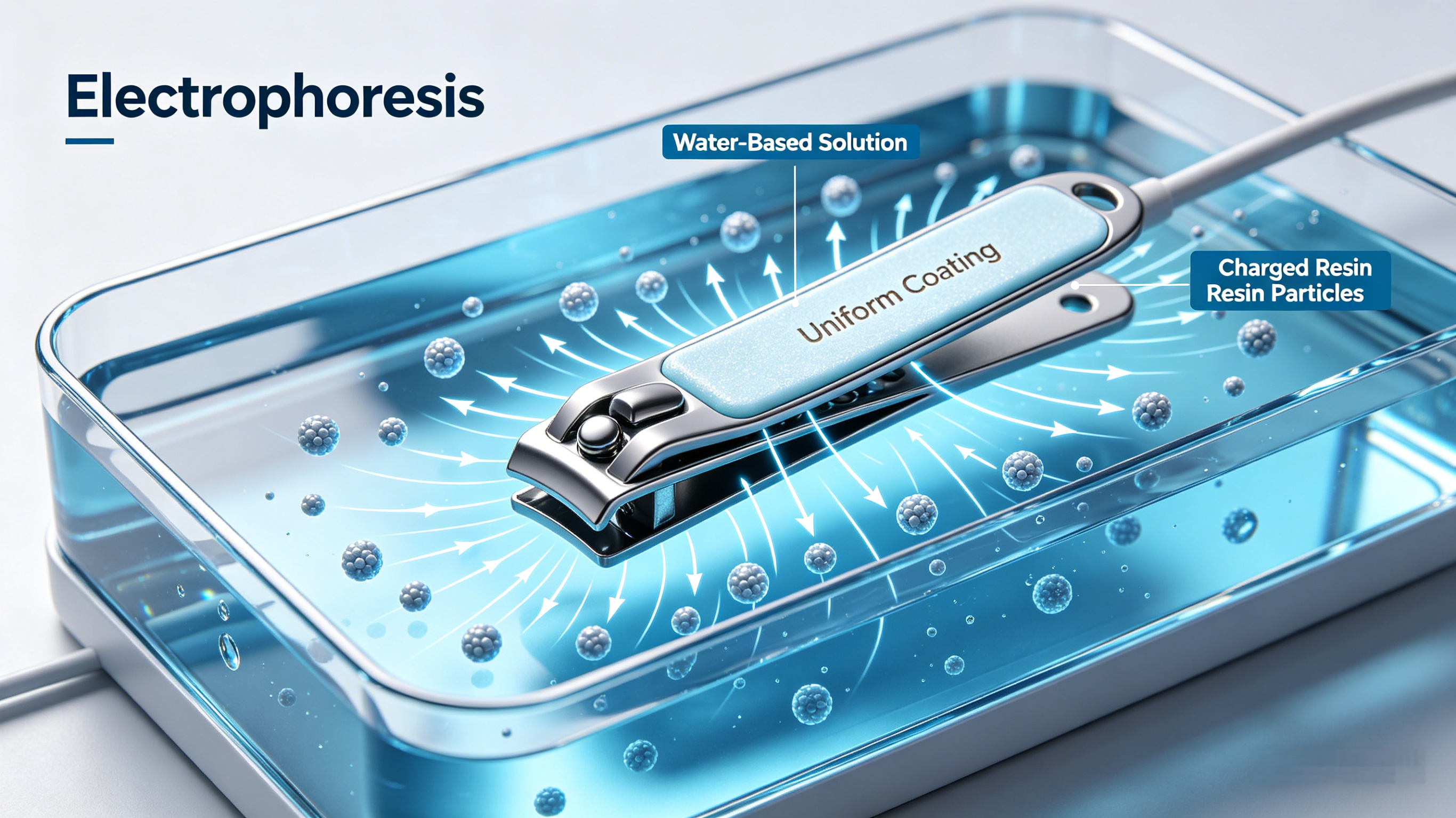
Electrophoresis, or E-coating, suspends charged paint or resin particles in a water-based solution. Under an electric field, those particles move toward and deposit on the oppositely charged nail clipper surface. After deposition, the coated part is baked or cured to form a continuous polymer film.
The important advantage of electrophoresis is uniform coverage. The process has strong throwing power, meaning it can coat recessed and complex areas more evenly than many traditional surface finishing methods. For nail clippers, that matters because moisture and residue often collect around pivots, jaw recesses, and the underside of levers. A consistent coating can reduce corrosion risk in those less visible areas.
Electrophoresis is also useful when a product line needs color choices, matte or gloss variation, or a smooth non-metallic appearance. Because the coating is resin or paint based, the visual effect is different from electroplating. It may not deliver the same cold metallic luster as chrome or nickel plating, but it can provide a clean, modern finish with good impact resistance and efficient production characteristics. Water-based, low-VOC formulations are also commonly associated with E-coating, making it attractive for brands that are evaluating environmental impact as part of sourcing decisions.
Electrophoresis vs. Electroplating: Practical Comparison
The best protocol is not determined by one feature. For nail clippers, the decision should balance finish style, geometry, wear expectations, production scale, and the environment in which the tool will be used. The comparison below summarizes the key differences buyers should consider.
| Decision Factor | Electroplating | Electrophoresis / E-Coating |
|---|---|---|
| Coating type | Metal layer such as nickel, chrome, zinc, or gold-toned plating | Resin or paint-based polymer coating |
| Appearance | Bright metallic luster with a premium visual effect | Smooth coated finish; can support matte, gloss, and color options |
| Coverage | Strong on exposed areas; may vary in recesses or complex geometry | Highly uniform, including recesses and detailed shapes |
| Corrosion protection | Strong when well specified and controlled | Excellent coverage can support humid-use protection |
| Wear behavior | High hardness and scratch resistance on metallic surfaces | Good impact resistance and flexibility for coated designs |
| Visual positioning | Best for classic, polished, luxury-oriented nail clippers | Best for everyday, colored, matte, or high-coverage designs |
| Process considerations | Requires close chemical and wastewater management | Often associated with water-based, lower-VOC coating systems |
Choosing a Finish for Your Product Positioning
A high-shine plated clipper can be the better choice when the product is intended to look metallic, giftable, or premium at first glance. Consumers often associate chrome-like or nickel-like brightness with hardness and durability. For a luxury-oriented product, electroplating can support that expectation, provided that coating uniformity, adhesion, and corrosion protection are verified during sampling.
Electrophoresis is often better for products that emphasize consistent protection, color, or modern visual design. It is especially practical for clippers with complex shapes or recessed areas where even coverage is important. A black, white, neutral, or colored coating can also help a brand differentiate its grooming tools without relying on metallic shine.
Some projects may consider a hybrid approach, such as using metal finishing for appearance and adding a clear electrophoretic topcoat for additional protection. Whether that approach is appropriate depends on the base material, clipper geometry, finish target, and manufacturing process. It should be evaluated through samples rather than assumed from theory.
Before final selection, define the use case clearly. Is the clipper for bathroom storage, travel kits, salon retail, personal care gift sets, or value-oriented daily use? Is the buyer’s priority bright shelf appeal, color consistency, rust resistance in recesses, or long-term handling wear? These answers will guide whether you compare plated options, E-coated options, or both across product collections.
Buyer Checklist for Surface Treatment Samples
When reviewing nail clipper samples, do not judge the finish only under showroom lighting. A coating that looks good in photos may still have weak points around the hinge, inconsistent edges, or surface defects that become obvious after handling. Use a structured review so each supplier or sample batch is evaluated in the same way.
- Inspect recesses and edges: Check the underside of the lever, jaw area, pivot region, and any stamped or curved details for thin coverage, bubbles, roughness, or discoloration.
- Compare color and gloss consistency: Place several samples side by side under neutral light. Look for variation between parts, especially for colored E-coatings or bright plated finishes.
- Check touch points: Handle the lever and body repeatedly. Surfaces that feel sharp, tacky, overly slippery, or uneven may create a poor user experience.
- Review adhesion expectations: Discuss what adhesion checks are used for the chosen coating and whether the process is suitable for the clipper’s base material and shape.
- Assess cleaning compatibility: Consider how the finish responds to normal wiping, drying, and storage conditions. Avoid assuming that all shiny finishes perform the same.
- Document the approved standard: Keep approved samples, finish photos, and written appearance limits so production can be compared against a clear reference.
If your team is preparing a new nail clipper project and needs to compare finish options, you can send an inquiry with the desired appearance, use case, target market, and packaging plan. For broader sourcing questions or custom development discussions, contact Olimor with the finish requirements you want to evaluate.
Maintenance Tips for Finished Nail Clippers
Even a well-finished nail clipper benefits from proper care. Surface treatments help protect the tool, but they do not replace basic maintenance. After use, wipe away nail residue and moisture, especially near the cutting jaws and pivot. Store the clipper in a dry location rather than leaving it on a wet sink or inside a damp toiletry pouch for long periods. Avoid harsh abrasive pads that can scratch plated surfaces or damage coated layers.
For retailers and brand owners, maintenance guidance can reduce customer complaints. A short care note on packaging or product pages helps users understand that corrosion resistance is improved by the finish, but everyday drying and clean storage still matter. This is especially relevant for personal care tools used in humid bathrooms or travel environments.
Final Recommendation
Electroplating and electrophoresis are both valuable surface treatment protocols for nail clippers, but they serve different product strategies. Choose electroplating when a genuine metallic finish, high shine, and hard surface feel are central to the product concept. Choose electrophoresis when uniform coverage, corrosion protection in complex areas, color flexibility, and efficient coated production are more important.
The most reliable decision comes from matching the finish to the product’s use case, then validating samples carefully. A nail clipper is a small tool, but its surface finish carries a large part of the buyer’s quality impression. By specifying the finish clearly and checking the areas where coatings usually fail first, brands can build nail clippers that look right, feel reliable, and perform consistently in everyday grooming routines.