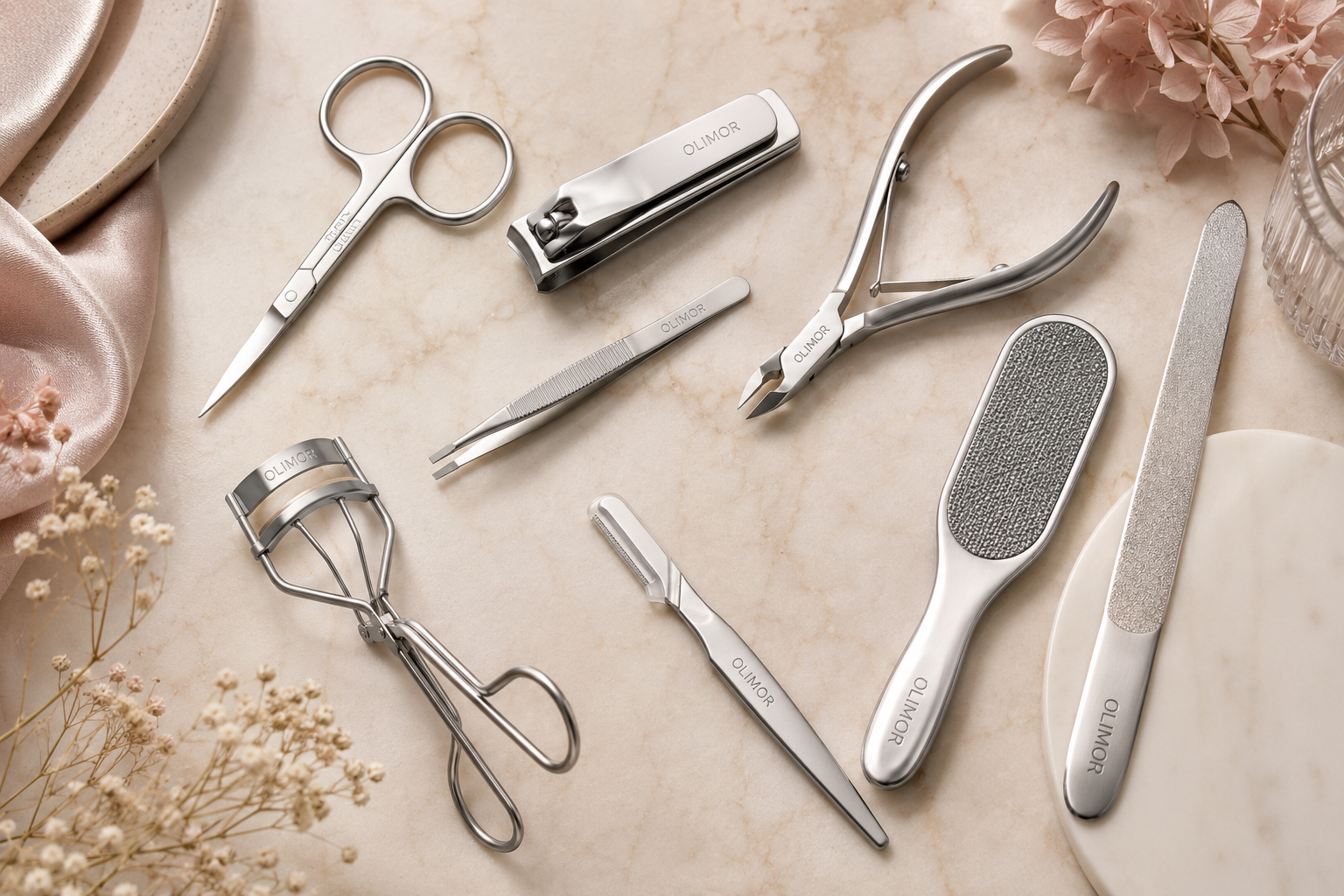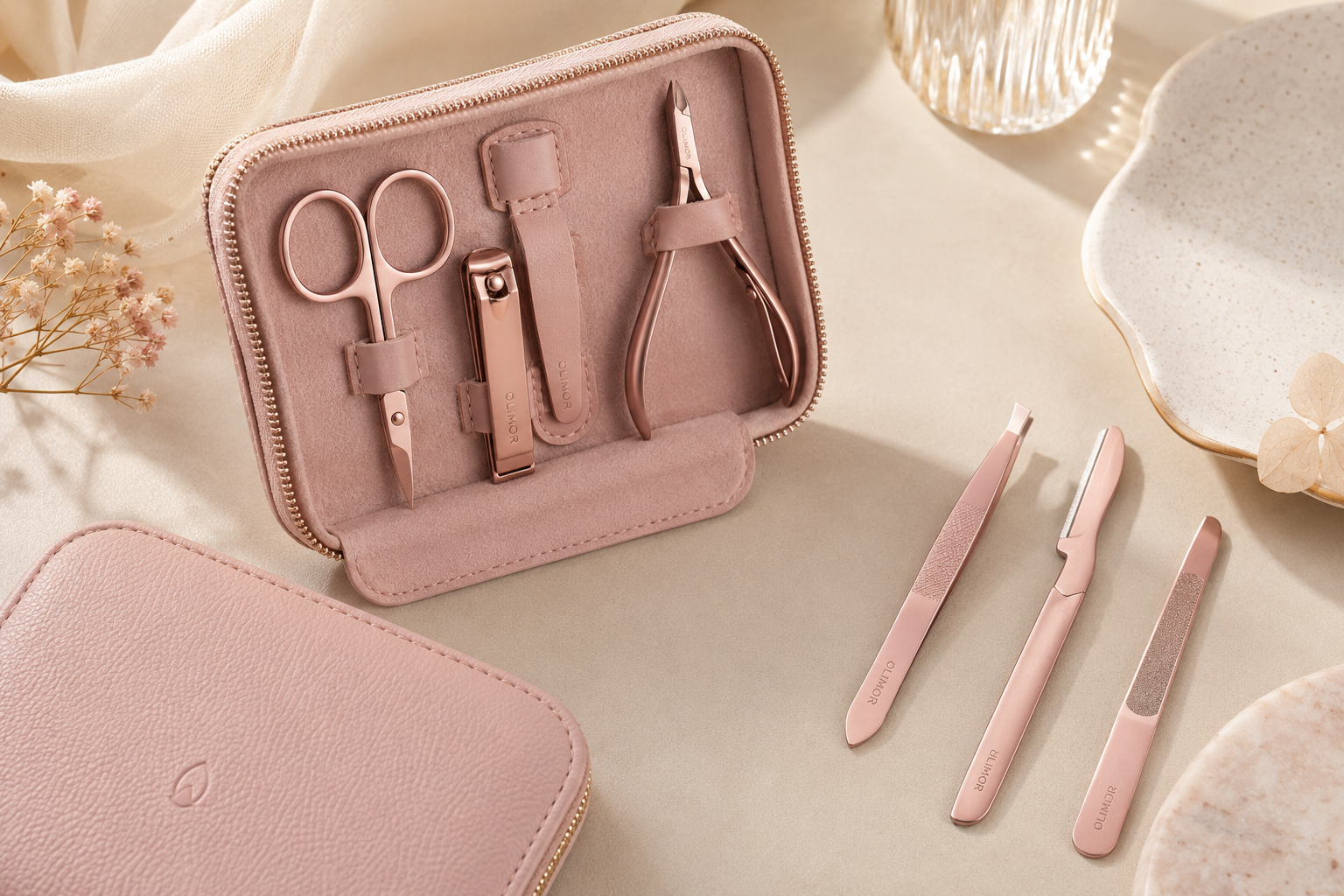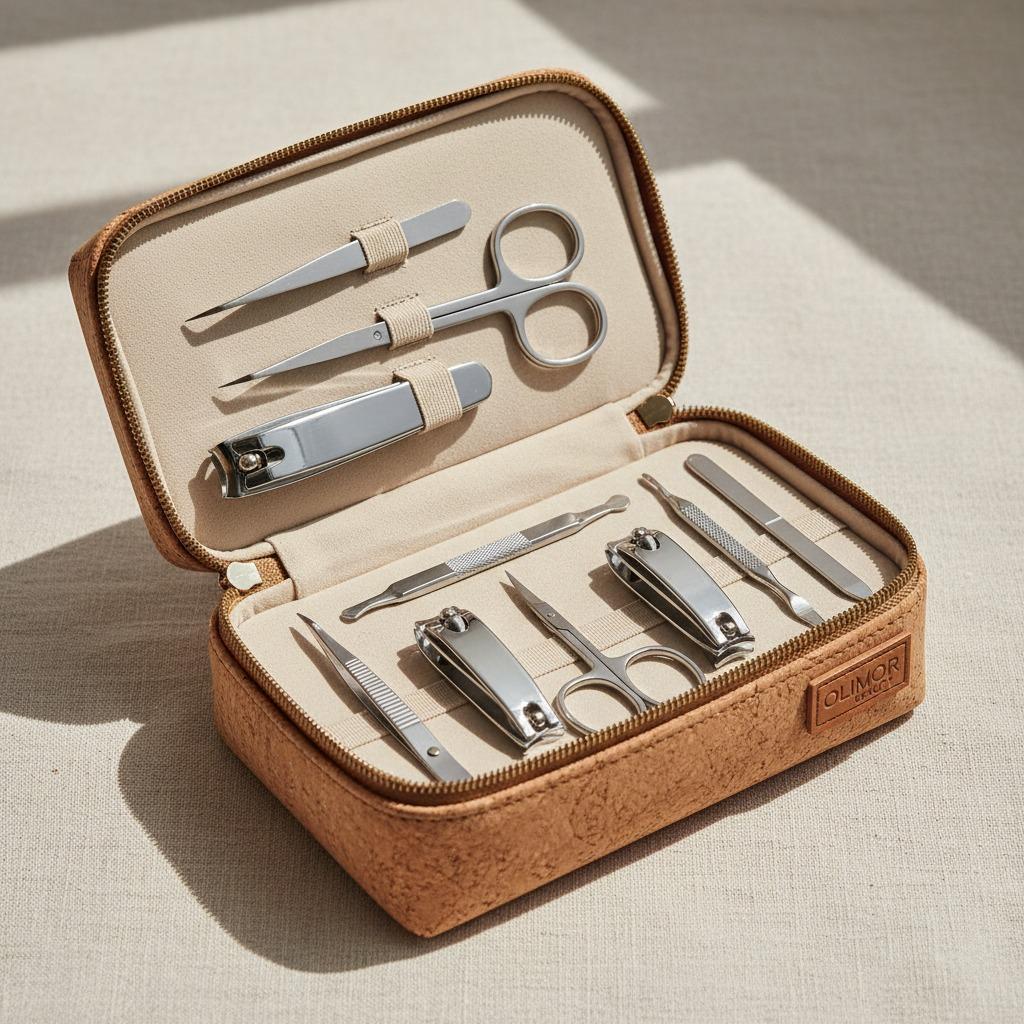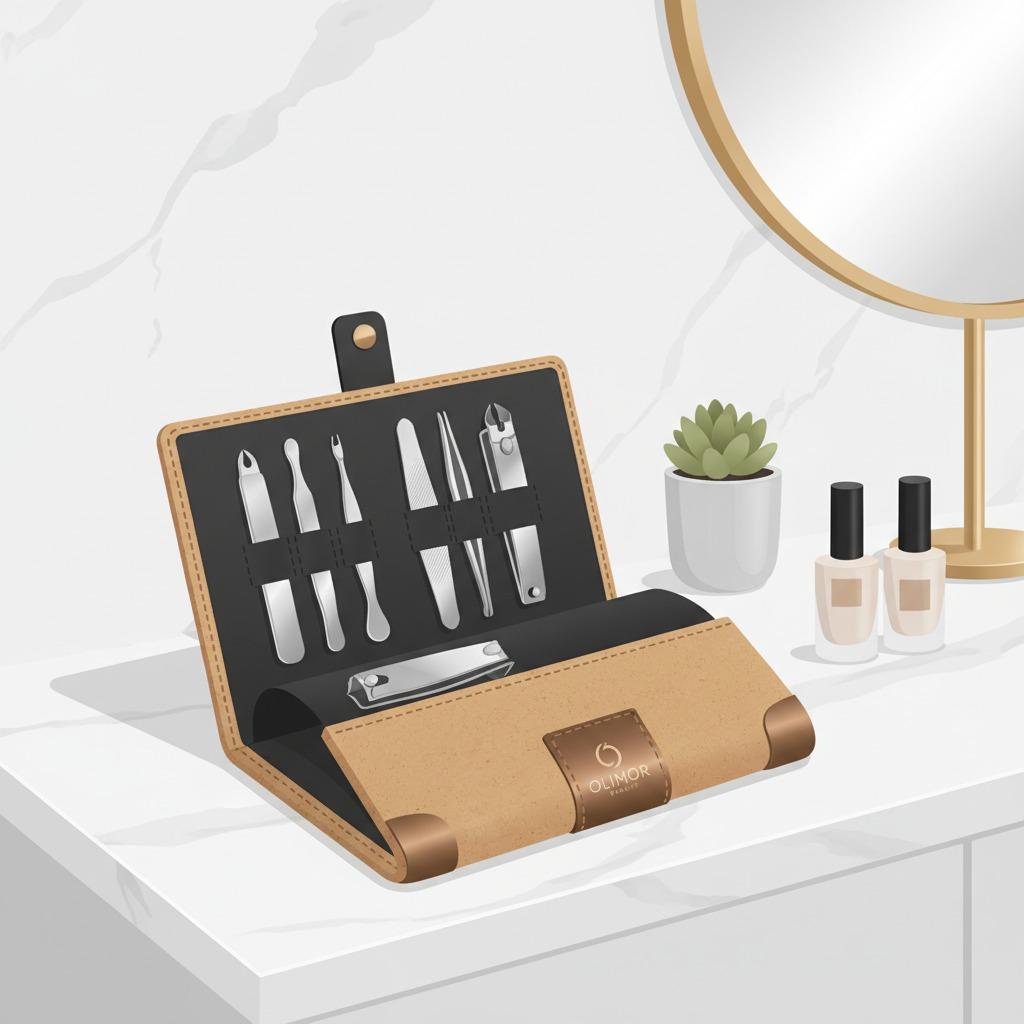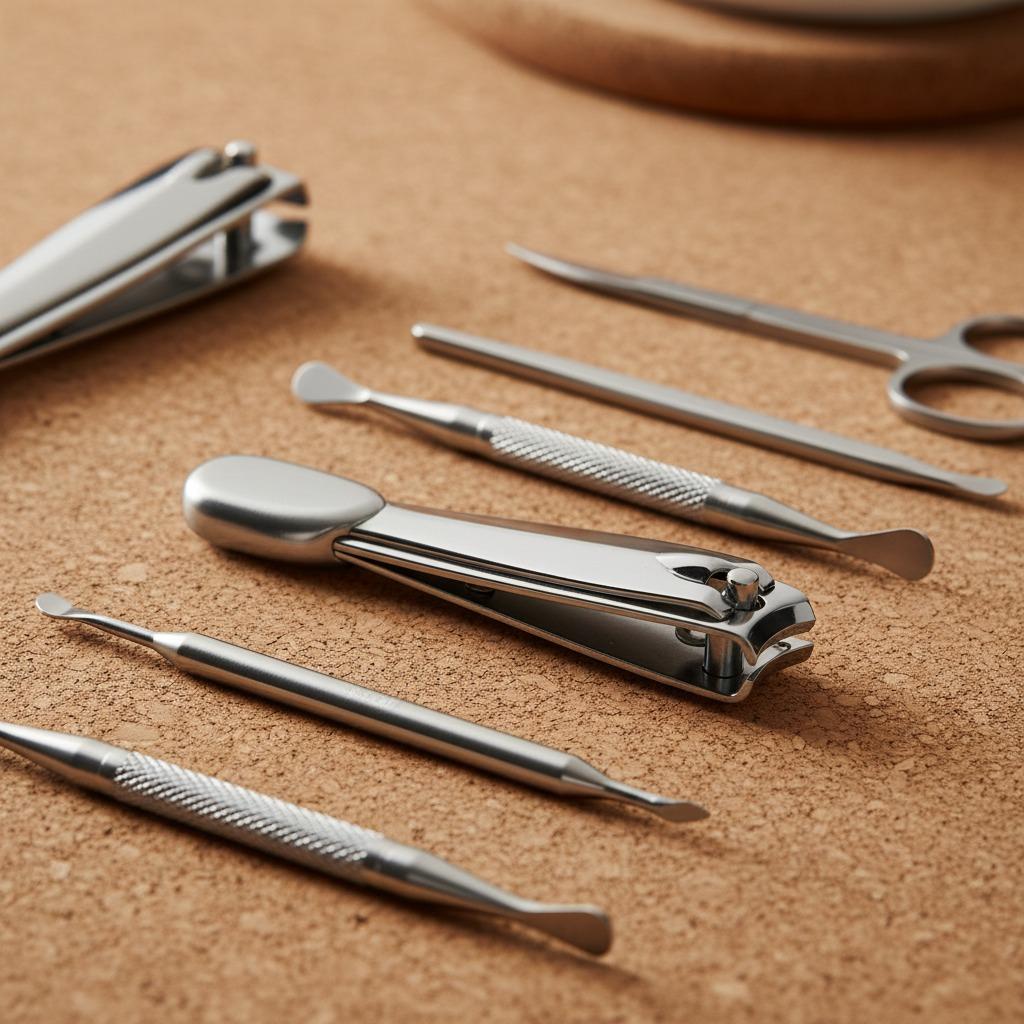











Nail clippers are small tools, but in wholesale channels they behave like a repeat-demand category: buyers notice cutting feel, handle comfort, packaging consistency, and whether the item arrives ready for resale. For distributors, the right sourcing decision is usually less about chasing the lowest unit cost and more about choosing a product structure that fits the end user, the sales channel, and the quality level you can support. China offers broad manufacturing experience, scalable production, and many packaging and customization options, which makes it a practical sourcing base for both personal care and pet grooming nail clippers.
Olimor Beauty supplies beauty tools and grooming tools with practical features such as stainless steel cutting parts, ergonomic handles, and safety-focused options such as guards. If you are comparing sourcing options, you can review current nail clipper styles, browse the broader tool collection, or use the information below to narrow the right supplier setup before you request samples.
Start with the buyer and the use case
The most reliable way to source nail clippers from China is to begin with the customer who will actually use the tool. A clipper selected for a pet grooming salon is not the same as one sold to a first-time home user or placed in a retail grooming kit. Matching the product to the channel helps avoid returns, complaints, and unnecessary feature costs.
- Wholesale distributors: look for stable supply, consistent cartons, durable blades, and packaging that downstream sellers can handle easily.
- Retail stores: prioritize shelf appeal, clear product claims, hanging cards or blister-pack compatibility, and easy-to-read instructions.
- Online resellers: focus on safe parcel packaging, accurate dimensions, and product images that explain the design without in-person assistance.
- Pet grooming channels: value control, grip comfort, cutting consistency, and suitability for the intended pet size.
- Personal care assortments: often need a clean finish, compact form, and a tool that looks simple and dependable in a kit or display.
For pet-oriented programs, it also helps to segment by animal size and user experience. A tool that works for cats or small pets may not be the best choice for larger nails if the blade opening or leverage is not appropriate. Likewise, a clipper that feels large or bulky can discourage new pet owners.
Compare product structures before you compare price
Two nail clippers can look similar in a catalog and still perform very differently in use. The blade alignment, hinge action, handle shape, and safety features all affect whether the product feels controlled and trustworthy. For distributors, these details often matter more than cosmetic differences alone.
| Channel or use case | What the buyer usually values | What to confirm in the sample | Common sourcing risk |
|---|---|---|---|
| Pet grooming | Grip security, cutting control, safety feel | Blade alignment, smooth pressure, stable guard, comfort in repeated use | Tool feels loose, awkward, or hard to control |
| Retail personal care | Simple presentation, clear instructions, clean finish | Packaging fit, readable labeling, no burrs or rough edges | Product looks acceptable but sells poorly on shelf |
| Online resale | Clear visuals, safe shipping, understandable use | Packaging protection, accurate dimensions, consistent appearance | Transit damage or customer confusion after delivery |
| Kit or bundle programs | Uniform finish and matching components | Handle color consistency, compact packing, alignment with other tools | One mismatched item weakens the whole set |
What to inspect in a sample
A sample should be treated as a working reference, not just a showroom piece. Open and close the clipper several times, try it with the kind of hand pressure your target user would apply, and check whether the tool remains stable when handled quickly. If possible, have at least one tester who resembles the eventual buyer: a groomer for salon use, or a home user for retail products.
Blade alignment and cutting feel
Stainless steel cutting parts are commonly preferred because they support a cleaner cut than a crushing motion. But the phrase stainless steel alone is not enough. What matters is how the edges meet, whether the hinge keeps the jaws aligned, and whether the action feels smooth rather than jerky. Misalignment can lead to uneven clipping and a weaker impression of quality.
Handle comfort and grip security
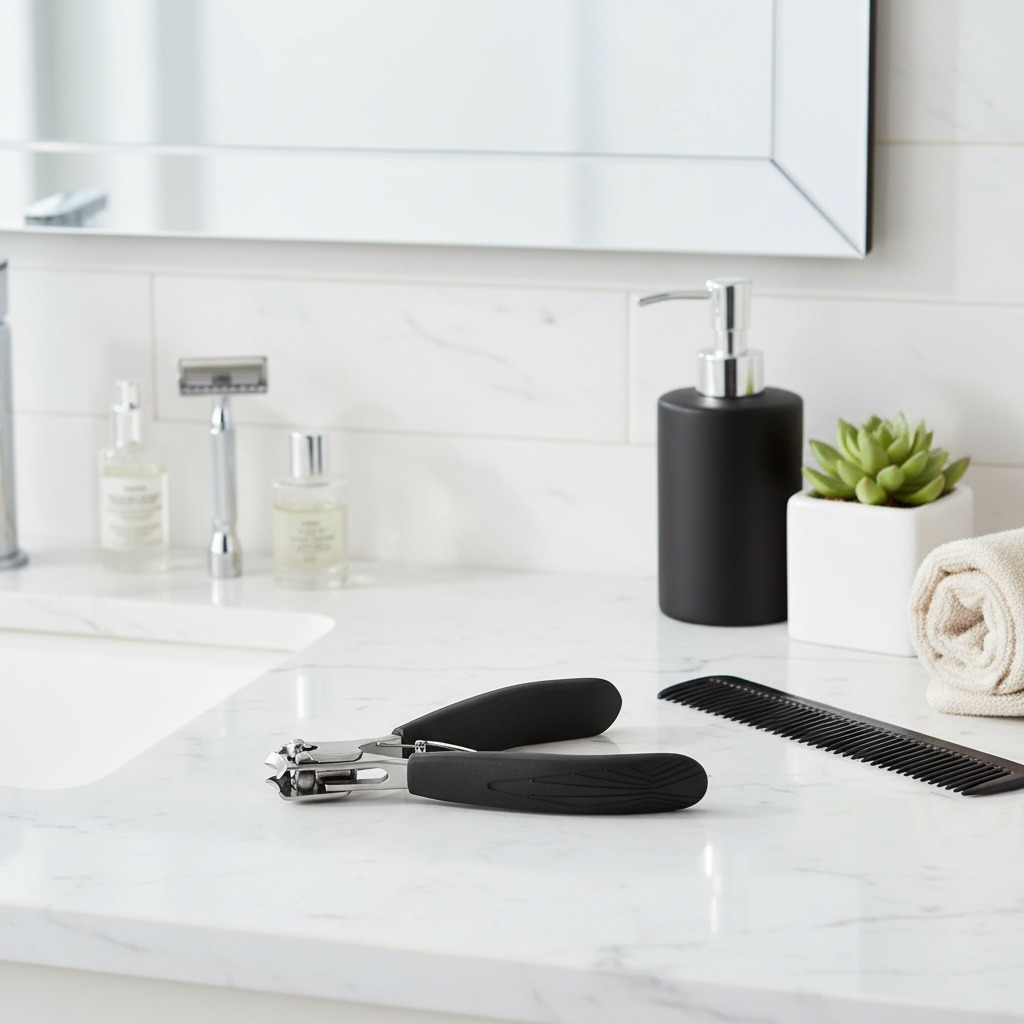
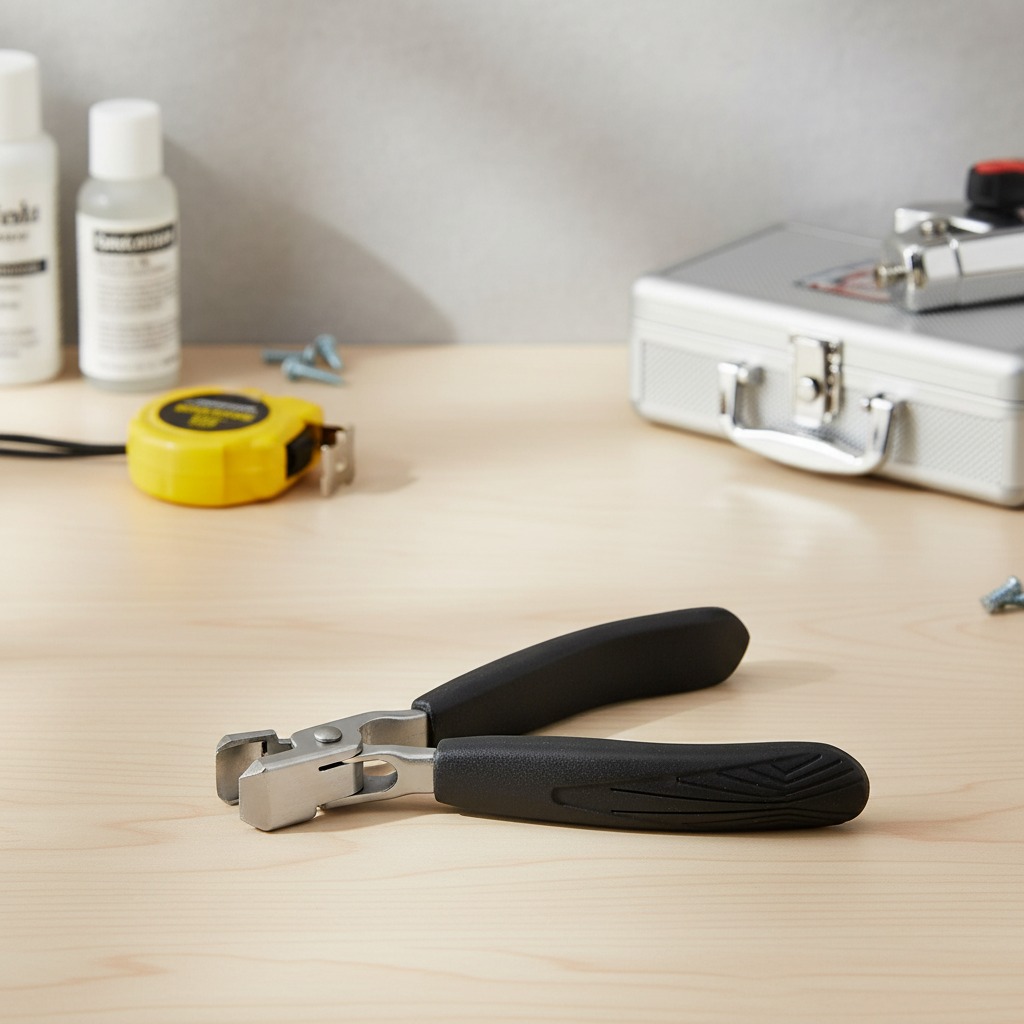
Ergonomic handles help the user apply pressure in a controlled way. The supplied product information highlights black ridged handles, which is a practical design choice because texture can improve grip and make the tool easier to control in normal use. For pet grooming, a secure grip is especially important because the animal may move during trimming.
Safety guard and user confidence
Safety guards can help reduce the risk of over-cutting, especially for less experienced users. A good guard should feel stable and purposeful, not flimsy. If the guard is supposed to guide trimming, verify that it sits correctly and does not interfere with normal cutting control.
Surface finish and edge quality
Look for burrs, sharp edges on handled areas, staining, uneven coating, or loose parts. A matte finish may be useful in some programs if customization is available, but finish should never replace function. The first questions are always about cutting feel, alignment, and safety.
Packaging fit
Packaging matters because it affects transit protection, shelf presentation, and customer trust. The clipper should sit securely in the pack without rubbing or moving around. For private-label or retail programs, confirm barcode placement, language needs, and whether the packaging supports your display format.
Material and customization choices that influence cost
When buyers compare suppliers, the real cost difference is often hidden in the details. Blade material, handle texture, finish quality, packaging type, and customization all affect the final program cost as well as the resale value.
- Blade material: Stainless steel is valued for sharpness, cleanliness, and durability, but buyers should still confirm edge finishing and assembly quality.
- Handle design: A simple ergonomic shape with ridges or texture can be easier to merchandise and more comfortable to use.
- Finish options: Matte or coated finishes may support branding, but they should be evaluated after performance is confirmed.
- Safety features: Guards and similar features can improve buyer confidence, especially in home-use and pet categories.
- Packaging: Shelf-ready or parcel-safe packaging changes both cost and complaint risk.
- Private label needs: Custom artwork, color matching, and carton details can raise complexity even when the tool structure stays the same.
If your channel sells multiple grooming items together, it may be more efficient to choose a consistent handle style or finish across the range. That makes the assortment look more coherent and easier for buyers to understand.
How to qualify a supplier before bulk order
Supplier evaluation should follow the product, not the brochure. Ask how the factory checks raw materials, assembly, and final packaging. The goal is to understand whether the supplier can hold the same standard across repeated production, not just produce one good sample.
- Confirm the approved sample. Keep a retained sample with your purchasing team so later production can be compared against the agreed reference.
- Define visible defect limits. Specify what counts as unacceptable for scratches, burrs, loose parts, coating issues, and packaging damage.
- Ask for inspection checkpoints. Useful checkpoints include blade edge condition, open-and-close function, hinge fit, handle assembly, guard placement, surface finish, and packing accuracy.
- Request production photos or pre-shipment review. This helps catch issues before goods leave the factory.
- Align carton and labeling details early. Confirm barcode placement, shipping marks, language requirements, and any market-specific descriptions.
Some buyers also ask how a factory approaches process control in line with broadly recognized systems such as ISO 9001. That can be a useful reference point, but buyers should verify the applicable version and ask for supplier documentation rather than assuming the same process applies to every order or product line. The same caution applies to customs and market-entry rules in the destination country: verify what your own market requires for the actual product, packaging, and claims.
Common sourcing problems and practical fixes
When a sample looks acceptable but production disappoints, the issue is often one of four things: component variation, loose assembly, rushed finishing, or packaging that protects the item poorly. Buyers can reduce these risks by asking the supplier how each step is checked.
- Loose hinge: confirm the opening and closing feel on retained samples and ask whether hinge fit is inspected during production.
- Uneven blade meeting: request a clear sample comparison and define what visible offset is unacceptable.
- Slippery handle: verify the texture or ridge pattern in hands similar to your end user group.
- Damaged retail packaging: test the pack for transit protection, not only shelf appearance.
- Unclear product positioning: make sure the supplier labels the clipper for pet grooming, personal care, or kit use as appropriate.
For distributors, solving these issues early is usually cheaper than handling returns, relabeling goods, or discounting stock.
Quality control questions that reduce sourcing risk
Nail clippers are simple enough to tempt rushed purchasing, but simple products still fail when the details are not checked. Before you place a bulk order, ask practical questions that connect directly to use and resale.
- Does the blade close evenly and cut cleanly without twisting?
- Does the handle feel stable in one hand and comfortable during repeated use?
- Does the safety feature stay in position and support controlled trimming?
- Are there any sharp burrs or rough edges on the finished item?
- Does the packaging protect the product during storage and shipping?
- Can the supplier keep the same finish, color, and assembly across repeated orders?
For pet nail clippers, also check whether the tool is comfortable for the hand sizes you expect in your market and whether the cutting area is easy to see. For personal care clippers, make sure the product feels compact, clean, and straightforward enough for a retail customer to understand without extra explanation.
Export and order planning points to settle early
Most sourcing problems happen because commercial details are left vague. A distributor should confirm the order structure before production starts, not after the goods are finished. That includes product description, packaging format, carton markings, shipping method, and any document set needed by the destination market.
If your order is intended for retail or private label use, treat artwork approval and packaging proofing as formal steps. If your market needs a commercial invoice, packing list, or other shipping paperwork, request the format early so the supplier can prepare it correctly. Clear communication at this stage is often the easiest way to protect margin and avoid delays.
When Olimor is a practical fit
Olimor Beauty focuses on practical grooming and beauty tools that combine functional design with straightforward sourcing support. For distributors, that usually means the product discussion can stay centered on what matters: material, grip, safety, packaging, and how the item will be sold. If you are building a private-label range or comparing nail clipper styles for a wholesale program, you can contact the team for sourcing questions or send a structured request through the product inquiry page.
A restrained buying process often works best: review the sample, compare the inspection points, confirm the packaging, and only then move to bulk. That approach is especially useful when you are sourcing for retail shelves, grooming salons, online channels, or bundled personal care kits.
FAQ
Can I request samples before placing a bulk order?
Yes. Sample review is the best way to check blade alignment, handle comfort, packaging fit, and the overall cutting feel before you commit to larger volume.
What should I ask about MOQ?
Ask the supplier how MOQ changes with the product style, packaging type, finish, and customization level. Different configurations can change the order setup even when the tool looks similar.
Can the nail clipper be customized?
Many buyers ask about handle color, finish, packaging, artwork, and branding. Confirm what can be customized for your channel and how those choices affect the order structure.
What quality checks should I request?
Focus on blade edge condition, open-and-close function, hinge fit, guard placement, surface finish, and final packaging inspection. Ask how nonconforming goods are handled before shipment.
How do I estimate lead time?
Lead time depends on the sample approval stage, packaging confirmation, production schedule, and shipping method. Ask the supplier to confirm the timeline after the final specification is approved.