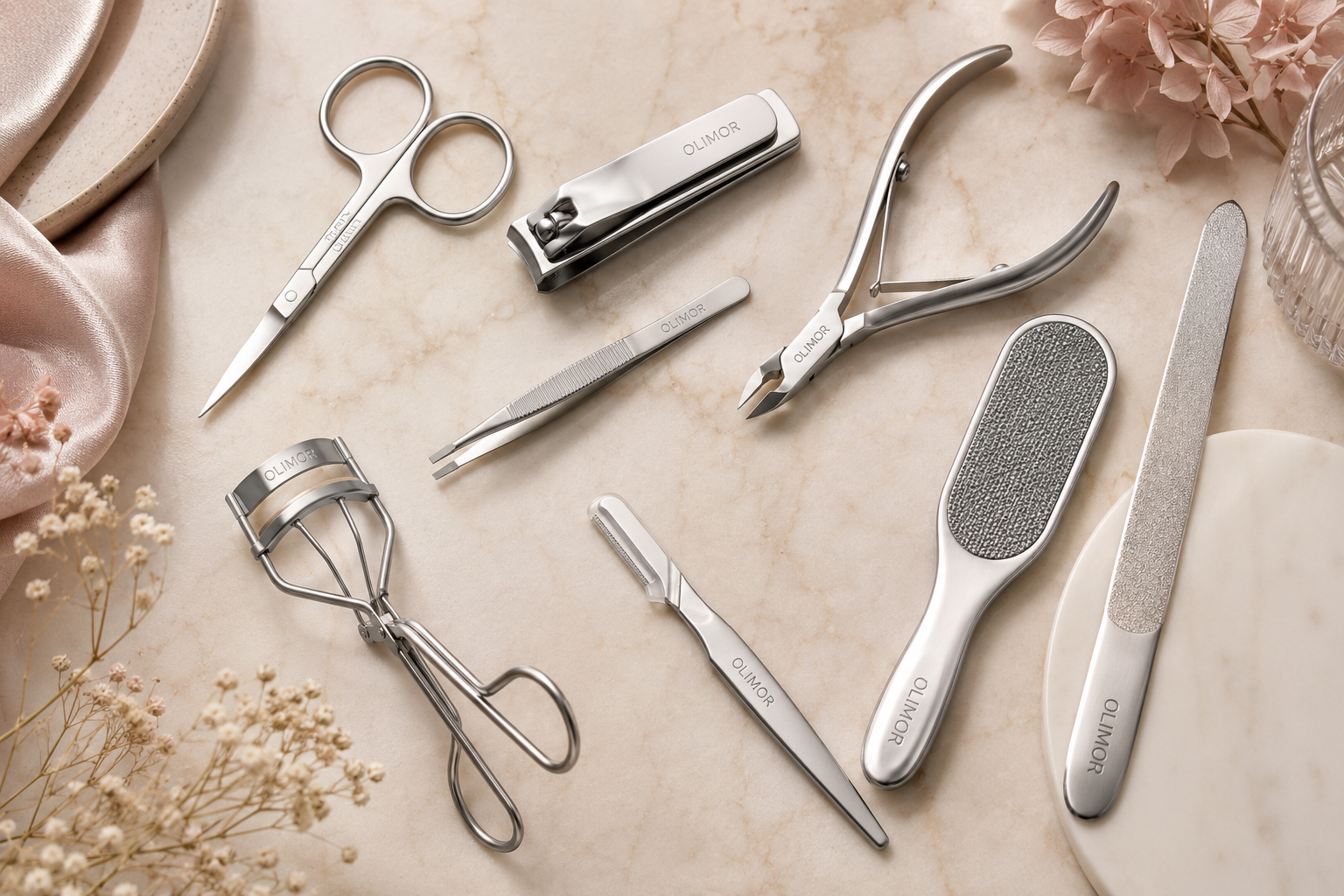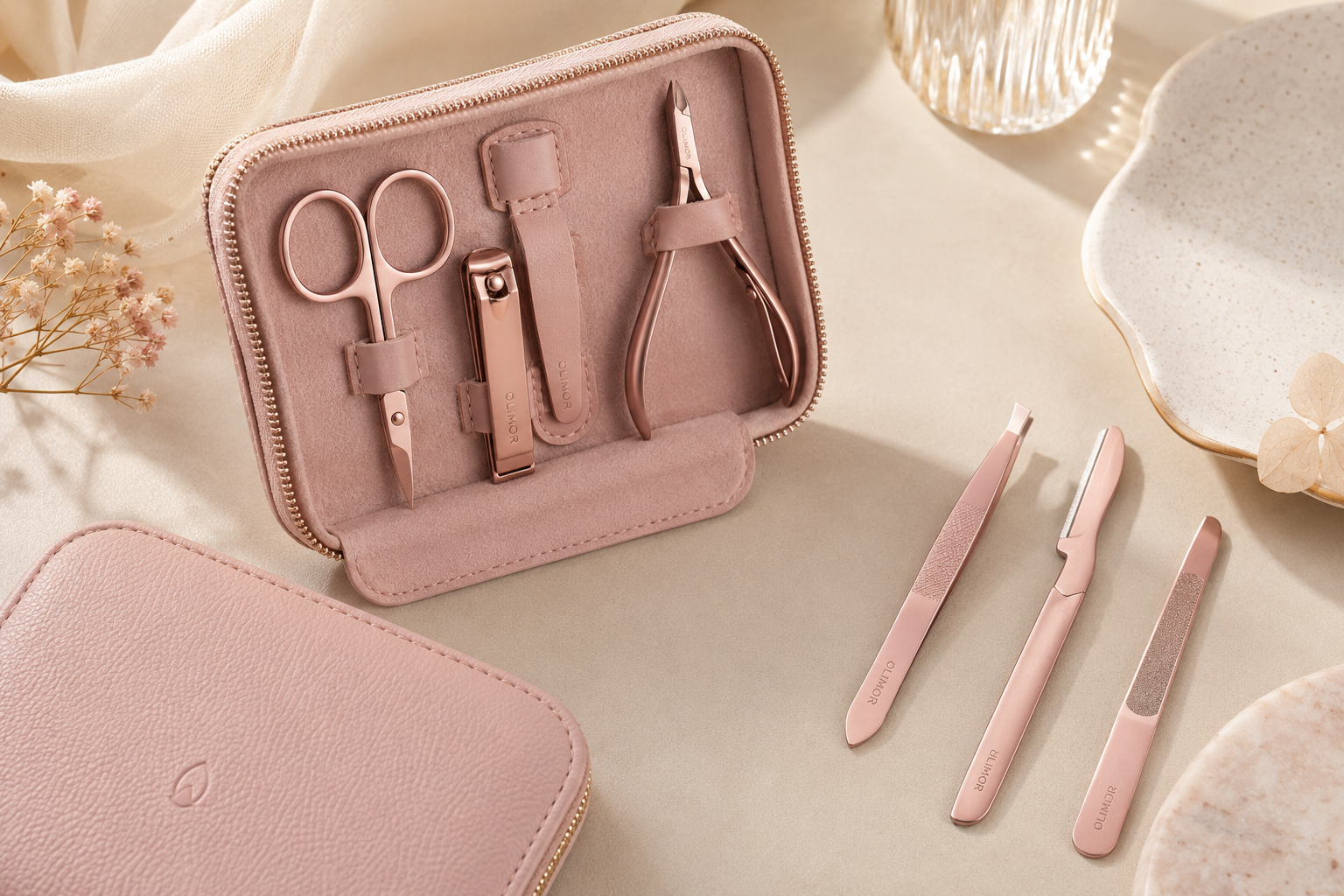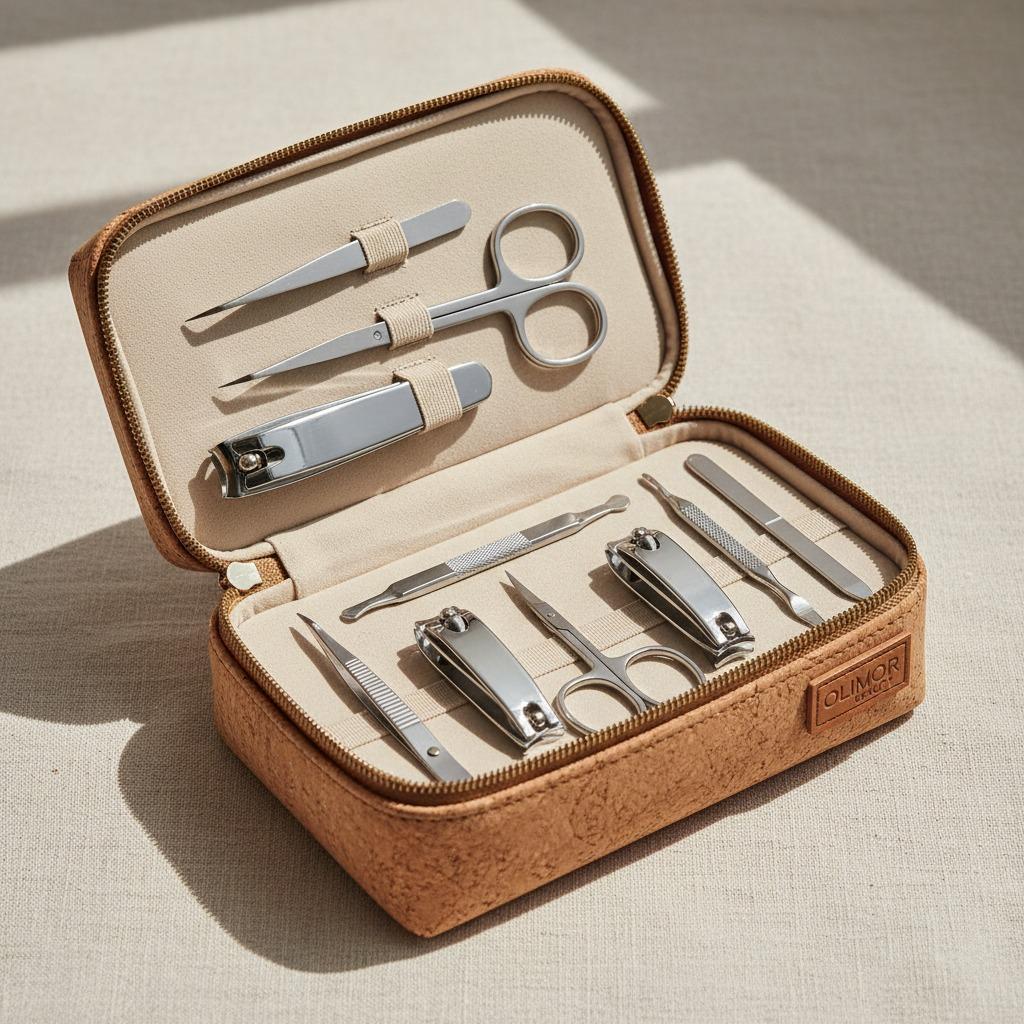











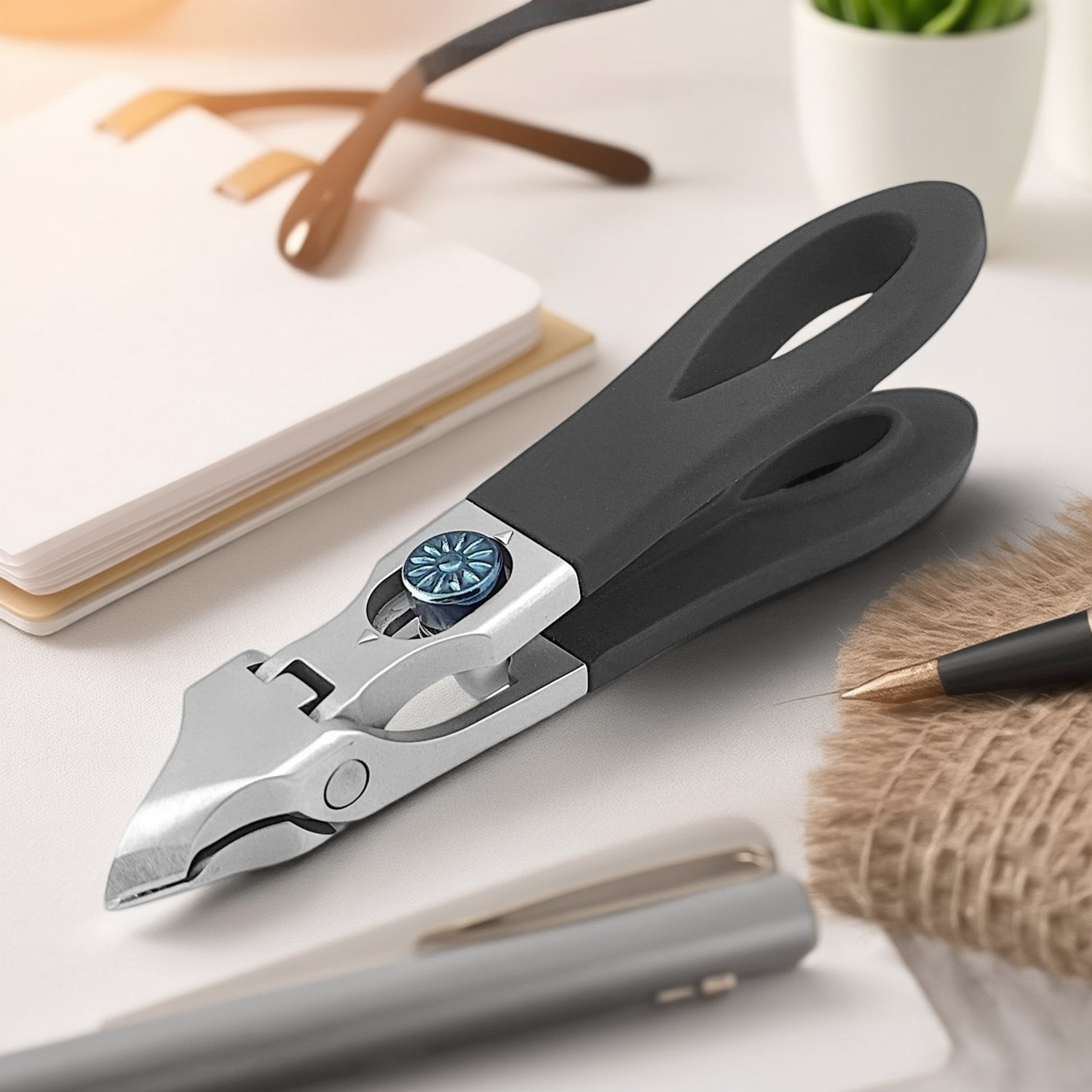
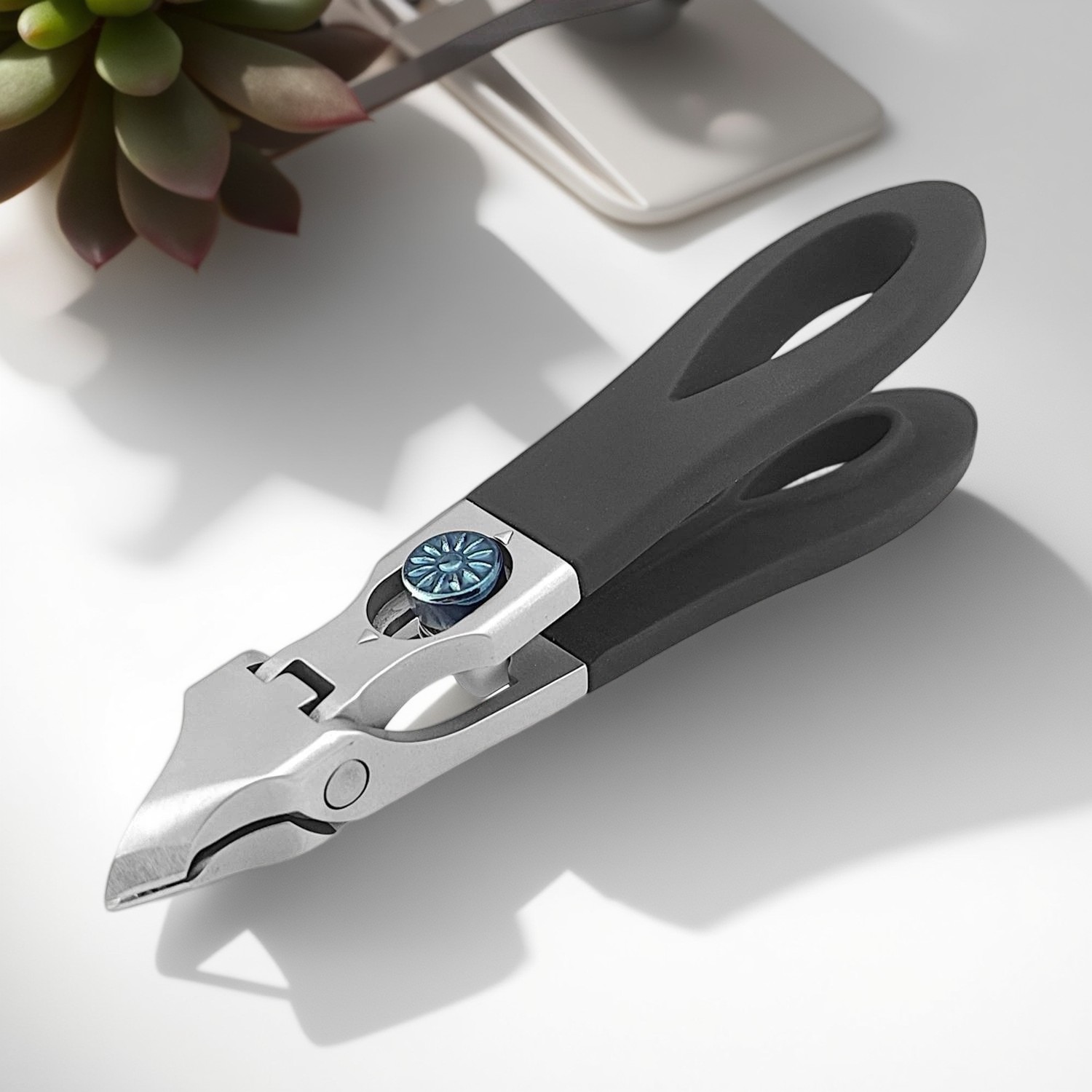
An ergonomic nail clipper is worth choosing when you want steadier trimming, less slipping, and a cleaner finish with fewer repeated cuts. For fingernails, the main benefit is control. For toenails, it is comfort and leverage. This style of clipper is designed to support both, using a stainless steel body, a polished metallic finish, matte black soft-grip handles, an angled blade, and a compact shape that fits easily into a drawer, grooming pouch, or travel kit.
For buyers, retailers, and grooming-set planners, the useful questions are practical: How does the grip feel in use? Does the blade meet cleanly? Is the tool easy to clean and store? Does the design fit everyday home care as well as travel use? The answers matter because nail clippers are judged not only by appearance, but by how securely they handle pressure and how consistently they trim.
Why an ergonomic nail clipper solves everyday trimming problems
Standard nail clippers can be perfectly functional, but they are not always comfortable. A narrow lever can concentrate pressure in one spot, and a slippery all-metal body can be awkward when hands are damp. That becomes more noticeable when trimming thicker toenails, working around curved edges, or trying to cut with the non-dominant hand.
An ergonomic clipper addresses those issues with a more secure hold and a cutting angle that feels natural. The soft-grip handles help reduce slippage, while the angled blade supports a steadier approach to the nail. The result is a tool that feels more controlled during routine grooming, especially when the user wants to make small, deliberate cuts instead of forcing one large trim.
This design is also suitable for people who want one practical tool for both fingernail and toenail care. It is compact enough for a bathroom shelf or a travel case, but its handling is intended to feel more stable than a basic clipper. For shoppers comparing grooming items, you can browse the broader beauty tool range or compare related sets in the collection pages to build a more complete assortment.
Core design features to compare before you buy
The best choice is not the most decorative one; it is the one that performs consistently and feels comfortable after repeated use. When evaluating this type of nail clipper, focus on a few core details that influence cutting quality, cleaning, and shelf appeal.
- Stainless steel body: A stainless steel structure supports durability and makes the tool easier to wipe clean after use.
- Polished metallic finish: A smooth finish gives the clipper a professional look and helps the tool feel finished rather than overly utilitarian.
- Matte soft-grip handles: The black grip surface helps the user hold the clipper securely during fingernail and toenail trimming.
- Angled blade: An angled cutting edge can make it easier to approach the nail at a comfortable position.
- Compact body: A smaller profile is helpful for travel kits, personal care bags, and compact retail displays.
- Pivot detail: The decorative accent at the pivot point adds visual distinction without changing the core function of the tool.
These features should be assessed together. A clipper can look premium but still feel awkward if the handle is too slick or the blade alignment is inconsistent. Likewise, a practical shape can lose value if the finish is rough or the tool does not store neatly with other grooming items.
Grip and leverage matter more than looks
Comfort begins with the handle. If the clipper is hard to hold, the user may press too hard, tilt the tool at the wrong angle, or stop and restart the cut several times. Soft-grip handles are useful because they help distribute pressure across the fingers and make the tool feel more secure when the user is trimming carefully.
Leverage matters just as much. Toenails can require more force than fingernails, especially when the nail is thicker or the trimming angle is less convenient. An ergonomic lever and angled blade make it easier to work steadily without excessive hand strain.
Material and finish affect maintenance
Stainless steel is a practical choice for grooming tools because it supports regular cleaning and resists the wear that comes from everyday handling. A polished finish adds visual appeal, but it should also be smooth and even. In sourcing and inspection, look for a consistent surface, tidy edge transitions, and a blade area that is easy to wipe after use.
How to compare ergonomic and standard nail clippers
For some buyers, the question is not whether the clipper works, but whether an ergonomic version is worth adding to the assortment. The answer depends on your customer profile. If your audience includes travelers, home-grooming shoppers, older users, or anyone who values a more stable grip, an ergonomic model often feels more relevant than a basic all-metal clipper.
| Comparison point | Ergonomic nail clipper | Standard nail clipper |
|---|---|---|
| Grip feel | Soft-grip handles help improve control | Usually relies on bare metal or a simple lever |
| Cutting angle | Angled blade supports a more natural approach | May feel less adaptable around curved nails |
| Comfort during use | Designed to reduce slipping and awkward pressure | Can feel less secure in wet or hurried use |
| Best fit | Home care, travel kits, gift sets, broader grooming ranges | Simple utility, budget-led assortments, basic refills |
| Retail presentation | Stronger visual appeal when paired with thoughtful packaging | Often positioned as a simple functional item |
In practice, the choice often comes down to use case. A standard clipper can be adequate for a low-frills assortment. An ergonomic one is stronger when your customers want comfort, a more polished appearance, and a tool that feels easier to control.
How to use it for cleaner fingernail and toenail trimming
Even a well-designed clipper works best with a careful method. Good technique protects the nail, improves the finished edge, and reduces the need for repeated filing.
- Start with clean, dry nails. Wash hands or feet first so the nail edge is easy to see and the tool is secure in the hand.
- Soften thick toenails if needed. A shower or brief soak can help, but the clipper and fingers should not be slippery.
- Trim in small sections. Short cuts give more control than one large cut, especially on fingernails.
- Follow the natural shape of the fingernail. Trim gradually to avoid cutting too deep into the sides.
- Keep toenails conservative and even. A straighter edge is often easier to maintain and less likely to create discomfort.
- Use the angled blade to guide, not force, the cut. Let the tool do the work rather than squeezing hard.
- Finish only where needed. If the edge feels sharp, a light file is better than repeated clipping.
For fingernails, the goal is usually a smooth, natural curve. For toenails, the main goal is a neat, stable edge with no over-trimming. The ergonomic handle helps in both cases because the user can hold the clipper with less strain and more confidence.
Cleaning, inspection, and storage for longer service life
A stainless steel clipper is easy to maintain, but it still needs routine care. After each use, remove nail debris from the blade and pivot area. Wipe the body with a dry cloth, or with a slightly damp cloth if needed, then dry it before storage. This is especially important if the clipper has been used in a humid bathroom or carried in a travel bag.
For households, salons, or shared grooming sets, hygiene should be part of the routine. Clean between users, and store the clipper in a pouch or compartment that protects the edge from rubbing against other metal tools. A compact shape makes storage easier, but it also means the tool can be overlooked in a drawer or kit, so a dedicated place helps preserve the cutting surface.
During inspection, look for a few practical signs of quality:
- The lever should move smoothly without catching.
- The cutting edges should meet evenly when closed.
- The grip insert should sit flush and feel secure in the hand.
- The polished finish should look consistent, without rough spots that could affect handling.
- The pivot area should be tidy and easy to clean after use.
If the clipper starts crushing the nail rather than trimming it cleanly, if the lever feels loose, or if the blade alignment changes over time, it is a sign that the tool should be replaced rather than forced into continued use.
What sourcing teams should evaluate before adding this clipper to a range
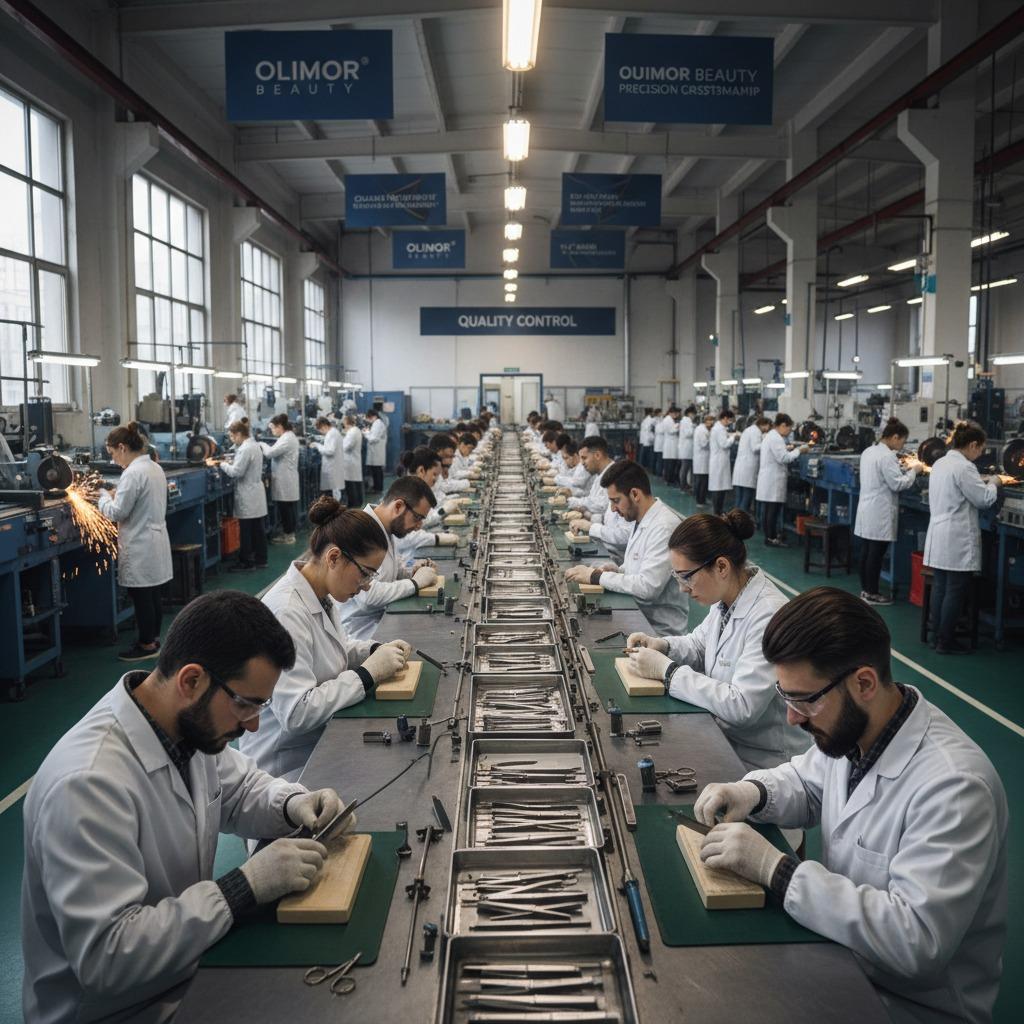
For distributors, retailers, salons, and private-label buyers, a nail clipper is both a grooming tool and a product that has to hold up under real customer handling. Photos can show the polished finish and the distinctive pivot detail, but sampling and inspection are still important before a listing or assortment decision.
Consider these sourcing factors:
- Usage fit: Does the grip suit everyday grooming, travel kits, or gift sets?
- Visual consistency: Are the finish, handle color, and pivot detail repeated cleanly across units?
- Customization needs: Will you need packaging changes, branding, or assortment coordination?
- Tool pairing: Does it fit well alongside other manicure and pedicure items?
- Quality checks: Are cutting action, smoothness, and grip feel checked before shipment?
- Cost drivers: Material choice, grip construction, finish complexity, packaging, and customization can all influence the final supply cost.
When selling into regulated markets, confirm current consumer product safety and labeling expectations with the relevant public authority, such as the EU General Product Safety Regulation framework or the U.S. Consumer Product Safety Commission, and verify the latest supplier documents for your destination market.
If you are comparing item families or planning a broader assortment, use the product pages to explore options, or send an inquiry with your intended market, packaging direction, and customization needs. For direct help with assortment planning, you can also contact the team for product-matching support.
FAQ
Can I request samples before placing a larger order?
Yes. For B2B purchasing, samples are often the best way to review grip feel, blade alignment, finish quality, and packaging fit before you commit to a full order. Use the inquiry form to ask what sample options are available.
What is the minimum order quantity?
Minimum order quantity depends on the item, packaging, and any customization you need. It is best to confirm this directly with the supplier during early planning.
Can the clipper be customized for retail or private label use?
Customization is often possible for packaging, branding, and assortment presentation. If you need a specific retail look or a coordinated grooming set, ask about available customization choices before finalizing the order.
How should I judge quality before stocking it?
Check the smoothness of the lever, the even meeting of the blades, the comfort of the soft-grip handles, and the consistency of the polished finish. If possible, test the clipper on real fingernail and toenail trimming tasks rather than relying on appearance alone.
What should I ask about lead time?
Ask how lead time changes with quantity, packaging, or customization, and confirm the schedule in writing before placing the order. That helps you match stock arrival to your retail or distribution plan.