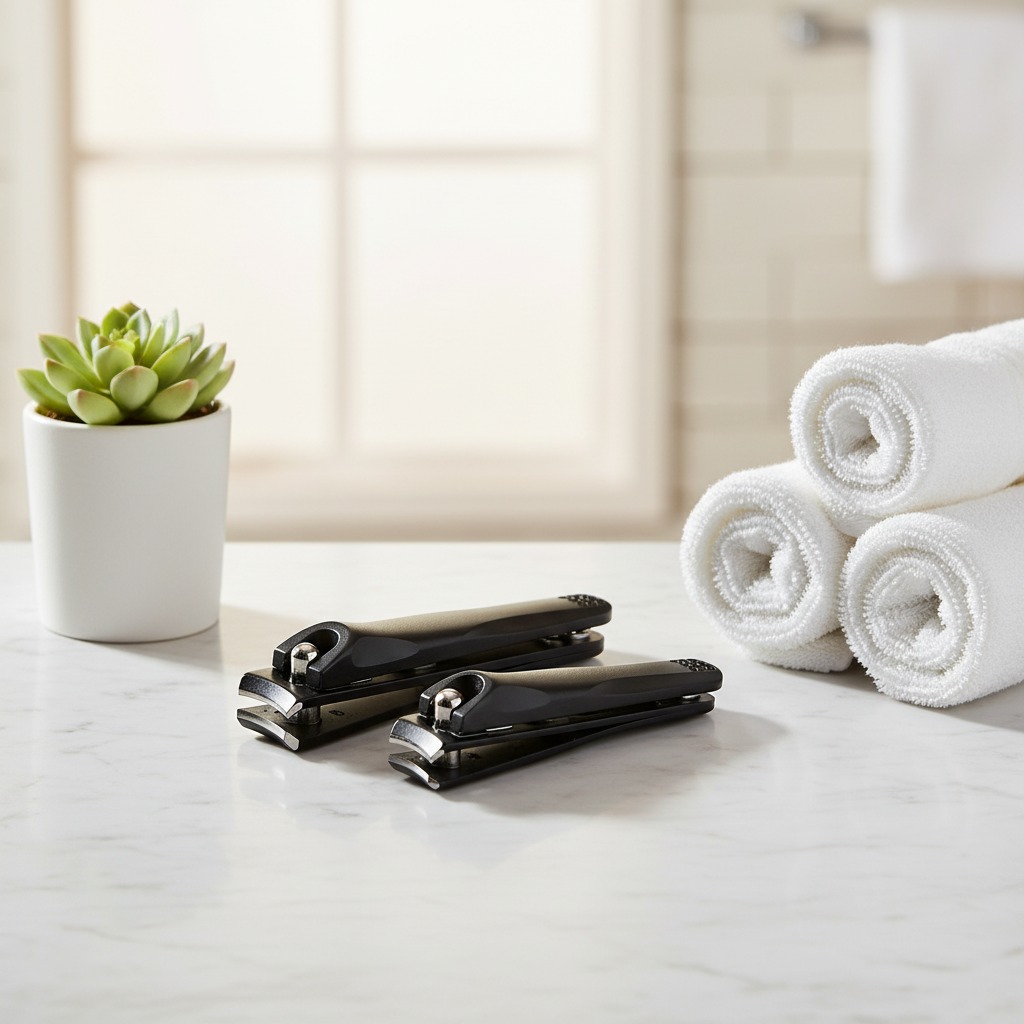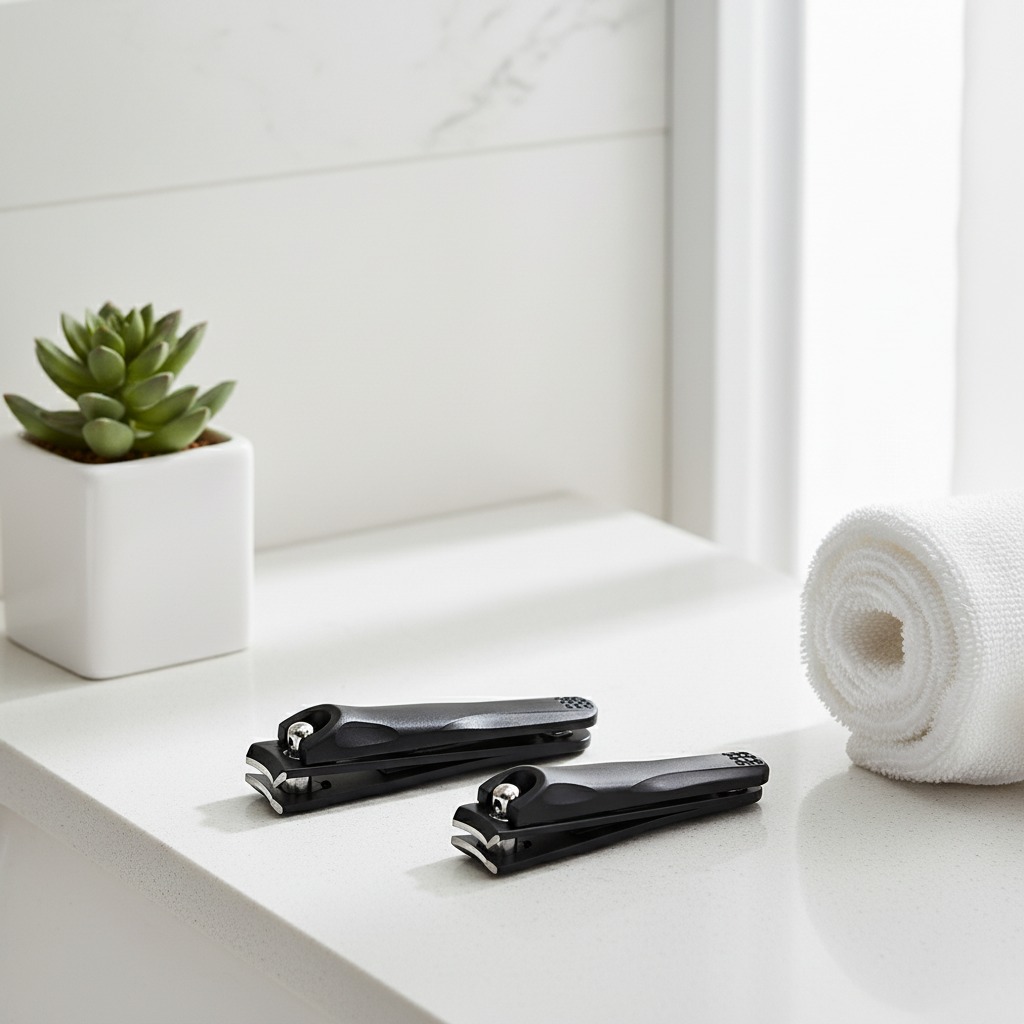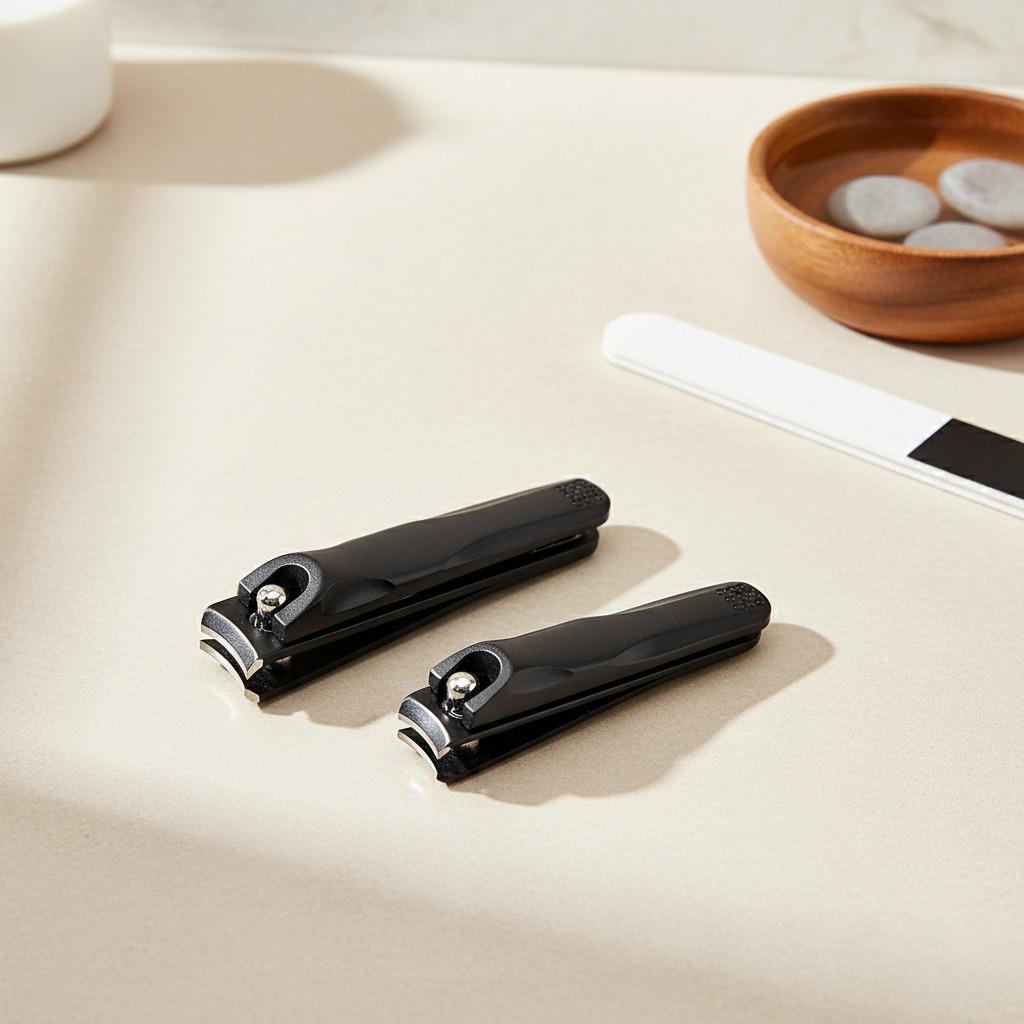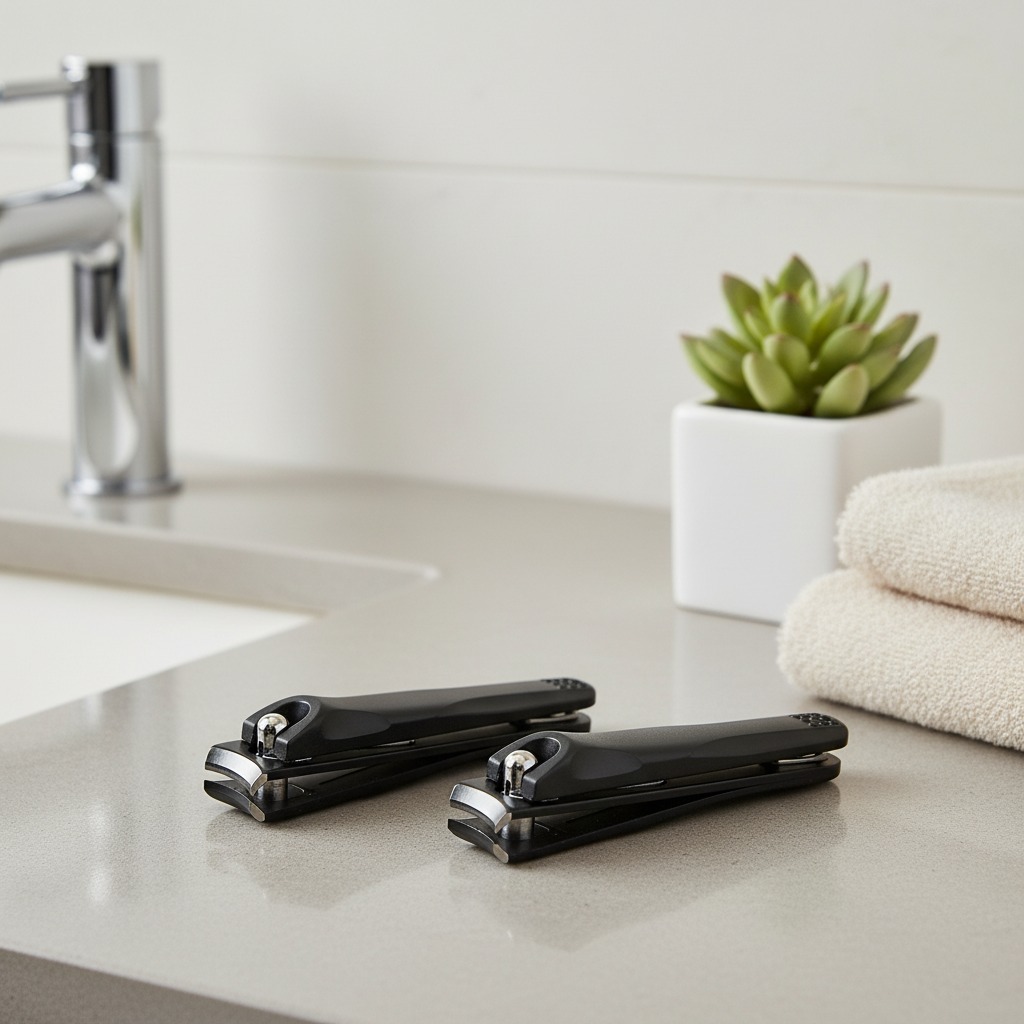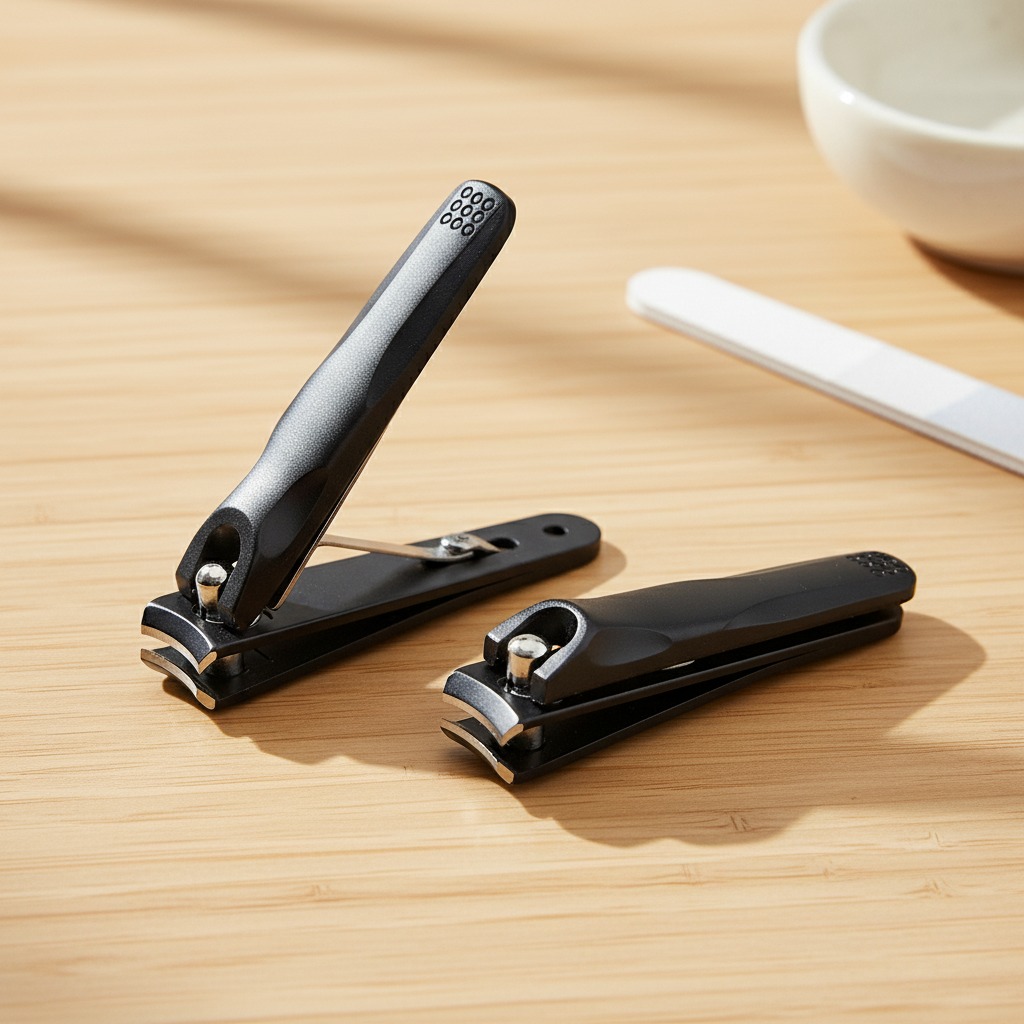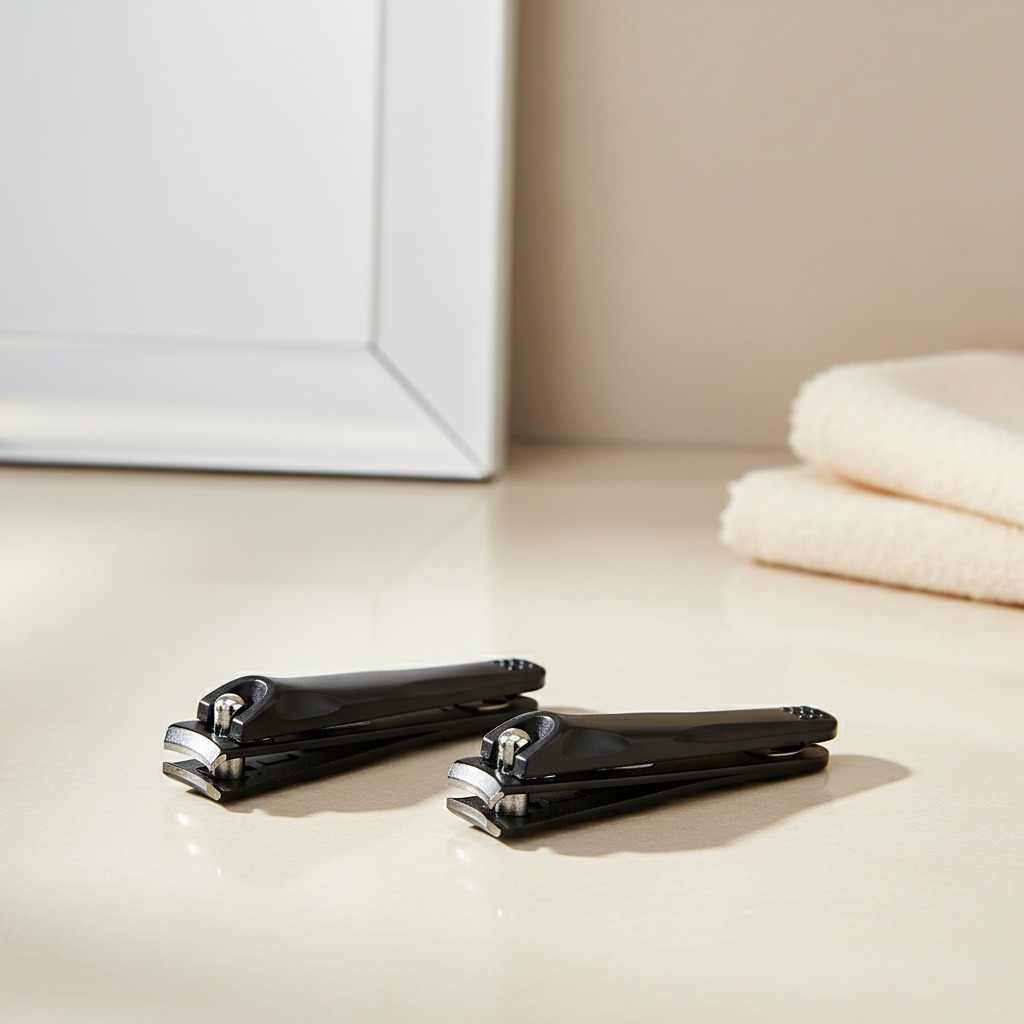











For distributors, retailers and personal care brands, a nail clipper is a small product with a large quality responsibility. Customers expect a clean cut, smooth leverage, safe edges and reliable resistance to rust through repeated daily use. When an order is produced in bulk, the challenge is not making one good sample; the challenge is keeping thousands of pieces consistent from the first carton to the last.
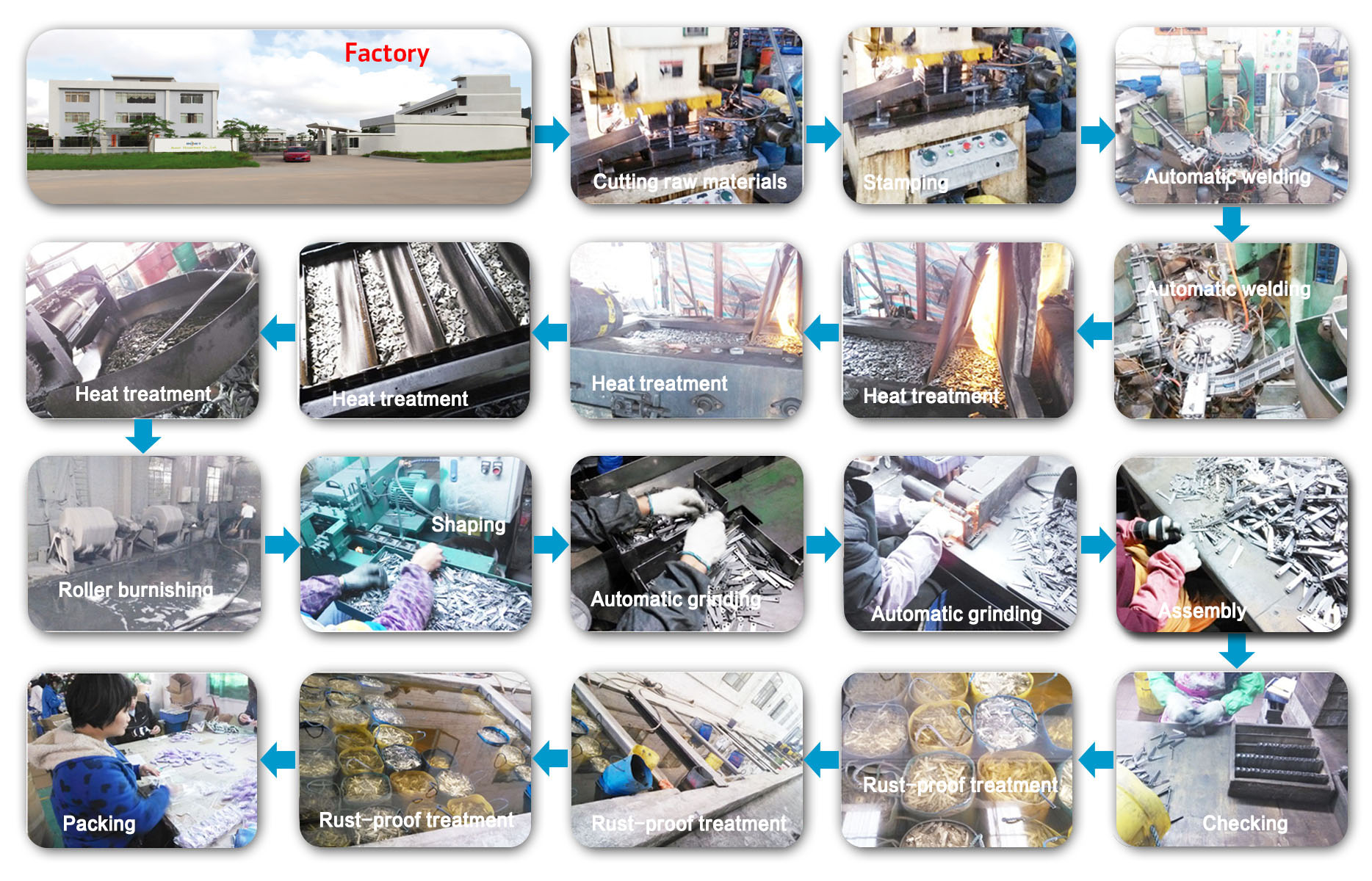
Olimor Beauty focuses on the production details that influence that consistency. A nail clipper production process upgrade is not only about adding equipment or increasing speed. It is about controlling each manufacturing stage so the finished product feels stable, cuts effectively and reaches buyers in a condition suitable for distribution. The process described below follows the key steps used in nail clipper manufacturing: cutting raw materials, stamping, automatic welding, heat treatment, shaping, automatic grinding, roller burnishing, assembly, checking, rust-proof treatment and packing.
Why Production Stability Matters in Nail Clipper Orders
Nail clippers are often evaluated quickly by end users. If the jaws do not align, if the lever feels loose, if the cutting edge pulls instead of trimming, or if rust appears early, the product loses trust. In a bulk order, even a small percentage of unstable pieces can lead to returns, repacking work or brand reputation problems.
Quality stability starts long before final inspection. It depends on whether the raw material is cut accurately, whether forming steps are repeatable, whether heat treatment supports durability and whether grinding produces a usable cutting edge without leaving uncomfortable burrs. For buyers comparing beauty tool products, understanding the production route helps separate basic appearance from manufacturing reliability.
A stable process also improves sourcing decisions. Instead of judging only by price, buyers can review which steps are controlled, where defects are most likely to occur and how the manufacturer reduces variation during repeat orders.
From Raw Material Cutting to Stamping: Building the Base
The first manufacturing stage is cutting raw materials. Precision at this step helps ensure that each blank has the correct starting size for later forming. If cutting is inconsistent, the problem can carry forward into stamping, shaping and assembly. Even if a final product looks acceptable from a distance, dimensional variation can affect jaw alignment and cutting pressure.
Stamping follows cutting and begins to create the nail clipper’s functional form. In a high-volume environment, stamping consistency is essential because the clipped parts must work together during assembly. A small variation in the shape of the upper blade, lower blade or lever area may affect how evenly force is transferred when the user presses the clipper.
Automatic welding is another important stage in creating a sturdy base. For a nail clipper, structural stability is closely connected to user confidence. A clipper that twists, feels weak or loses alignment during use does not meet practical expectations. Upgraded production aims to make these early-stage operations more repeatable so later finishing work is not used to hide problems created at the beginning.
Heat Treatment and Durability Control
Multiple heat treatment stages are used to enhance durability. For nail clippers, durability is not only about surviving storage or shipping. The cutting parts must withstand repeated pressure while maintaining a functional edge. Heat treatment helps support the mechanical properties needed for daily use, while process control helps reduce the risk of pieces that are too soft, too brittle or unevenly treated.
Because exact performance depends on material, product design and production requirements, buyers should evaluate heat treatment through practical purchasing criteria rather than vague claims. Useful review points include whether the cutting feel remains consistent across samples, whether the clipper returns smoothly after pressure and whether the jaws maintain alignment after repeated opening and closing.
For brands planning repeat purchasing, durability should be checked at both sample and production stages. A sample can show design intent, but bulk production stability shows whether the process is controlled. That is why heat treatment should be considered a core manufacturing step rather than an invisible technical detail.
Shaping, Automatic Grinding and Roller Burnishing
After structural forming and heat treatment, the product moves into refinement stages. Shaping helps bring the clipper closer to its final profile. Automatic grinding contributes to the cutting edge and the surface areas that affect hand feel. Roller burnishing further refines the product for smoother operation and a more finished touch.
These steps are especially important because nail clippers are handled directly and used near skin. Rough edges, uneven grinding or poor finishing can create discomfort even if the clipper technically cuts. A smooth product is not simply more attractive; it is easier to use safely and more likely to meet consumer expectations.
Automatic grinding can also support consistency in bulk production because manual variation is reduced when the process is properly controlled. However, automation alone does not guarantee quality. The important question is whether the grinding result is checked against functional requirements: cutting edge contact, jaw symmetry, burr control and lever movement.
Assembly, Checking and Rust-Proof Treatment
Assembly brings the separate parts together into a usable nail clipper. This is where earlier dimensional control becomes visible. If the stamped and shaped parts are stable, assembly can be smoother and the finished clipper is more likely to have accurate alignment. If earlier steps vary too much, assembly may produce inconsistent hand feel or cutting performance.
Checking after assembly is a critical safeguard. Inspection should not focus only on surface appearance. For nail clippers, functional checks are equally important because the user experience depends on mechanical interaction between parts. Rust-proof treatment then helps prepare the product to withstand normal daily handling and storage conditions. For personal care items that may be kept in bathrooms, toiletry bags or retail displays, resistance to rust is a meaningful buyer concern.
Finally, packing secures the product for distribution. Good packing helps prevent surface damage, contamination and mixing issues during handling. For bulk buyers, packing is also part of operational efficiency because clear, secure packing supports warehousing, labeling and retail preparation.
Practical Buyer Checklist for Bulk Nail Clippers
When sourcing nail clippers, buyers can use a structured checklist to compare production quality beyond appearance. The following points are useful for product managers, importers, wholesalers and brands preparing a new order or reviewing an existing supplier relationship.
- Cutting performance: The clipper should trim cleanly without tearing or requiring excessive pressure.
- Jaw alignment: Upper and lower cutting edges should meet evenly across the working area.
- Lever action: The lever should press smoothly and return without looseness or awkward resistance.
- Edge comfort: Non-cutting edges should be free from sharp burrs that may scratch the user.
- Surface finish: Grinding and burnishing should create a consistent appearance without obvious rough marks.
- Rust resistance consideration: Review the rust-proof treatment and how the product will be packed and stored.
- Bulk consistency: Compare multiple pieces, not only one selected sample, to judge variation.
- Packing suitability: Confirm whether the packing method protects the product through shipping and distribution.
This checklist can be used together with category planning across product collections, especially when nail clippers are sold alongside other manicure, pedicure or grooming tools. Consistency across a line can matter as much as the performance of a single item.
How Process Upgrades Reduce Defect Risk
A nail clipper production process upgrade supports quality by reducing opportunities for uncontrolled variation. Each stage has a specific role. Cutting raw materials creates accurate starting pieces. Stamping and automatic welding form the base. Heat treatment supports durability. Shaping, automatic grinding and roller burnishing improve function and finish. Assembly turns parts into a working tool. Checking identifies issues before shipment. Rust-proof treatment and packing help protect the finished product.
When these steps are managed as one connected process, defects are easier to prevent rather than repair. For example, a grinding issue may be related to earlier shape variation. A lever problem may trace back to assembly fit or stamped part consistency. A rust complaint may involve treatment, handling or packing. Process thinking helps manufacturers and buyers discuss quality with more accuracy.
For buyers, this matters because a low unit price can become expensive if inspection failures, repacking, complaints or replacement shipments occur. Stable production helps protect margins, delivery schedules and customer confidence.
Questions Worth Preparing Before an Order
Before placing a bulk nail clipper order, it is useful to define practical expectations. The goal is not to overcomplicate a simple product, but to make sure the important quality points are clear before production begins. Buyers may prepare target requirements for cutting feel, finish level, packing format and inspection priorities. If the product will be sold through retail, online bundles or professional supply channels, those sales conditions should influence the quality review.
When discussing a project with Olimor Beauty, share the intended market, order use case, packaging needs and any reference expectations for finish or function. This makes communication more precise and reduces misunderstanding during sampling and production. To start a sourcing conversation, buyers can send an inquiry or contact Olimor with product details and purchasing goals.
A Better Standard for Everyday Grooming Tools
A nail clipper may look simple, but reliable bulk production depends on many connected manufacturing steps. Cutting, stamping, automatic welding, heat treatment, shaping, automatic grinding, roller burnishing, assembly, checking, rust-proof treatment and packing all influence the final result. When these stages are upgraded and controlled, buyers receive products that are more consistent in function, finish and distribution readiness.
For businesses sourcing personal care tools, the strongest purchasing decisions come from looking beyond surface appearance. A well-made nail clipper should cut cleanly, feel stable, resist avoidable finishing defects and arrive packed for practical handling. By focusing on production stability from raw material to final packing, Olimor Beauty supports the quality expectations that bulk buyers and end users both depend on.