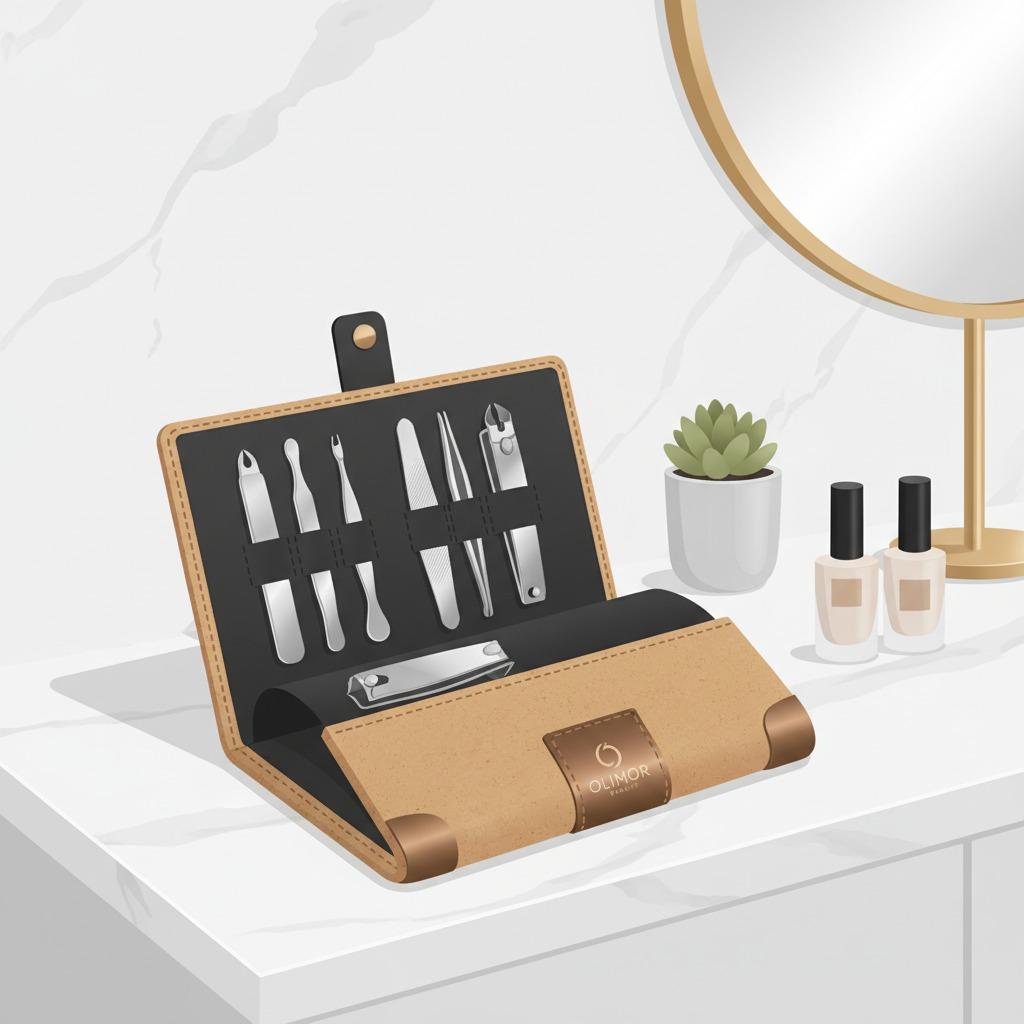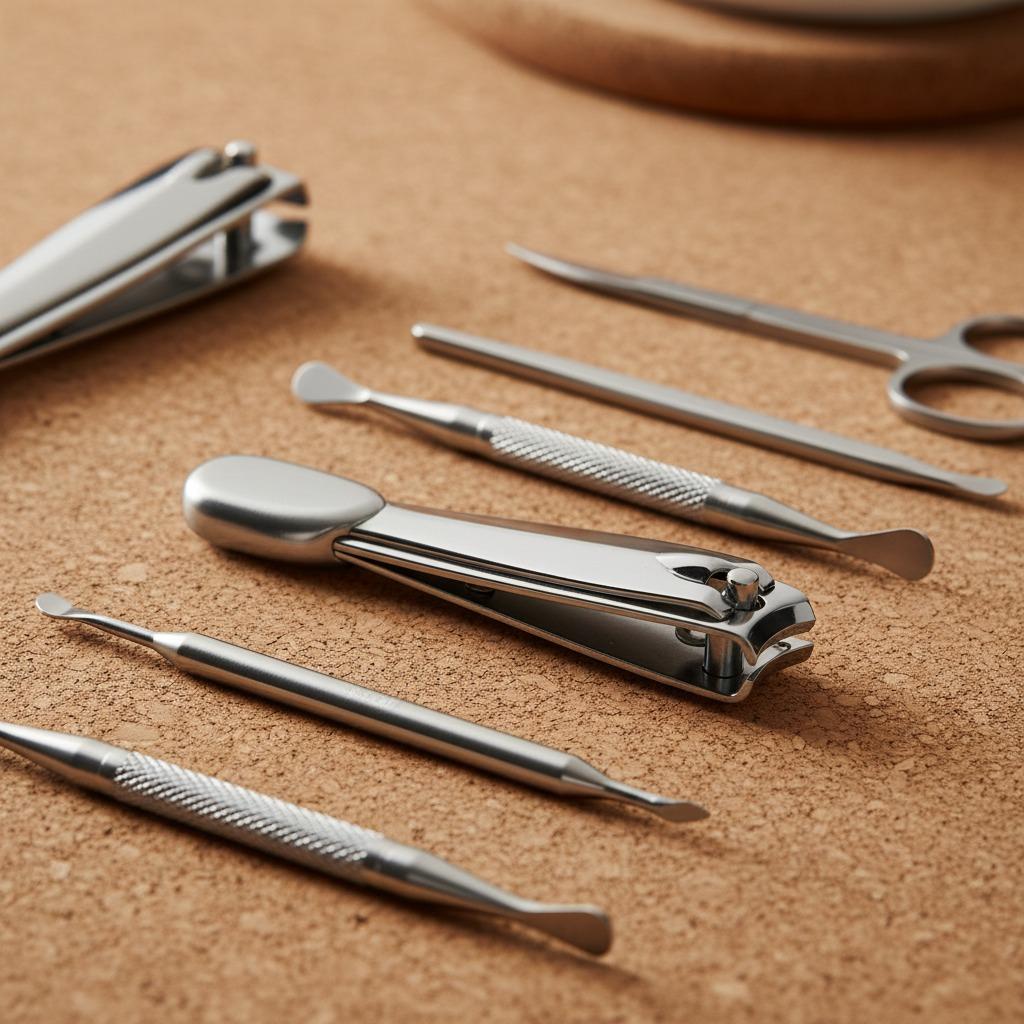












For beauty tool buyers, a nail clipper may look simple, but it is one of the products customers judge quickly. A clipper that crushes the nail, loses sharpness too soon, pinches the skin, rusts in storage, or feels uncomfortable in the hand can damage confidence in an entire grooming range. Selecting the right nail clipper supplier is therefore not only a purchasing task; it is a quality decision that affects repeat sales, retail reviews, salon usability, and brand consistency.
Olimor Beauty supplies stainless steel nail clippers with attention to hardness testing, internal quality control, and practical handling. One explicit quality point is the HRC 50-52 hardness range, which helps indicate resistance to wear and supports long-lasting cutting edges. For buyers comparing beauty tool products, this guide explains how to evaluate a supplier, what to check before placing an order, and why hardness, finishing, and packaging details matter.
What Buyers Should Expect from a Nail Clipper Supplier
A dependable nail clipper supplier should be able to support more than basic product availability. Buyers need confidence that each batch is consistent, that the clipping action feels clean, and that the final product is suitable for its sales channel, whether it is a personal care kit, a salon accessory, a travel grooming item, or a retail beauty tool display.
The first evaluation point is product stability. Nail clippers are repeatedly opened, pressed, cleaned, and stored in humid bathroom or salon environments. Even when the design is compact, the lever, cutting jaws, pin, and body must work together smoothly. Poor alignment can create uneven pressure, while a weak cutting edge can bend or tear the nail instead of trimming it cleanly.
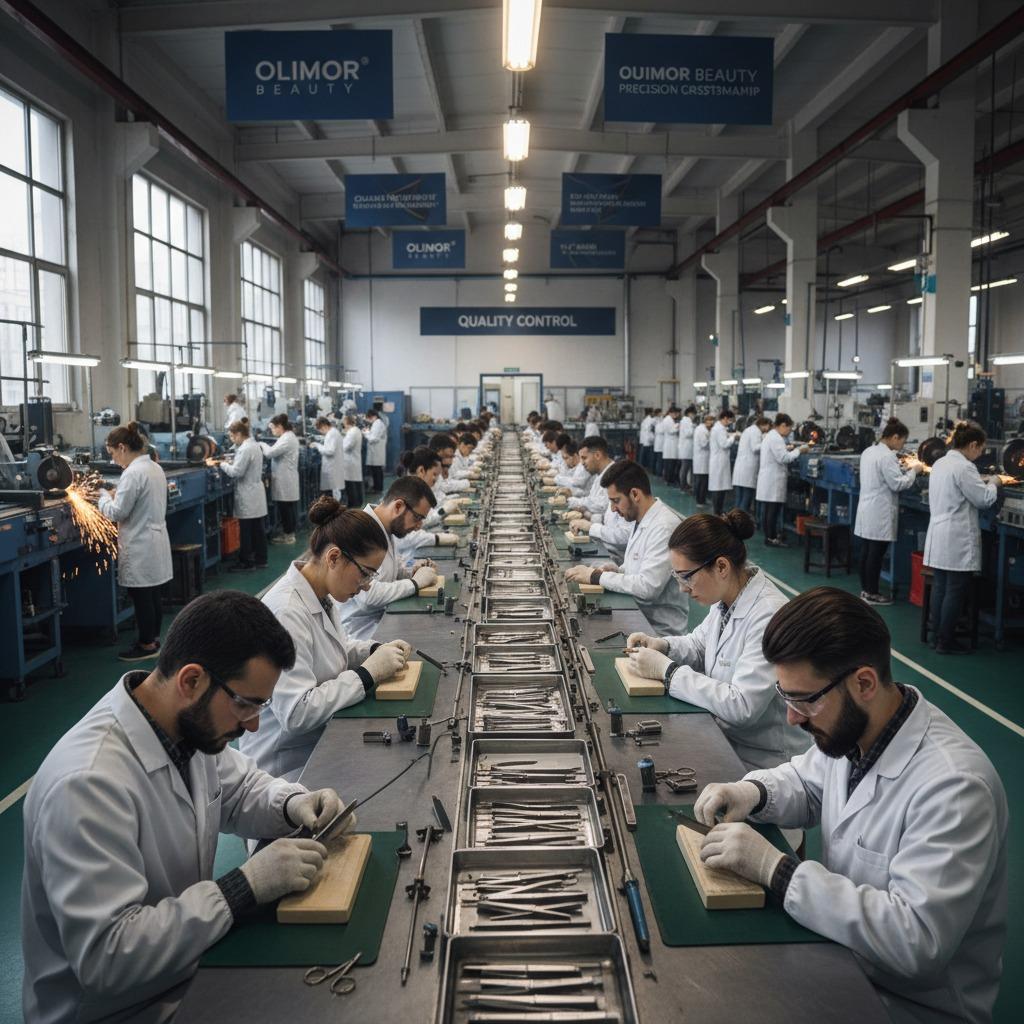
The second point is supplier process control. Olimor Beauty emphasizes internal quality control from raw material selection to final packaging. For buyers, that matters because defects are often introduced at different stages: inconsistent material selection, incomplete polishing, inaccurate assembly, or inadequate packaging protection. A supplier that treats quality as a full-process responsibility is easier to work with than one that only checks the finished carton.
Why HRC 50-52 Hardness Matters for Nail Clippers
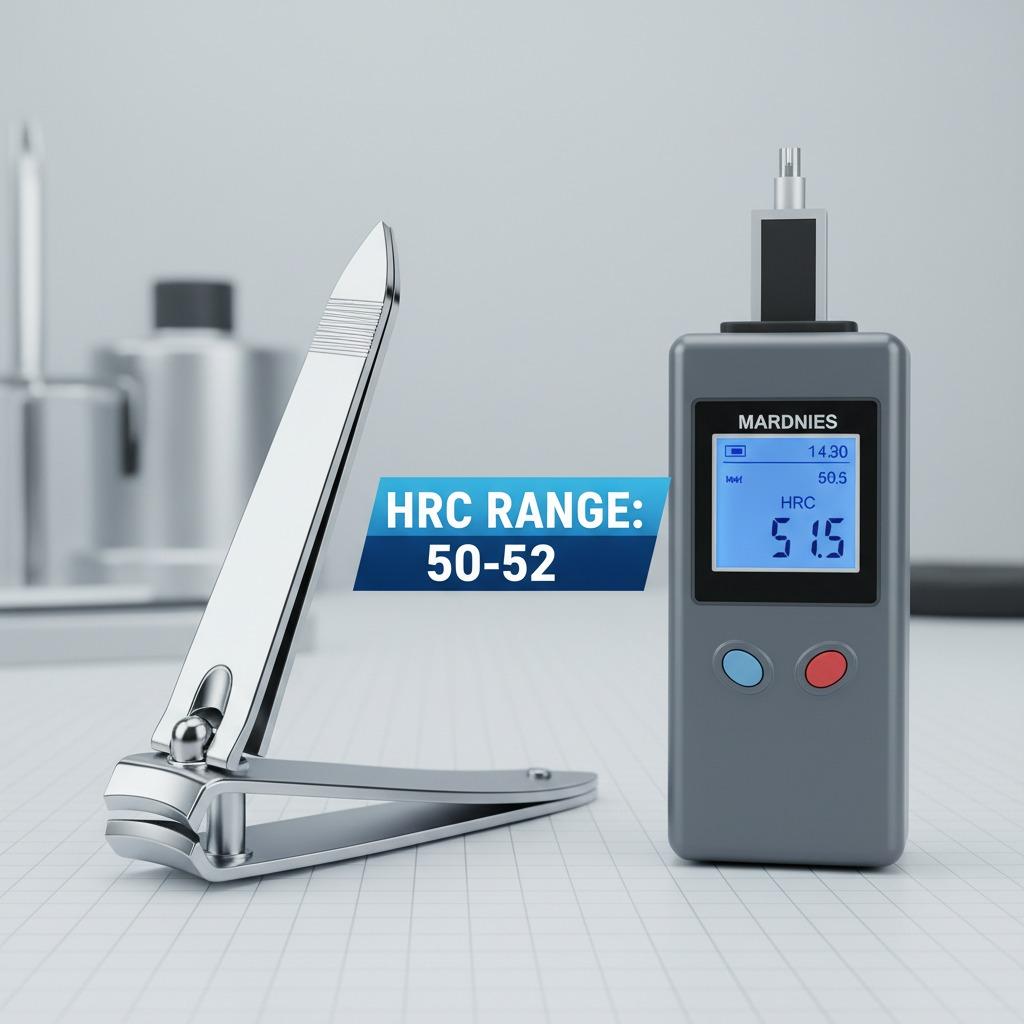
Hardness is one of the most useful technical references when evaluating nail clippers. The supplied product information highlights an HRC range of 50-52. HRC refers to Rockwell hardness on the C scale, a common way to describe the hardness of metal components. In a nail clipper, hardness influences wear resistance and the ability of the cutting edge to remain functional through repeated use.
A clipper that is too soft may dull quickly or deform at the edge. A clipper that is too brittle may be more vulnerable to chipping or cracking under pressure. The value of HRC 50-52 is that it gives buyers a concrete specification to discuss when reviewing product quality, rather than relying only on appearance or general claims about durability.
Hardness testing also helps remove uncertainty from procurement. If a product is described as stainless steel but has poor cutting durability, the material alone does not solve the problem. The heat treatment, forming, sharpening, and inspection process all influence final performance. By including metal hardness testing as part of the quality discussion, buyers can compare suppliers more objectively and reduce the risk of receiving tools that look acceptable but fail in daily use.
Stainless Steel, Cutting Feel, and Practical User Comfort
The original product information identifies these nail clippers as stainless steel tools. Stainless steel is widely preferred for grooming tools because buyers expect a clean surface, good strength, and suitability for regular handling. However, stainless steel quality should still be judged by how the finished tool performs, not by the material name alone.
When testing samples, pay attention to the cutting feel. A good nail clipper should close with controlled resistance, meet evenly at the cutting edge, and produce a clean trim without requiring excessive force. The lever should not feel loose, sharp against the finger, or unstable during use. For professional and personal care markets, comfort is especially important because a tool that is technically sharp but awkward to handle may still receive poor feedback.
Olimor Beauty also references ergonomic designs. In practical terms, buyers should check whether the clipper can be held securely, whether the lever angle supports easy pressing, and whether the edges around the body are finished smoothly. For retail buyers, these details affect perceived value. For salon buyers, they affect comfort during repeated use.
Quality Control Checklist Before You Confirm an Order
A structured inspection checklist helps buyers compare suppliers fairly. It also creates a shared language for sample approval and repeat orders. The following points are useful when evaluating nail clippers from Olimor Beauty or any potential supplier.
- Hardness reference: Confirm that the HRC 50-52 range is part of the quality expectation for the product being sourced.
- Cutting alignment: Check that the two cutting edges meet evenly and do not leave visible gaps when closed.
- Sharpness and clipping result: Test on appropriate nail samples to see whether the clipper trims cleanly instead of crushing or splitting.
- Lever movement: Open and close the clipper repeatedly to assess smoothness, stability, and finger comfort.
- Surface finishing: Look for burrs, rough corners, scratches, discoloration, or uneven polishing that may affect safety or presentation.
- Assembly strength: Review the pivot, pin, and lever connection for looseness or irregular movement.
- Packaging condition: Ensure the final packaging protects the product from rubbing, movement, and surface damage during transport.
- Batch consistency: Compare multiple samples, not just one display piece, to confirm consistent feel and finish.
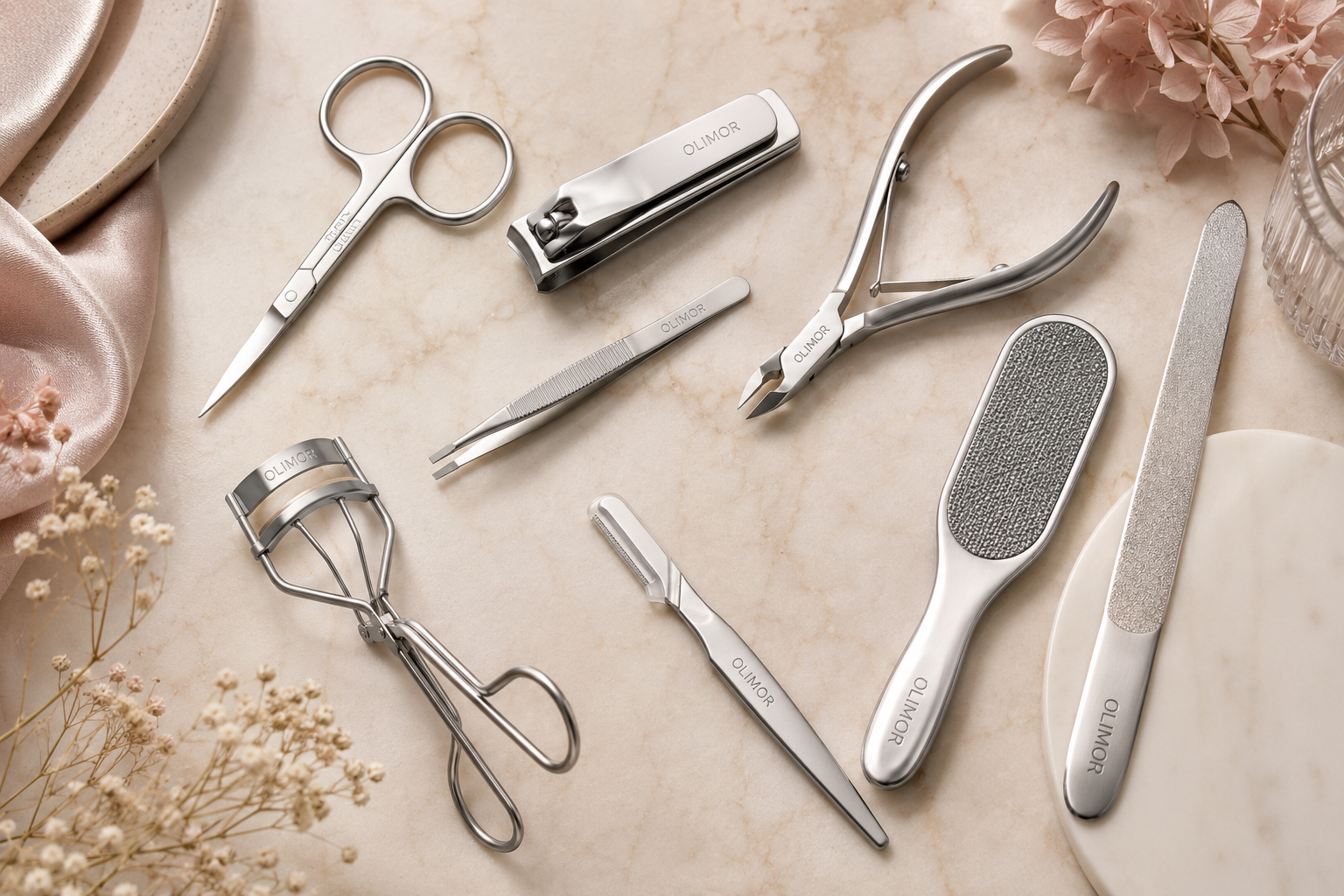
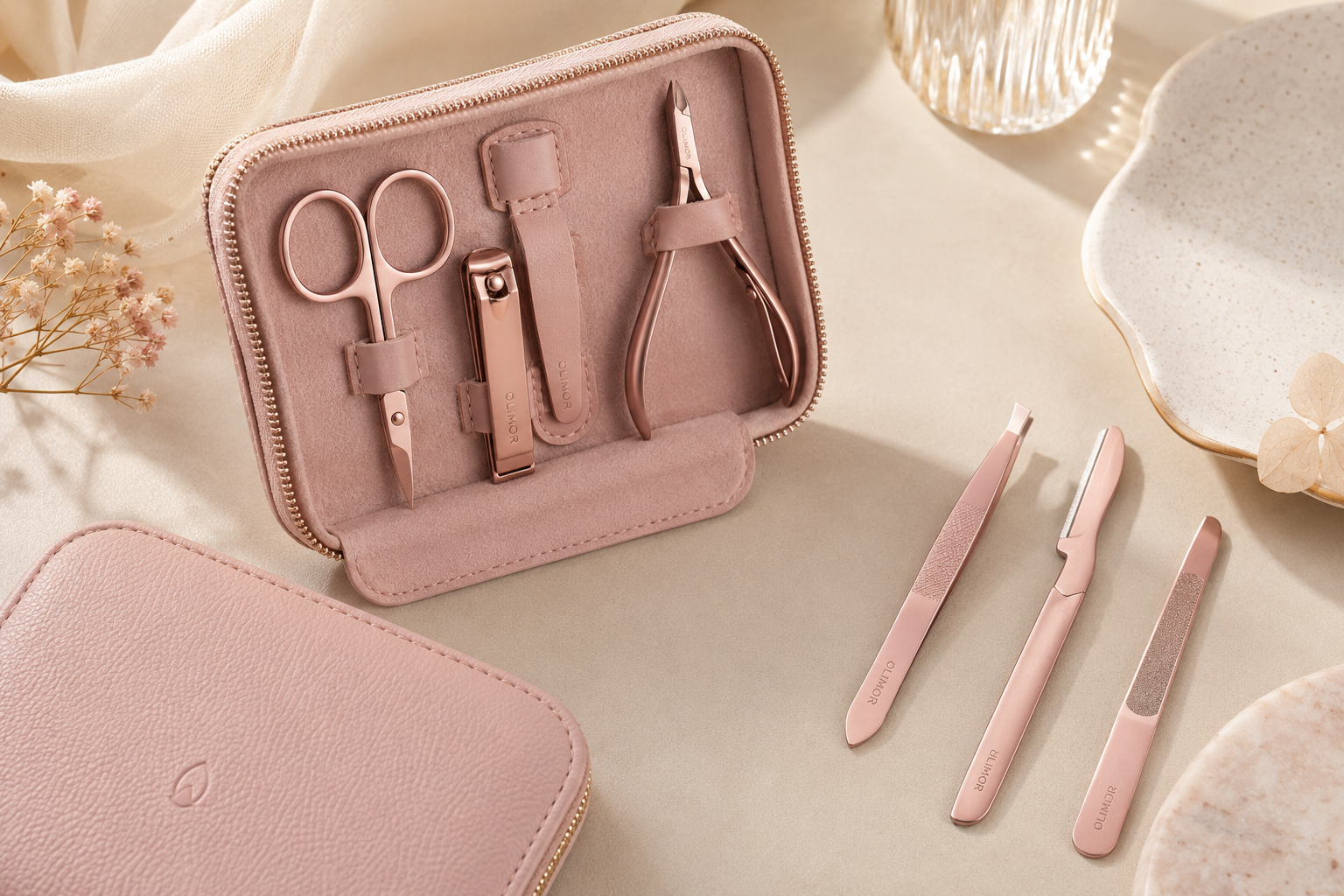
This checklist is especially important for buyers building a grooming set or adding clippers to a broader line of product collections. A clipper may be a small item, but if it sits beside tweezers, scissors, files, or other manicure tools, inconsistent quality becomes easy for customers to notice.
Sourcing Questions That Help Separate Strong Suppliers from Basic Vendors
Before placing a production order, buyers should move beyond price and catalog images. The best sourcing conversations focus on the product’s real-world performance and the supplier’s control points. Since Olimor Beauty highlights hardness testing, stainless steel construction, and internal quality control, these topics are logical starting points for evaluation.
Useful questions include: How is hardness testing incorporated into the inspection process? What visual and functional checks are performed before packaging? How are raw materials selected for nail clipper production? How are defective cutting edges or poor surface finishes identified? What packaging options can protect the clipper from scratches during shipping and storage?
These questions do not require the buyer to overcomplicate the purchase. They simply ensure the supplier understands the product as a grooming tool, not as a generic metal item. A reliable supplier should be able to discuss how the product is checked, how quality problems are controlled, and how buyers can review samples before moving forward. If you need to discuss a nail clipper project, you can contact Olimor or send an inquiry with your target market, packaging needs, and quality expectations.
How Nail Clippers Fit Different Sales Channels
Nail clippers are used across many markets, but the buyer priorities can differ. Retail beauty brands may care most about appearance, packaging, and customer review risk. Professional buyers may focus more on repeated use, smooth clipping action, and easy handling. Gift set and travel kit buyers may prioritize compact size, clean finishing, and packaging compatibility.
For personal care retail, the product should look polished and feel reliable immediately when the customer opens the package. Small defects, such as rough edges or uneven cutting jaws, can lead to returns. For salon or grooming professionals, fatigue and consistency matter more. A clipper that requires too much force or feels unstable during repeated use will not be favored even if it appears attractive in packaging.
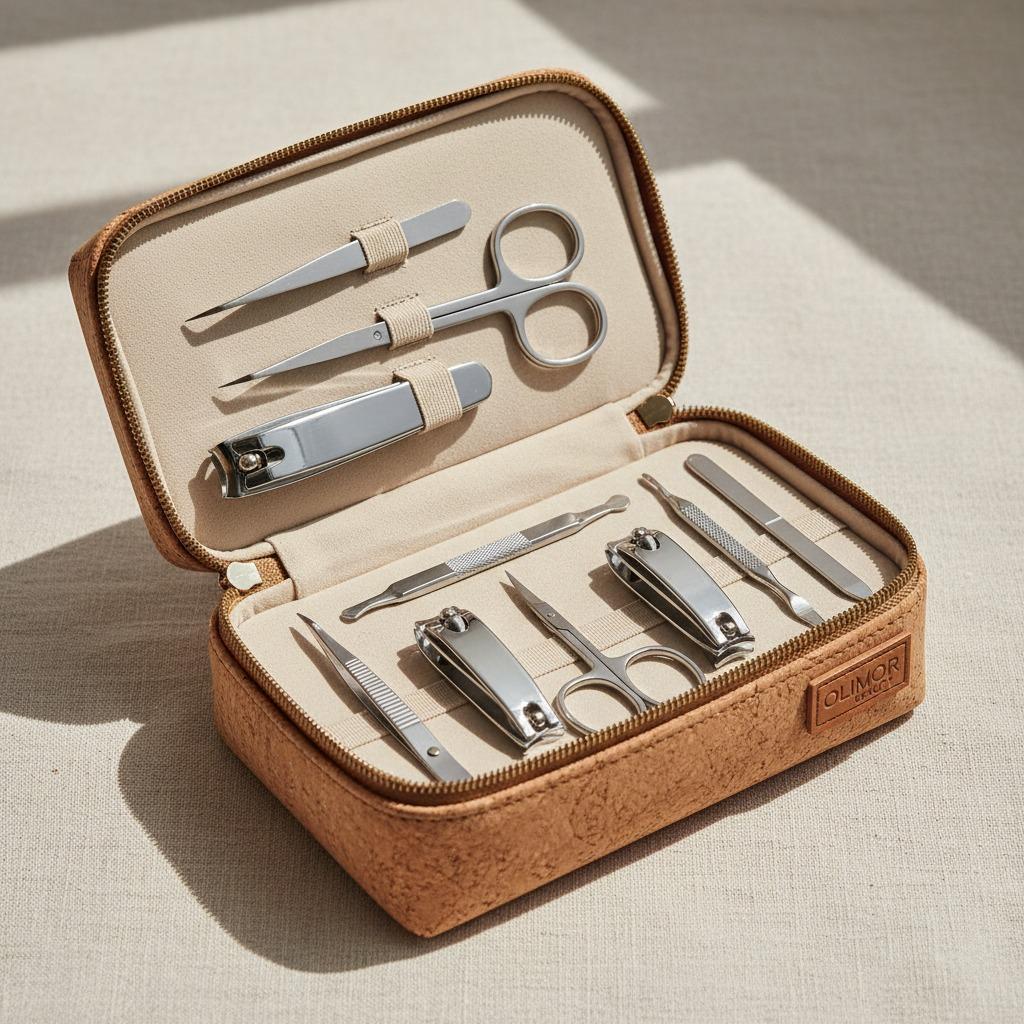
For kit assembly, the clipper must also match the quality level of the other tools included. If the nail file, scissors, or tweezers feel premium but the clipper performs poorly, the overall set feels inconsistent. This is why hardness, cutting action, stainless steel finishing, and packaging protection should be considered together.
Maintenance Guidance Buyers Can Share with End Users
A quality nail clipper still benefits from proper care. Providing simple maintenance guidance can reduce complaints and extend user satisfaction. End users should wipe the clipper after use, store it in a dry location, and avoid using it on materials other than nails. If the clipper is part of a professional setting, routine cleaning practices should follow the hygiene requirements of that workplace.
Buyers can also include basic use instructions in packaging or product listings. Customers should clip gradually rather than forcing a deep cut in one press, especially on thicker nails. They should also avoid dropping the clipper onto hard surfaces, as impact can affect alignment. These small reminders help customers understand that a grooming tool is designed for precision use.
Why Olimor Beauty Is a Practical Nail Clipper Supplier Choice
Olimor Beauty’s nail clipper offering is built around several clear buyer concerns: stainless steel construction, hardness testing, an HRC 50-52 range, ergonomic design, and internal quality control from raw material selection to final packaging. These are practical points for buyers who want grooming tools that can support daily use and present well in professional or personal care environments.
When comparing suppliers, the goal is not to choose the most decorative description or the lowest unit price in isolation. The goal is to choose a nail clipper supplier that can support consistent cutting performance, controlled finishing, and reliable presentation across repeat orders. By using hardness data, sample testing, and a clear inspection checklist, buyers can make better decisions and reduce product risk before the clippers reach customers.
For buyers developing a nail care line, refreshing a retail tool range, or sourcing stainless steel grooming accessories, Olimor Beauty provides a focused starting point for nail clipper procurement. A well-made clipper may be small, but it plays an important role in customer trust, daily grooming comfort, and the perceived quality of a beauty tool range.