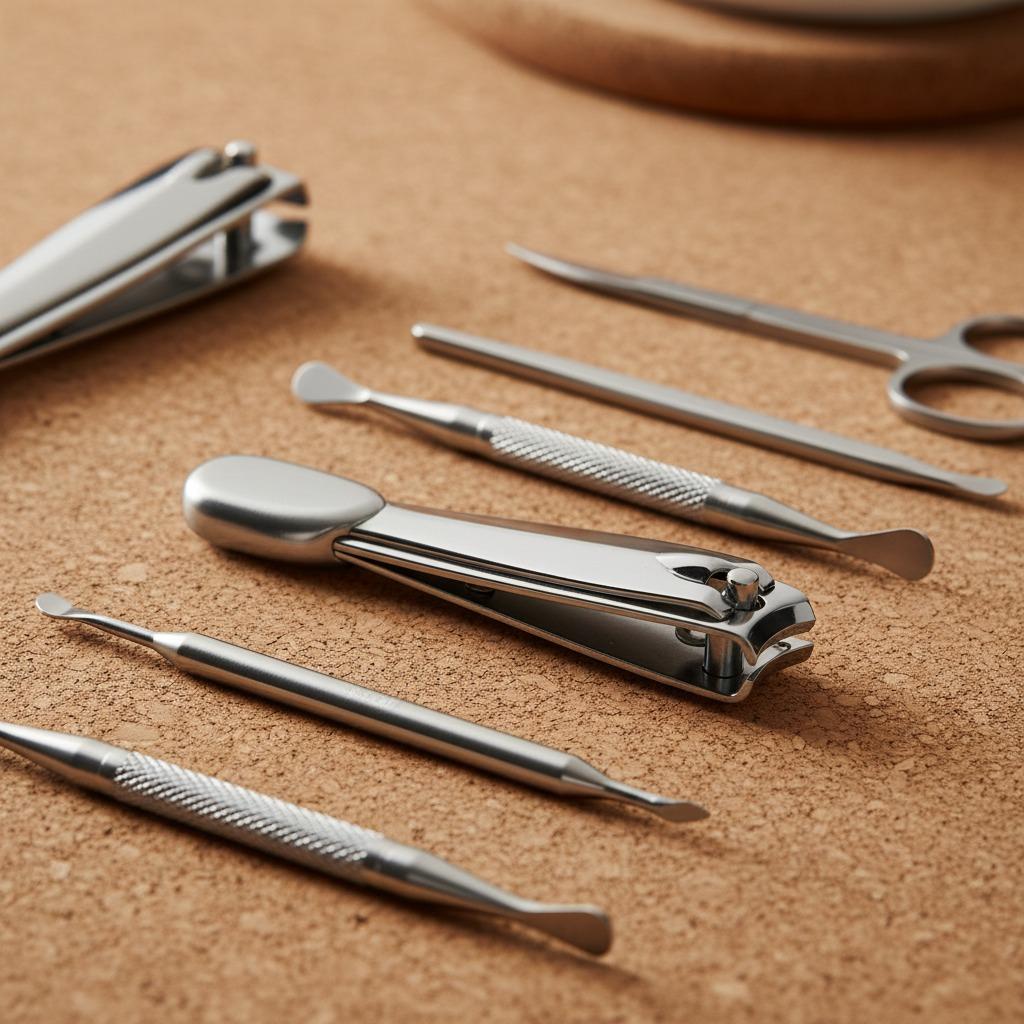
Quality assurance frameworks matter because beauty tools are used close to the body, often on delicate skin, nails or hair. A tool that looks acceptable in a product photo may still fail in daily use if its edges are uneven, its grip is uncomfortable, its finish is poorly controlled or its packaging does not protect it during transport. For retailers, distributors, salons and private-label buyers, a clear quality framework turns subjective impressions into repeatable inspection standards.
For Olimor Beauty, quality assurance is not only about checking a finished product at the end of production. It is a structured way to think about material selection, tool geometry, usability, finishing, packaging and batch consistency. This is especially important for tools such as nail clippers, where small details in blade alignment and cutting feel can determine whether the user experiences a clean trim or nail splitting.

What a Beauty Tool Quality Assurance Framework Should Cover
A useful framework starts by defining what the tool must do, who will use it and what failure would look like. A nail clipper, for example, must cut cleanly, feel stable in the hand, resist corrosion under normal storage conditions and avoid sharp non-cutting edges that could scratch the user. Tweezers, scissors, cuticle tools and other grooming accessories each require their own inspection logic, but the principle is the same: every product should be judged against its real use case.
Buyers reviewing beauty tool products can benefit from separating quality into four practical layers: design intent, production control, finished-goods inspection and after-sale feedback. Design intent sets the target. Production control keeps manufacturing aligned with that target. Finished-goods inspection catches visible and functional issues before shipment. Feedback from customers and professional users helps refine the next production run.
In a beauty tool business, quality should not be limited to whether a product is visually attractive. A polished surface can hide poor cutting performance. A heavy tool can feel premium at first but become tiring to use. A lightweight tool can be convenient but may feel unstable if the grip is not designed well. A quality framework brings these trade-offs into the open so that sourcing decisions are based on function as well as appearance.
Nail Clipper Quality Standards: Performance Details That Matter
Nail clippers provide a useful example because their performance is easy for users to judge. If the blades are misaligned, the clipper may crush rather than cut. If the cutting edge is too dull, the user may need extra pressure. If the lever feels loose, the tool may seem unreliable even if it still cuts. If the body has burrs or rough edges, the product can feel unfinished.
When evaluating a stainless steel nail clipper, inspection should focus on the features that affect comfort, safety and durability. The following checklist can help buyers, product teams and quality staff create a more consistent review process:
- Blade alignment: The upper and lower cutting edges should meet evenly across the cutting curve.
- Cutting feel: The clipper should trim nails cleanly without excessive force or repeated squeezing.
- Lever stability: The lever should move smoothly and return to position without wobbling or sticking.
- Surface finish: Non-cutting edges should be smooth to the touch, with no obvious burrs or scratches that affect handling.
- Corrosion resistance review: The material and finish should be suitable for typical bathroom or toiletry storage environments.
- Ergonomic grip: The tool should be easy to hold, especially for users trimming both fingernails and toenails.
- Packaging protection: Packaging should prevent the clipper from rubbing, opening or becoming damaged during shipping.
These standards should be documented in language that production and inspection teams can apply consistently. “Good quality” is too vague. “No visible burrs on handle edges,” “lever opens and closes smoothly,” and “cutting edges meet evenly” are more useful because they describe observable conditions.
From Raw Material to Packaging: Where Quality Checks Belong
A reliable quality assurance framework follows the product through each stage instead of waiting until final inspection. Early checks reduce waste because problems can be corrected before many units are completed. For nail clippers and similar metal beauty tools, the process may include incoming material review, forming or machining checks, polishing inspection, assembly review, functional testing and packaging inspection.
Material-related decisions should be handled carefully. Buyers do not always need to specify every technical parameter themselves, but they should understand which material claims are important for the product category and which claims need evidence. For beauty tools, the material discussion often involves strength, finish, resistance to normal moisture exposure and compatibility with intended use. If a product is positioned for a professional salon, the review may need to be stricter than for a simple travel grooming item.
Packaging is also part of quality. A tool that passes factory inspection can still reach the customer with scratches, dents or loose components if the packaging is inadequate. For e-commerce, the package may need to survive parcel handling. For retail, it may need to display the product clearly while preventing tampering. For multi-item grooming sets, dividers or fitted trays may be necessary to reduce contact between tools.
A Practical Inspection Table for Beauty Tool Buyers
The table below shows how a buyer can turn quality concerns into review points. It is not a substitute for a formal inspection standard, but it helps structure conversations between purchasing, product development and quality teams.
| Quality Area | What to Check | Why It Matters |
|---|---|---|
| Function | Cutting, gripping, closing, opening or spring action, depending on tool type | Confirms the product performs its basic grooming task |
| Safety and finish | Burrs, rough edges, sharp corners outside the working edge, loose parts | Reduces discomfort and avoidable user complaints |
| Consistency | Appearance, size, movement and feel across multiple samples | Helps ensure customers receive the same experience from batch to batch |
| Durability | Joint stability, lever strength, finish retention and normal-use resistance | Supports longer product life and fewer returns |
| Packaging | Protection, labeling accuracy, presentation and shipping suitability | Protects the tool and supports a professional buying experience |
How Quality Frameworks Support Sourcing Decisions
For importers, wholesalers and brand owners, quality frameworks make sourcing more disciplined. Instead of choosing a product only because it looks attractive or meets a target cost, the buyer can compare samples against the same criteria. This is especially useful when selecting from multiple suppliers or when developing a line across different tool categories.
Before placing an order, it is helpful to define acceptable and unacceptable conditions. For example, minor cosmetic variation in a non-visible area may be acceptable, while blade misalignment on a nail clipper should not be. A small packaging scuff may be treated differently from a loose hinge or rough cutting edge. These distinctions prevent confusion when reviewing samples, pre-shipment inspections or customer feedback.
Buyers exploring Olimor product collections can also think about quality at the assortment level. A collection should feel coherent in finish, handling and presentation. If a nail clipper, tweezer and grooming scissor are sold together, the user will notice if one item feels substantially weaker than the others. Consistency across a range can be as important as the performance of a single tool.
Maintenance Guidance That Protects the User Experience
Quality does not end when the tool leaves the factory. Clear maintenance guidance helps users keep beauty tools in better condition. Nail clippers should generally be stored dry, wiped after use and kept away from harsh conditions that may affect the finish or moving parts. Cutting tools should not be used on materials outside their intended purpose, because misuse can damage edges or loosen joints.
For brands and retailers, simple care instructions can reduce avoidable complaints. Users may not realize that moisture left on a tool can affect appearance over time, or that dropping a clipper can disturb blade alignment. A small instruction card, product page note or packaging icon can help set realistic expectations without overcomplicating the product.
Building Trust Through Clear Standards
Trust in beauty tools is built through repeated, reliable use. A customer may not know the details of a quality assurance framework, but they will notice when a nail clipper cuts smoothly, when the finish feels clean, when the tool fits comfortably in the hand and when the product arrives without damage. Those experiences are the result of controlled decisions made before the product reaches the shelf.
For business buyers, the most effective approach is to combine sample testing, written inspection criteria, packaging review and ongoing feedback. This creates a practical loop: define the standard, check the product, learn from the market and refine the next order. If you are comparing beauty tools for a retail range, salon supply program or private-label project, you can send an inquiry with your intended use, target market and quality priorities. For broader sourcing questions, you can also contact Olimor to discuss which evaluation points are most relevant to your product plan.
A strong quality assurance framework does not make beauty tools complicated. It makes them more predictable. By focusing on function, safety, finish, durability and packaging, buyers can select products with greater confidence and users can enjoy tools that perform as expected in everyday grooming.