A professional eyelash curler should lift lashes cleanly without pinching the eyelid, crimping the hair or requiring excessive force. The tool may look simple, but its performance depends on frame fit, hinge alignment, handle control, pad resilience and finishing quality. For makeup artists, beauty retailers, private-label buyers and everyday users, the best choice is not the curler that feels strongest; it is the one that closes evenly, sits close to the lash line and allows controlled pressure.
Olimor Beauty focuses on practical beauty tools, and the eyelash curler described here reflects the details that matter in real use: a curved frame, ergonomic textured handles, a precision hinge, a soft silicone pad and a dual-tone gold and black finish. These features support positioning, grip and presentation, but buyers should still evaluate samples by hand before making product decisions.
This guide explains how to choose a professional eyelash curler for personal kits, salons, retail assortments or sourcing projects. It also covers short lashes, cleaning, pad replacement, cost factors and supplier evaluation questions so the selection process is based on function rather than appearance alone.
What a Professional Eyelash Curler Must Do Well
A good eyelash curler has one primary job: create a lifted curve while protecting the lash line. It should open and close smoothly, meet the silicone pad evenly and feel stable in the hand. If the tool twists, snaps shut or presses harder on one side, the result may be an uneven curl that becomes more visible once mascara is applied.
Professional feel comes from control. The user should be able to place the curler at the lash root, apply gradual pressure, release fully and reposition without tugging. Ergonomic handles help the hand stay steady, especially when working near the eye. A textured grip is useful because beauty tools are often handled after skincare, foundation or cream products, and a slippery handle can cause overcorrection or accidental pinching.
The silicone pad is equally important. A soft, resilient pad cushions the lashes as the upper bar closes, helping the hair bend upward instead of being pressed against a hard edge. If the pad is too hard, deeply grooved or misaligned, the curler can leave a sharp crease. If it is too soft or poorly seated, it may not support the lash evenly. The goal is balanced resistance, not harsh pressure.
Fit Around the Eye: The First Selection Test
The most overlooked buying factor is frame fit. A professional eyelash curler can be well made and still perform poorly if its curve does not suit the user. The frame needs to approach the lash line closely without digging into the eyelid or leaving outer-corner lashes untouched. For retailers and beauty brands, this matters because customers have different eye shapes, lid depths and lash directions.
When testing a curler, place it near clean, dry lashes without squeezing. Check whether the center and corners sit comfortably. The frame should feel balanced rather than forcing the user to angle the wrist sharply. If the tool only reaches the center lashes, users may clamp repeatedly or pull sideways, which can increase discomfort and lash stress.
For salon or retail assortment planning, test the sample on several eye shapes when possible. A versatile curve reduces the need for complicated technique and makes the product easier to recommend. The Olimor eyelash curler uses a curved frame intended to help the tool sit close to the lash line, but buyers should confirm fit against their target customer profile.
Key Features to Inspect Before Buying
Photos can show finish and style, but they cannot fully reveal hinge control, pad feel or frame alignment. Whether selecting from beauty tool products or comparing samples for a private-label project, inspect the tool physically. Open and close it several times. Watch the top bar contact the pad. Feel whether the handles move smoothly and whether any rough points sit near the eye-contact area.
| Inspection point | Why it matters | What to check |
|---|---|---|
| Frame curve | Controls access to the lash root and comfort around the lid | Balanced contact across center and corners without harsh pressure |
| Hinge movement | Affects pressure distribution and user control | Smooth closing, no wobble, no sudden snap and no scraping feel |
| Handle grip | Improves control during placement and squeezing | Ergonomic shape with a secure textured surface |
| Silicone pad | Cushions lashes and helps prevent sharp bends | Soft, resilient, seated evenly and free from deep marks or residue |
| Finish quality | Supports comfort, cleaning and retail appearance | Even finish, clean edges and no burrs near the lash or lid area |
| Packaging support | Protects the frame during shipping and display | Packaging that does not compress the curler or deform the pad |
A dual-tone gold and black finish can support a polished retail look, but finish should never compensate for weak mechanics. If the hinge is loose, the pad is uneven or the frame has rough edges, the user experience will suffer regardless of color or packaging.
How to Use an Eyelash Curler Without Crimping Lashes
Technique is part of product performance. Even a well-designed curler can crimp lashes if used with excessive force or over mascara. Curl lashes before mascara, not after. Mascara can stiffen lash fibers, and clamping over dry mascara may cause sticking, pulling or breakage. Lashes should also be dry; damp lashes often lose shape quickly and may bend unevenly.
- Start with clean, dry lashes and a clean silicone pad.
- Hold the curler with the eye relaxed and look slightly downward into a mirror.
- Position the frame close to the lash root without catching skin.
- Squeeze gently for a short hold instead of clamping as hard as possible.
- Release completely before moving the tool.
- Reposition slightly toward the middle of the lash length and apply lighter pressure.
- Apply mascara after curling if a more defined finish is desired.
The softest-looking curl usually comes from two or three controlled points rather than one hard clamp at the base. If the result is a visible angle instead of a curve, check three things: the pad may be worn, the hinge may not close evenly or the user may be applying too much pressure at a single point.
Choosing an Eyelash Curler for Short, Fine or Straight Lashes
Short lashes need precision more than force. The curler must approach the lash root closely enough to capture the hairs without trapping skin. A curved frame and soft silicone pad are useful because they allow controlled contact at the base of the lashes, where lift matters most. Fine or straight lashes also benefit from gradual pressure because harsh clamping can create a bend that looks unnatural.
For short lashes, avoid trying to catch every tiny outer-corner hair by pulling the tool sideways. Side pressure can tug delicate lashes and make positioning less stable. Instead, curl the main lash section cleanly, then use mascara placement or a smaller detail tool if needed for the outer corner. The professional result is a smooth lift that opens the eye, not a forced curl that stresses the lash line.
Retail buyers should consider how the product will be explained to customers with short or downward-growing lashes. Instructions should emphasize clean, dry lashes, light pressure and full release before repositioning. A tool that feels secure and predictable is easier for these users than one that requires repeated squeezing to achieve visible lift.
Cleaning, Pad Care and Maintenance
An eyelash curler is used close to the eye, so maintenance is not optional. Makeup residue, skin oil and mascara transfer can collect on the silicone pad and frame. This buildup can reduce grip, create uneven pressure and raise hygiene concerns, especially in shared professional environments.
After use, wipe the pad and frame with a soft cloth. If residue remains, use a gentle makeup-remover wipe or a cloth lightly dampened with a suitable cleanser, then dry the tool thoroughly. Avoid soaking the hinge unless the product care instructions permit it, because trapped moisture may affect smooth movement over time. Store the curler in a dry place where the pad is not compressed by heavier tools.
Inspect the silicone pad regularly. Replace it when it shows deep grooves, cracks, loss of resilience or sticky residue that cannot be removed. A worn pad may press lashes against a harder edge and increase the chance of crimping. In salon or makeup-artist kits, cleaning between users and frequent pad checks are especially important. Buyers should also ask suppliers whether replacement pads are available or whether pad supply needs to be planned separately.
Cost Factors for Retailers and Private-Label Buyers
The cost of a professional eyelash curler is influenced by more than the frame itself. Buyers should consider the finish, handle design, hinge consistency, silicone pad quality, packaging structure, inspection requirements and any customization requested. A more polished finish or textured ergonomic handle may support a higher retail position, while stronger packaging can help protect the tool during transit and display.
Do not evaluate cost only by unit price. A low-cost curler that arrives with misaligned hinges, compressed pads or inconsistent finishing can create returns, complaints and extra inspection work. For B2B sourcing, the better question is whether the product matches the intended selling channel and customer expectations. A salon kit may prioritize handling and cleaning. A retail gift set may require stronger visual presentation. A private-label range may need consistent color, packaging and accessory planning across multiple beauty tools.
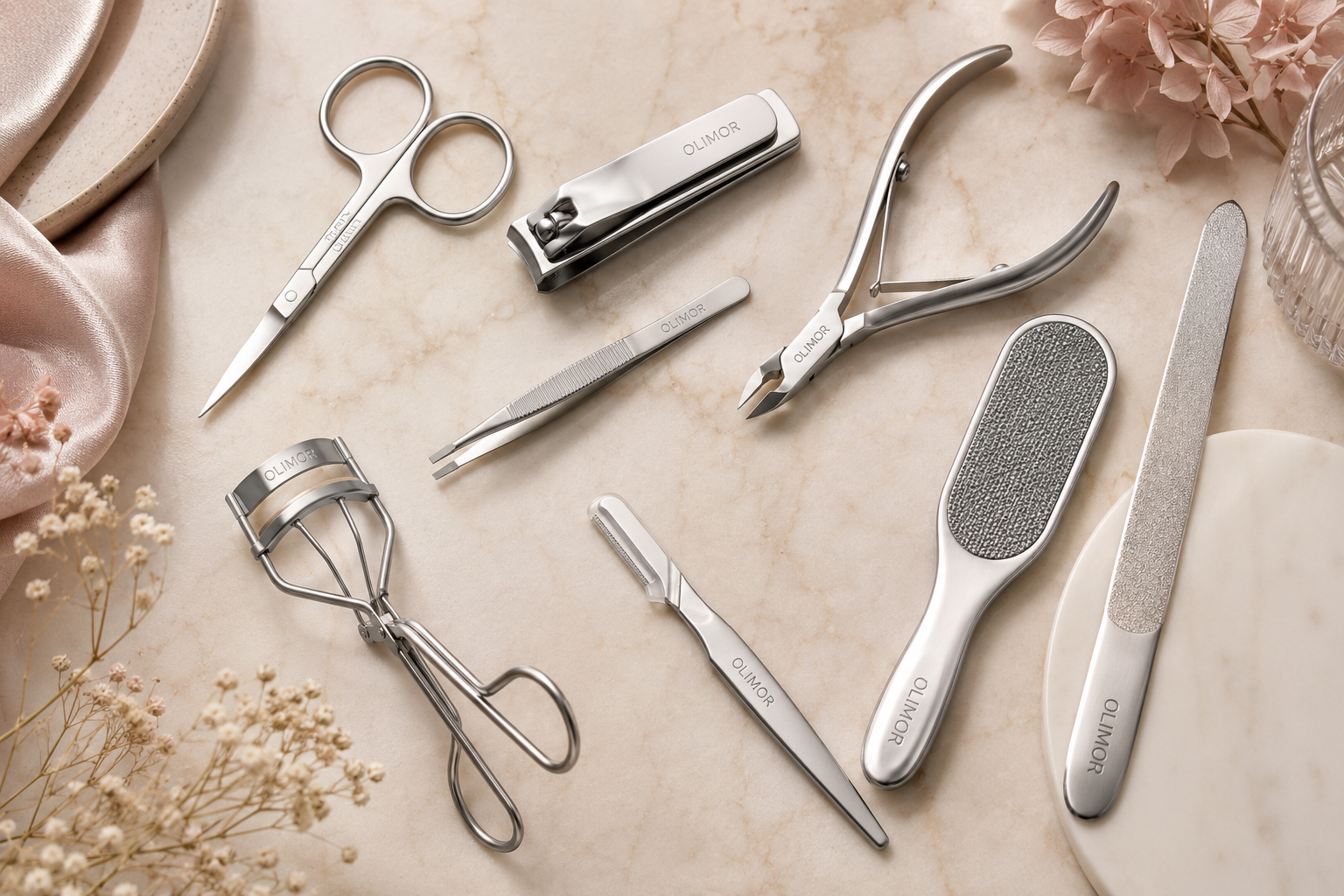
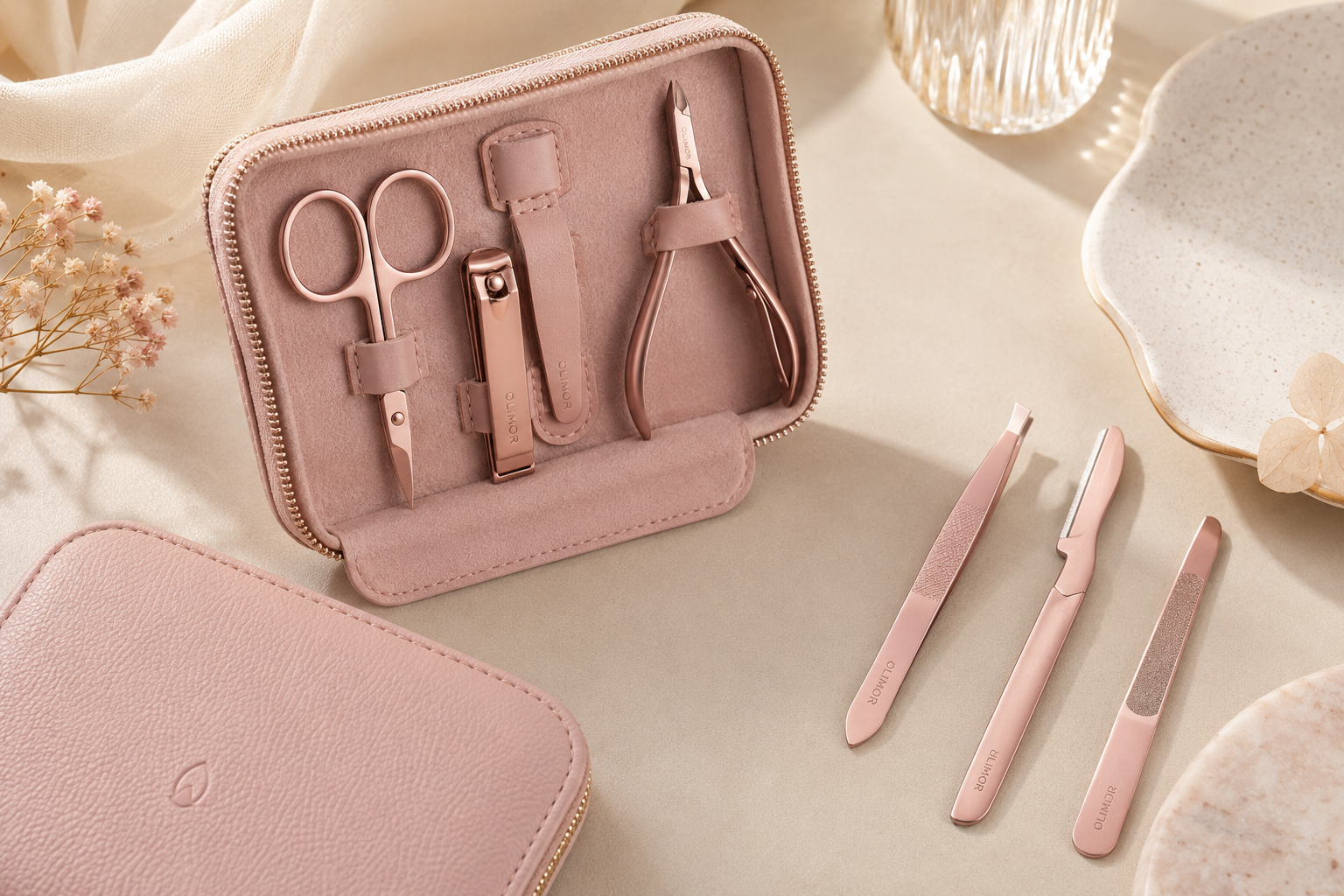
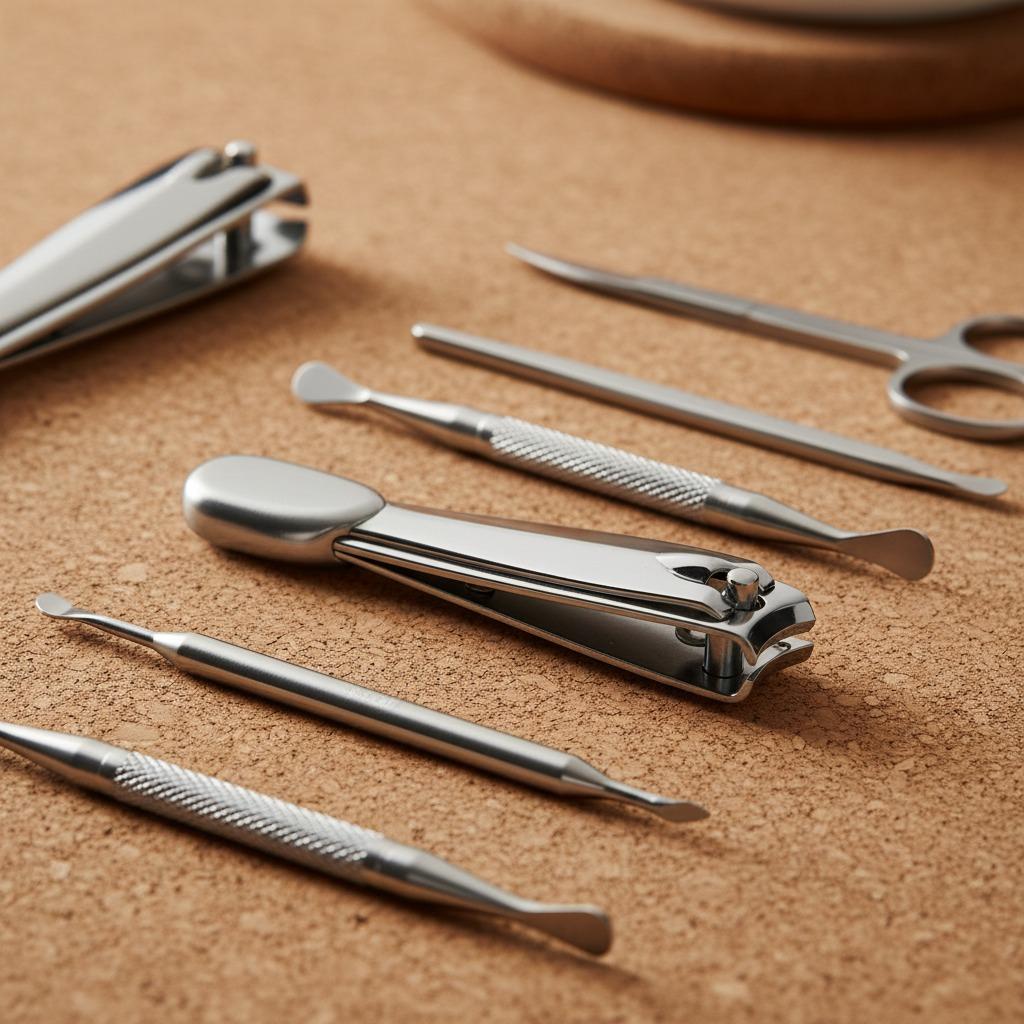
When reviewing options in a broader beauty tool collection, compare the eyelash curler with adjacent products such as tweezers, scissors and manicure tools. Consistent finish quality, packaging style and hand feel help the range look intentional rather than assembled from unrelated items.
Supplier Evaluation and Quality Questions
A reliable eyelash curler supplier should be able to discuss practical production and inspection details. Buyers do not need invented performance claims; they need clear answers about how the tool is made, checked, packed and supported. For a product used near the eye, alignment and surface finishing deserve careful attention.
- How is hinge alignment checked before packing?
- How are rough edges, burrs or uneven finishing controlled near the eye-contact area?
- What silicone pad options or replacement arrangements are available?
- How is the curler protected from frame compression during shipping?
- What customization can be applied to finish, packaging or branding without affecting function?
- What inspection documents or production references can be provided for the order?
Regulatory expectations depend on the market where the product will be sold. For general consumer products, buyers may need to review current guidance from bodies such as the U.S. Consumer Product Safety Commission or applicable European Union product safety rules. Requirements can change, so verify the current versions, market obligations and supplier documents before placing orders. Do not assume certification unless it is shown in valid supplier records.
When Olimor Beauty Is a Good Fit
Olimor Beauty is a suitable option for buyers who want beauty tools with practical handling details rather than decorative design alone. The eyelash curler described here combines ergonomic textured handles, a precision hinge, a curved frame and a soft silicone pad with a gold and black visual finish. These details address the issues users most often notice: slipping, pinching, uneven curl, difficulty reaching shorter lashes and discomfort during repeated use.
For personal users, the decision should come down to comfort, fit and curl control. For salons, the tool should be easy to clean, inspect and use on different clients. For retailers and beauty brands, sample testing should confirm that the curler supports the intended customer experience and packaging position. If you are planning a beauty tool assortment or reviewing sourcing options, you can send an eyelash curler inquiry or contact Olimor Beauty with your requirements.
Professional Eyelash Curler Buyer Checklist
- Confirm the frame reaches the lash line comfortably on the intended user profile.
- Open and close the hinge repeatedly to check for smooth, even movement.
- Inspect whether the top bar meets the silicone pad evenly across the full width.
- Check handle shape and texture for secure control during use.
- Review the silicone pad for softness, resilience and clean seating.
- Look for rough edges, finish defects or contact points that may cause discomfort.
- Ask about replacement pads, packaging protection and customization options.
- Verify current compliance obligations for the selling market and request relevant supplier documents.
FAQ
Can I request samples before ordering eyelash curlers?
Sample availability depends on the product plan, customization needs and current stock situation. For sourcing decisions, samples are strongly recommended because hinge feel, frame fit and pad comfort should be checked by hand.
Is there a fixed MOQ for customized eyelash curlers?
MOQ depends on the customization scope, packaging requirements and production arrangement. Buyers should share the target finish, branding and packaging details so the supplier can confirm what is practical.
What customization options should buyers discuss?
Common discussion points include finish appearance, handle details, packaging design, branding placement and replacement pad planning. Function should be approved before decorative changes are finalized.
How should quality be checked before shipment?
Useful checks include hinge smoothness, pad seating, frame alignment, finish condition, edge comfort, packaging protection and carton condition. Buyers should agree on inspection expectations and documentation before production.
How long does production or delivery take?
Lead time depends on order quantity, customization, packaging approval and production schedule. Confirm timing with the supplier for the specific project rather than relying on a general estimate.