Thick nails need a clipper that cuts with control, not just force. For salons, distributors, grooming-kit brands and personal care retailers, the right nail clippers for thick nails should combine a durable stainless steel body, accurate jaw alignment, comfortable leverage and a secure grip that helps users trim gradually without slipping.
This guide explains how to evaluate stainless steel nail clippers designed for thick nails, including material considerations, ergonomic handling, inspection points, maintenance, packaging checks and supplier questions. Olimor Beauty focuses on practical beauty tools for everyday grooming and professional use, including stainless steel nail clippers with an ergonomic handle concept, non-slip soft-touch grip, matte finish and precision cutting focus. Buyers building a nail care range can also review related beauty tool products or compare broader grooming tool collections.
Why Thick Nails Need a Purpose-Built Clipper
Thick nails can be naturally dense, hardened with age, or difficult to trim because the nail plate resists bending. A basic small clipper may squeeze the nail instead of cutting cleanly through it. That can create jagged corners, partial cuts, rough edges or a need for repeated pressure in the same area.
A purpose-built thick nail clipper should make trimming more predictable. The goal is to help the user place the cutting edge accurately, apply pressure in a controlled way and remove small sections without crushing the nail. This matters for toenails in particular, because toenails are often firmer than fingernails and require more leverage.
For B2B buyers, this category solves a practical consumer problem. Customers who struggle with ordinary clippers often look for a tool that feels stronger and safer in the hand. A thick nail clipper can be a useful product for pedicure assortments, senior-friendly grooming ranges, travel care kits, salon retail shelves and private label nail care programs.
Core Product Features to Evaluate
The most useful nail clippers for thick nails are not defined by one feature. Cutting strength, grip security, lever movement, jaw accuracy and finish quality all work together. A clipper that looks robust but closes unevenly may still perform poorly. A sharp edge with a slippery handle can also be difficult to control.
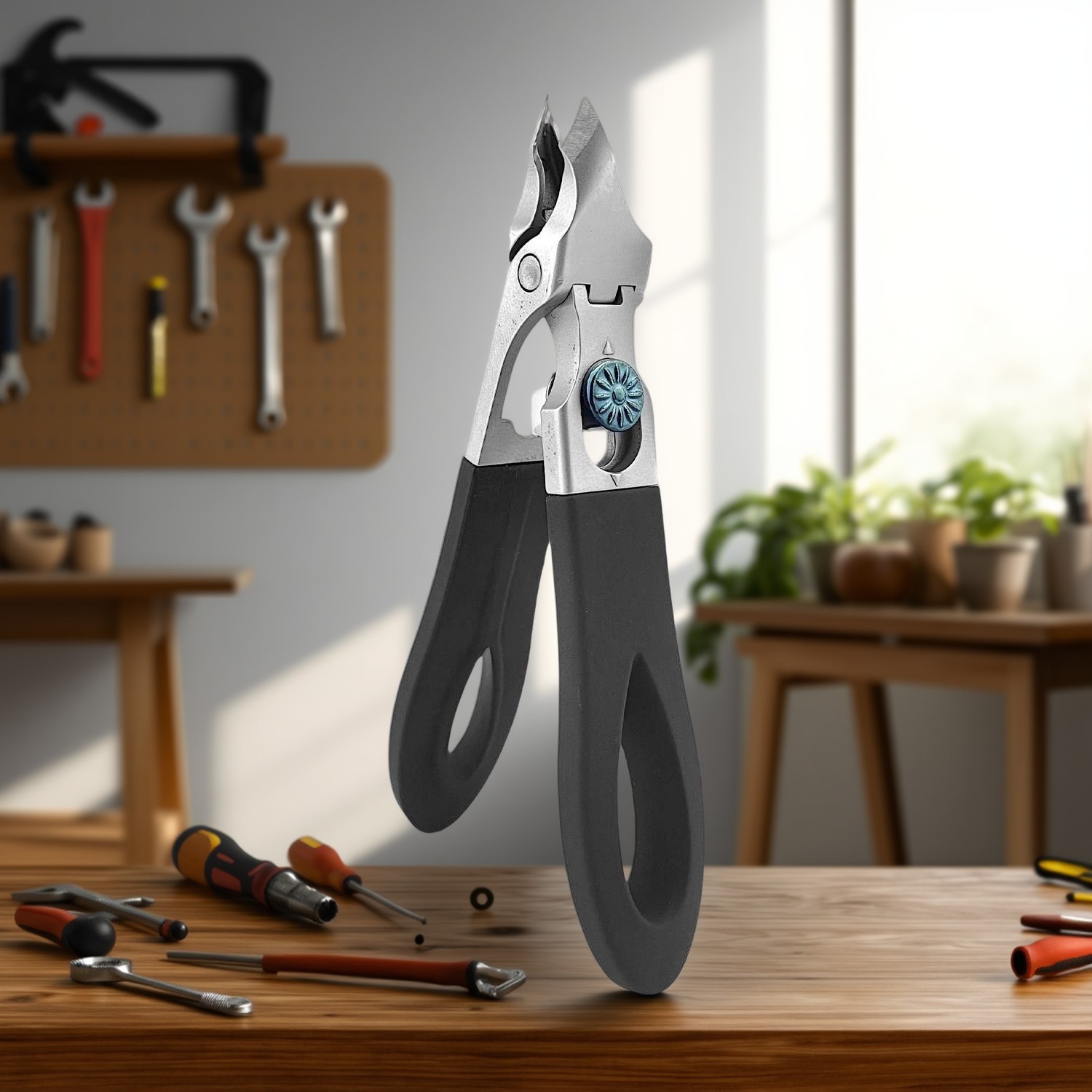
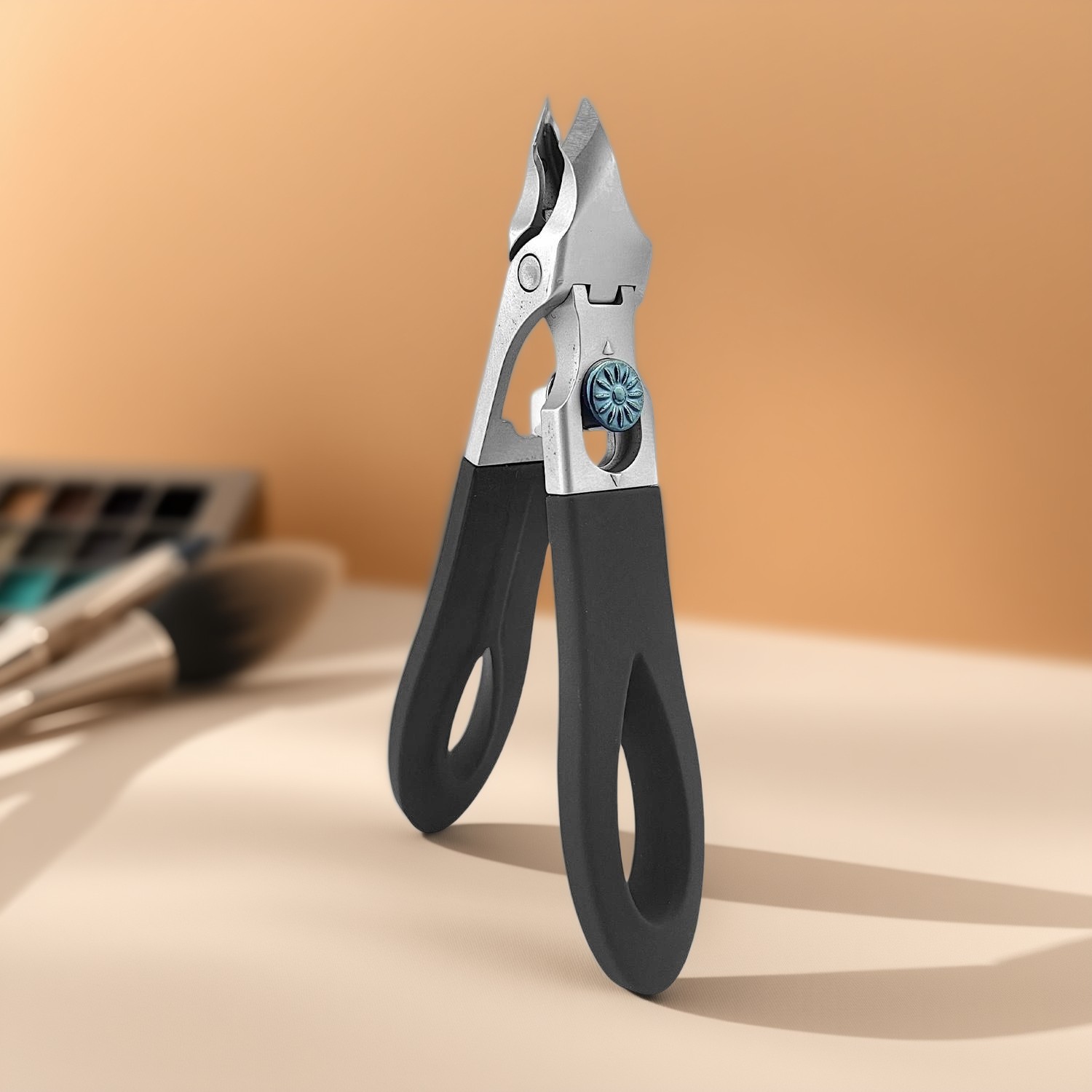
Olimor’s described design focuses on stainless steel construction, ergonomic handling, a non-slip soft-touch grip, a matte finish, durability and precision cutting. When comparing similar tools, buyers should confirm how these details feel in actual use, not only how they appear in product photos.
- Stainless steel body: Supports strength, clean appearance and repeated grooming use when properly maintained.
- Precision cutting focus: Helps the clipper trim dense nails in a cleaner and more controlled way.
- Ergonomic handle design: Helps users press with better leverage and less awkward hand positioning.
- Non-slip soft-touch grip: Improves stability, especially when trimming tougher toenails.
- Matte finish: Gives the tool a refined retail appearance and can support a more secure hand feel.
Stainless Steel Construction and Cutting Control
Stainless steel is widely used for nail grooming tools because it provides a strong, smooth surface and supports a durable cutting structure. For thick nail clippers, the body should feel stable when pressure is applied. If the frame flexes or the lever feels loose, the user may lose accuracy during the cut.
Cutting control starts with jaw alignment. The two cutting edges should meet evenly from side to side. Uneven contact can leave the nail partly uncut or may require the user to clip the same area several times. For thick nails, repeated clipping can be uncomfortable and may increase the chance of rough edges.
Buyers should also check the opening width and cutting line visibility. A clipper intended for thick nails should allow the user to position the nail clearly and cut in small sections. Visibility is important because thick toenails should not be trimmed aggressively into the corners. A controlled straight-across approach is usually easier to manage with a clipper that provides stable handling and clear edge placement.
It is reasonable for trade buyers to ask suppliers about manufacturing controls, in-process inspection and final appearance checks. However, buyers should not rely on general quality language alone. Samples should be reviewed directly for jaw fit, cutting edge consistency, lever movement, surface finish, grip attachment and packaging protection before larger purchasing decisions are made.
Ergonomic Grip: Comfort Is a Performance Feature
For thick nails, ergonomics directly affects cutting performance. A user often needs firmer pressure than with normal fingernail trimming. If the handle is narrow, slippery or awkward, that pressure may be applied at the wrong angle. The result can be a sudden snap, a rough edge or a cut that goes deeper than intended.
An ergonomic handle should allow the thumb and fingers to sit naturally. The lever should move smoothly without requiring an uncomfortable wrist position. A non-slip soft-touch grip can help users maintain control, especially in bathroom or salon environments where hands may be slightly damp after washing. The matte finish described for Olimor’s clipper also supports a more understated, professional appearance for retail and salon use.
Grip comfort matters for several buyer groups. Home users may want a tool that feels safer and easier to handle. Older users may appreciate stable leverage. Salon professionals need predictable control during repeated grooming services. Retailers and distributors benefit when a tool feels substantial and understandable as soon as the customer holds it.
Comparison Checklist for B2B Buyers
Use the following checklist when comparing nail clippers for thick nails across suppliers or product lines. It helps separate meaningful product quality from surface-level appearance.
| Evaluation point | What to inspect | Why it matters |
|---|---|---|
| Cutting edge alignment | Edges meet evenly without visible gaps or offset | Supports cleaner trimming and reduces repeated cutting |
| Lever movement | Opens and closes smoothly without looseness or scraping | Improves control when pressure is applied |
| Stainless steel body | Body feels stable and surface is cleanly finished | Supports durability, hygiene perception and retail value |
| Grip design | Ergonomic shape with non-slip soft-touch handling if specified | Helps users manage thick nails with less hand strain |
| Finish consistency | Matte finish is even; edges feel smooth to the touch | Improves user comfort and product presentation |
| Packaging protection | Clipper is secured so the edge and surface are not damaged in transit | Reduces complaints and protects shelf appearance |
| Assortment fit | Size, finish and function match other manicure or pedicure tools | Helps build a coherent retail or professional range |
Safe Use and Problem-Solving Tips
A good clipper works best when paired with the right trimming technique. Thick nails should usually be trimmed slowly in small sections rather than forced through in one large cut. This protects user comfort and helps create a neater edge.
- Clean the clipper before use and make sure the grip is dry.
- If the nail is very firm, soften it with warm water first, then dry the nail surface.
- Position the cutting edge carefully and trim in small sections.
- For toenails, keep the trim controlled and avoid cutting too deeply into the side corners.
- Use a nail file after clipping to smooth any rough edges.
- Wipe away nail debris after use and store the clipper in a dry place.
If a nail is painful, severely thickened, discolored, infected-looking or difficult to trim because of a medical condition, the user should not force the clipper through it. Professional medical or podiatry advice may be appropriate. General grooming tools are not a substitute for diagnosis or treatment.
For suppliers and retailers, clear use instructions can reduce avoidable customer dissatisfaction. Many complaints about thick nail clippers come from forcing too much nail into the jaw, trimming at a poor angle or storing the tool in damp conditions. Simple user guidance on the package or product page can improve the ownership experience.
Maintenance, Hygiene and Storage
Stainless steel nail clippers still need care. After each use, users should remove nail fragments from the jaw area and wipe the tool dry. Leaving grooming tools in wet bathroom areas for long periods can affect appearance over time, especially if residue remains around the hinge or cutting edge.
For personal use, routine cleaning and dry storage are usually the most important habits. For salons or shared-use environments, the tool should be handled according to the hygiene and disinfection rules that apply in that market and workplace. Local public health departments or equivalent regulators may publish sanitation requirements for nail salons. Buyers should verify the current rules and ensure any cleaning method is compatible with the tool materials and finish.
Trade buyers can request maintenance wording from the supplier or develop clear care instructions for retail packaging. Useful instructions may include cleaning after use, drying before storage, keeping the tool away from children, avoiding misuse on non-nail materials and checking the cutting edge before each use.
Packaging and Retail Presentation
Packaging is not only about appearance. For nail clippers, it protects the cutting edge, prevents surface rubbing and communicates the tool’s purpose. A clipper designed for thick nails should be easy to identify on the shelf or online. Customers should understand that the product is intended for stronger cutting control and comfortable handling.
For retail programs, packaging should support both protection and explanation. If a non-slip soft-touch grip, ergonomic handle or stainless steel body is a key selling point, the packaging or product page should say so clearly without exaggeration. Avoid medical-style claims unless the product, claims and target market have been reviewed for regulatory compliance.
For gift sets or travel grooming kits, check that the clipper fits securely with other tools. It should not rub against files, tweezers or scissors in a way that damages the finish. A consistent matte appearance can help the tool match a modern personal care assortment, but practical protection is just as important as visual consistency.
Supplier Evaluation and Commercial Questions
Commercial buyers should evaluate the supplier as carefully as the product. A stainless steel thick nail clipper may be a small item, but quality variation can affect customer reviews, returns and brand perception. Before ordering, ask questions that confirm the supplier understands your sales channel, packaging needs and inspection expectations.
Relevant supplier evaluation points include sample availability, customization options, packaging format, surface finish consistency, in-process inspection, final product checks and communication responsiveness. If your company follows a formal quality management process, you may ask whether supplier documents align with recognized frameworks such as ISO 9001. Do not assume certification; verify current certificates, scope and validity directly with the supplier documents if this matters to your purchasing process.
Regulatory requirements depend on market and product claims. A general grooming clipper is different from a medical device claim. If you plan to market a clipper for medical or therapeutic use, verify the current requirements with the appropriate regulator in your target market, such as the U.S. Food and Drug Administration for products sold in the United States. Always review current versions of rules and supplier documents rather than relying on outdated summaries.
When you are ready to compare samples or discuss packaging, you can send a product inquiry with your target channel, assortment plan and customization needs. For range planning support, contact Olimor with the type of nail care program you are building.
Cost Factors Without Guesswork
The cost of nail clippers for thick nails depends on multiple factors, and responsible suppliers should not quote without understanding the project. Material selection, finish, grip structure, packaging, customization, inspection requirements and order conditions can all influence the final quotation.
A basic unbranded tool in simple packaging will not be evaluated the same way as a customized matte-finish clipper with soft-touch grip and retail-ready presentation. Buyers should compare total value instead of only unit cost. A lower-cost clipper that slips, cuts unevenly or arrives with damaged surfaces can create hidden costs through returns, complaints and lost customer trust.
For accurate comparison, ask suppliers to quote against the same specification. Provide details such as target market, packaging preference, logo or color needs, expected sales channel and any inspection requirements. This makes it easier to compare offers fairly and prevents misunderstandings later in production.
When This Product Fits Your Assortment
Nail clippers for thick nails are a strong fit when your customers need more cutting control than a standard clipper can provide. They are relevant for pedicure-focused assortments, salon retail products, personal grooming kits, senior care-oriented ranges and private label nail care lines. The key is to position the product clearly: it is a controlled grooming tool for dense nails, not a cure for nail conditions.
Olimor’s stainless steel thick nail clipper concept, ergonomic handle, non-slip soft-touch grip, matte finish and precision-focused cutting design make it suitable for buyers who want a practical, easy-to-understand tool in a nail care range. The best purchasing decision comes from sample review, clear specifications and supplier communication rather than appearance alone.
FAQ
Can I request samples before placing a larger order?
Sample discussion is recommended for B2B buyers. Samples allow you to check grip comfort, jaw alignment, lever movement, finish consistency and packaging protection before confirming a purchase plan.
Is there a fixed MOQ for customized nail clippers?
MOQ can depend on the product configuration, customization method, packaging and current production arrangement. Buyers should confirm the applicable MOQ directly during inquiry instead of assuming a standard number.
What customization options should buyers discuss?
Common discussion points include logo placement, surface finish, grip appearance, packaging style and assortment matching. Exact options should be verified with Olimor based on the selected product and project requirements.
How should quality be checked before shipment?
Buyers can define inspection points such as cutting edge alignment, lever smoothness, stainless steel surface finish, grip condition, packaging protection and carton presentation. Any required inspection documents or standards should be agreed before production.
How is lead time confirmed?
Lead time depends on order details, customization, packaging and production schedule. Confirm the current timing with the supplier after specifications are clear and before finalizing the order.