










An eyelash curler is a small beauty tool, but its performance depends on mechanical details that buyers and users can feel immediately. Lever ratio, pivot placement, handle geometry, frame stability and pad contact all affect how much pressure reaches the lashes and how controllable that pressure feels in the hand.
The key point is simple: a better eyelash curler is not the one that delivers the highest force. It is the one that converts finger pressure into smooth, even, predictable curl control. For beauty retailers, salons, gift-set developers and private-label buyers, understanding this helps separate a tool that only looks attractive from one that performs reliably for different users.
This guide explains how eyelash curler lever mechanics work, what to inspect in samples, how pad and frame design affect comfort, and what sourcing questions to ask before adding a curler to a product line. Buyers comparing beauty tool products can use these checks to evaluate function alongside finish, packaging and commercial fit.
What Lever Ratio Means in an Eyelash Curler
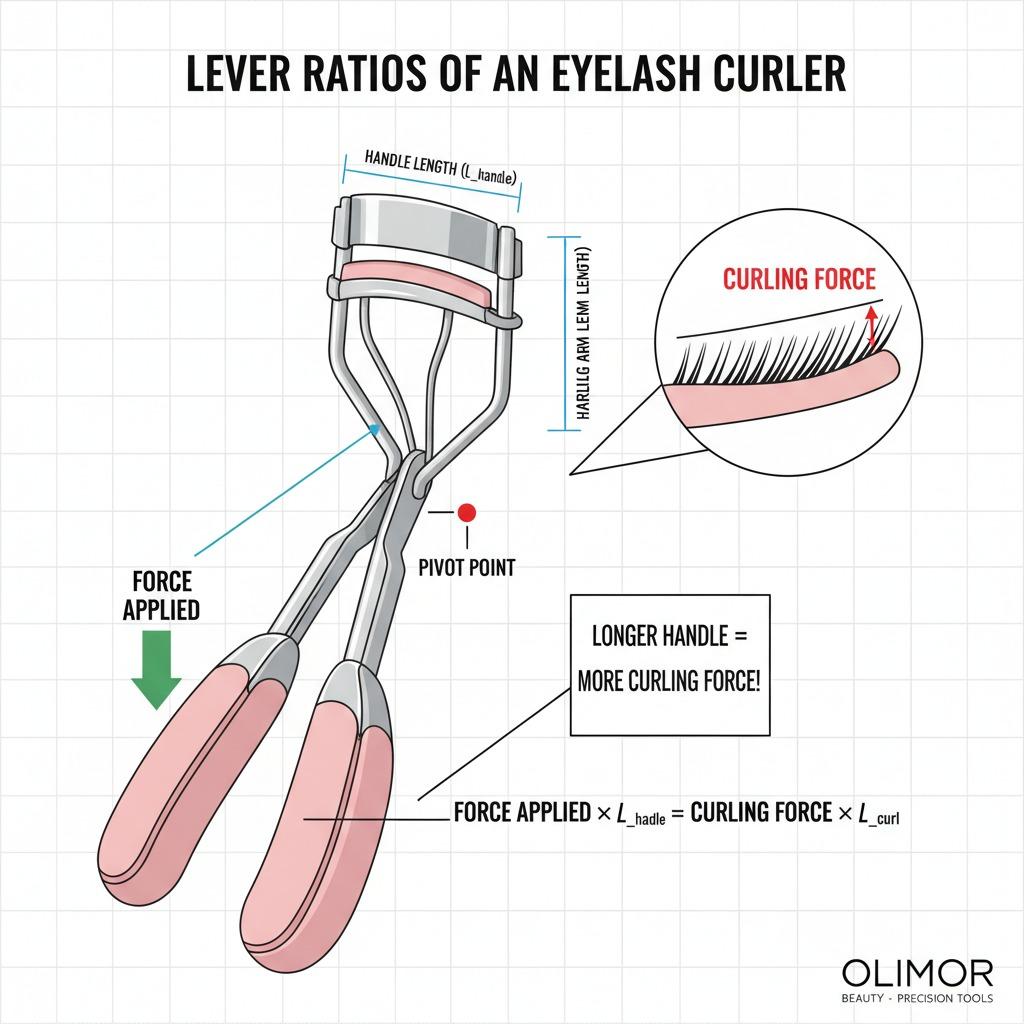
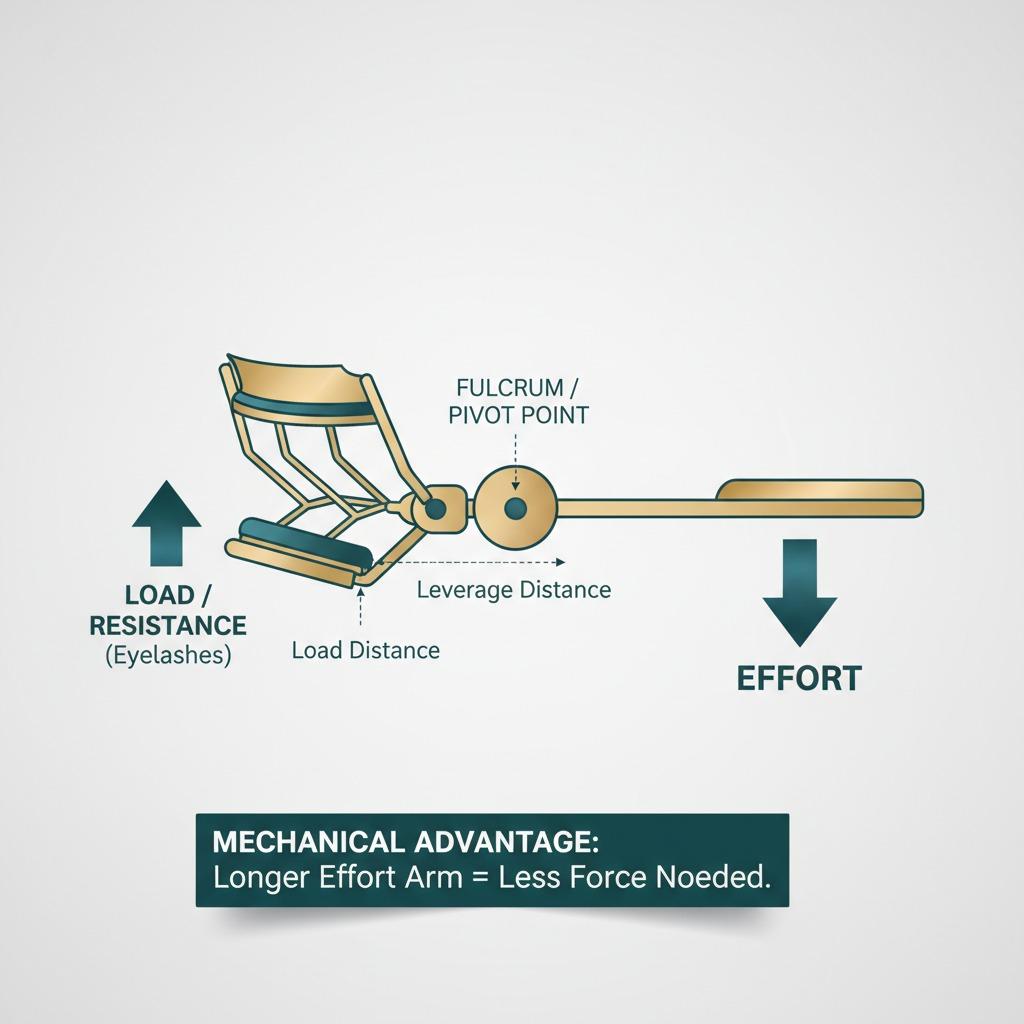
In an eyelash curler, the user squeezes the handles, the pivot transfers motion, and the upper pressing bar moves toward the cushioned pad. Lever ratio describes the relationship between the handle side of the mechanism and the curling head side. When the handle side provides greater mechanical advantage, the user can create more pressure at the lash area with less hand effort.
That does not mean more leverage is always better. Eyelashes and eyelids are delicate. A tool with too much force and poor pad contact can create a sharp bend, pinch skin or feel difficult to control. A tool with too little mechanical advantage may require hard squeezing, which can tire the hand and reduce precision. The best balance is progressive pressure: the curl builds gradually as the handles close.
Progressive pressure matters because eyelash curling is not a one-size action. Some users prefer a soft daily lift. Others want more visible root lift. Makeup artists may use short controlled pulses along the lash length. A well-balanced lever system lets the user stop, adjust and release without a sudden jump in pressure at the end of the squeeze.
How Pivot Placement Changes Curl Shape
The pivot is the hinge point that controls how the pressing bar travels toward the pad. Small changes in pivot placement can affect both the amount of force and the angle of contact. If the movement is uneven, lashes may be pressed more strongly at the center than at the corners, or one side of the curler may close before the other.
For the user, this can show up as a curl that is lifted in one area but weak near the outer lashes. It can also create a pinching sensation if the tool does not follow the eye contour comfortably. For buyers, pivot behavior is one of the most important sample-review details because it affects real use more than surface color or plating alone.
To inspect pivot action, open and close the curler slowly without lashes in it. Watch the pressing bar as it approaches the pad. The bar should meet the pad evenly across the width, without obvious tilt, side wobble or delayed contact on one corner. Then squeeze gently and feel whether resistance builds smoothly. A rough hinge, loose side play or sudden closing action can indicate inconsistent pressure control.
Handle Geometry and Ergonomics
Handle design influences how the lever ratio feels in practice. Longer handles may improve mechanical advantage, but comfort also depends on finger opening size, handle spacing, grip angle and how the wrist naturally positions the tool near the eye. A curler can have strong leverage yet still feel awkward if the user must bend the wrist sharply or squeeze from an uncomfortable angle.
For daily retail customers, ergonomic discomfort can turn a technically functional tool into one that is rarely used. For salon and makeup professionals, repeated use makes handle comfort even more important. A curler used throughout a workday should allow controlled squeezing without excessive hand strain.
When comparing samples, test the handle with different hand sizes if possible. The tool should feel stable between the fingers, and the user should be able to close it gradually rather than snapping it shut. If the handle openings are too small, users may lose control. If they are too large or slippery, the tool may shift during placement.
Pad Contact: The Detail That Determines Comfort
The silicone or elastomer pad is not just a soft accessory. It is part of the pressure system. The pad cushions the upper bar, distributes force across the lashes and helps prevent a harsh crease. Even if the lever ratio is well designed, a poor pad can make the curler feel aggressive or ineffective.
A pad that is too hard may concentrate pressure and create a visible crimp rather than a rounded curl. A pad that is too soft may absorb too much of the squeezing energy, making the user press harder to see a result. A worn, cut or flattened pad can also change the way the tool performs over time.
Buyers should inspect pad fit as well as pad feel. The pad should sit securely in its channel and align with the pressing bar. It should rebound after light pressure and should not show obvious splitting, uneven height or loose edges in new samples. For retail programs, confirm whether replacement pads, spare pads or specific packaging requirements are part of the project scope before finalizing the order.
Comparison Table: What to Check in Eyelash Curler Samples
Lever ratio is rarely listed as a simple specification, so it needs to be evaluated through handling, inspection and sample feedback. The table below gives buyers a practical way to compare eyelash curlers across different designs.
| Evaluation point | What to inspect | Why it matters |
|---|---|---|
| Lever feel | Close the handles slowly and note whether pressure builds progressively. | Shows whether the user can control the curl instead of applying sudden force. |
| Pivot stability | Check for side wobble, rough movement or looseness around the hinge. | A stable pivot helps deliver even pressure across the lash line. |
| Bar-to-pad alignment | Watch whether the upper bar meets the pad evenly from left to right. | Uneven contact can cause inconsistent curl or pinching at one side. |
| Pad resilience | Press the pad lightly and see whether it rebounds cleanly. | Pad rebound affects comfort, crease control and ongoing usability. |
| Frame stiffness | Squeeze gently and look for twisting or flexing. | A stable frame transfers pressure more predictably. |
| Eye-area fit | Assess head curvature and placement comfort with different users. | Fit affects whether the tool can reach the lash base without catching skin. |
| Finish and edges | Inspect surfaces that touch the hand or approach the eye area. | Smooth finishing supports comfort and a better perceived product quality. |
How Users Can Curl Lashes More Safely
Good mechanics reduce risk, but technique still matters. Eyelash curlers should be used with care, especially near the eyelid. The tool should be used on clean lashes before mascara. Mascara can make lashes stiffer or tackier, increasing the chance of pulling when the curler is released or moved.
A controlled method is usually better than one hard squeeze. Place the pad close to the lash base without catching skin, close the handles gently, hold briefly, and release fully before moving the tool. For a more natural curve, repeat with lighter pressure near the middle of the lashes rather than forcing the root area.
- Start with clean lashes: avoid curling after mascara to reduce sticking and pulling.
- Use a mirror angle: looking slightly downward can make the lash base easier to access.
- Close slowly: gradual pressure gives time to stop if skin is caught.
- Release fully: never pull or reposition the curler while it is clamped.
- Replace damaged pads: a split or flattened pad can turn smooth pressure into a sharp press.
Retailers and brands can include simple use instructions in packaging or online product content. Clear instructions reduce misuse and help customers experience the tool as intended.
Maintenance and Inspection for Consistent Performance
An eyelash curler that worked well when new can become inconsistent if it is dirty, bent or used with a damaged pad. Makeup residue, skincare oils and adhesive products can build up on the pad or frame. This changes how lashes sit in the tool and may make the closing motion feel less smooth.
Users should wipe the pad and frame with a soft cloth or an appropriate cosmetic tool cleaner, then allow the curler to dry before storage. The hinge area should be kept free from heavy product buildup. The pad should be checked regularly for cuts, flattening, hardening or loss of rebound. If the frame becomes bent or the bar no longer meets the pad evenly, the tool may no longer curl predictably.
For salons, makeup artists and beauty counters, maintenance also supports hygiene. Local rules and professional hygiene expectations may apply depending on where tools are used. Businesses should verify current requirements from relevant local authorities. In the United States, the Consumer Product Safety Commission is a useful public body for general consumer product safety information. For products sold in the European Union, businesses should review applicable obligations under the General Product Safety Regulation and verify current versions and supplier documents. These references do not replace product-specific compliance review.
B2B Sourcing: Questions to Ask Before Choosing a Supplier
For B2B buyers, eyelash curler sourcing should go beyond appearance, color and packaging. Functional consistency is important because the product is used close to the eye and because customers quickly notice poor pressure control. Requesting and comparing samples is the most practical way to evaluate lever behavior, pivot stability and pad contact.
When reviewing beauty tool collections, build a simple scorecard. Include sample handling by more than one person, ideally with different hand sizes and eye shapes. Ask testers to describe specific observations rather than general preferences. Useful feedback includes whether the curler feels stiff, whether pressure arrives too suddenly, whether the pad feels too hard, or whether the head shape is difficult to position.
Key sourcing questions
- Can the supplier provide samples for functional review before order confirmation?
- What customization options are available for finish, color, logo placement, packaging or accessory pads?
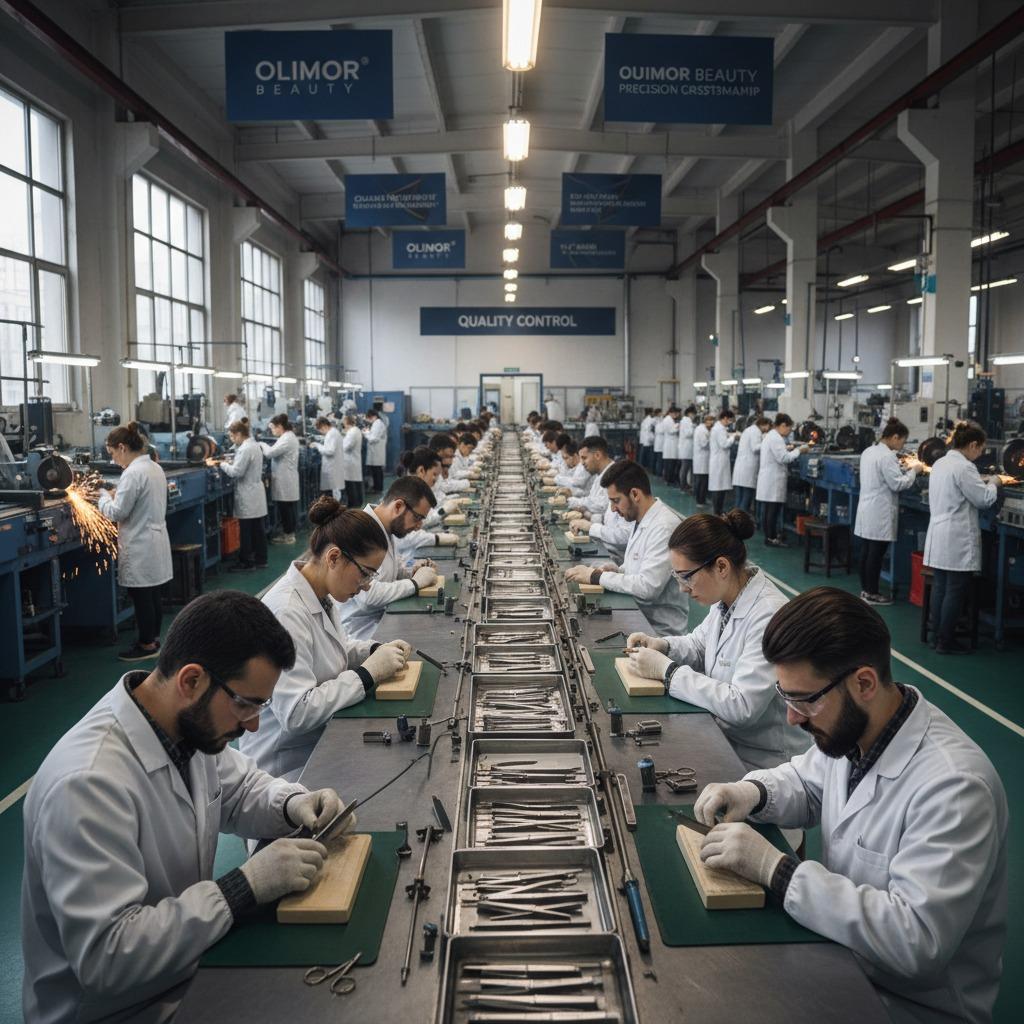
- How is bar-to-pad alignment checked during production or pre-shipment inspection?
- How are visible edges, hinge movement and frame deformation inspected?
- Are replacement pads included, optional or handled as a separate item?
- What documents can the supplier provide for the product, packaging and target market requirements?
Cost is also influenced by more than the basic tool shape. Factors may include metal finishing, handle design, pad configuration, logo process, packaging complexity, inspection expectations and order quantity. Buyers should avoid comparing quotes only by unit price unless specifications and quality expectations are clearly aligned.
Private Label and Retail Positioning
For private-label programs, the eyelash curler should match the intended customer. A salon-focused tool may prioritize smooth repeated handling and replacement pad planning. A mass retail tool may need strong shelf appeal, clear instructions and durable packaging. A gift-set curler may need coordinated finish and compact presentation, but it still needs reliable bar alignment and comfortable pressure control.
Product pages and retail training should communicate practical benefits without overstating claims. Instead of vague language such as professional quality, focus on observable features: smooth handle action, cushioned pad contact, stable frame feel, comfortable grip and controlled lash shaping. These points help customers understand why one curler may feel better than another.
Olimor supports beauty tool sourcing conversations where both design and function are considered. If you are developing an eyelash curler, comparing sample options or planning a private-label assortment, you can contact Olimor with your target market, packaging direction and expected use case. For a specific project, send a product inquiry so the discussion can focus on suitable tool options and customization needs.
Buyer Checklist for Eyelash Curler Approval
Use this checklist before approving an eyelash curler for retail, salon or promotional use.
- The handle closes smoothly without sudden pressure spikes.
- The pivot does not wobble or feel rough during repeated opening and closing.
- The pressing bar contacts the pad evenly across the width.
- The pad is secure, resilient and free from visible defects.
- The frame does not twist noticeably under gentle squeeze pressure.
- The head curvature is comfortable for the intended customer group.
- Edges and surfaces near the eye area feel smooth.
- Packaging and instructions explain correct use and pad care.
- Customization, replacement pads and inspection expectations are confirmed with the supplier.
- Relevant market requirements and supplier documents are reviewed before purchase.
FAQ
Can I request eyelash curler samples before placing a B2B order?
Sample availability depends on the project and product option. Buyers should request samples for hands-on review because lever feel, pivot movement and pad alignment are best assessed physically.
Is there a fixed MOQ for customized eyelash curlers?
MOQ can vary by product style, customization method, packaging and production arrangement. Confirm the current requirement with the supplier before planning a launch or promotion.
What customization options are commonly discussed for eyelash curlers?
Common discussion points include finish, color, logo application, packaging, pad accessories and assortment needs. Available options depend on the selected tool and project scope.
How should quality be checked before shipment?
Inspection should include appearance, hinge movement, frame stability, bar-to-pad alignment, pad condition and packaging checks. Buyers should agree on inspection expectations and required documents in advance.
What affects lead time for eyelash curler projects?
Lead time can be affected by sample approval, customization complexity, packaging confirmation, order quantity and production scheduling. Ask for current timing based on the exact project details.
The Bottom Line
Lever ratio is one of the hidden reasons an eyelash curler feels comfortable, stiff, gentle or too aggressive. It works together with pivot placement, handle geometry, frame stability and pad resilience. A well-designed curler does not simply clamp harder; it gives the user controlled pressure and even contact so lashes can be lifted without harsh creasing.
For buyers, the practical approach is to evaluate samples with clear criteria. Look at how the mechanism moves, how the pad receives pressure, how the tool fits the eye area and how easily users can control the squeeze. When these details are reviewed early, the final product is more likely to meet customer expectations and support a stronger beauty tool assortment.