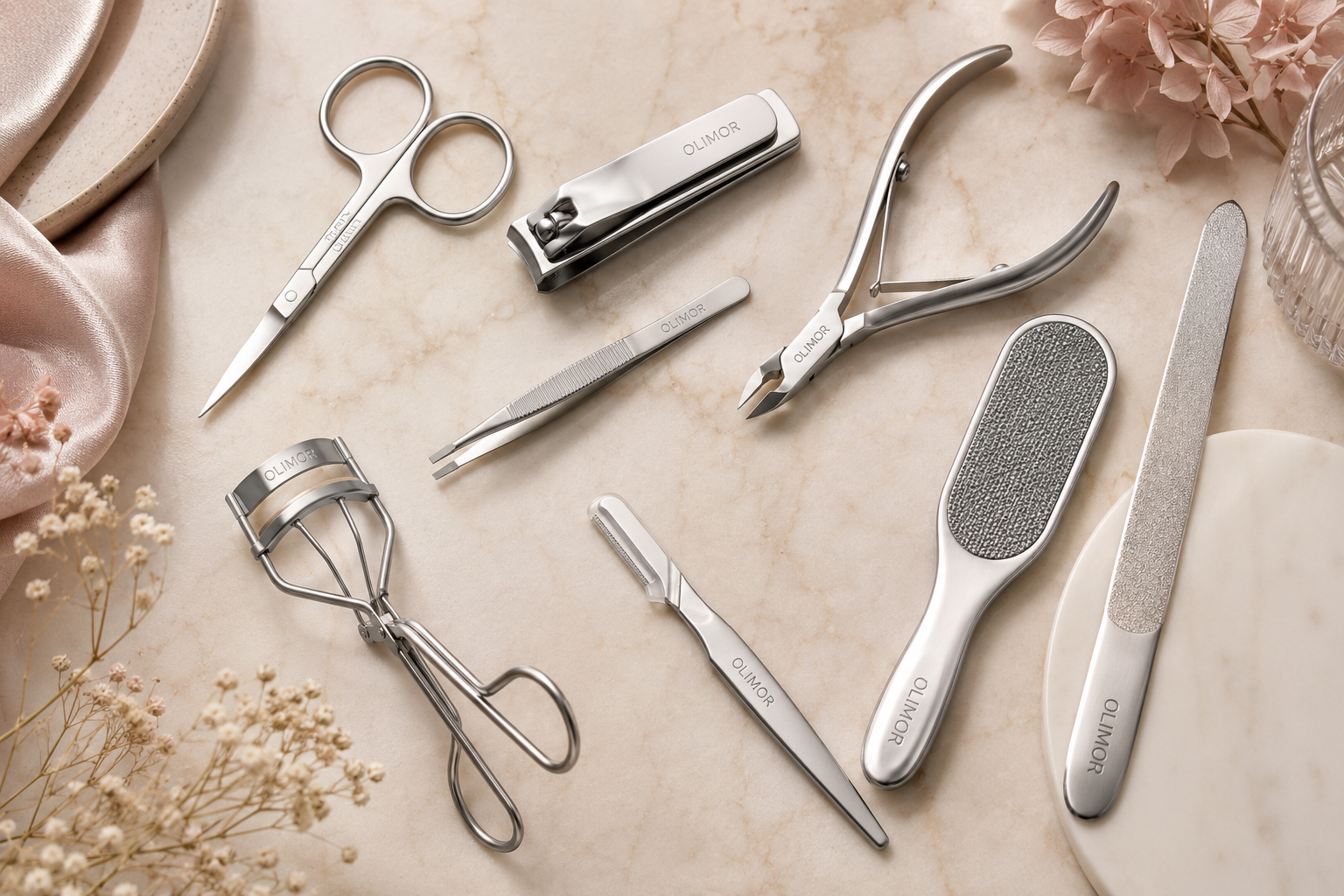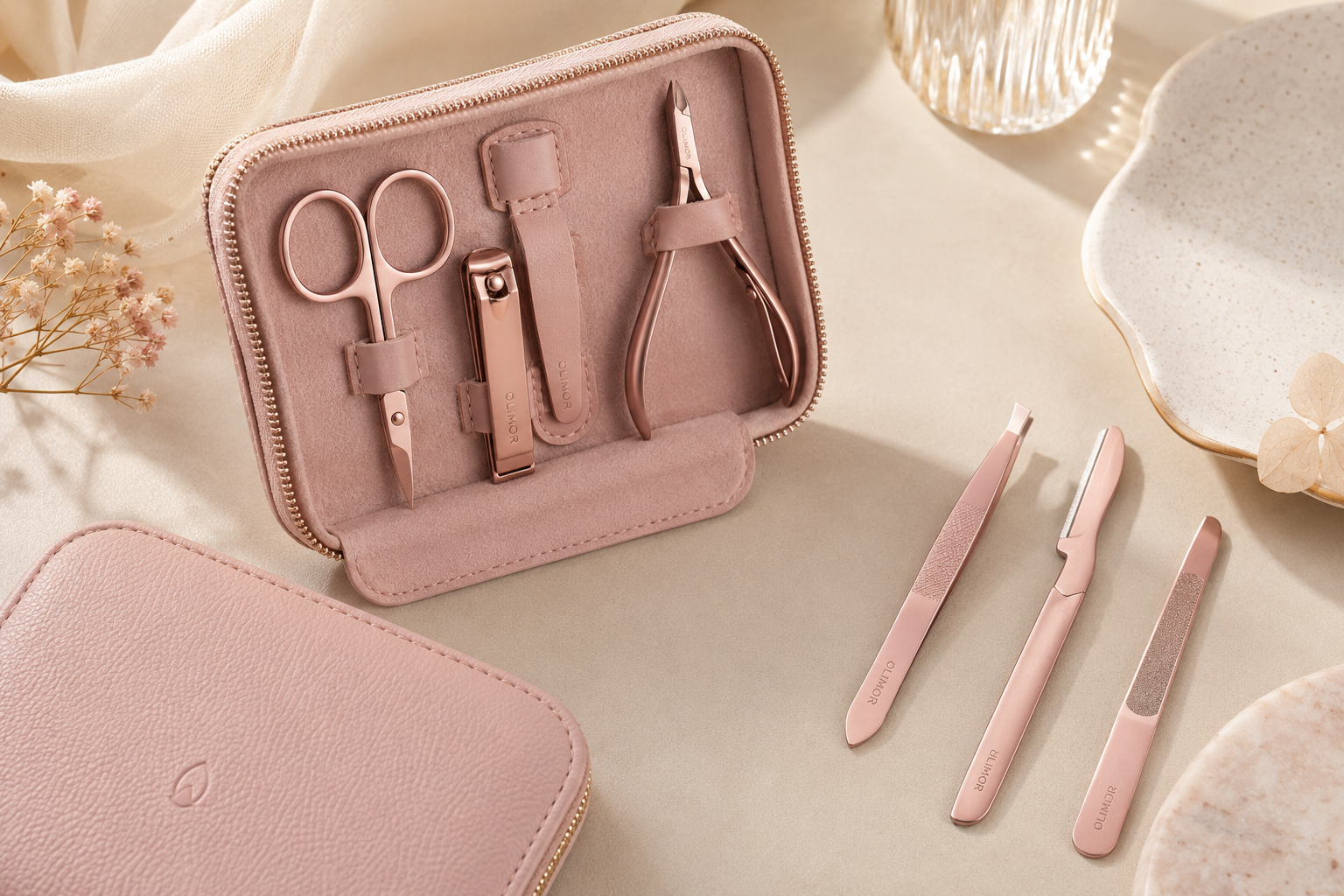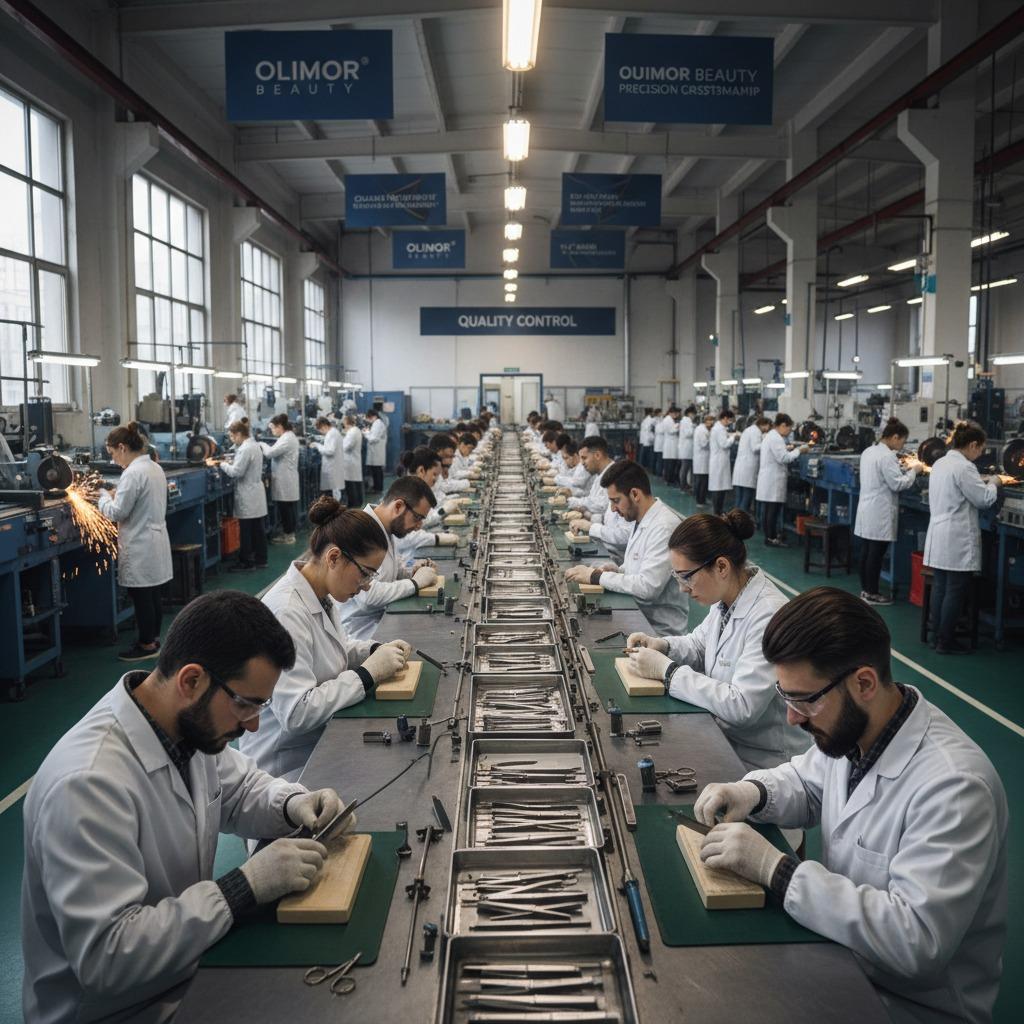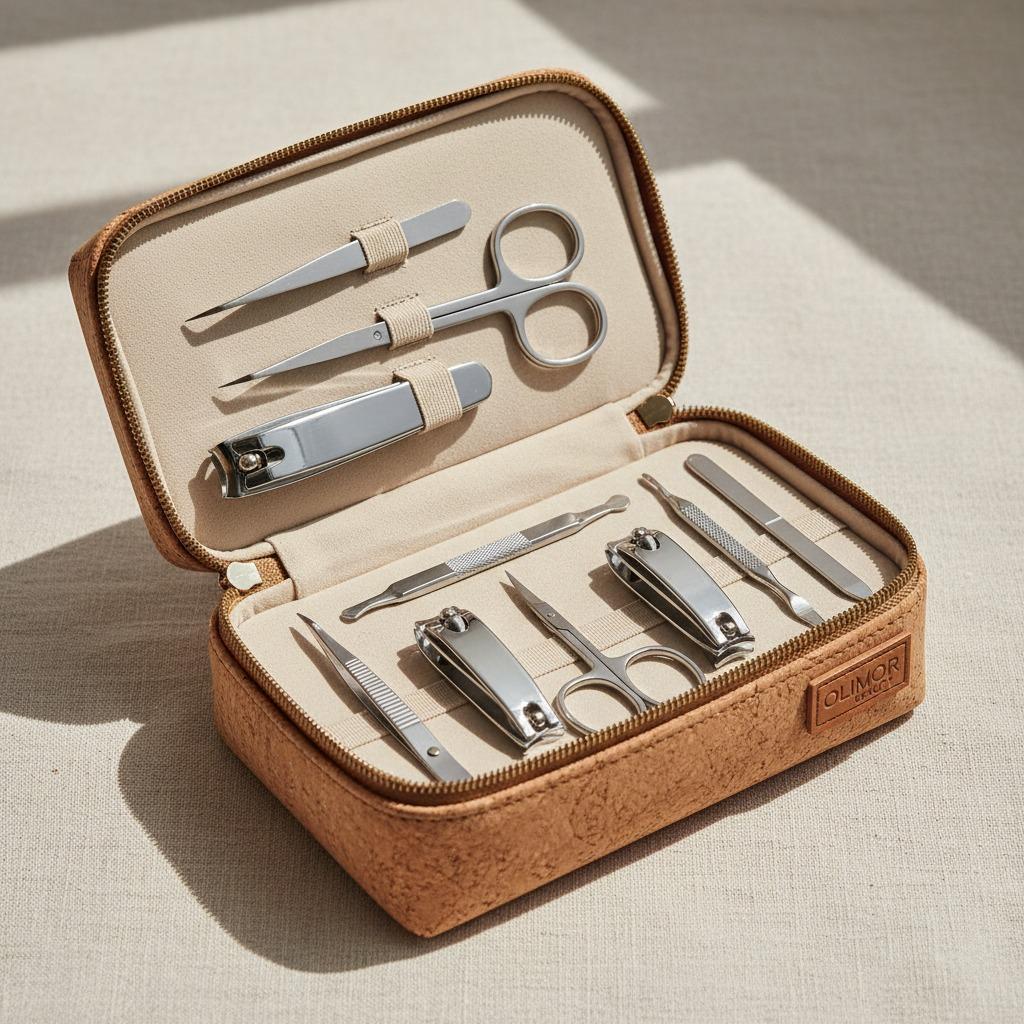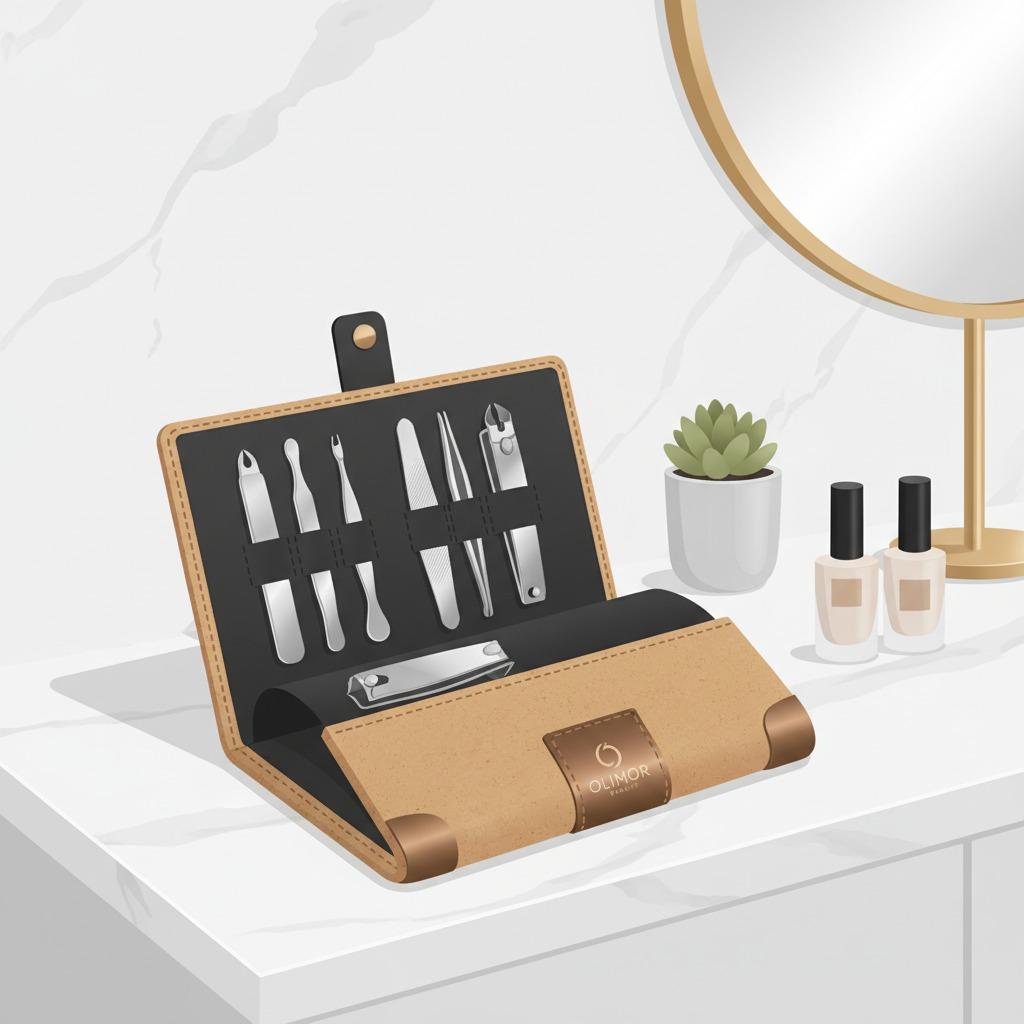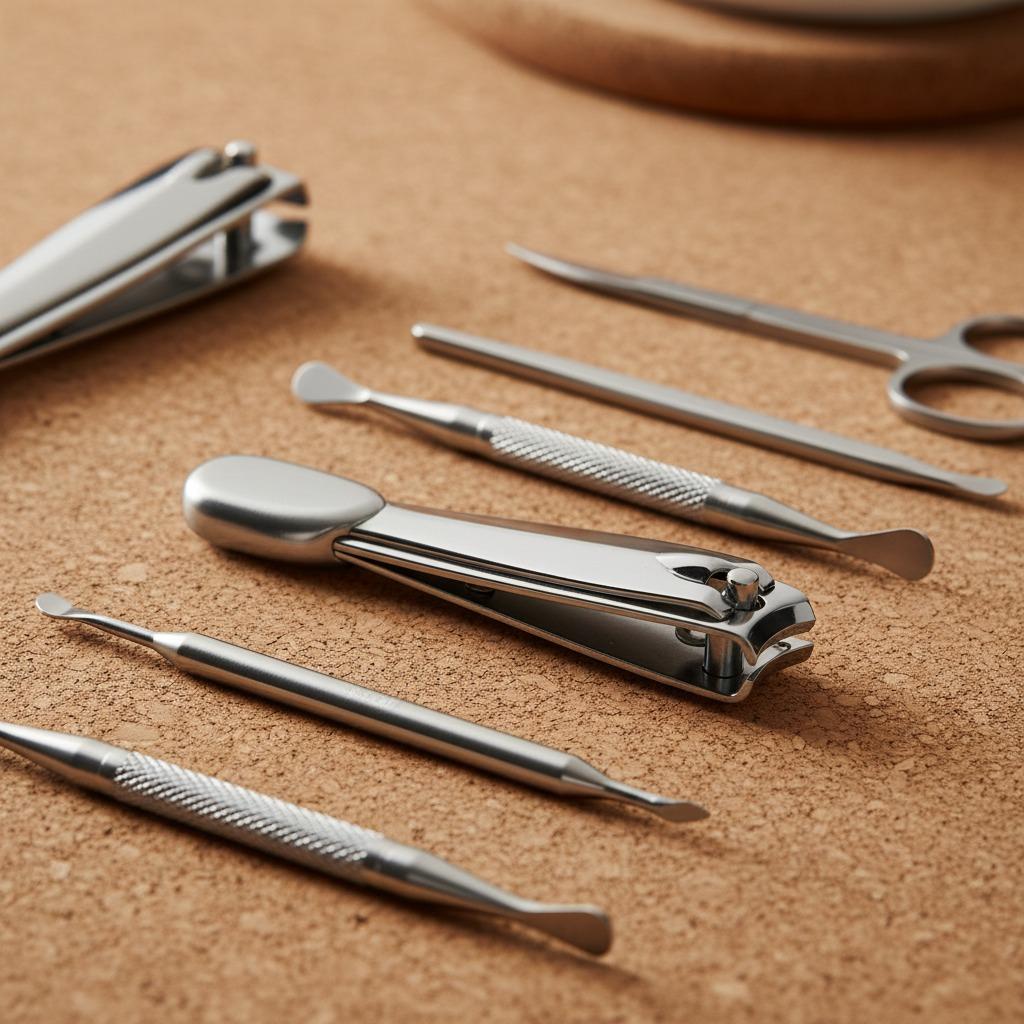











An anti-splash nail clipper is designed for one clear purpose: to trim nails while helping keep clipped nail fragments contained. For everyday users, that means less cleanup around the sink, vanity, towel or floor. For retailers, distributors and private-label beauty tool buyers, it means a simple grooming product with a benefit that is easy to explain and easy for customers to notice.
Olimor Beauty’s anti-splash nail clipper combines a standard clipping mechanism with an enclosed chamber that helps collect nail clippings as they are cut. It also uses a curved blade design intended to follow the natural nail shape and support controlled trimming. For buyers comparing beauty tool products, this type of clipper is most relevant when cleanliness, handling comfort and practical everyday use matter more than decorative styling alone.
This guide explains how anti-splash nail clippers work, what design details affect performance, how to use and maintain them, and what B2B buyers should check before adding the item to a retail, promotional or personal care assortment.
What an Anti-Splash Nail Clipper Does
A standard nail clipper cuts by bringing two sharpened edges together under lever pressure. The cut nail piece can spring away because nail fragments are small, hard and curved. Direction can vary depending on nail thickness, blade alignment, how much nail is removed, and the angle of the user’s hand.
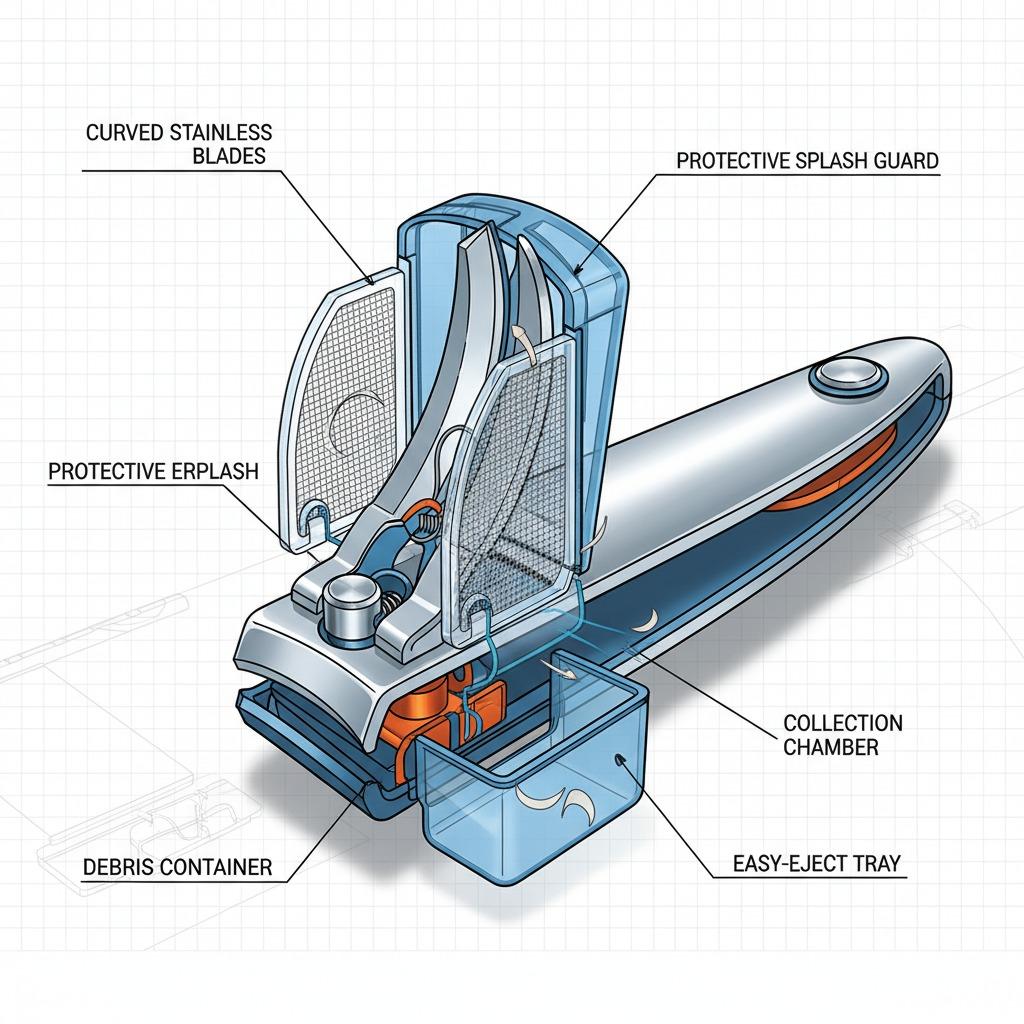
An anti-splash nail clipper adds a containment feature around the cutting area. Instead of leaving the clipping path fully open, the enclosed chamber helps catch the fragments immediately after cutting. The tool still performs the same basic function as a conventional clipper, but it reduces one of the most common annoyances of nail grooming: scattered clippings.
This feature is useful in several practical settings:
- Home grooming: Helps keep sinks, counters and bathroom floors tidier after trimming.
- Travel kits: Supports cleaner nail care in hotels, shared bathrooms and compact spaces.
- Family personal care drawers: Offers a straightforward upgrade for adults who want less mess.
- Retail beauty assortments: Gives shoppers a visible, functional reason to choose the product.
- Gift and grooming sets: Adds a practical beauty-tool feature beyond basic clipping.
The anti-splash design should be understood as a cleanliness aid, not a substitute for good trimming technique or routine cleaning. Users still need to position the blade carefully, empty the chamber and store the tool properly.
Core Design Features That Affect Trimming Quality
The usefulness of a nail clipper depends on how the blade, lever, body and containment chamber work together. A clipper may look simple, but small design differences can change how stable and comfortable it feels during use.
Curved blade profile
Olimor Beauty’s anti-splash nail clipper is described with curved blades. A curved cutting edge can help the user follow the natural arc of the nail instead of forcing a flat cut across the entire nail plate. This supports smaller, more controlled cuts and can help users avoid cutting too deeply into the corners.
For sample evaluation, buyers should check whether the blade curve feels practical for typical fingernail trimming. The edges should meet evenly when the lever is pressed. If the blades do not align well, the clipper may crush, bend or leave ragged edges instead of producing a clean cut.
Enclosed clipping chamber
The chamber is the feature that gives an anti-splash clipper its main benefit. It should sit close enough to the cutting area to catch clippings, but not so close or bulky that it blocks visibility or makes positioning awkward. If the chamber is difficult to empty, users may leave fragments inside, which reduces hygiene and satisfaction.
Buyers should open, close and empty the chamber during sample review. A practical design should make the containment benefit obvious without requiring complicated instructions.
Lever action and hand stability
A nail clipper needs enough leverage to cut cleanly while allowing the user to control how much nail is removed. The lever should press smoothly without shifting from side to side. If the tool slips in the hand, the user may need repeated cuts, which can create an uneven nail edge.
Grip comfort is especially important for mass-market personal care items because the product may be used by people with different hand sizes and trimming habits. A balanced feel can improve confidence and reduce user frustration.
Stainless Steel, Workmanship and Inspection Points
Olimor Beauty’s anti-splash nail clipper is described with stainless steel material. Stainless steel is commonly used in grooming tools because it supports durability, a clean appearance and easier cleaning compared with many lower-grade materials. It is also suitable for tools that may be stored in bathroom environments, provided users dry and store them properly.
Material naming alone is not enough for B2B sourcing. Buyers should verify the supplier’s current material documents and product specifications instead of relying only on a catalog description. Stainless steel can vary by grade, surface finish and processing method, and those differences can affect appearance, edge retention and corrosion resistance.
During inspection or sample review, focus on observable quality rather than unsupported claims:
- Blade contact: The cutting edges should meet evenly when closed.
- Cutting feel: The clipper should cut without excessive force or nail crushing.
- Lever stability: The lever should not feel loose, wobbly or misaligned.
- Edge finishing: Non-cutting edges should not feel sharp against the hand.
- Chamber security: The anti-splash cover or enclosure should stay in place during normal use.
- Cleaning access: Users should be able to empty nail fragments without struggling.
- Surface condition: Check for visible scratches, burrs, stains or inconsistent finishing on samples.
For consumer products, importers and brand owners should also review applicable product safety and labeling obligations in their sales markets. Depending on destination and product presentation, recognized public bodies such as the U.S. Consumer Product Safety Commission and EU product safety regulators may be relevant. Always verify current regulatory versions, documentation requirements and supplier declarations for the specific market; do not assume that a general beauty-tool description confirms compliance.
How to Use an Anti-Splash Nail Clipper Correctly
Cleaner trimming comes from both the tool and the technique. The enclosed chamber helps contain nail fragments, while controlled cutting helps produce a smoother nail edge. Users should trim slowly enough to see where the blade is placed and avoid removing too much nail at once.
- Start with clean nails. Remove visible dirt and make sure the nail edge can be seen clearly.
- Trim when nails are manageable. Dry nails are easier to control for many users. If nails are very hard, trim after a short soak, then dry them before clipping.
- Align the curved blade with the nail shape. Follow the natural contour instead of cutting deep into the side corners.
- Use several small cuts. A series of controlled cuts usually gives a neater result than one aggressive cut.
- Keep the chamber oriented toward the clipping path. This helps the anti-splash feature collect fragments more effectively.
- Do not overfill the chamber. Empty it after trimming so fragments do not remain trapped inside.
- Finish with a file if needed. Filing can smooth small points left after clipping.
Users should avoid cutting nails too short, especially near the sides. Over-trimming can cause discomfort and may make the nail edge harder to maintain. The anti-splash function improves tidiness, but careful trimming is still the key to a comfortable result.
Cleaning, Maintenance and Storage
An anti-splash nail clipper needs basic maintenance because the chamber is designed to collect nail fragments. If users do not empty it, the same feature that improves cleanliness during trimming can become inconvenient after use.
After each trimming session, open or access the chamber and discard the collected nail pieces. Use a soft brush or dry cloth to remove fragments near the blade and hinge area. If the clipper is rinsed, dry it thoroughly before storage. Stainless steel supports corrosion resistance, but damp storage can still affect appearance and tool life over time.
Storage is simple but important. Keep the clipper in a dry drawer, grooming pouch or personal care case. Avoid leaving it beside a wet sink, inside a shower area or under damp towels. For travel, a pouch or case helps protect the cutting edges and keeps the chamber cleaner between uses.
For shared environments, cleaning should be more consistent. Retailers selling grooming kits may want to include brief care instructions on packaging or inserts. Clear maintenance guidance reduces misuse and helps customers understand how to keep the anti-splash function working as intended.
Anti-Splash vs. Standard Nail Clippers
Many buyers ask whether an anti-splash clipper is meaningfully different from a standard clipper. The answer depends on the customer’s priorities. If the buyer only wants the lowest-complexity trimming tool, a basic clipper may be enough. If the customer values tidier grooming, easier cleanup and a more feature-driven retail story, an anti-splash model has a stronger advantage.
| Comparison Point | Standard Nail Clipper | Anti-Splash Nail Clipper |
|---|---|---|
| Main function | Cuts nails with an open clipping path | Cuts nails while helping contain fragments |
| Cleanup | Clippings may scatter onto surfaces | Enclosed chamber helps reduce scattered debris |
| User appeal | Familiar and simple | Familiar function with a practical cleanliness upgrade |
| Design checks | Blade alignment, lever action, edge finish | Blade alignment, lever action, chamber position and emptying |
| Retail positioning | Basic grooming essential | Cleaner trimming tool for home, travel and grooming sets |
| Maintenance need | Remove fragments from blade area | Empty chamber and clean blade area after use |
The anti-splash design does not need exaggerated claims. Its commercial value is straightforward: it solves a common daily annoyance in a way consumers can understand quickly.
Selection Criteria for Retailers, Distributors and Brand Teams
When sourcing anti-splash nail clippers, evaluate the product as both a functional grooming tool and a retail item. A sample should not only look acceptable; it should trim cleanly, feel stable and make the containment feature easy to use.
Use this checklist when comparing samples or discussing specifications with a supplier:
- Clipping performance: Does the tool cut cleanly with moderate pressure?
- Blade alignment: Do the cutting edges meet evenly across the useful cutting area?
- Chamber effectiveness: Does the enclosed section help collect clippings during typical use?
- Chamber emptying: Can users remove fragments quickly without complicated handling?
- Grip and leverage: Does the clipper stay stable in the hand?
- Surface finish: Are there visible burrs, rough points or inconsistent finishing?
- Packaging fit: Does the design fit the intended retail pack, travel kit or gift set?
- Instruction clarity: Is the anti-splash benefit easy to explain without overpromising?
- Supplier documentation: Can the supplier provide current product specifications and relevant documents for your market?
Cost factors can include material choice, finishing, packaging, customization, order volume, inspection requirements and shipping arrangement. Buyers should avoid judging only by unit price. A lower-cost clipper that feels unstable, leaves ragged edges or has a difficult chamber may create returns, poor reviews or weak repeat purchases.
If you are building a wider grooming range, compare this item with related personal care collections to see whether it fits your assortment strategy. Anti-splash clippers can work as a standalone SKU, part of a travel grooming kit, or an add-on in a beauty accessory program.
Customization and Sourcing Questions to Clarify
B2B buyers often need more than a product image. Before placing an order, clarify how the clipper will be supplied, presented and documented. Do not assume that every supplier offers the same customization options, packaging formats or inspection process.
Useful questions include:
- What product specifications are available for the current anti-splash nail clipper model?
- What packaging options can be discussed for retail, travel, promotional or private-label use?
- Can samples be provided for handling, clipping and chamber-emptying evaluation?
- What customization options are available for branding or presentation?
- What quality checks are used before shipment, and what inspection documents can be shared?
- What order quantities, production timing and shipping terms apply to the specific project?
These questions are commercially important because a nail clipper is a hands-on item. The buyer should confirm feel, function and packaging before committing to a larger program. If a product is intended for a regulated market or a major retail channel, documentation should be reviewed early, not after packaging has already been finalized.
Why Consider Olimor Beauty’s Anti-Splash Nail Clipper
Olimor Beauty’s anti-splash nail clipper is positioned as a practical grooming tool for cleaner everyday trimming. The curved blade design supports controlled nail shaping, while the enclosed clipping chamber helps collect fragments that would otherwise scatter during use. Its stainless steel material is also relevant for buyers looking for a durable, easy-to-clean beauty tool.
For sourcing teams, the best evaluation method is direct sample handling. Check how the clipper cuts, whether the lever feels stable, how naturally the curved blade follows the nail, how well the chamber captures fragments, and how easily it empties. These details determine whether the product will feel useful to customers after purchase.
For retail and distribution programs, the anti-splash feature gives the product a clear selling point without needing complex education. It can be presented as a cleaner trimming option for home use, travel kits, grooming sets and everyday personal care ranges. To discuss product options, packaging or project requirements, send an anti-splash clipper inquiry or contact Olimor Beauty for sourcing support.
FAQ
Can I request samples before ordering anti-splash nail clippers?
Sample availability should be confirmed with Olimor Beauty based on the current product and project requirements. Samples are useful for checking clipping feel, chamber emptying, finish and packaging suitability before a larger order.
Is there a minimum order quantity?
MOQ depends on the product configuration, packaging, customization and order plan. Buyers should confirm the current requirement directly when submitting an inquiry, especially for private-label or promotional programs.
Can the nail clipper be customized for retail or brand programs?
Customization may be discussed for suitable projects, including presentation or branding needs. Available options should be verified with current supplier information before artwork, packaging or launch planning is finalized.
How should quality be evaluated before shipment?
Quality review should include blade alignment, cutting feel, lever stability, anti-splash chamber function, surface finish, cleaning access and packaging condition. Buyers should also request relevant product specifications and verify any required documents for their sales market.
What affects lead time for an anti-splash nail clipper order?
Lead time can depend on order quantity, packaging, customization, production schedule, inspection needs and shipping arrangement. Confirm the current timeline with Olimor Beauty for the specific project rather than relying on a general estimate.