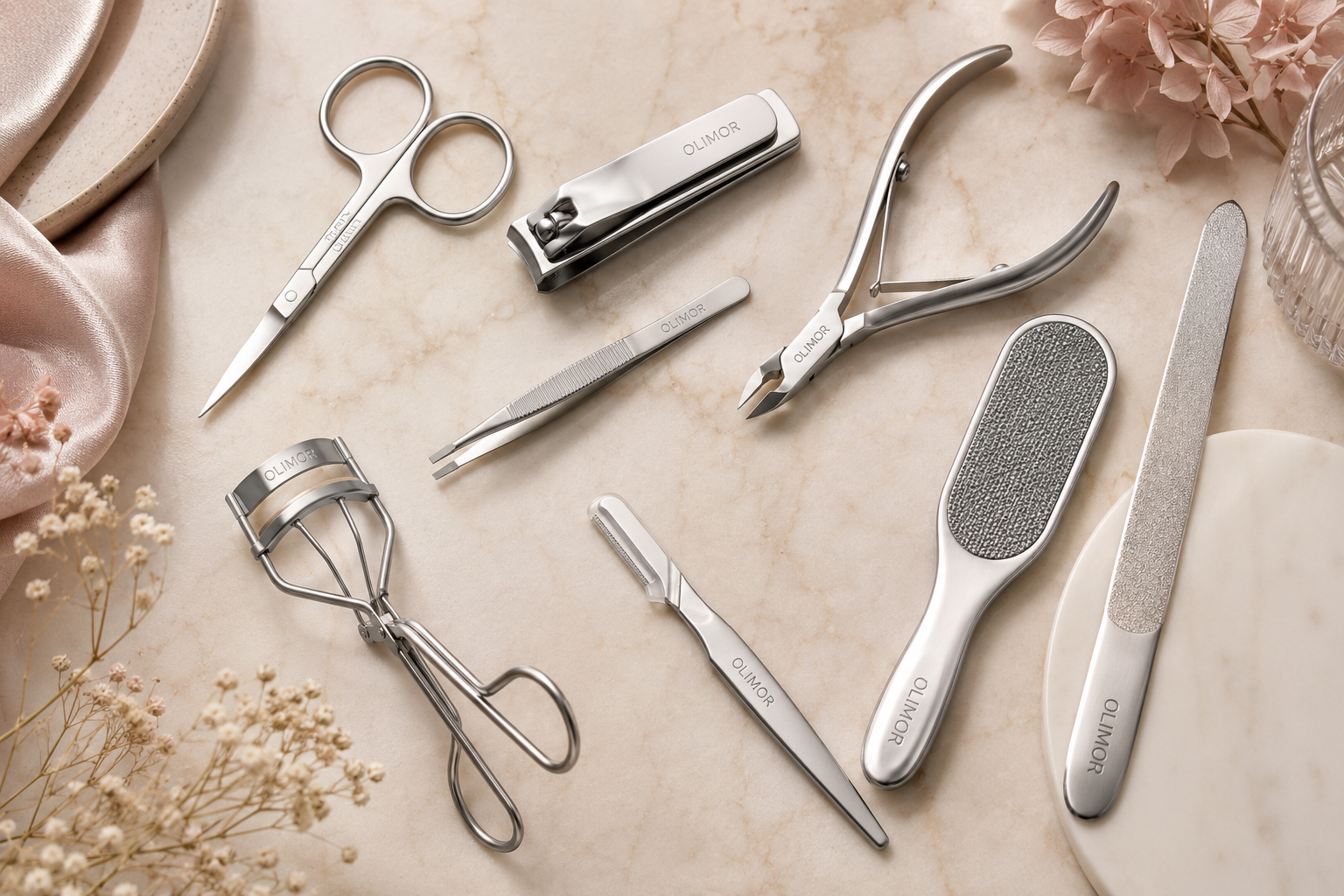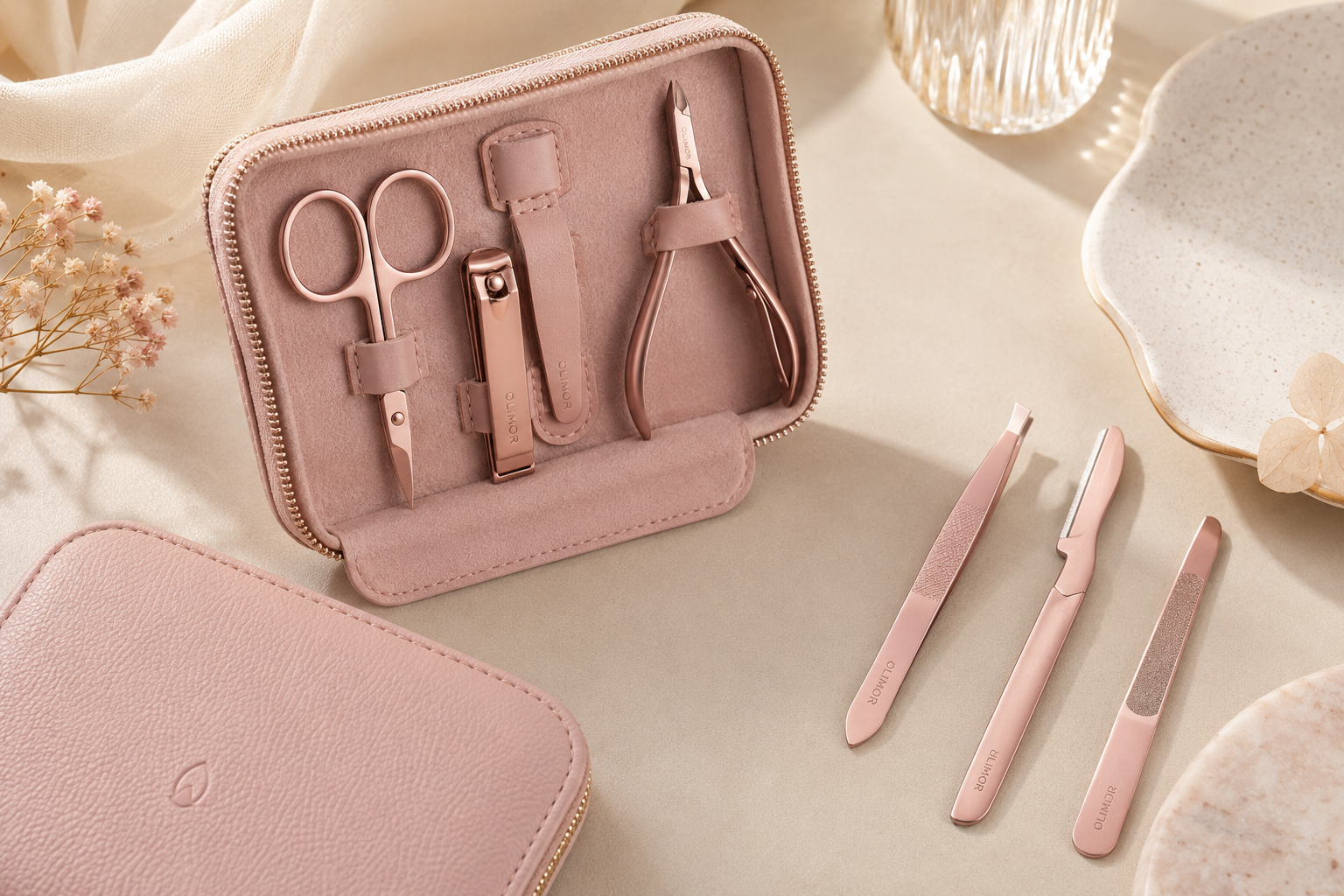











Women’s nail clippers are small grooming tools, but they have a direct effect on manicure quality, customer satisfaction and repeat purchase. A good clipper cuts cleanly with controlled pressure. A poor one can crush the nail plate, leave ragged edges, slip during use or feel uncomfortable in the hand.
For beauty retailers, salons, manicure kit buyers and private-label grooming brands, the main buying question is not simply whether a clipper looks attractive in packaging. The better question is whether the material, cutting edge, lever action, finish and storage design support reliable everyday use. Olimor Beauty focuses on practical beauty tools for personal care ranges, and nail clippers should be evaluated with the same attention given to more visible manicure items.
This guide explains how to assess women’s nail clippers for clean trimming, comfortable handling, long-term maintenance and B2B sourcing. Buyers planning a wider grooming assortment can compare related beauty tool products or review broader personal care collections when building a nail care range.
What Makes a Women’s Nail Clipper Different?
A women’s nail clipper is typically selected for fingernail care, compact storage and controlled trimming. The tool must be precise enough for short natural nails, rounded nail shapes, oval edges and regular manicure maintenance. Many users want a clean cut that requires only light filing afterward, especially before applying polish or nail treatments.
The difference is not only size. A useful women’s nail clipper should combine a suitable jaw curve, clean edge alignment, stable lever movement and a smooth finish. If the jaw is too wide for fingernails, the user may remove too much nail at once. If the lever is too stiff, the cut may feel abrupt and harder to control. If the surface has burrs or sharp corners, the tool can feel cheap even if the blade initially cuts well.
For B2B buyers, this category often sits inside manicure sets, travel kits, gift boxes, salon retail displays and e-commerce personal-care assortments. Customers judge these tools quickly. They notice whether the clipper feels solid, whether it cuts without tearing, and whether the finish stays clean after repeated handling. That makes women’s nail clippers both a functional item and a brand-experience item.
Material, Cutting Edge and Build Quality
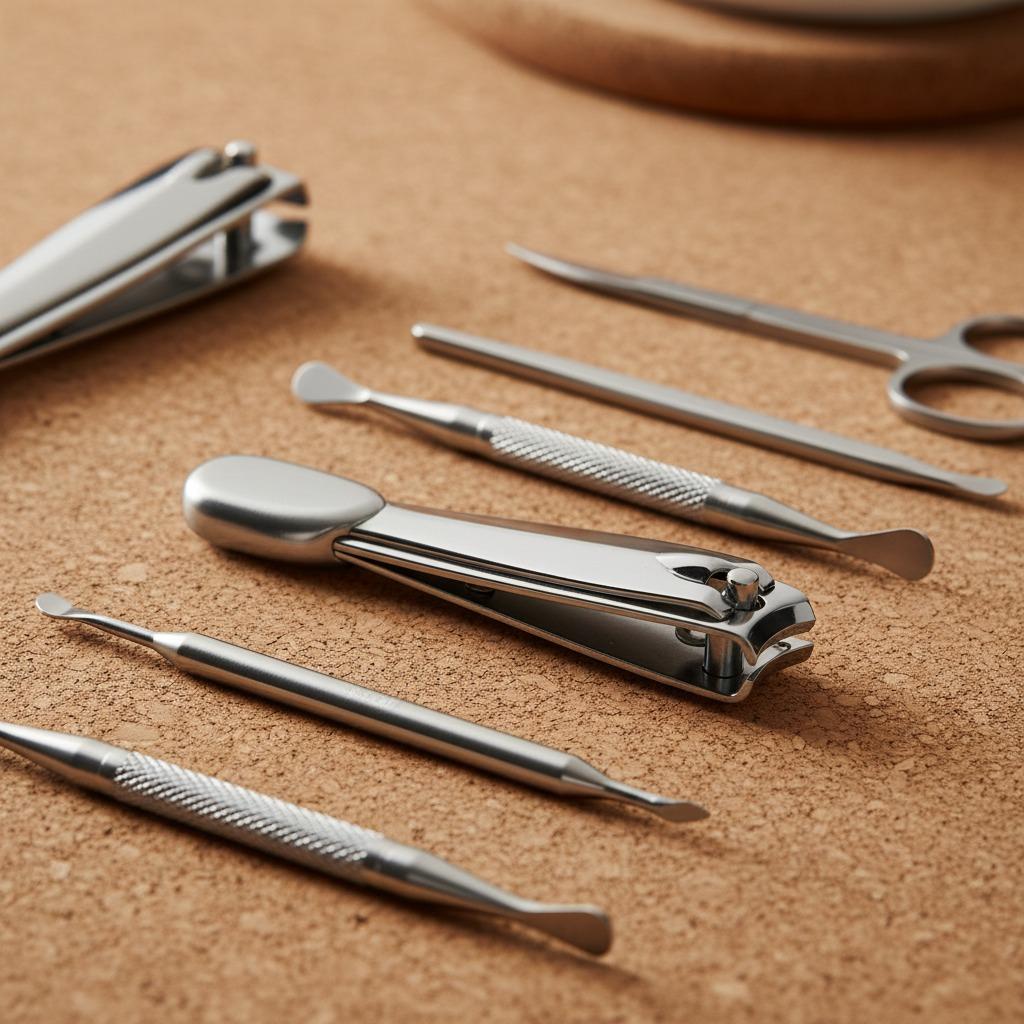
The supplied Olimor product information highlights surgical steel for nail clippers. Surgical steel is commonly valued in grooming tools because it can support strength, corrosion resistance and hygienic handling when properly manufactured and maintained. For nail clippers, the material must hold a fine cutting edge while resisting deformation from repeated lever pressure.
Material alone does not guarantee a good clipper. The cutting edges must be shaped and aligned correctly. When the upper and lower jaws do not meet evenly, the clipper may cut on one side and bend the nail on the other. That causes uneven edges and may encourage splitting after trimming. Buyers should inspect the full jaw width, not only the center point.
Lever construction is another quality signal. The lever should press down smoothly without excessive wobble. The pin or rivet area should feel secure, and the tool should not scrape or twist under normal hand pressure. A clipper that looks polished but feels loose during the first inspection is unlikely to satisfy users over time.
Surface finish deserves the same attention as sharpness. A clean polished finish can support a refined retail appearance, but it should not hide rough edges near the handle, lever, file area or corners. Burrs may scratch packaging inserts, feel unpleasant against the thumb or create a poor first impression when customers open a manicure set.
Choosing the Right Clipper Type or Nail Clipper Set
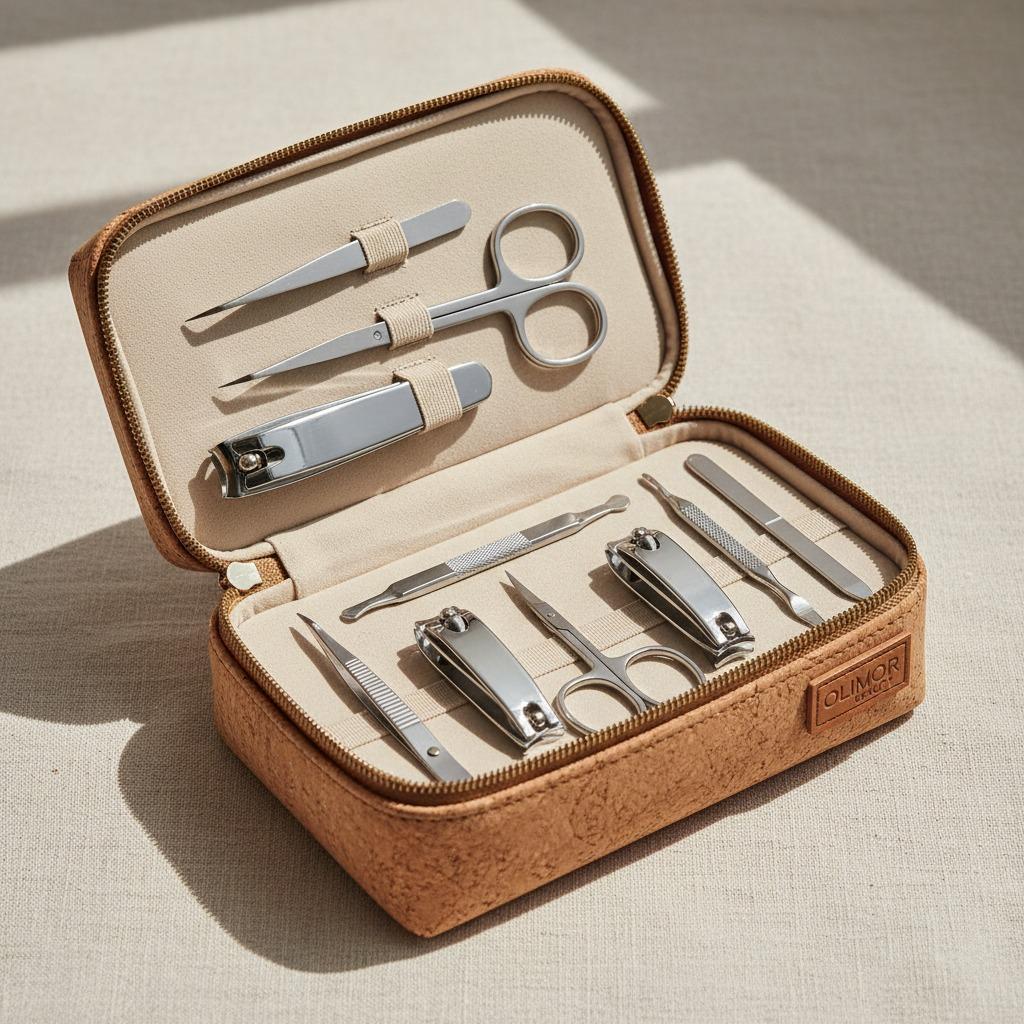
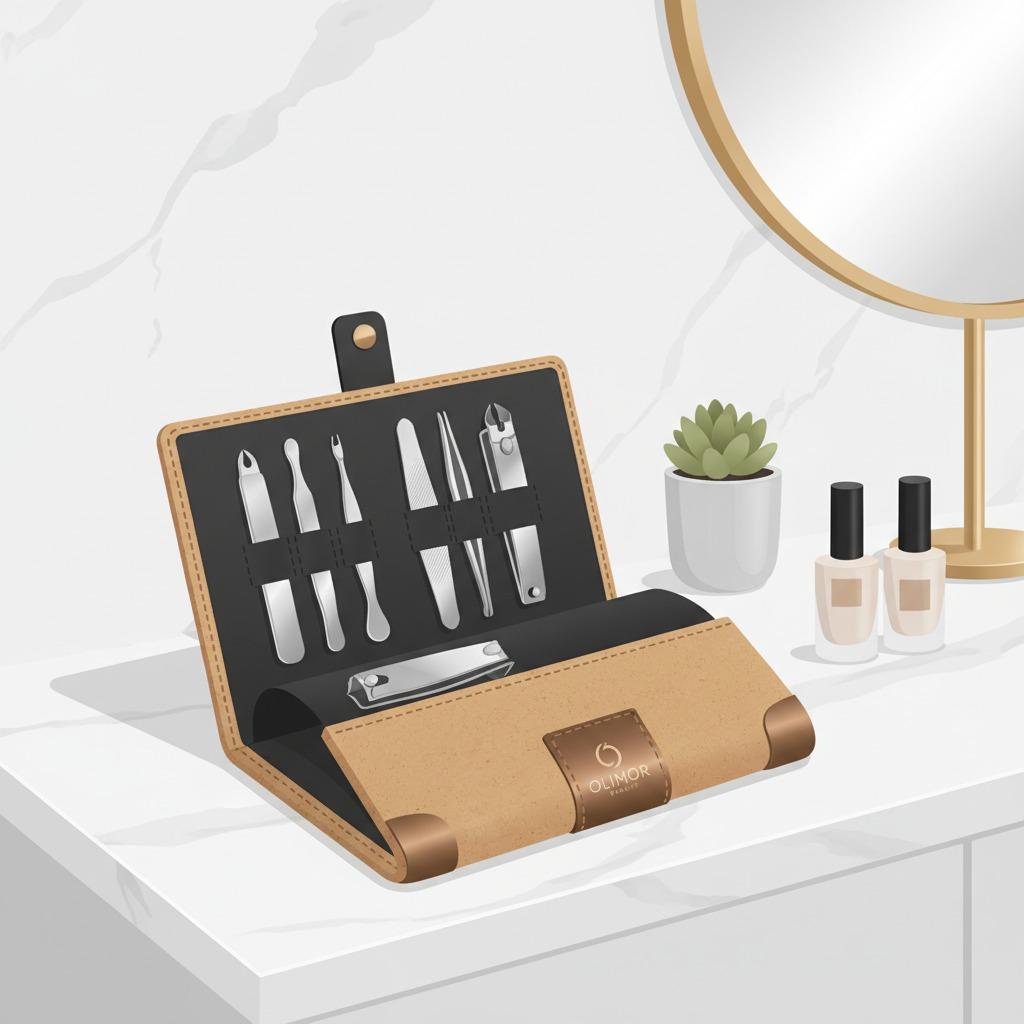
The best choice depends on the target user, channel and product format. A single compact fingernail clipper may be ideal for handbag kits or everyday manicure care. A multi-piece nail clipper set may be more suitable for gift sets, family grooming kits or salon retail where users expect separate tools for fingernails and thicker nails.
A set should not add tools only for a higher piece count. Each item should have a clear role. Overlapping tools can make the kit look full but reduce real value. A stronger set gives users the right tool for each trimming task while keeping the presentation simple and easy to understand.
| Tool option | Best use | What buyers should check | Common sourcing concern |
|---|---|---|---|
| Compact fingernail clipper | Daily manicure care, travel pouches, compact retail kits | Fine curved edge, visibility, comfortable thumb pressure | Too small to grip comfortably or too stiff for frequent use |
| Larger nail clipper | General household grooming or thicker nails | Stronger leverage, stable jaw opening, secure lever action | Oversized jaw may be less precise for small fingernails |
| Multi-piece nail clipper set | Gift boxes, salon retail, grooming assortments | Tool variety, consistent finish, protective case layout | Duplicated tools without a clear purpose |
| Detail trimming tool | Small corrections and corner shaping | Narrow cutting area, smooth tips, controlled handling | Tips may feel rough if finishing is not inspected |
Packaging should make the intended use clear. If a set includes different clipper sizes, the insert card or product page can explain which tool is for fingernails, thicker nails or detailed correction. Clear guidance reduces misuse and helps customers appreciate the value of the set.
Ergonomics: Comfort, Control and Safer Trimming
Nail clipping requires small movements close to the fingertip, so ergonomics matter. A clipper that slips, twists or requires excessive pressure can lead to uneven cuts or trimming too close to the skin. Good ergonomics means the user can see the cutting line, hold the tool securely and press the lever smoothly.
The lever should be long enough to provide comfortable leverage but not so large that it blocks visibility. The thumb contact area should feel smooth and stable. A highly polished clipper may look elegant, but if the lever is too slippery, users may feel less control. Some markets prefer a clean polished surface, while others may favor textured contact points for grip.
Compactness also has limits. Women’s nail clippers are often chosen for small purses, travel kits and manicure pouches, but very small tools can be uncomfortable if the lever is short or stiff. When selecting a compact design, buyers should test it with realistic hand positions rather than judging only by dimensions or visual style.
For salon retail and e-commerce, comfort can reduce returns and negative reviews. Customers may not use technical words such as jaw alignment or lever transmission, but they will describe whether the tool feels easy, sharp, smooth or awkward. Those impressions directly affect perceived quality.
How to Use Women’s Nail Clippers for Cleaner Results
Even a well-made clipper performs better with proper technique. The goal is to shorten the nail gradually while preserving the natural shape. Cutting too much at once, especially at the corners, can create discomfort, uneven edges or more filing work.
- Start with clean, dry nails. Wash hands, remove debris and dry the nails so the clipper does not slip.
- Trim in small sections. Follow the natural curve of the nail instead of taking one large cut across the full width.
- Leave a small free edge. Avoid cutting too close to the fingertip, especially on short natural nails.
- Shape corners carefully. Use small controlled cuts rather than digging into the side of the nail.
- Use the right tool for thicker nails. A stronger or larger clipper is usually better for toenails than forcing a compact fingernail clipper.
- Finish with light filing. Smooth only the areas that need refinement. Excessive filing can weaken the nail edge.
- Clean the tool after use. Remove nail fragments and wipe the jaws before storage.
Brands and retailers can include these instructions on packaging, inserts or product pages. Simple use guidance improves the customer experience and reduces avoidable complaints caused by using a small fingernail clipper on nails that require a stronger tool.
Maintenance, Cleaning and Storage
Nail clippers contact keratin, skin oils, hand cream residue and moisture. Simple maintenance helps preserve cutting performance and appearance. After each use, users should remove nail fragments from the jaw area and wipe the tool with a clean cloth. If the clipper has been exposed to water, it should be dried before being placed in a pouch, case or drawer.
Surgical steel and stainless beauty tools are chosen for durability, but they still need dry storage. Leaving tools damp inside closed cases can affect appearance over time. Loose storage in a drawer can also damage the cutting edge if the clipper collides with scissors, tweezers or other metal tools.
For manicure sets, the case should hold each item securely. A fitted tray, elastic loop or protective sleeve helps prevent tools from rubbing during shipping and storage. If the jaws are pressed open or knocked against other tools, the edge may become misaligned before the customer even uses the product.
Retail packaging should support maintenance as well as presentation. A beautiful case that lets tools move freely may create quality problems in transit. A simple instruction card explaining cleaning, drying and proper storage can add value without making unsupported performance claims.
B2B Sourcing Checklist for Women’s Nail Clippers
When sourcing women’s nail clippers for a beauty brand, online store, salon range or promotional set, combine visual inspection with functional review. The following checklist helps buyers focus on real product value.
- Confirm that the upper and lower cutting edges meet evenly across the full width.
- Test whether the clipper cuts cleanly without crushing, bending or tearing the nail.
- Check lever movement for smooth pressure, limited wobble and secure assembly.
- Review the jaw curve against the intended use, such as fingernail trimming or thicker nail care.
- Inspect polished surfaces, corners and lever edges for burrs or rough finishing.
- Compare compact and larger sizes if building a nail clipper set.
- Assess hand feel with normal use positions, not only from product photos.
- Check whether the tool remains stable when used with recently washed hands.
- Review packaging protection for shipping, storage and retail presentation.
- Prepare clear user instructions for safe trimming, cleaning and dry storage.
Buyers should also request current supplier documents relevant to their market and product type. Consumer product safety expectations may vary by destination. For example, companies selling in the European Union should review the current General Product Safety Regulation requirements, while companies selling in the United States may need to consider applicable Consumer Product Safety Commission guidance for consumer products. Always verify current versions and ask suppliers for product-specific documentation rather than assuming a tool has any certification.
Cost Factors and Commercial Selection
The cost of women’s nail clippers depends on more than the base metal. Buyers should evaluate the complete product specification, including material choice, edge processing, polishing quality, lever assembly, inspection level, packaging, set configuration and customization requirements. A very low unit cost may become expensive if it leads to inconsistent cutting, visible defects or packaging damage.
For retail programs, the best value is usually the tool that matches the customer promise. A compact travel clipper may prioritize portability and smooth finish. A salon retail clipper may need stronger hand feel and a more premium presentation. A multi-piece set may require consistent finish across every item so the kit feels intentional rather than assembled from mismatched tools.
Customization can also affect cost and planning. Logo placement, surface finish, case design, insert cards and packaging style should be discussed early because they influence sampling and production review. Buyers should avoid approving artwork before confirming that the physical tool meets quality expectations. Function should come before decoration.
If you are comparing options for a nail care assortment, you can send a product inquiry with your target channel, preferred set style and packaging direction. For broader assortment planning, contact Olimor to discuss suitable beauty tool categories.
Supplier Evaluation Questions Before Ordering
A reliable supplier conversation should be specific. Instead of asking only for a catalog and price, buyers should ask how the clipper is inspected, how edge alignment is controlled, what packaging options protect the tool and what customization is practical for the order plan.
Useful questions include:
- What material and finish are used for the nail clipper, and how should the tool be maintained?
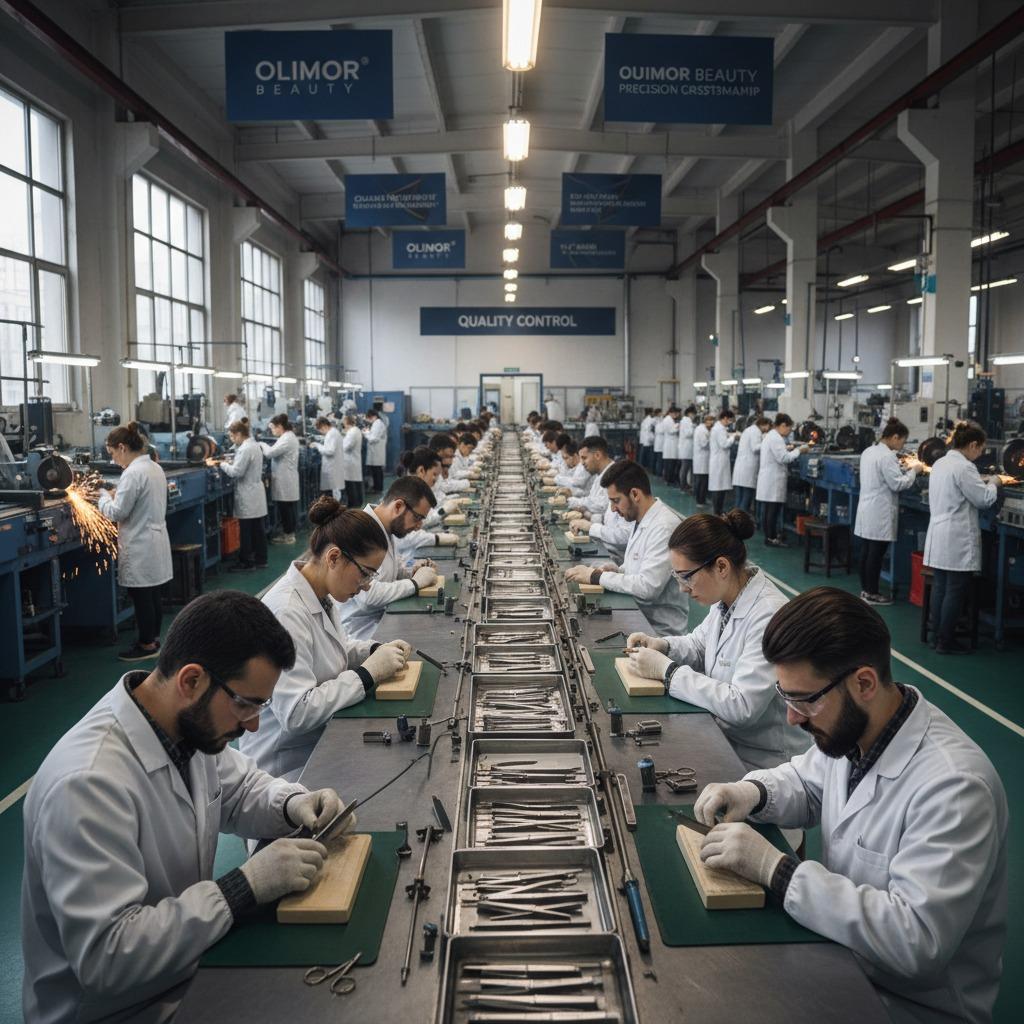
- How are cutting edges, lever movement and surface burrs checked before shipment?
- Can samples be reviewed in the intended packaging or case configuration?
- What customization options are available for logo, finish, case or retail packaging?
- What order requirements, production timing and documentation apply to the selected specification?
These questions help separate a basic product quote from a sourcing plan. They also make it easier to compare suppliers fairly, because each proposal can be reviewed against the same functional and commercial criteria.
FAQ
Can buyers request samples before placing an order?
Sample availability should be confirmed during the inquiry stage. Reviewing samples helps buyers check edge alignment, hand feel, finish quality and packaging fit before making a sourcing decision.
Is there a fixed MOQ for women’s nail clippers?
MOQ depends on the selected product, customization, packaging and order requirements. Buyers should ask for the current MOQ based on the exact specification rather than assuming one quantity applies to all options.
Can nail clippers be customized for a beauty brand?
Customization may include logo, finish, case, insert card or retail packaging, depending on the tool and order plan. Functional approval should come before final packaging and branding approval.
How should quality be checked before shipment?
Buyers should review cutting performance, jaw alignment, lever stability, surface finish, burrs, packaging protection and set consistency. Any required inspection documents should be confirmed with the supplier for the specific order.
What affects lead time for a nail clipper order?
Lead time can be influenced by product selection, sampling, customization, packaging development and order volume. Buyers should confirm timing directly with the supplier after specifications are finalized.
Final Buying Advice
Women’s nail clippers deserve careful selection because their quality is immediately visible in use. The strongest options combine durable surgical steel, accurate edge alignment, comfortable lever action, smooth finishing and protective storage. These details help users trim nails cleanly while reducing unnecessary filing and frustration.
For B2B buyers, the best sourcing decision balances product function, packaging protection, customization, inspection and market fit. A nail clipper may be a compact tool, but when it performs well, it supports trust in the entire beauty range.