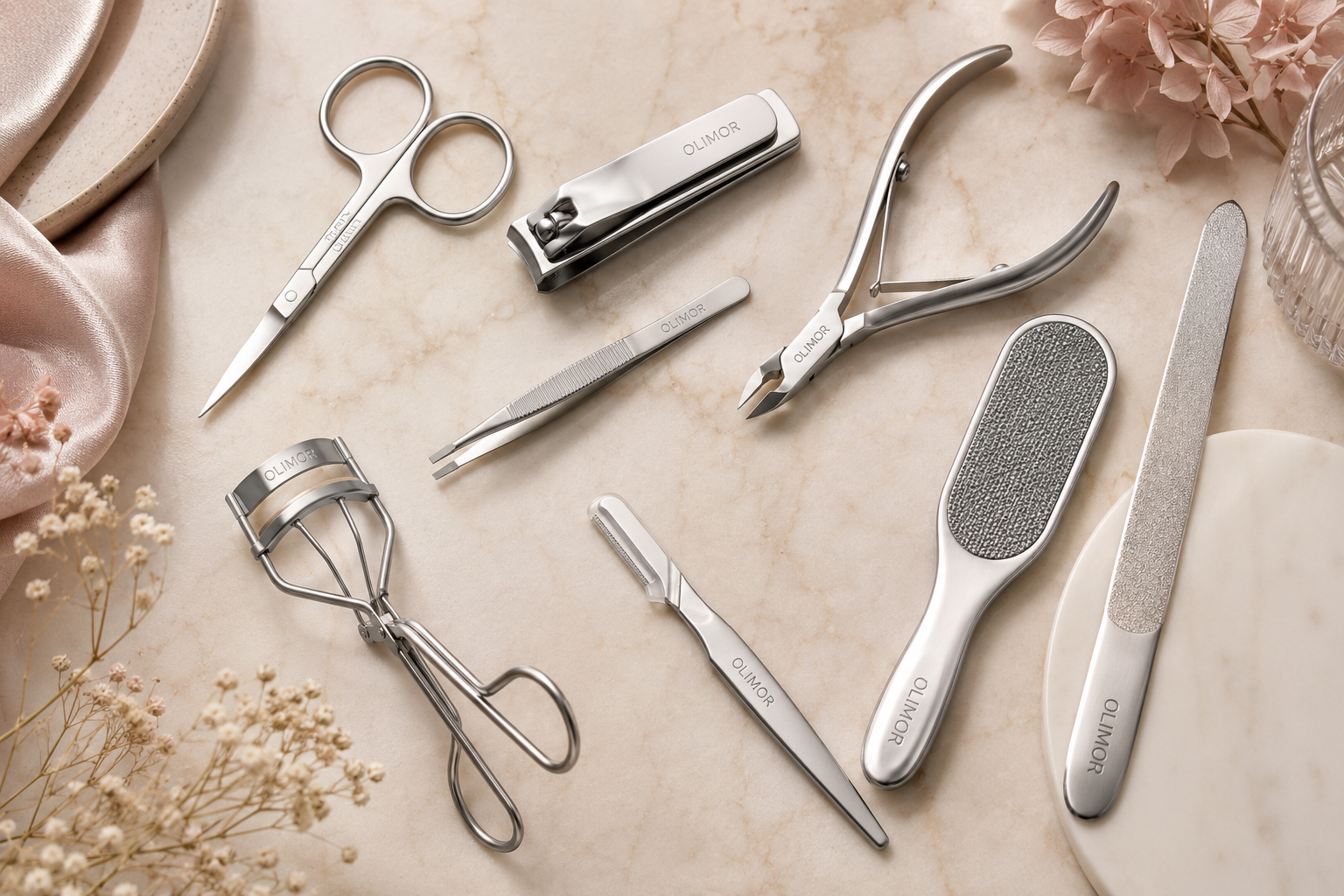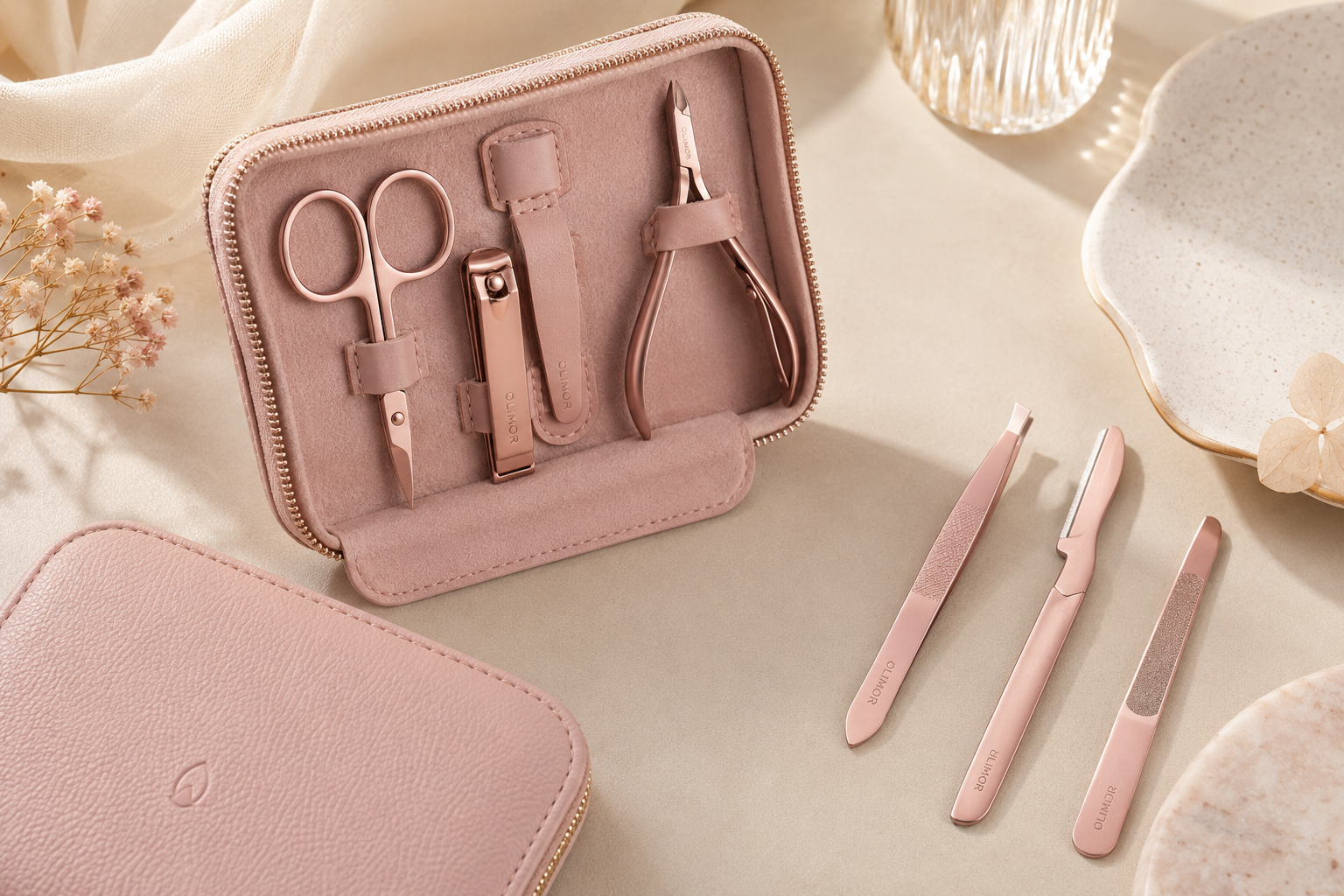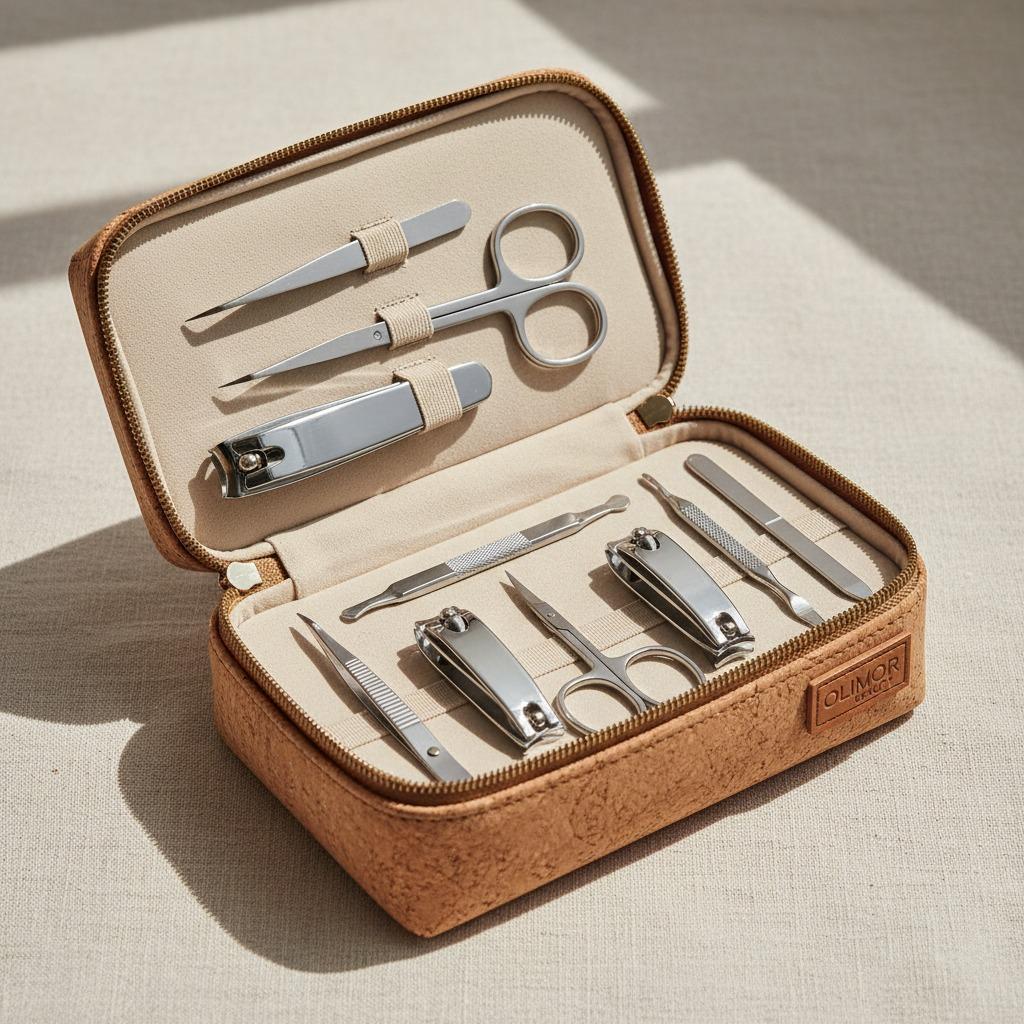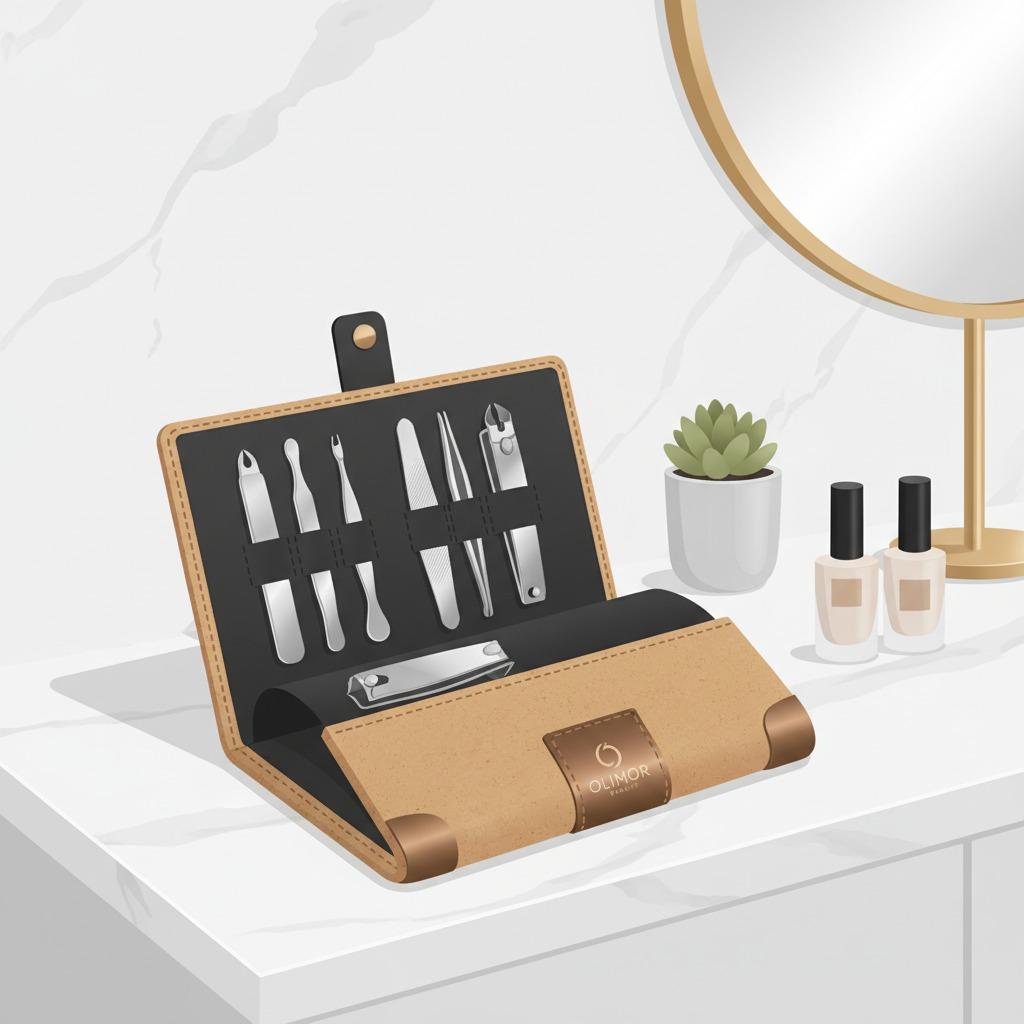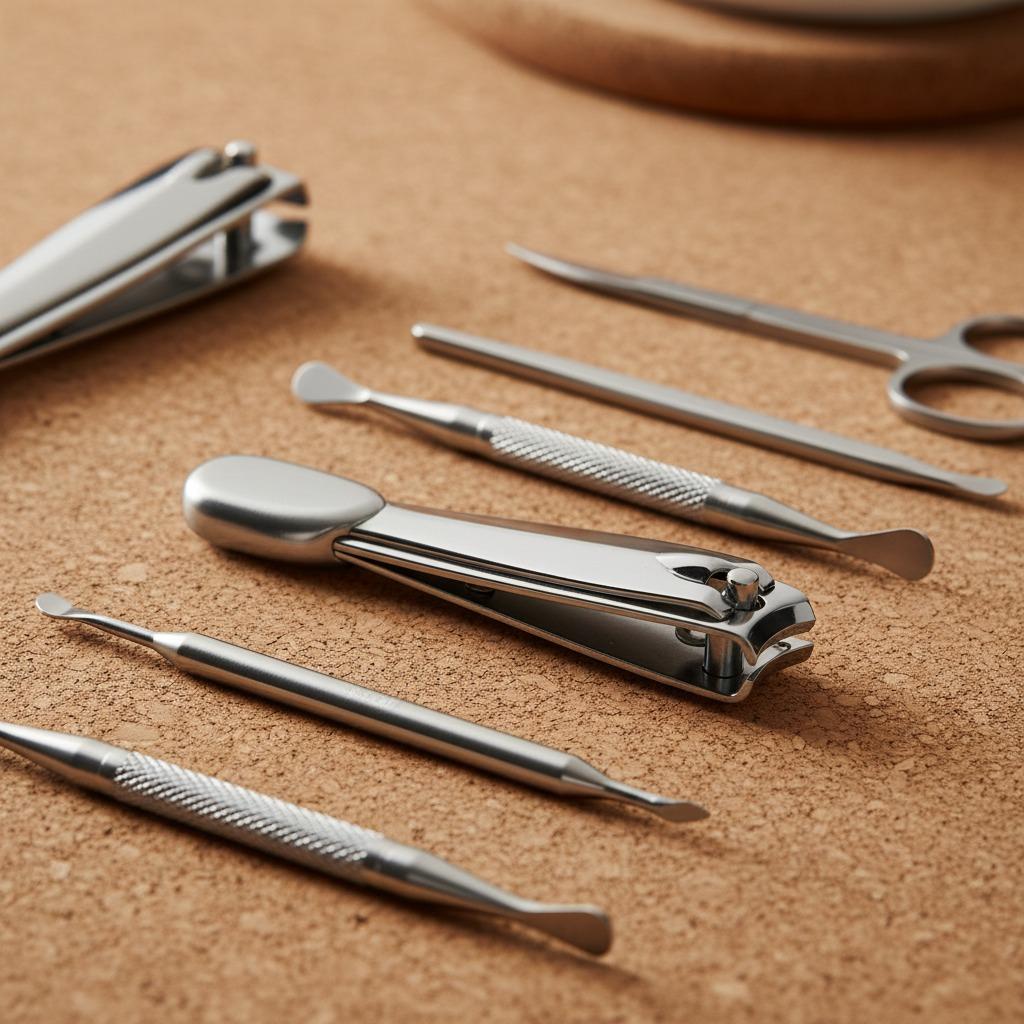











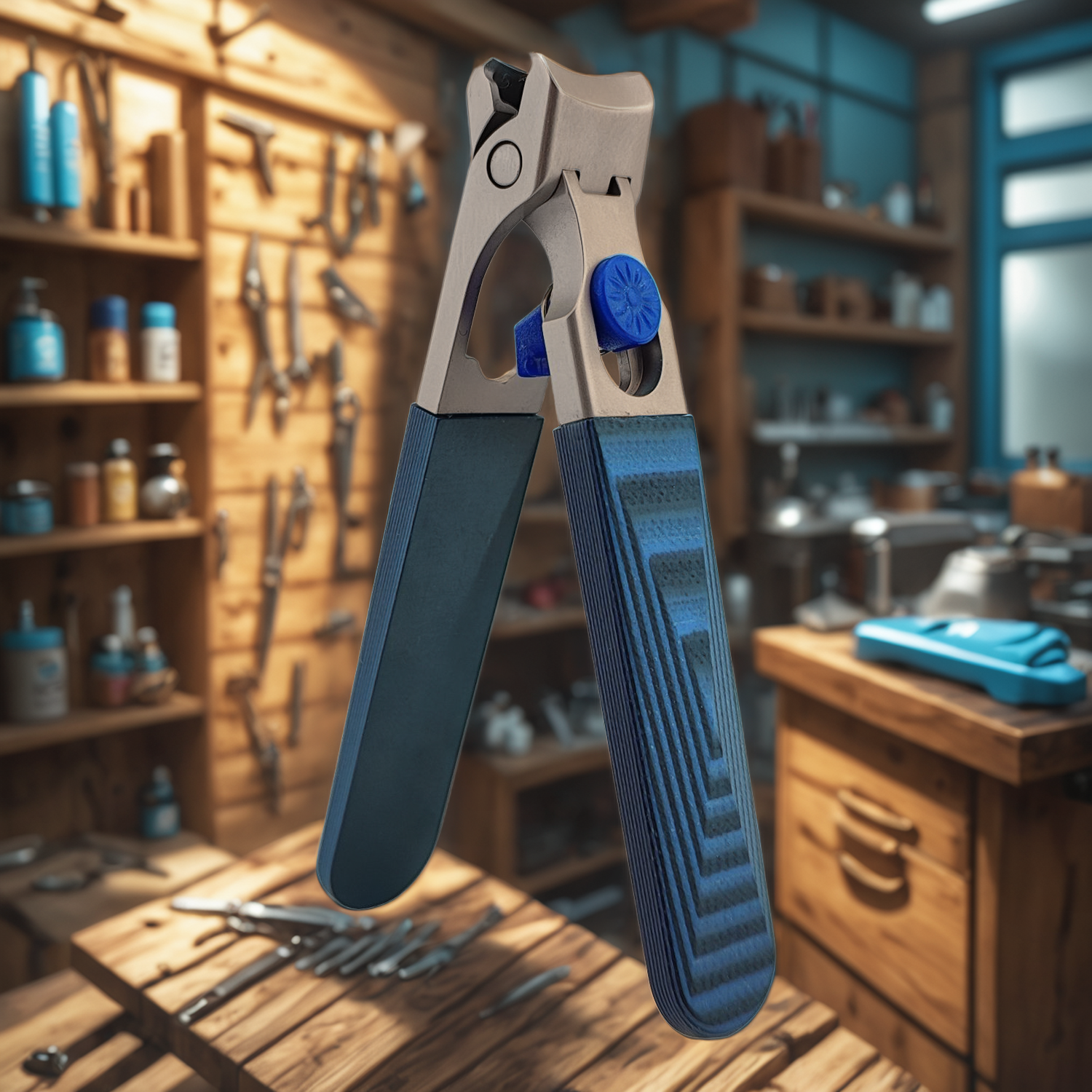
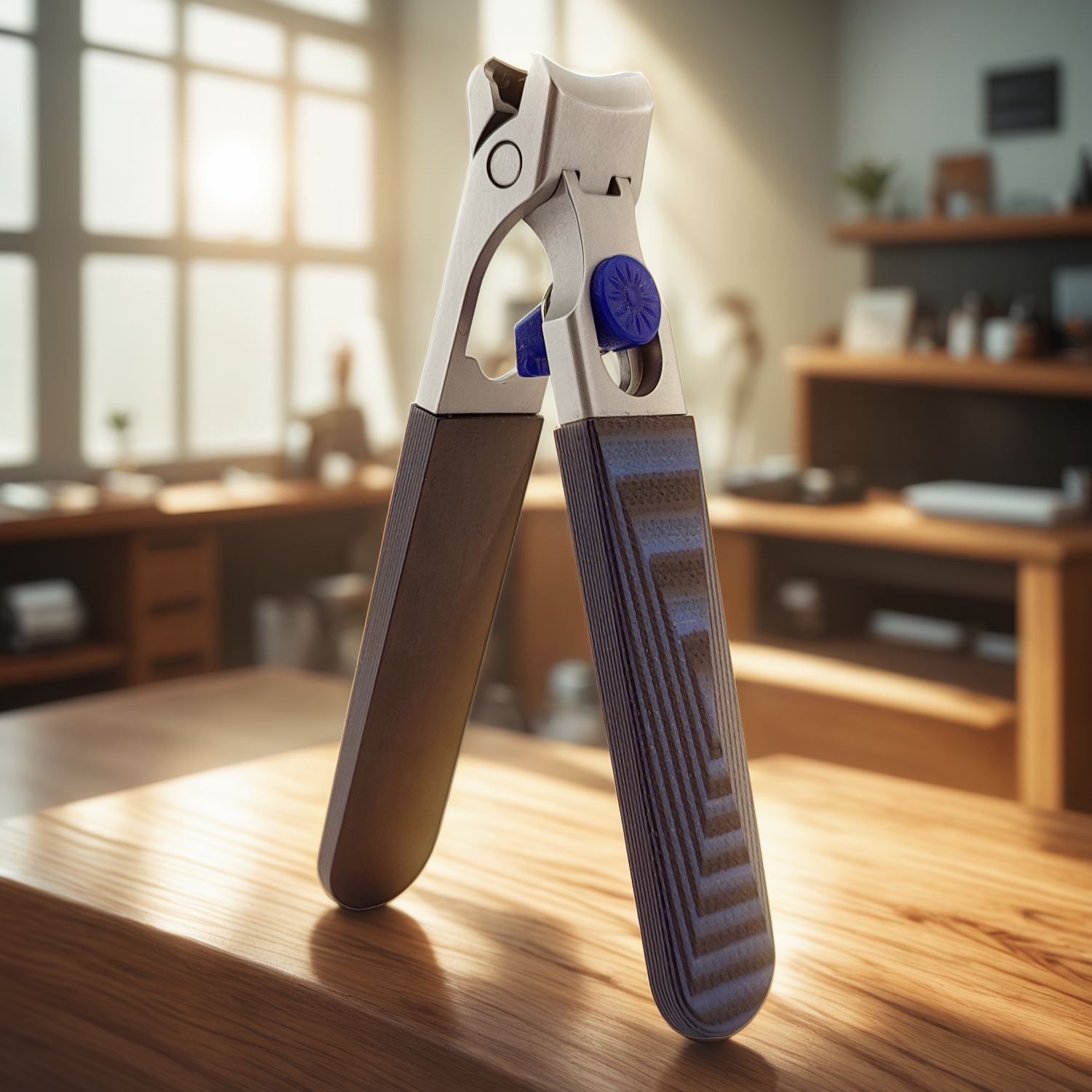
An ergonomic nail clipper is a compact grooming tool designed to make nail trimming steadier, cleaner and more comfortable. For consumers, the value is simple: a clipper should not slip, crush the nail or leave a rough edge. For personal care brands, retailers, salons, hospitality buyers and kit assemblers, the value is broader: the tool must feel reliable in the hand, cut predictably across common nail types, store easily and match the quality expectations of the final customer.
The main search intent behind this product is practical selection. Buyers want to know what makes one nail clipper better than another, how ergonomic features affect performance, whether a compact clipper can handle travel and thicker nails, and what details should be checked before placing a sourcing order. This guide answers those questions with a focus on grip, leverage, cutting alignment, material choice, inspection, maintenance and supplier evaluation.
Olimor supplies practical beauty and personal care tools for grooming applications. Buyers reviewing nail care items can browse related beauty tool products or compare complementary items in the product collection when building a retail range, travel set or salon accessory line.
What Makes a Nail Clipper Ergonomic?
An ergonomic nail clipper is not defined by appearance alone. It is defined by how well the design supports the user’s hand during a small but precise cutting task. Nail trimming requires controlled pressure, close visibility and accurate positioning near the fingertip or toe. If the tool shifts in the hand, the user may cut at the wrong angle, leave jagged corners or trim too close to the skin.
The most important ergonomic factors are grip security, lever comfort, jaw alignment and overall balance. A textured or anti-slip handle helps the user maintain control, especially in bathrooms, salons, hotel rooms or travel situations where hands may be slightly damp. A comfortable lever reduces the effort needed to close the jaws. A stable body helps pressure transfer cleanly from the hand to the cutting edge instead of twisting during use.
Ergonomics also influences perceived quality. When a buyer or end user first holds a clipper, they quickly notice whether the surface feels secure, whether the lever moves smoothly and whether the edges feel well finished. These details matter in retail and promotional channels because the product is often judged before it is used. A compact grooming tool can still communicate care, precision and durability through its handling.
Cutting Performance: Clean Edges Depend on Alignment and Leverage
The purpose of a nail clipper is to cut cleanly with controlled pressure. A sharp edge is important, but sharpness alone is not enough. The cutting edges must meet evenly across the jaw. If one side closes before the other, the nail can bend, tear or split. This is especially noticeable on thicker nails and on nails that have a curved or uneven edge.
Leverage is another key part of cutting performance. A well-designed lever allows the user to close the jaws without excessive squeezing. This helps people who trim frequently and supports more controlled cutting for toenails or harder nail edges. For thicker nails, the better method is usually a series of smaller cuts following the natural nail shape rather than one deep cut across the full width. This reduces stress on the nail and gives the user better control.
Stainless steel is commonly used for grooming tools because it can support durability and corrosion resistance when properly manufactured and maintained. However, buyers should avoid relying on material wording alone. The actual user experience depends on forming, grinding, edge finishing, assembly, surface treatment and final inspection. A stainless steel nail clipper that is poorly aligned can still perform badly, while a carefully finished clipper can feel more precise and safer to handle.
Best Uses: Everyday Grooming, Travel Kits and Thicker Nails
A single ergonomic nail clipper can serve several markets, but buyers should define the main use case before choosing a design. Everyday home grooming requires comfort, reliable cutting and easy storage. Travel grooming requires compact size, durability and secure handling in less convenient environments. Thicker nail care requires strong leverage, stable jaws and clean edge contact.
For everyday use, the clipper should be pleasant enough for repeated trimming. Users notice whether the handle slips, whether the lever feels too sharp under the finger and whether clipped edges need heavy filing afterward. For family grooming kits, salon accessory packs or retail nail care sections, consistency across units is important because users expect the same feel and function from every piece.
For travel use, compactness matters, but compact should not mean weak. A travel nail clipper may be carried in a toiletry pouch, handbag, gym kit, desk drawer or hotel amenity set. It should resist ordinary storage contact, remain easy to identify and feel stable during use. Anti-slip handling is useful because trimming may happen after bathing, handwashing or applying lotion.
For thicker nails, buyers should pay special attention to jaw geometry and lever response. A clipper intended for thicker nails should not require awkward hand force. The user should be able to approach the nail gradually, cut in small sections and finish with a nail file if needed. Brands should present this use responsibly: a nail clipper can help with routine grooming, but painful, infected or medically abnormal nails should be addressed by a qualified professional.
Buyer Checklist for Comparing Ergonomic Nail Clippers
Product photos can show the general shape, but nail clippers should be evaluated by hand. The following checklist helps B2B buyers compare samples in a structured way before selecting an item for retail, travel, salon, promotional or private-label use.
| Evaluation point | What to check | Why it matters |
|---|---|---|
| Grip security | Hold the clipper with dry and slightly damp fingers to assess texture and stability. | Reduces slipping and improves trimming control. |
| Lever comfort | Press the lever several times and check for sharp contact points or unstable movement. | Improves user comfort and perceived quality. |
| Blade alignment | Inspect whether the cutting edges meet evenly across the jaw. | Helps prevent crushing, bending or tearing the nail. |
| Cut cleanliness | Test trimming response on suitable sample material or controlled nail samples where appropriate. | Shows whether the clipper cuts predictably without excessive force. |
| Surface finishing | Check corners, underside areas, lever edges and visible surfaces. | Prevents rough handling feel and supports retail presentation. |
| Travel suitability | Review compactness, storage safety and compatibility with pouches or kits. | Ensures the clipper works in portable grooming sets. |
| Packaging fit | Confirm how the item sits in blister cards, boxes, pouches or multi-tool kits. | Protects the product and improves shelf appearance. |
| Batch consistency | Compare multiple samples, not only one preferred unit. | Helps identify variation before larger sourcing decisions. |
This checklist is useful because most nail clipper issues are practical: slipping, uneven closing, uncomfortable pressing, rough finishing or poor packaging fit. These problems can lead to returns or negative reviews even when the product looks acceptable in a catalogue image.
Manufacturing and Inspection Details That Affect Quality
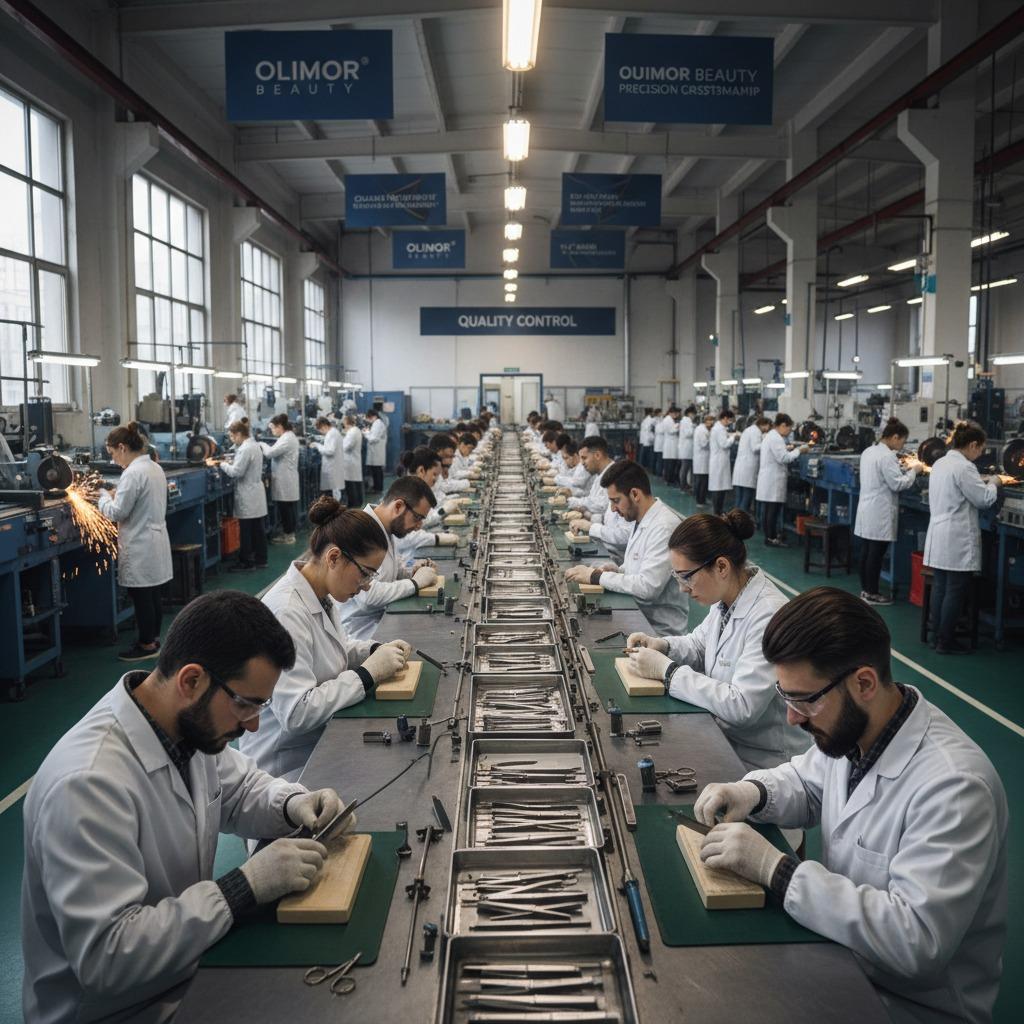
For an ergonomic nail clipper, manufacturing quality is visible in small details. Raw material selection affects strength and corrosion behavior. Forming and assembly affect the body shape and lever movement. Grinding and edge finishing affect cutting performance. Surface finishing affects both appearance and touch. Packaging checks affect whether the clipper arrives clean, protected and ready for presentation.
Buyers should ask suppliers how they control jaw alignment, lever movement and finished edges. They should also review whether the surface finish is consistent across different parts of the clipper. A tool may have a smooth top surface but rougher contact points underneath the lever or near the side edges. Those less visible areas still influence user comfort.
Inspection should include both visual and functional checks. Visual checks cover stains, burrs, scratches, color variation, plating or finish inconsistency, and packaging cleanliness. Functional checks cover lever action, jaw closing, grip feel and cutting response. If the clipper is intended for a retail line or kit program, buyers should keep approved samples for comparison during later production review.
Depending on the destination market and distribution channel, importers and retailers may need to consider general consumer product safety obligations. Public bodies such as the U.S. Consumer Product Safety Commission and the European Commission’s General Product Safety Regulation framework may be relevant for consumer goods. Requirements can change, so buyers should verify current versions, local obligations and supplier documents instead of relying on assumptions. This statement does not claim any certification for Olimor products.
Cost Factors Without Guesswork
Nail clipper cost is influenced by design complexity, material choice, finishing requirements, inspection expectations, packaging format, customization and order structure. A basic compact clipper in simple packaging will not have the same cost profile as a more finished ergonomic model with special handle texture, customized branding and retail-ready packaging.
Buyers should compare total project value rather than unit price alone. A lower-cost clipper that slips, cuts unevenly or arrives with inconsistent finishing can create higher downstream costs through returns, complaints, repacking or lost customer trust. Conversely, over-specifying decorative features that do not improve the user experience may increase cost without improving sell-through.
When requesting a quotation, provide practical details: target application, expected sales channel, packaging style, customization needs, destination market and quality priorities. If samples are needed, explain what must be evaluated: grip feel, thicker nail performance, travel kit fit, retail presentation or general everyday grooming. Clear requirements make supplier communication more efficient and reduce misunderstandings.
For project-specific discussion, buyers can send an inquiry with the intended use and preferred packaging direction. This allows the conversation to focus on product suitability rather than generic pricing.
How to Use an Ergonomic Nail Clipper Safely and Effectively
Even a well-made clipper performs best when used correctly. Trim nails when they are clean and visible. Position the clipper so the jaw follows the natural nail curve. Avoid cutting too deeply into corners, especially on toenails, because aggressive trimming can cause discomfort or snagging as the nail grows.
- Trim gradually: Use several small cuts instead of one large cut, especially on thicker nails.
- Keep the hand steady: Use the textured grip and press the lever with controlled pressure.
- Do not rush corners: Shape the nail edge carefully to avoid sharp points or over-trimming.
- Finish with a file: Smooth rough edges to reduce snagging on fabric or socks.
- Stop if there is pain: Pain, bleeding, infection or abnormal nail changes require appropriate professional advice.
This guidance is useful for retail content, instruction inserts and product pages. Clear use instructions can reduce misuse and help customers understand the benefit of an ergonomic design.
Maintenance and Storage for Longer Tool Life
A nail clipper is often stored in humid places, so basic care matters. Moisture, nail debris and cosmetic residue can collect around the jaw and hinge area. Over time, buildup can make the tool less pleasant to use and may affect smooth operation.
- Clean after use: Remove nail debris with a dry cloth or soft brush.
- Dry before storage: Wipe the clipper after use in a bathroom, salon or travel environment.
- Avoid non-nail materials: Cutting tags, wire, hard plastic or packaging can damage the cutting edge.
- Store separately: Use a pouch or dedicated compartment to reduce scratches and contamination.
- Inspect periodically: If the jaws no longer close evenly or the lever feels unstable, replace the tool.
Stainless steel construction can support durability, but it does not eliminate the need for drying and proper storage. Maintenance instructions are especially important for travel kits, hospitality amenities and retail sets where users may not receive much product guidance.
Supplier Evaluation for Brands, Retailers and Kit Builders
Choosing a nail clipper supplier should involve more than selecting a shape from a catalogue. A good sourcing process looks at product fit, production consistency, communication and packaging support. For ergonomic nail clippers, buyers should request samples and evaluate them against the final use case. A clipper for a premium grooming kit may require a different finish and packaging approach than a simple emergency travel item.
Useful supplier questions include: What material and finish options are available? How is cutting alignment checked? Can packaging be adapted for retail, pouch sets or bulk kit assembly? What customization options are practical for the selected model? How are pre-shipment checks handled? The answers should be documented and compared with the samples received.
Customization should also be realistic. Branding, packaging, finish and kit configuration can add value, but they should not compromise handling or cutting performance. If the target customer values travel convenience, prioritize compactness and storage. If the item is marketed for thicker nails, prioritize leverage, jaw stability and user instructions. If the clipper is part of a broader grooming range, make sure the design language works with other tools.
Olimor focuses on usable beauty tools with attention to material selection, surface finishing, cutting performance and final packaging checks. Buyers planning a nail care project can contact Olimor to discuss product direction, sample review and suitable companion tools.
FAQ: Samples, MOQ, Customization, Quality and Lead Time
Can I request samples before confirming an ergonomic nail clipper order?
Yes. Samples are important because grip comfort, lever movement and jaw alignment cannot be fully judged from images. Use samples to compare cutting response, finish consistency, packaging fit and suitability for the intended sales channel.
Is there an MOQ for nail clipper sourcing?
MOQ can depend on the selected model, customization, packaging method and production arrangement. Buyers should share the target application and packaging needs so the supplier can confirm the applicable order requirements.
Can the nail clipper be customized for a private-label or retail program?
Customization may include branding, packaging, finish direction or kit configuration depending on the product and project scope. Confirm what is practical during sample and quotation discussions, and keep approved samples for reference.
How should quality be checked before shipment?
Quality review should include visual inspection, surface finishing, lever movement, jaw alignment, cutting response, packaging condition and comparison with approved samples. Buyers should also verify current regulatory obligations and supplier documents for the destination market.
What affects lead time for a nail clipper project?
Lead time can be affected by sample approval, customization, packaging development, production scheduling and inspection requirements. Discuss timing early, especially when the clipper is part of a larger grooming kit or retail launch.
Practical Conclusion for B2B Buyers
An ergonomic nail clipper is small, but it deserves careful selection. The best choice is not simply the most decorative or the cheapest; it is the tool that gives the user a secure grip, controlled leverage, clean cutting action and reliable storage in the intended environment. For everyday grooming, travel kits, salon accessories or thicker nail care, details such as anti-slip handling, stainless steel construction, blade alignment, smooth finishing and packaging compatibility all influence satisfaction.
Before committing to a project, define the user scenario, compare samples, inspect functional details and confirm supplier documentation. A clear sourcing process helps brands and retailers build a nail care item that feels practical, dependable and appropriate for the market it serves.