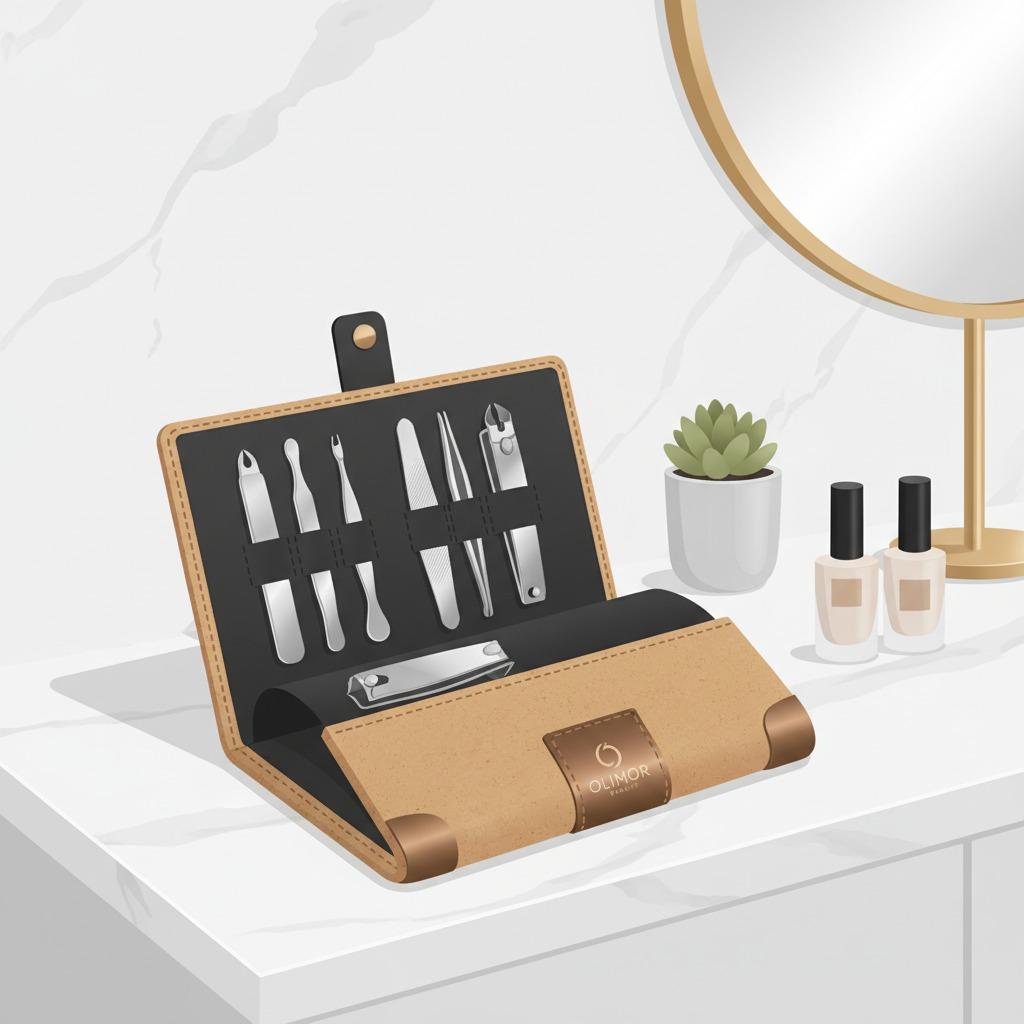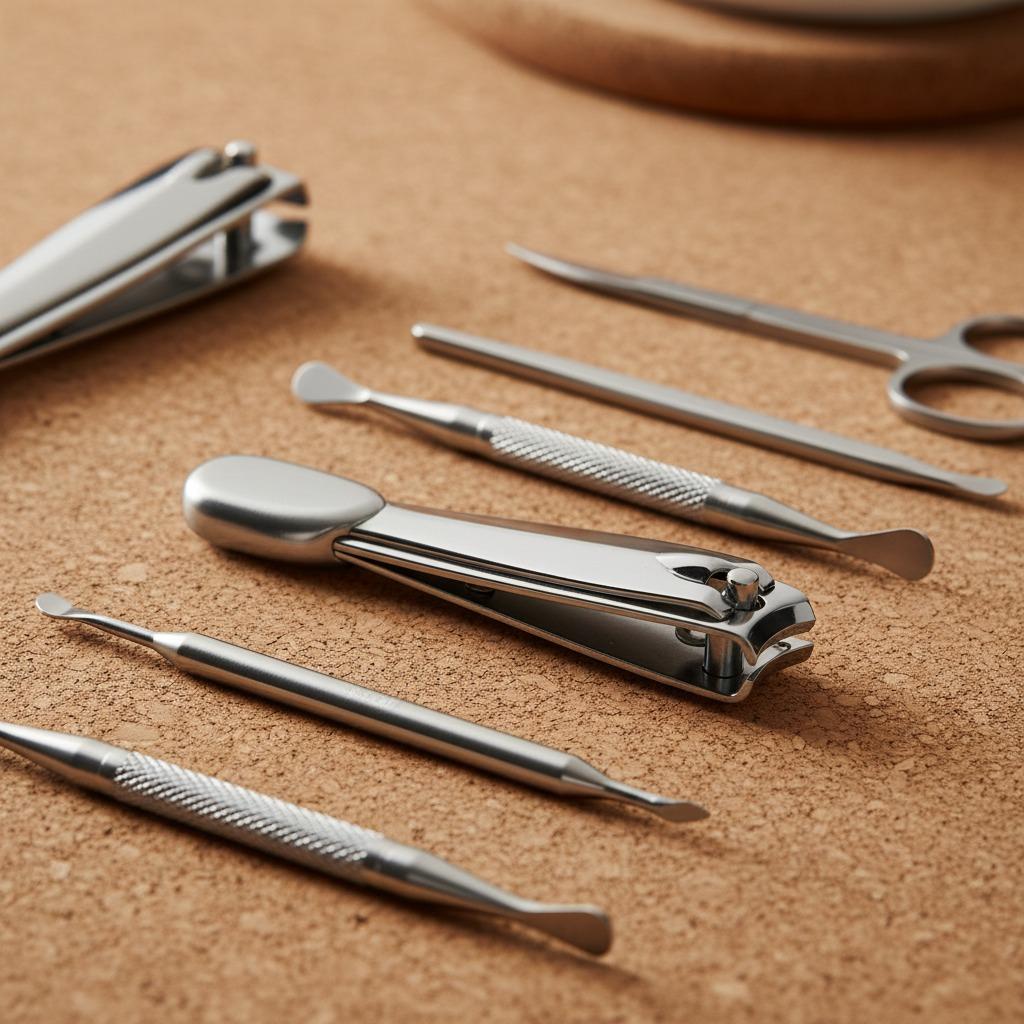











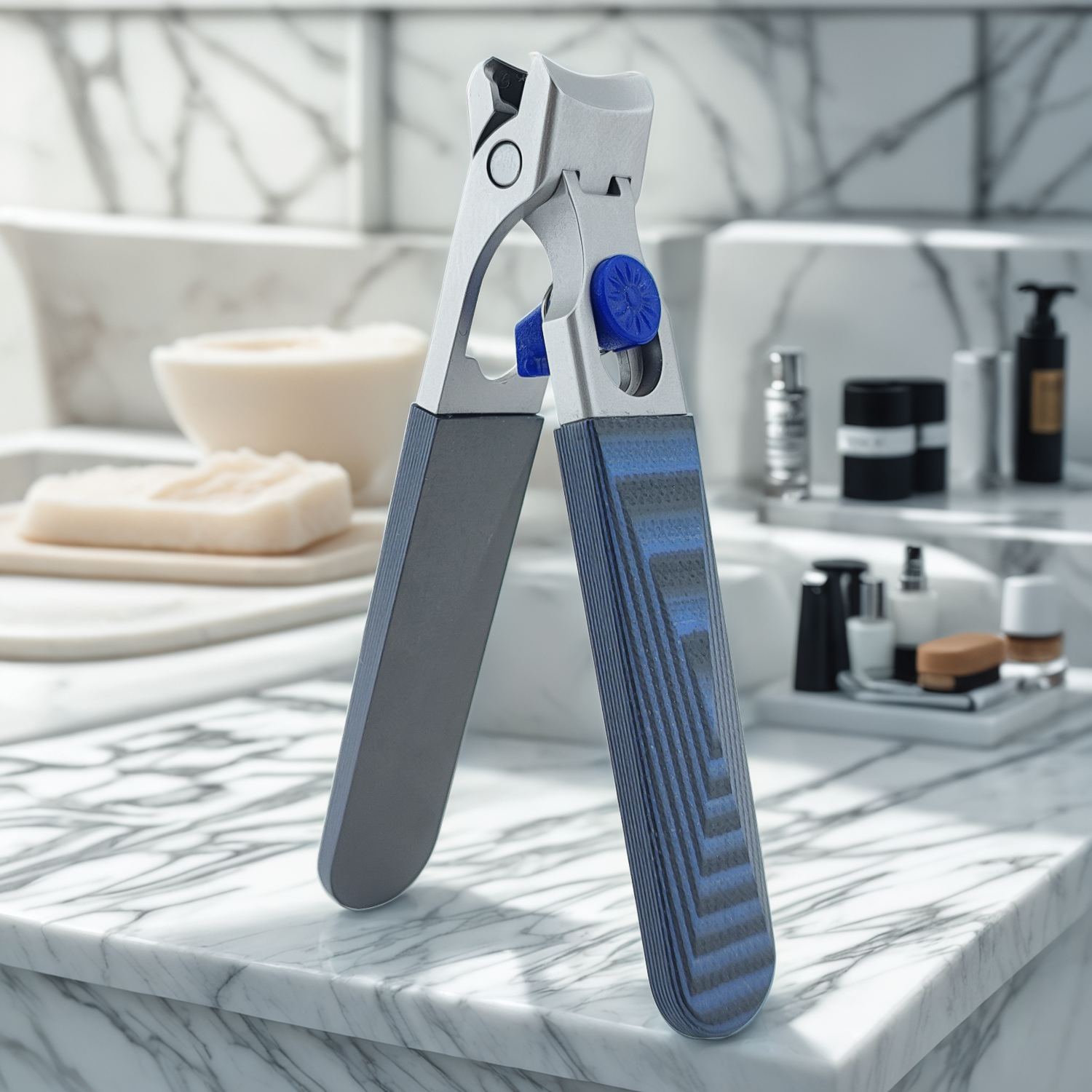
An ergonomic nail clipper should do more than cut nails. It should help the user hold the tool steadily, position the blade accurately, trim without excessive force, and store the sharp edge safely after use. These details matter for everyday grooming, but they also matter for retailers, salon suppliers, travel kit assemblers and beauty tool distributors comparing products for resale.
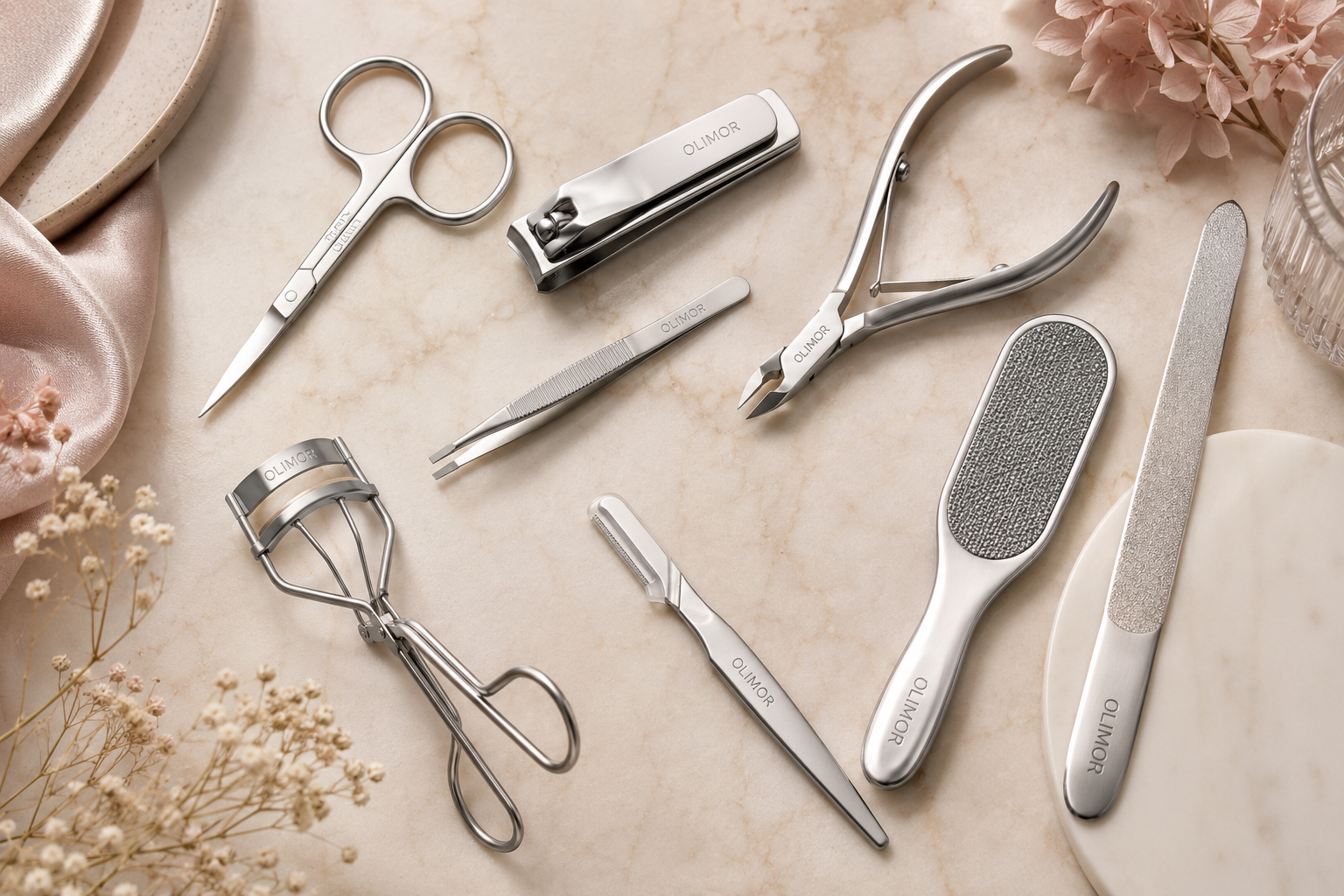
The Olimor Beauty Pro-Series nail clipper is built around practical trimming control. Its key features include ultra-sharp stainless steel blades, dual-textured handles with a geometric non-slip pattern, a secure safety locking mechanism, and a lightweight yet durable frame. This guide explains how those features affect use, what buyers should inspect before purchasing, and how to maintain a nail clipper so it stays reliable for routine grooming.
What Makes a Nail Clipper Ergonomic?
Ergonomics in a nail clipper is not just about making the handle look comfortable. It is about improving control during a small, precise cutting task. A clipper that slips, twists in the hand, or needs too much pressure can create jagged edges or encourage the user to cut at an awkward angle. That is especially frustrating when trimming toenails or thicker nails.
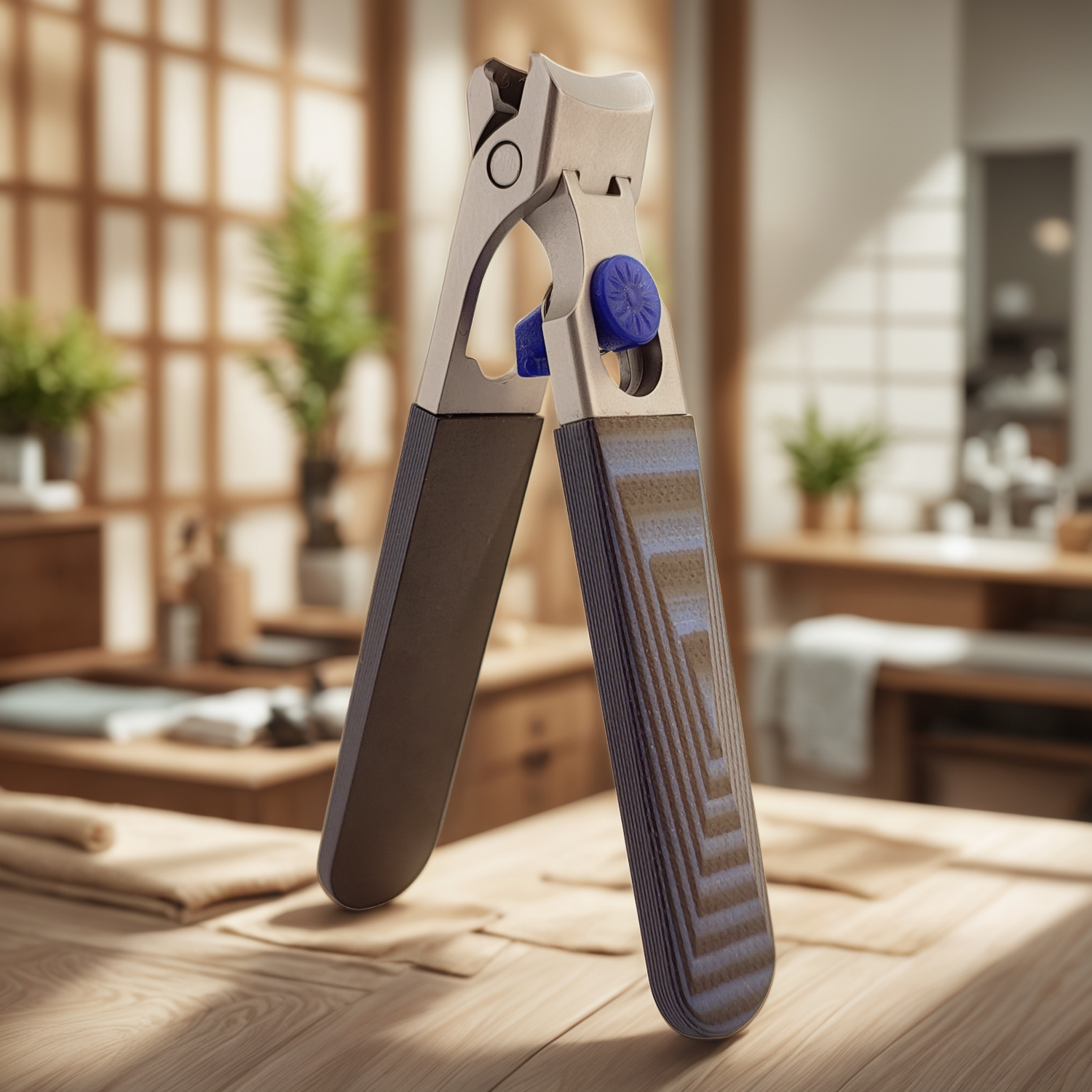
The Pro-Series clipper uses dual-textured handles and a geometric pattern to support a more stable grip. This matters when hands are slightly damp after washing, when the user is trimming at an angle, or when extra steadiness is needed around nail corners. A textured handle helps the user focus on blade placement instead of over-squeezing the tool.
For personal grooming, an ergonomic handle can make routine trimming feel more predictable. For professional or semi-professional settings, such as grooming services or salon supply assortments, it can also reduce fatigue from repeated use. A buyer evaluating similar products should handle samples directly and check whether the grip feels stable across different hand sizes, not only whether the product looks premium in packaging.
Why Blade Quality Matters for Thick Nails
Thick nails are a common reason users upgrade from a basic clipper. When blades are dull or poorly aligned, the tool may compress the nail before cutting it. This can leave rough edges, create splits, or require several uncomfortable attempts. A sharper cutting edge and stable blade alignment help the user trim in smaller, cleaner sections.
The Olimor Beauty Pro-Series clipper is positioned for controlled trimming, including thicker nails, through its ultra-sharp stainless steel blades. Stainless steel is commonly used in grooming tools because it supports a clean cutting edge and offers useful resistance to rust during normal care. It still needs proper drying and storage, but it is a practical material choice for nail tools that may be used near sinks, bathrooms, toiletry bags or travel pouches.
Technique remains important. Even with a sharp clipper, very thick nails should not be forced through one large cut. The safer, cleaner approach is to trim gradually from one side to the other, following the natural shape of the nail and leaving a small free edge. If nails feel especially hard, trimming after a shower or a brief soak can make the nail easier to cut. Users with painful, infected, severely thickened or abnormal nails should seek appropriate professional advice rather than forcing a household tool through the nail.
Core Features to Compare Before Buying
A good product description should translate into features the user can feel and inspect. For an ergonomic nail clipper, the most important factors are blade sharpness, handle stability, locking safety, frame durability and finish quality. Buyers should be cautious about vague terms such as premium or professional unless the tool can be checked against practical criteria.
| Evaluation point | Why it matters | What to inspect in a sample |
|---|---|---|
| Stainless steel blades | Support clean trimming and help resist rust in normal grooming conditions. | Edges should appear even, sharp and aligned, with no visible gaps when closed. |
| Non-slip ergonomic handle | Improves control and helps reduce twisting during the cut. | Texture should be easy to grip without feeling sharp or uncomfortable. |
| Leverage and pressure | Affects comfort, especially for toenails and thicker nails. | Cutting action should feel smooth, not loose, stiff or unstable. |
| Safety locking mechanism | Protects the blade during storage and travel. | Lock should engage securely and not release too easily in a pouch or drawer. |
| Frame and finish | Influence durability, appearance and user confidence. | Check for smooth surfaces, no unintended sharp edges and a solid feel. |
| Intended channel fit | Different markets need different feature emphasis. | Assess whether the clipper suits home kits, travel kits, retail shelves or salon supply ranges. |
This table is useful for individual shoppers, but it is especially important for B2B buyers comparing multiple samples. A clipper may look similar online yet feel very different in the hand. Before committing to a larger purchase, inspect the cutting edge, the handle texture, the lock and the finish under normal light. If possible, test trimming behavior on suitable sample material or through approved internal evaluation procedures rather than relying on appearance alone.
Home Use: How to Trim Nails More Cleanly
A well-designed clipper gives the user control, but good technique produces the best result. The goal is to cut gradually, avoid sudden pressure, and leave a smooth edge that does not catch on socks, gloves, bedding or clothing.
- Start with a clean tool. Wipe the clipper before use, especially if it has been stored in a drawer, pouch or travel bag.
- Soften hard nails when needed. Trim after bathing or after a brief soak if nails feel brittle or difficult to cut.
- Use the textured handle deliberately. Hold the clipper so the fingers press against the non-slip grip, not against the blade area.
- Make several small cuts. For thick nails, work gradually instead of forcing the blade across the whole nail at once.
- Follow the natural nail line. Avoid cutting deeply into corners, particularly on toenails.
- Check the edge. If a small point remains, smooth it with a suitable nail file rather than over-clipping.
- Lock the clipper after use. Engage the safety mechanism before storage or packing.
This process is helpful for adults trimming their own nails and for caregivers helping a family member. When trimming someone else’s nails, work slowly and keep the hand or foot supported. If there is pain, bleeding, swelling, discoloration or suspected infection, stop and seek qualified guidance.
Travel Use: Why the Safety Lock Is Important
A travel nail clipper needs more than a compact shape. It may be placed in a toiletry bag with fabric pouches, razors, cosmetics, bottles, towels or other personal care items. If the cutting edge is exposed, it can snag materials or make the tool less pleasant to handle. A secure locking mechanism helps keep the sharp blades protected when the clipper is not in use.
The Pro-Series clipper includes an intuitive safety lock for storage and travel. This feature is useful for business travel, gym bags, vacation kits, hotel amenity-style sets and personal grooming pouches. For kit assemblers, it also creates a simple selling point: the clipper is designed to be stored more safely after trimming.
Travel conditions also increase the importance of basic care. Nail clippers are often used near sinks or packed before they are completely dry. Stainless steel helps resist rust, but no grooming tool should be stored wet for long periods. After use, wipe away nail debris and moisture, allow the tool to dry, then engage the lock before packing. Retailers building a wider grooming offer can compare this item with other beauty tool products to create coordinated travel or nail care selections.
Maintenance and Hygiene for Longer Tool Life
Routine maintenance is simple but important. After each use, remove visible nail fragments from the blade area. Wipe the stainless steel surfaces with a clean, dry cloth. If the clipper has been exposed to water, soap or sanitizer, dry it fully before locking and storing it. Moisture trapped inside a closed pouch can affect the appearance and feel of metal tools over time.
Do not use a nail clipper for non-grooming tasks such as cutting tags, wire, plastic ties, tape or packaging. These uses can damage the cutting edge or disturb blade alignment. If the clipper begins to require more force than usual, inspect the blade area for residue, bending, looseness or uneven contact. A tool that no longer cuts cleanly should be replaced rather than forced.
Shared-use environments require stricter hygiene practices than personal use. Salons, grooming providers and retail demonstration settings should follow local sanitation rules and internal hygiene procedures. In some markets, public bodies such as the U.S. Food and Drug Administration and the U.S. Consumer Product Safety Commission may publish information relevant to personal care products, consumer product safety or labeling expectations. For the European market, buyers should also be aware of general product safety obligations such as the EU General Product Safety Regulation. Always verify the current version of any regulation and request relevant supplier documents for the product and market involved; do not assume certification or compliance from a product name alone.
B2B Sourcing: How to Evaluate a Nail Clipper Supplier
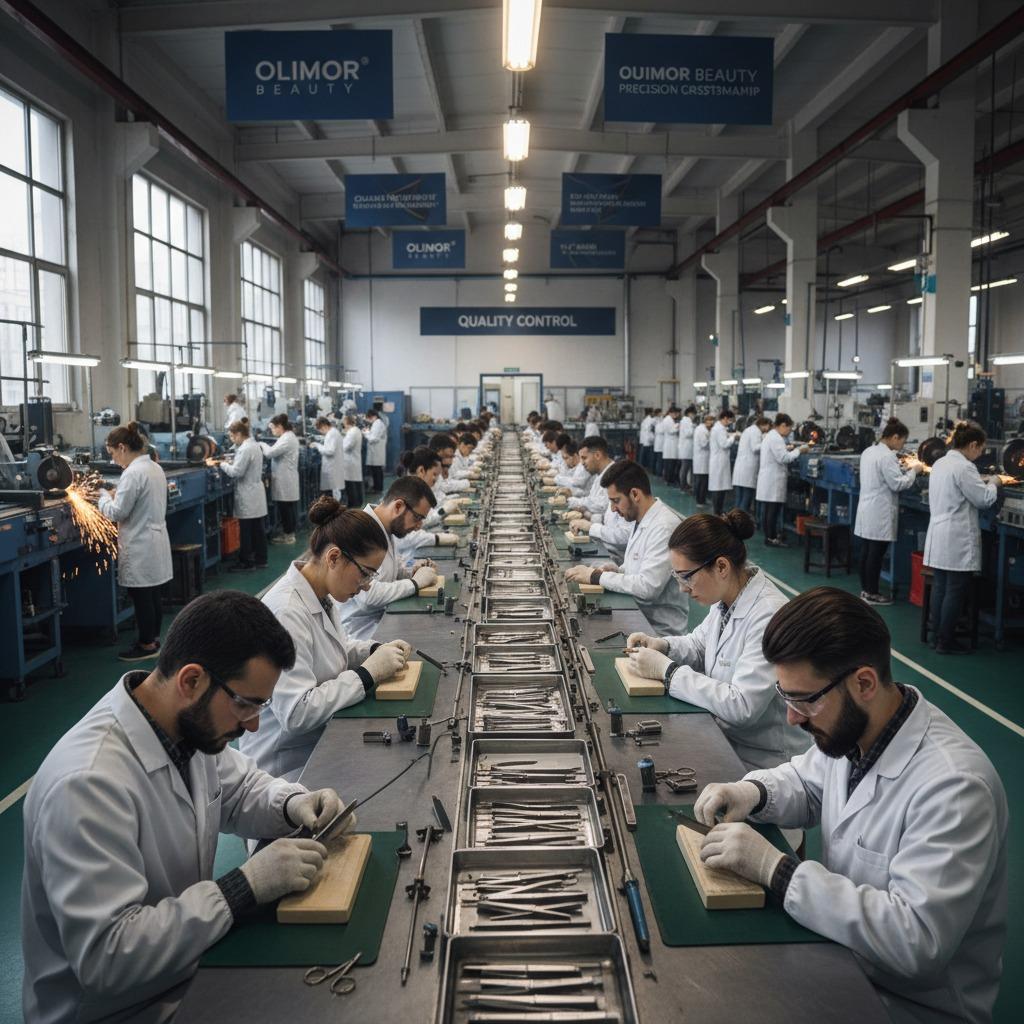
For distributors, importers, beauty retailers and promotional kit buyers, sourcing a nail clipper is not only about unit appearance. A successful product should be consistent across samples and repeat orders, easy to explain to customers, and suitable for the intended sales channel. The Pro-Series clipper offers several practical feature points: stainless steel blades, a dual-textured non-slip handle, controlled trimming for thicker nails, a safety lock, rust-resistant materials and a lightweight durable frame.
Before choosing a supplier or adding a clipper to an assortment, prepare a sample review checklist. A structured review helps separate usable quality from decorative packaging.
Sample inspection checklist
- Check whether the blades meet evenly when closed.
- Confirm that the cutting action feels smooth and controlled.
- Inspect the handle texture for grip, comfort and finish consistency.
- Engage and release the safety lock several times to assess stability.
- Look for burrs, rough edges, discoloration or uneven surfaces.
- Test whether the product fits the intended packaging, travel pouch or grooming kit.
- Ask what customization options are available without assuming specific minimums or timelines.
- Request current product documentation appropriate to the destination market.
Cost comparisons should consider more than the quoted product price. Important cost factors may include packaging style, customization, inspection requirements, freight method, order quantity, market documentation, and after-sales handling. A lower-cost clipper that produces complaints about slipping, rough edges or weak locking may create higher total cost for a brand or retailer. Buyers planning a broader assortment can review Olimor product collections to see how a nail clipper may fit with other beauty and personal care tools.
Retail Positioning and Customer Questions
For retail and e-commerce listings, the strongest positioning is clear and practical: an ergonomic nail clipper for controlled trimming at home or while traveling. Avoid overpromising medical outcomes or making claims that are not supported by product documentation. Instead, explain the features customers can understand immediately: stainless steel blades for clean cutting, a textured handle for grip, a safety lock for storage, and a lightweight frame for daily or travel use.
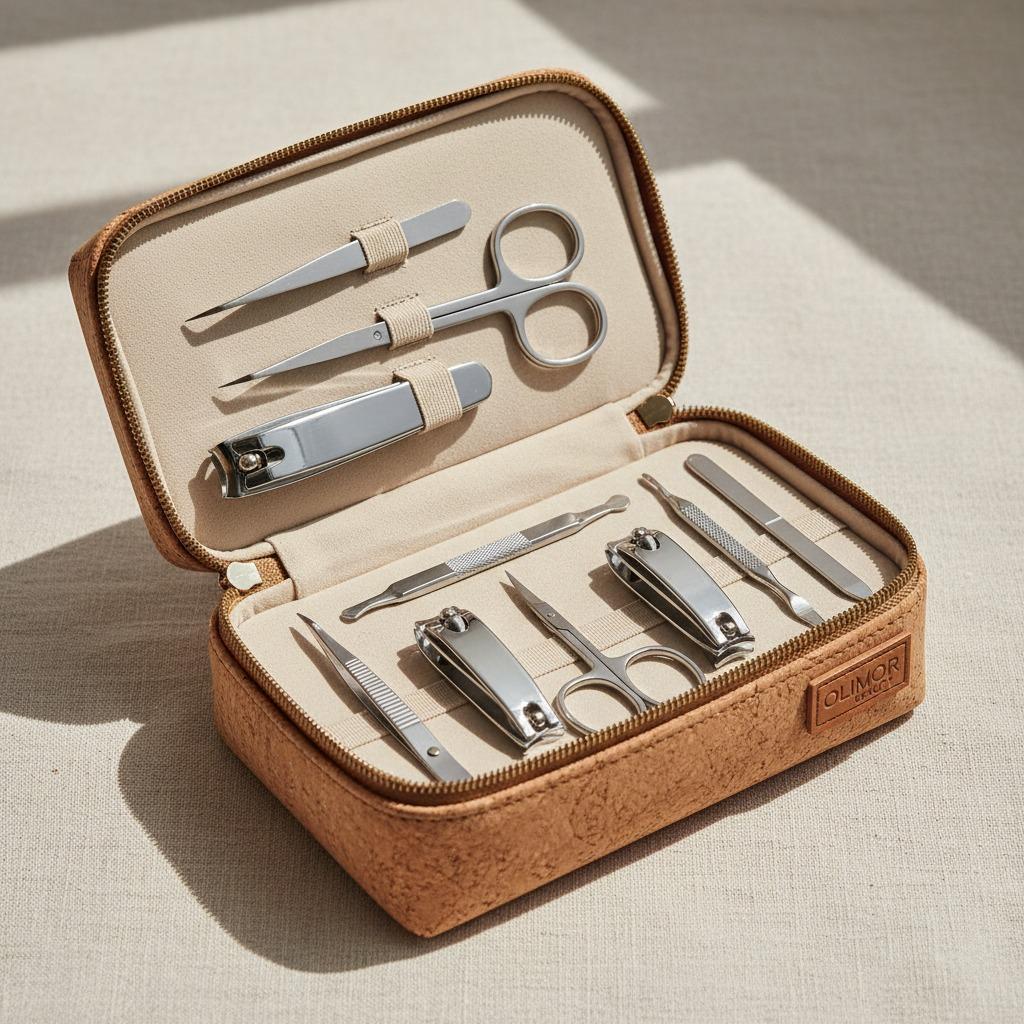
For B2B buyers, this product can be positioned in several channels. It may fit a personal grooming section, a nail care display, a travel kit, a salon supply range or a giftable beauty accessory set. The best channel depends on packaging, customer expectations and the rest of the assortment. If the product is sold for thicker nails, show users how to trim in small sections and avoid forcing the cut. Clear usage education can reduce dissatisfaction and support better customer reviews.
When discussing customization, samples or order planning, keep communication specific. Ask about available finishes, packaging approaches, branding options, inspection steps and documentation for your destination market. To discuss product selection or sourcing requirements, buyers can contact Olimor or send details through the product inquiry form.
When This Ergonomic Nail Clipper Is a Good Fit
The Olimor Beauty Pro-Series ergonomic nail clipper is a practical fit when the buyer needs a controllable grooming tool with clear everyday benefits. Its stainless steel blades support clean trimming, the dual-textured geometric handle helps stabilize the grip, and the safety lock makes storage and travel more convenient. These features are relevant for individual users who want a dependable clipper and for B2B buyers who need an easy-to-explain product for grooming assortments.
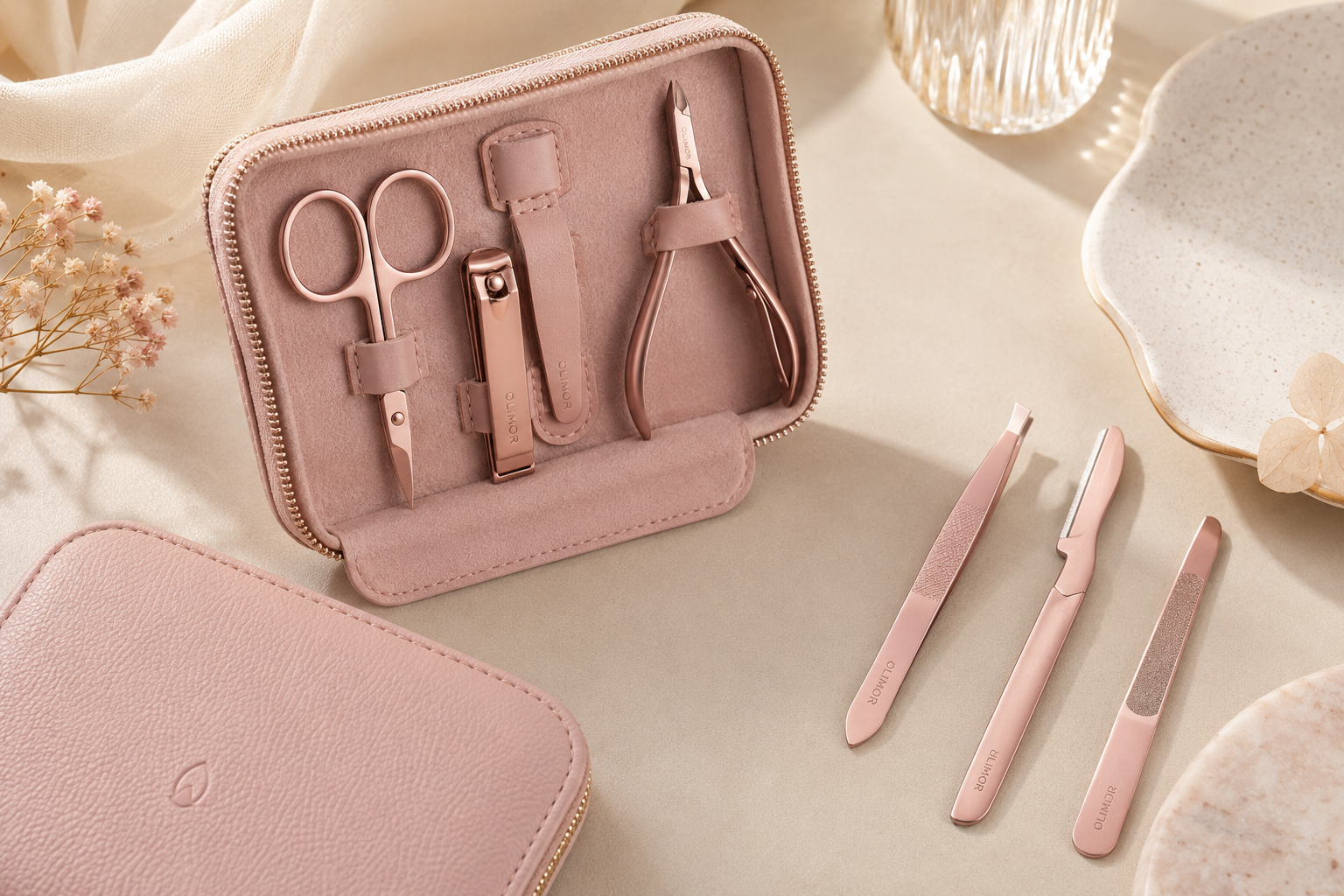
It is especially suitable for users who dislike slippery small clippers, travelers who want a tool that locks before packing, and retail buyers seeking a nail care item with visible functional details. As with any beauty tool purchase, final selection should be based on sample inspection, intended market requirements and current supplier documentation rather than assumptions.
FAQ
Can I request a sample before placing a business order?
Business buyers can ask Olimor about sample availability for evaluation. Use the sample stage to inspect blade alignment, handle comfort, locking action, finish quality and packaging suitability before confirming a larger order.
Is there a fixed MOQ for this ergonomic nail clipper?
MOQ can depend on the product configuration, packaging, customization and order plan. Buyers should confirm current MOQ details directly with Olimor rather than relying on a general estimate.
Can the nail clipper be customized for retail or kit projects?
Customization may be discussed for suitable B2B projects, including packaging or branding requirements where available. Confirm feasible options, artwork requirements and any effect on cost or production planning with the supplier.
How should quality be checked before shipment?
Useful checks include blade alignment, cutting action, safety lock function, handle texture, surface finish and packaging condition. Buyers should also request current product documents needed for their destination market and verify applicable requirements.
How should lead time be confirmed?
Lead time depends on order details, customization, packaging and production planning. Confirm the current schedule with Olimor during inquiry and before finalizing any purchasing commitment.