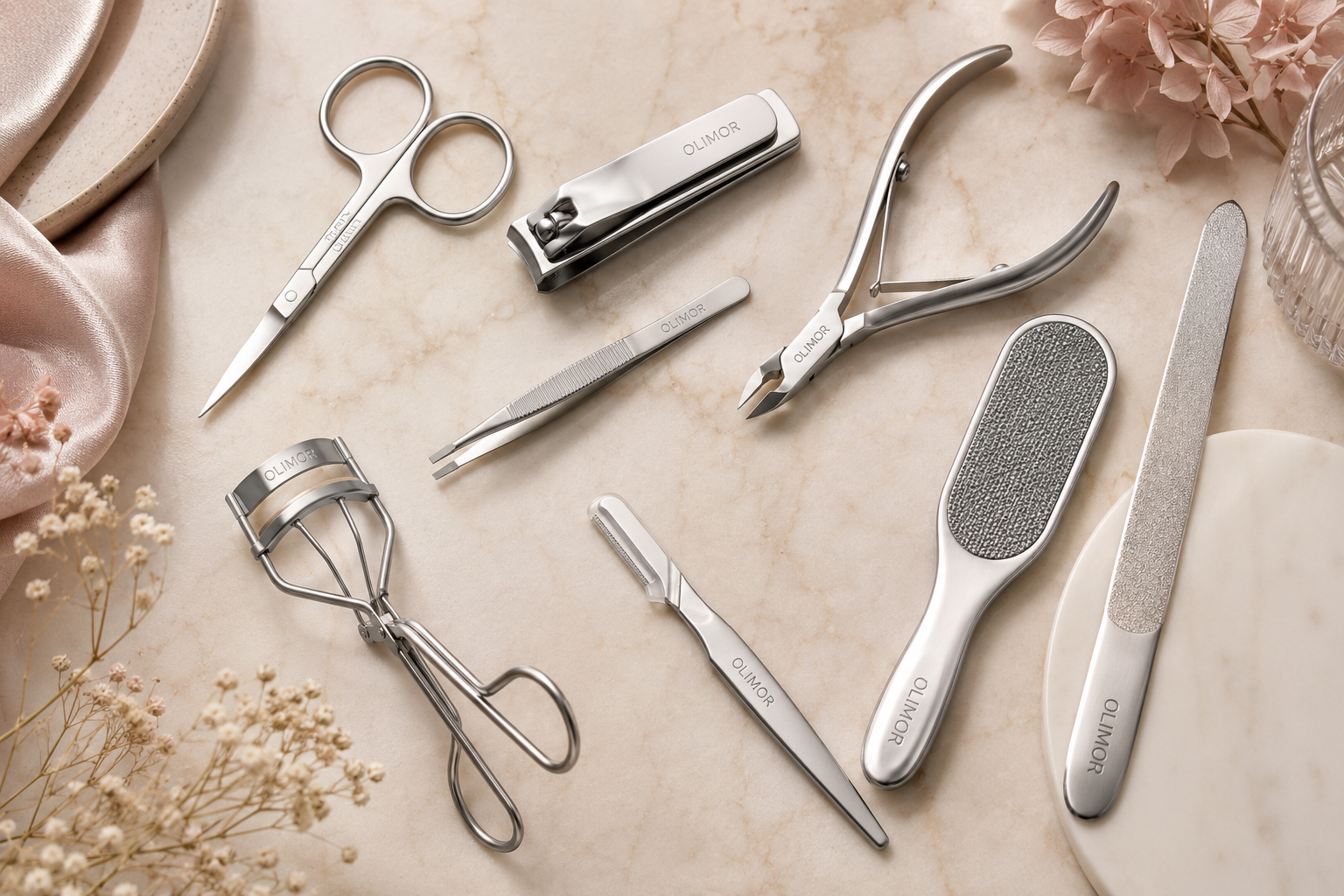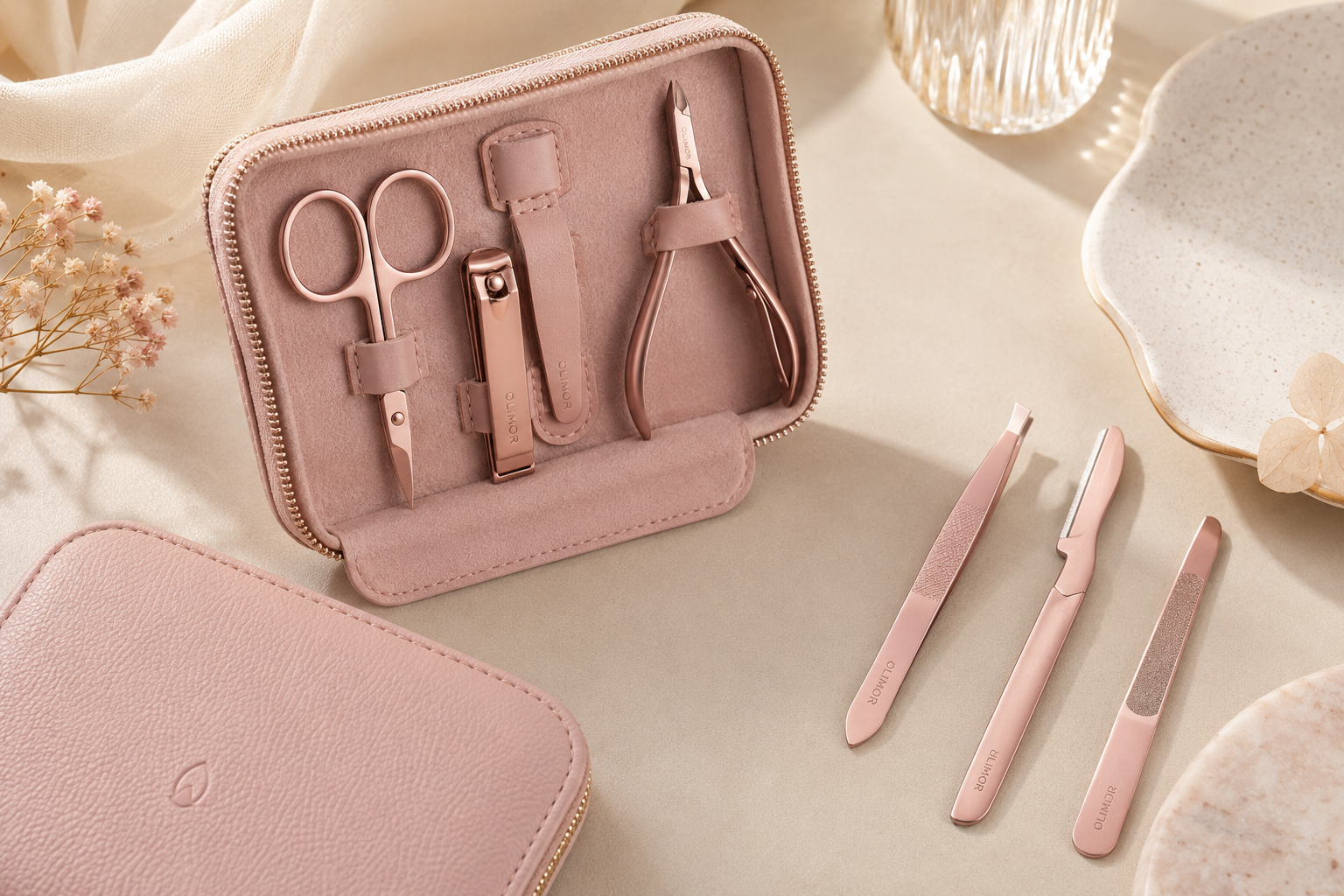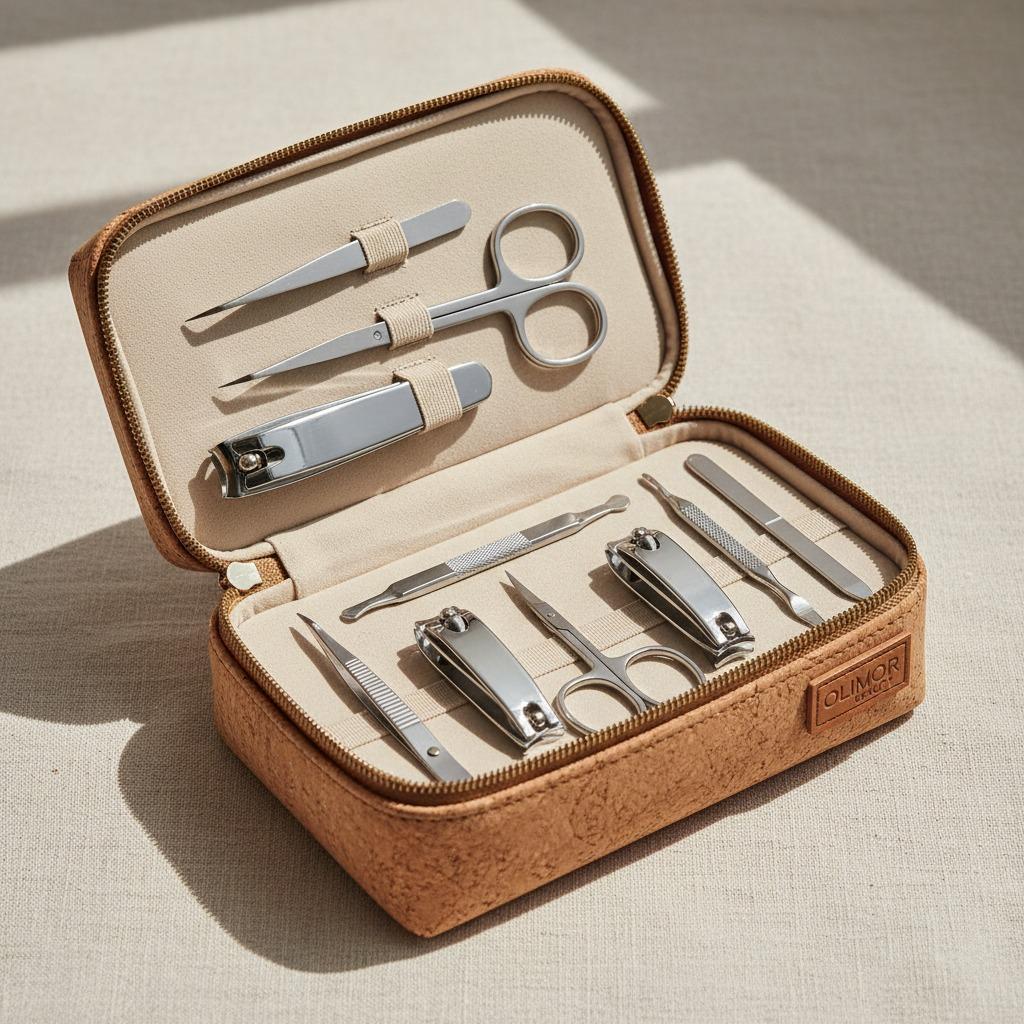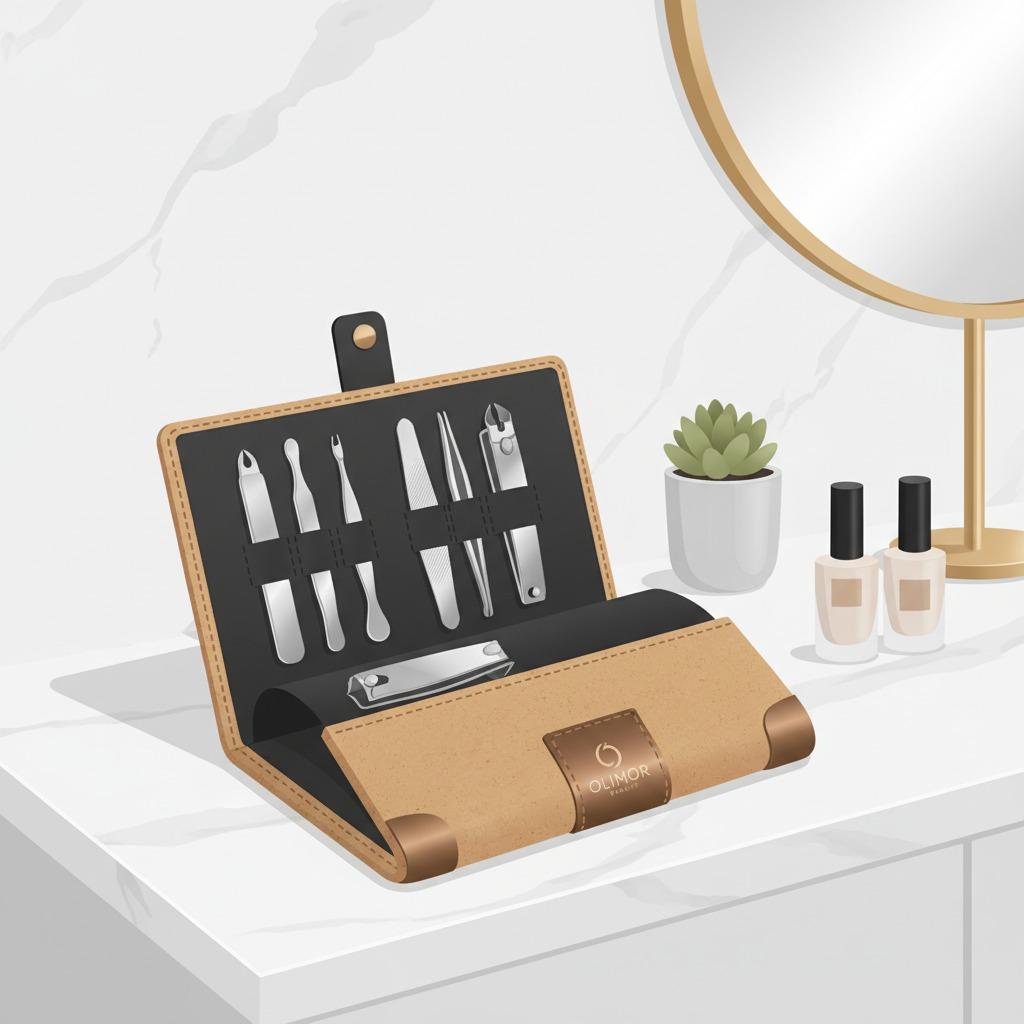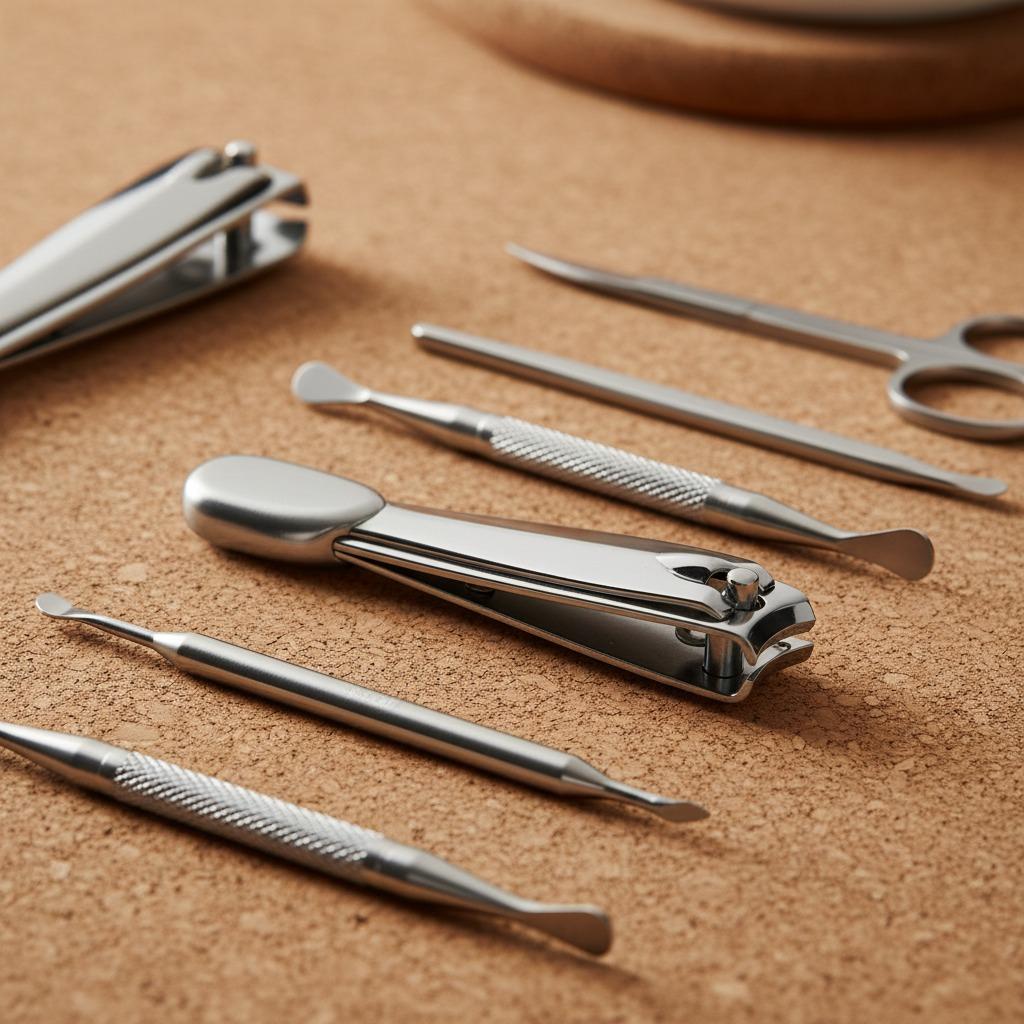











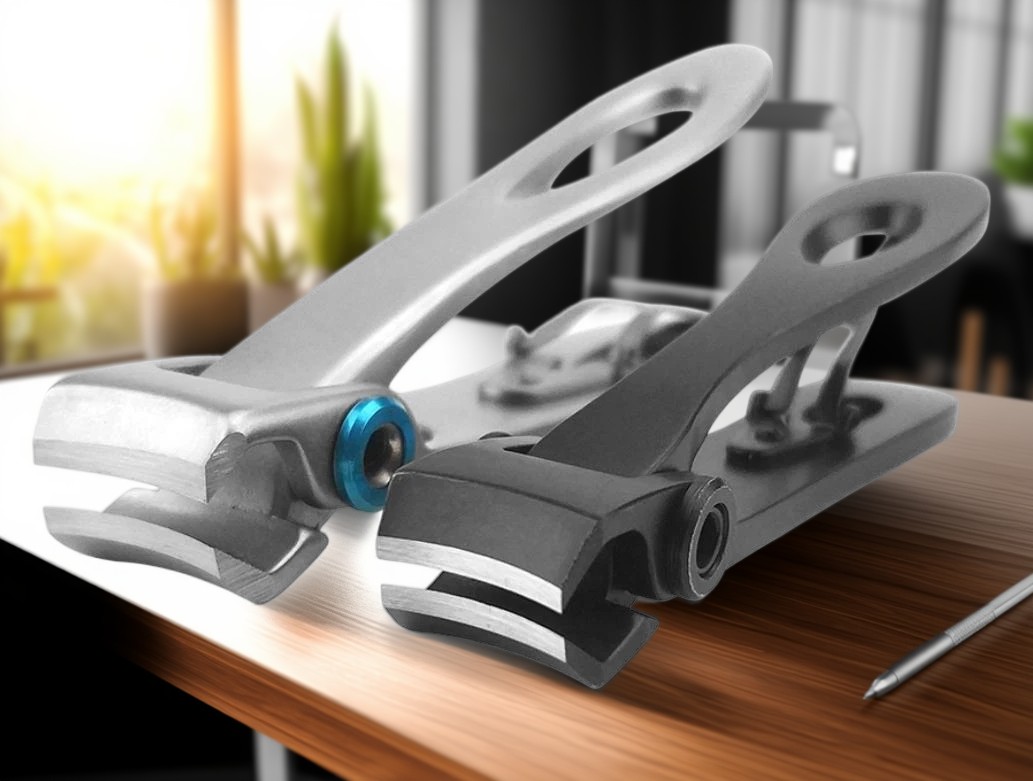
A good nail clipper should do one thing very well: cut cleanly with control. For salons, beauty retailers, grooming kits, and personal care buyers, that simple requirement affects the user experience, the appearance of the finished nail edge, and the long-term value of the tool. Olimor Beauty professional nail clippers are designed around practical details that matter during repeated use: stainless steel construction, an angled blade that follows the natural nail curve, an ergonomic handle, a thumb hole for controlled pressure, and a refined silver and matte black appearance.
This article explains what makes a professional nail clipper different from a basic disposable grooming tool, how to evaluate design details before sourcing, and how to use and maintain clippers so they continue to perform reliably.
What Sets a Professional Nail Clipper Apart?
Professional nail clippers are expected to provide repeatable results. A salon technician may trim many different nail types in one day, while a consumer using the same tool at home still wants a smooth cut without crushing, tearing, or leaving jagged edges. The difference is usually found in the blade geometry, grip stability, lever action, and material choice.
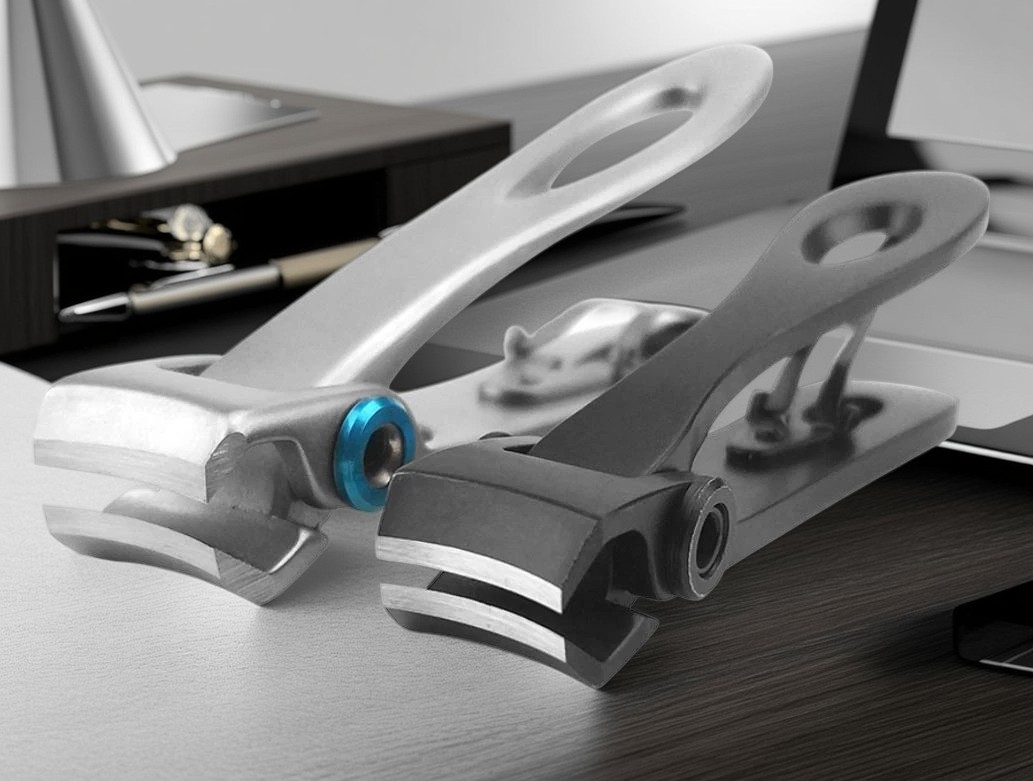
The Olimor Beauty design uses stainless steel, a material commonly selected for grooming tools because it supports durability and is suitable for routine cleaning. The clipper also features an angled blade. Instead of forcing the user to make a straight cut across a naturally curved nail, the slanted blade is intended to follow the nail’s contour more comfortably. This helps create a cleaner edge and can reduce the chance of nail splitting when the tool is used correctly.
Appearance also matters for professional buyers. The two-tone finish combines glossy silver with dark matte black, giving the clipper a polished but understated look. For a salon station, retail grooming set, or travel kit, visual consistency can influence how the tool is perceived before it is ever used.
Key Design Features to Evaluate Before Buying
When comparing professional nail clippers, focus on the features that directly affect cutting control. A clipper does not need excessive decoration or complicated mechanisms; it needs a strong, comfortable structure that performs reliably. The following checklist can help buyers, distributors, and salon purchasers judge whether a nail clipper is suitable for their customers or service environment.
- Blade shape: An angled or slanted blade can make it easier to follow the natural curve of the nail, especially when trimming in small sections.
- Cutting edge alignment: The upper and lower cutting edges should meet evenly, helping the clipper cut rather than bend the nail.
- Material: Stainless steel supports long-term use and practical cleaning for both personal and professional grooming settings.
- Grip design: Easy-to-hold handles and geometric cutouts can improve finger placement and reduce slipping during trimming.
- Thumb control: A strategically placed thumb hole helps the user apply pressure more steadily, which is important for precision cuts.
- Finish quality: Smooth surfaces, clean edges, and an even two-tone finish contribute to both comfort and product presentation.
These details are especially important when the clipper is part of a broader grooming assortment. Buyers looking to compare related tools can explore Olimor’s beauty tool products to evaluate how a nail clipper fits within a complete personal care range.
Why an Angled Blade Helps Nail Trimming
Many nail trimming problems come from using too much force or cutting too much nail at once. A straight blade can work well in some situations, but nails are naturally curved, and users often need to adjust the angle of the clipper repeatedly to achieve a balanced shape. An angled blade gives the user a more natural cutting path, especially along the sides and corners of the nail.
For fingernails, this helps create a neat edge without aggressive reshaping. For stronger toenails, the same control can help the user make shorter, more deliberate cuts instead of trying to remove a large section in one motion. The goal is not to rush the trimming process, but to create a clean, controlled result with less stress on the nail plate.
The original design concept also highlights reduced risk of cracking or splitting. No clipper can guarantee that nails will never split, because nail condition, dryness, thickness, and technique all matter. However, a sharp, well-aligned angled blade used in small cuts can support healthier-looking grooming results than a dull tool that crushes the nail before cutting it.
Grip, Comfort, and Control During Repeated Use
Comfort is not only a consumer feature; it is a performance feature. If a clipper is hard to hold, the user may press unevenly, twist the tool, or cut at the wrong angle. Olimor Beauty’s professional nail clipper includes an easy-grip handle and a thumb hole designed to support stable pressure. Geometric cutouts add functional grip points while also contributing to the tool’s visual identity.
For salon use, this matters because technicians need consistent hand positioning. For personal use, it helps users who want more confidence when trimming toenails or cutting with the non-dominant hand. A controlled grip can also make it easier to trim in several small cuts, which is safer for shaping than forcing one large cut.
The silver and matte black color combination gives the tool a professional look, but the design should still be evaluated first as a working instrument. A nail clipper’s value comes from how well it transfers pressure from the user’s hand to the blade, and whether the user can maintain control from the first cut to the last.
Suitable Uses: Home Kits, Salons, Retail, and Travel Grooming
Professional nail clippers can serve different buyer needs. A salon may want a dependable clipper for manicure and pedicure services. A retail brand may want to include clippers in a grooming kit. A distributor may need a practical design that appeals to both professional and household users. The Olimor Beauty nail clipper is described as suitable for personal and professional use and versatile enough for delicate fingernails as well as stronger toenails.
| Use Case | What Matters Most | Relevant Clipper Feature |
|---|---|---|
| Salon manicure | Clean shaping and controlled pressure | Angled blade and thumb hole |
| Pedicure service | Stability when trimming stronger nails | Ergonomic handle and stainless steel build |
| Home grooming kit | Ease of use for routine trimming | Natural curve cutting design |
| Retail assortment | Professional appearance and broad appeal | Glossy silver and matte black finish |
When planning an assortment, consider whether the clipper will be sold alone, paired with files and cuticle tools, or grouped into a travel-friendly grooming set. Olimor’s product collections can help buyers think about how nail care tools fit with other beauty accessories.
How to Use Professional Nail Clippers for Better Results
Even a well-designed clipper performs best when used with good technique. The most common mistake is cutting nails too short or attempting to cut across the entire nail in one heavy press. A slower approach protects the nail edge and gives the user more control over shape.
- Start with clean, dry hands or feet. Nails should be free from residue so the clipper can sit securely against the edge.
- Position the angled blade along the natural curve. Align the blade with the section you want to trim rather than forcing the nail into the tool.
- Trim in small sections. Several controlled cuts usually create a smoother shape than one large cut.
- Avoid cutting too deep at the corners. Keep the cut conservative, especially on toenails, to reduce discomfort after trimming.
- Smooth the edge if needed. A nail file can refine small points or uneven edges after clipping.
- Clean the clipper after use. Remove nail debris and wipe the tool dry before storage.
For professional settings, cleaning practices should follow the salon’s hygiene procedures and local requirements. For home users, simple cleaning and dry storage help maintain the clipper’s condition between uses.
Maintenance and Storage Considerations
Stainless steel is a practical material for beauty tools, but it still benefits from proper care. After trimming, remove loose nail fragments from the blade area. Wipe the clipper with a clean cloth and allow it to dry before placing it in a pouch, drawer, or kit. Avoid storing nail tools in constantly damp environments, because moisture can affect many metal products over time.
Do not use a nail clipper as a general cutting tool. Cutting tape, plastic tags, wire, or other non-nail materials can damage blade alignment and reduce cutting quality. If the clipper begins to crush rather than cut, or if the blade edges no longer meet evenly, it is time to replace or review the tool.
For businesses sourcing nail clippers, maintenance expectations should also influence packaging and customer instructions. A simple use-and-care insert can reduce misuse and help end users understand how to keep the tool clean and effective.
Sourcing Questions for Beauty Tool Buyers
When purchasing professional nail clippers for resale, salon supply, or private grooming assortments, product evaluation should go beyond appearance. Buyers should define the intended user, preferred packaging format, finish expectations, and quality inspection criteria before placing an order. This avoids mismatches between the tool and the customer segment.
Useful sourcing questions include: Is the clipper intended mainly for fingernails, toenails, or both? Does the target market prefer a classic metallic look or a darker professional finish? How should the tool be packed for retail presentation or kit assembly? What surface finishing standards are required for edges, handle comfort, and visual consistency? What cleaning instructions should be included for end users?
If you are comparing nail clippers for a new beauty tool program, you can send an inquiry with your intended market, packaging needs, and quantity planning. For broader sourcing discussions, contact Olimor to review suitable beauty tool options.
A Practical Balance of Precision and Presentation
Olimor Beauty professional nail clippers combine functional cutting details with a polished appearance. The stainless steel structure, angled blade, ergonomic handle, thumb hole, and grip-enhancing cutouts are all relevant to the same goal: helping users trim nails cleanly and confidently. The glossy silver and matte black finish adds visual appeal without distracting from the tool’s purpose.
For salons, retailers, and personal care buyers, the right clipper is not simply the one that looks sharp in a product photo. It should feel secure in the hand, cut predictably, suit both fingernail and toenail grooming, and be easy to maintain. By focusing on blade geometry, grip control, material, and care instructions, buyers can choose professional nail clippers that support reliable nail grooming in everyday use.