










Stainless steel nail clippers look simple, but the details behind a clean trim are mechanical, material and ergonomic. Blade alignment, lever pressure, grip texture, finishing quality and cleaning access all affect whether the tool cuts smoothly or crushes the nail edge. For personal-care brands, beauty retailers, salon buyers, travel kit assemblers and distributors, these small differences can influence customer satisfaction and the perceived value of a complete grooming range.
Olimor Beauty focuses on practical beauty tools where appearance and everyday performance need to work together. Its stainless steel nail clipper direction emphasizes a durable metal body, rust-resistant performance, a polished finish, curved cutting blades, an ergonomic textured grip, compact portability and, in some styles, useful presentation details such as a holder, display stand or built-in nail file. This guide explains how to evaluate stainless steel nail clippers for personal use, retail assortments, salon kits and B2B sourcing without relying on surface shine alone.
What Buyers Should Expect from a Good Nail Clipper
A good nail clipper should cut the nail cleanly with controlled pressure. It should not bend the nail before cutting, leave ragged corners, slip in the hand or feel unstable at the lever. The user should be able to trim gradually and predictably, then finish with only light filing if needed.
For commercial buyers, the product also needs to hold up to repeated handling, packaging, shipping and display. A clipper that looks polished but has rough edges, weak leverage or inconsistent blade contact can weaken a grooming kit. Nail clippers are often one of the most frequently used items in manicure sets, toiletry pouches and travel grooming kits, so they should be evaluated as functional tools rather than simple accessories.
- Clean cut: The cutting edges should meet evenly and trim rather than tear, crush or splinter the nail.
- Controlled leverage: The lever should press smoothly without excessive force, wobble or sticking.
- Secure grip: A textured handle helps reduce slipping, especially with damp hands or thicker nails.
- Durable body: Stainless steel supports strength, corrosion resistance and easy wiping when properly manufactured and maintained.
- Retail-ready finish: Smooth polishing, consistent appearance and secure packaging help the tool feel suitable for professional or gift-oriented assortments.
Why Stainless Steel Is a Practical Material for Nail Clippers
Stainless steel is widely used for manicure and grooming tools because it offers a useful balance of strength, corrosion resistance and cleanability. Nail clippers may be stored in bathrooms, salon drawers, handbags, gym bags, hotel amenity kits or travel pouches. These environments can expose the tool to humidity, skin oils, soap residue and regular cleaning routines.
A stainless steel body helps preserve appearance and function better than materials that stain, flex excessively or lose surface integrity quickly. A polished stainless steel surface is also easier to wipe and inspect because residue and nail dust are more visible. For buyers, this matters not only for hygiene perception but also for long-term product presentation.
However, the phrase stainless steel does not automatically guarantee a good clipper. Two tools made from similar base material can perform very differently depending on cutting geometry, hinge stability, lever design, surface finishing and quality control. When comparing samples, buyers should inspect both material finish and mechanical behavior. The body should feel firm, the lever should return smoothly, and the cutting edges should meet across the full width of the mouth.
Blade Shape, Alignment and Cutting Control
The cutting edge is the most important part of a nail clipper. Olimor stainless steel nail clippers are described with curved blades designed to support precise trimming. A curved blade can follow the natural arc of many fingernails, helping the user create a neater shape with fewer awkward angles. For toenails, some users may prefer straighter trimming habits, but a curved edge can still help remove length gradually when used carefully.
Blade alignment is the difference between a crisp cut and a frustrating trim. When the upper and lower blades do not meet evenly, the nail may bend before it cuts. This can lead to rough edges, repeated clipping in the same place, layered splitting or discomfort. Buyers should close each sample and inspect whether the edges meet evenly from one side to the other. There should be no obvious gap, tilted contact or uneven corner pressure.
Simple Cutting Tests for Samples
A practical nail clipper evaluation does not require complicated language. It requires repeatable observation. Test the clipper on different nail conditions when possible, including thinner fingernails, average adult fingernails and slightly thicker nails. The goal is to observe pressure, control, edge result and user comfort.
- Open and close the lever several times before cutting. It should feel smooth and controlled.
- Clip small sections rather than forcing one deep cut. The tool should remove the nail cleanly.
- Check whether the clipper slips sideways or requires repeated pressure.
- Inspect the trimmed edge for crushing, tearing or jagged residue.
- Feel the non-cutting edges of the tool for burrs or rough stamped areas.
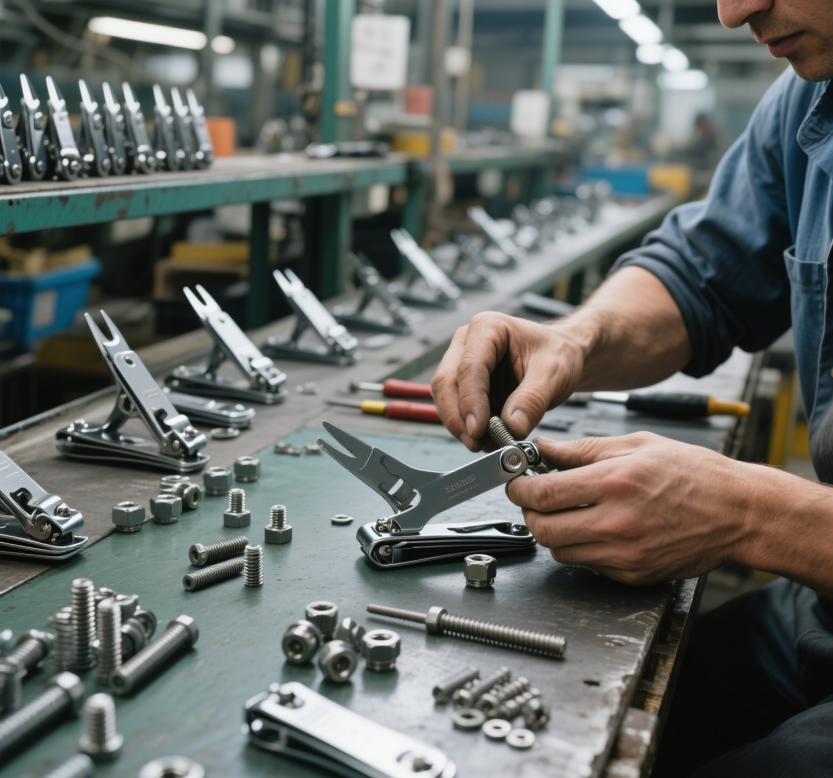
For sourcing teams, consistency matters as much as one impressive sample. If samples vary noticeably in lever tension, jaw alignment or polish quality, ask the supplier how those points are checked before packing.
Grip, Ergonomics and Everyday Handling
A nail clipper is compact, but ergonomics still matter. Trimming requires controlled pressure in a small area, and many users clip nails with the non-dominant hand or after washing, when fingers may be slightly damp. A slippery lever can cause overcutting, awkward pressure or loss of confidence around nail corners.
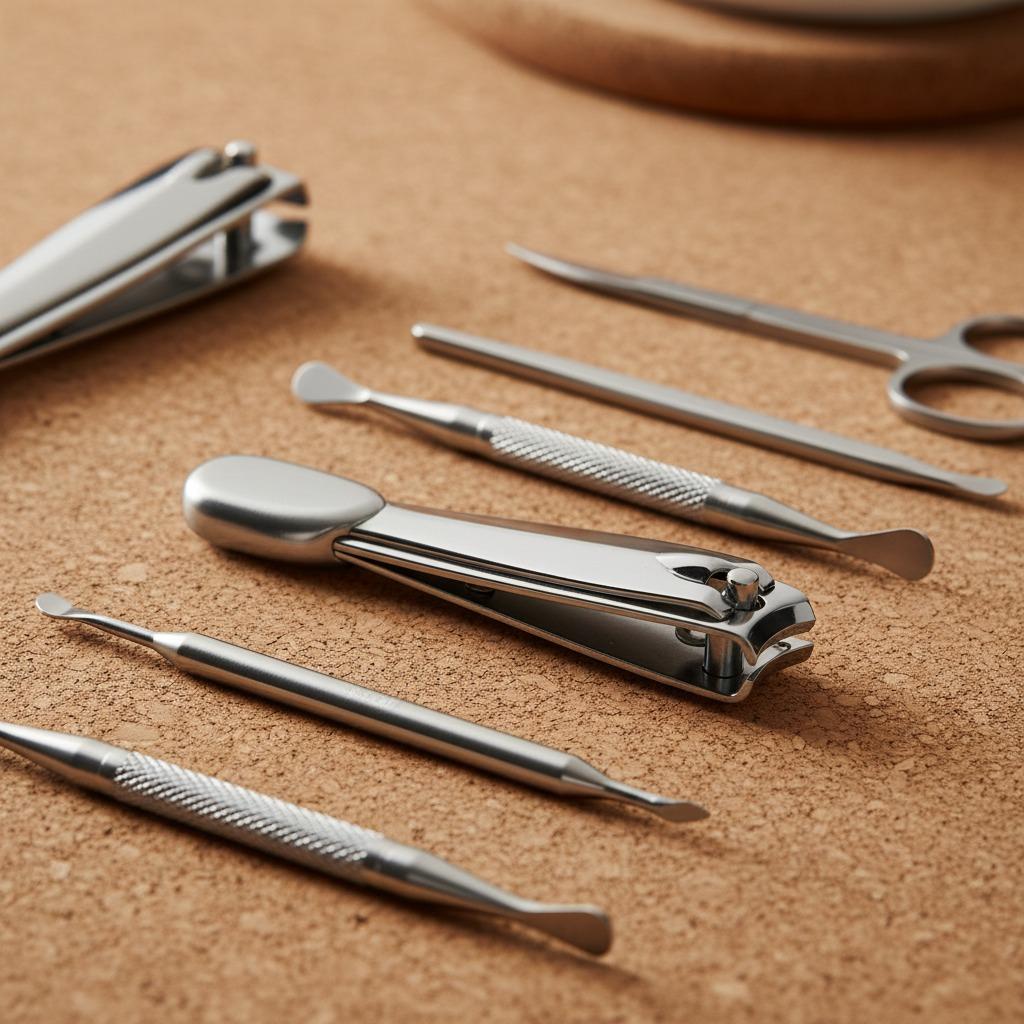
Olimor nail clipper designs include ergonomic handling and a textured grip area. Texture is useful because it gives the thumb and finger a defined surface for traction. Decorative engraved or geometric patterns can add visual interest, but their real value is practical: they help the user apply pressure without the tool rotating or sliding.
Comfort also depends on lever geometry and edge finishing. The lever should not create a narrow, painful pressure point. The tool should be easy to flip open, hold near the cutting end for precision, and hold farther back for leverage. Rough corners, sharp non-cutting edges or an unstable hinge can make a clipper feel low quality even if the body material is strong.
Compact Design, Travel Use and Retail Presentation
Nail clippers are often needed away from home: a rough edge before a meeting, a broken nail during travel, or routine grooming in a hotel room. A compact stainless steel clipper fits easily into a toiletry pouch, purse, desk drawer, manicure kit or gym bag. Portability should not sacrifice stability. A travel-friendly clipper still needs a secure lever, clean cutting edge and smooth exterior that will not snag fabric or scratch nearby items.
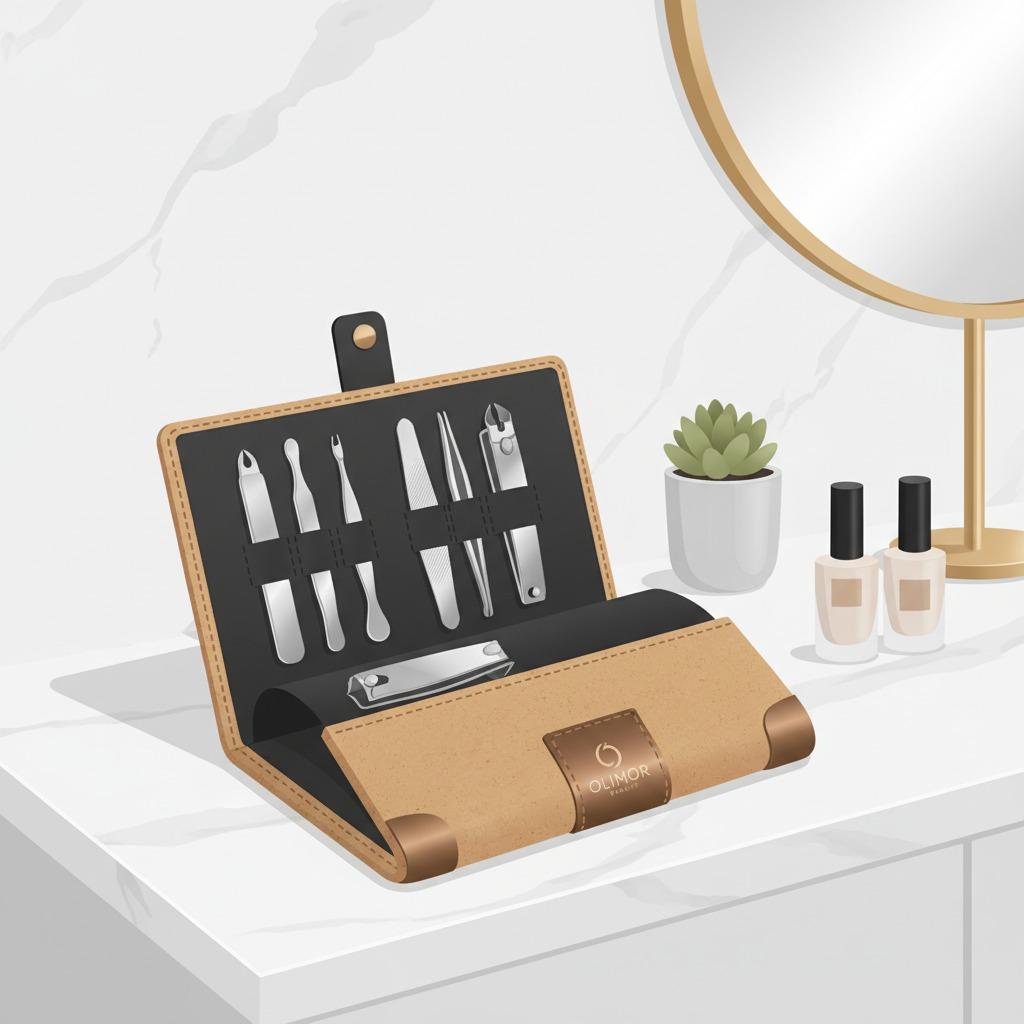
For retail and gift assortments, presentation is also important. Source material highlights refined visual elements such as a polished metallic finish, blue-and-gold display styling, a clear acrylic stand, an elegant holder and, in some product directions, a built-in nail file. These features may support display value, gift packaging or kit organization. Buyers should still treat them as secondary to cut quality, grip comfort and finishing safety.
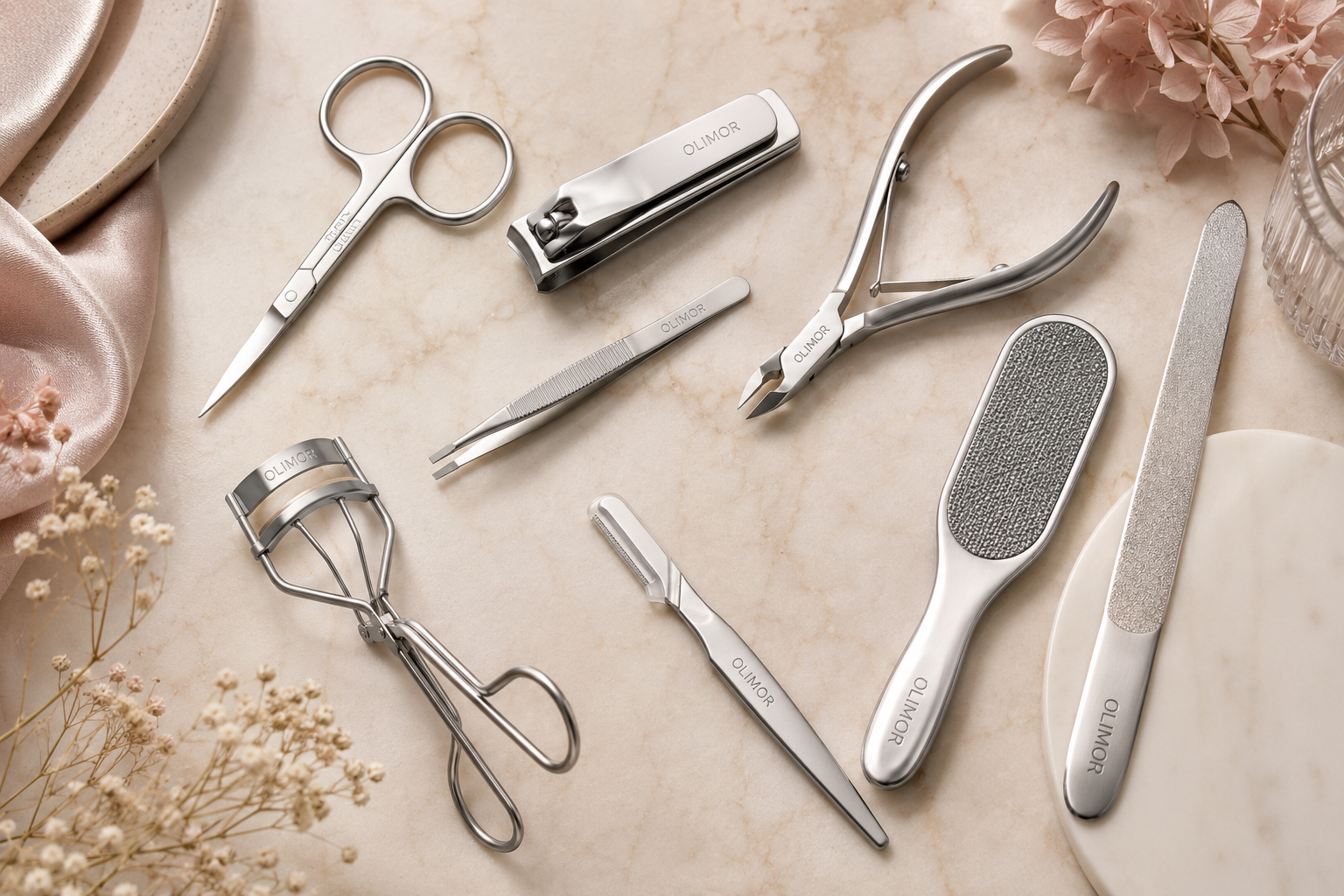
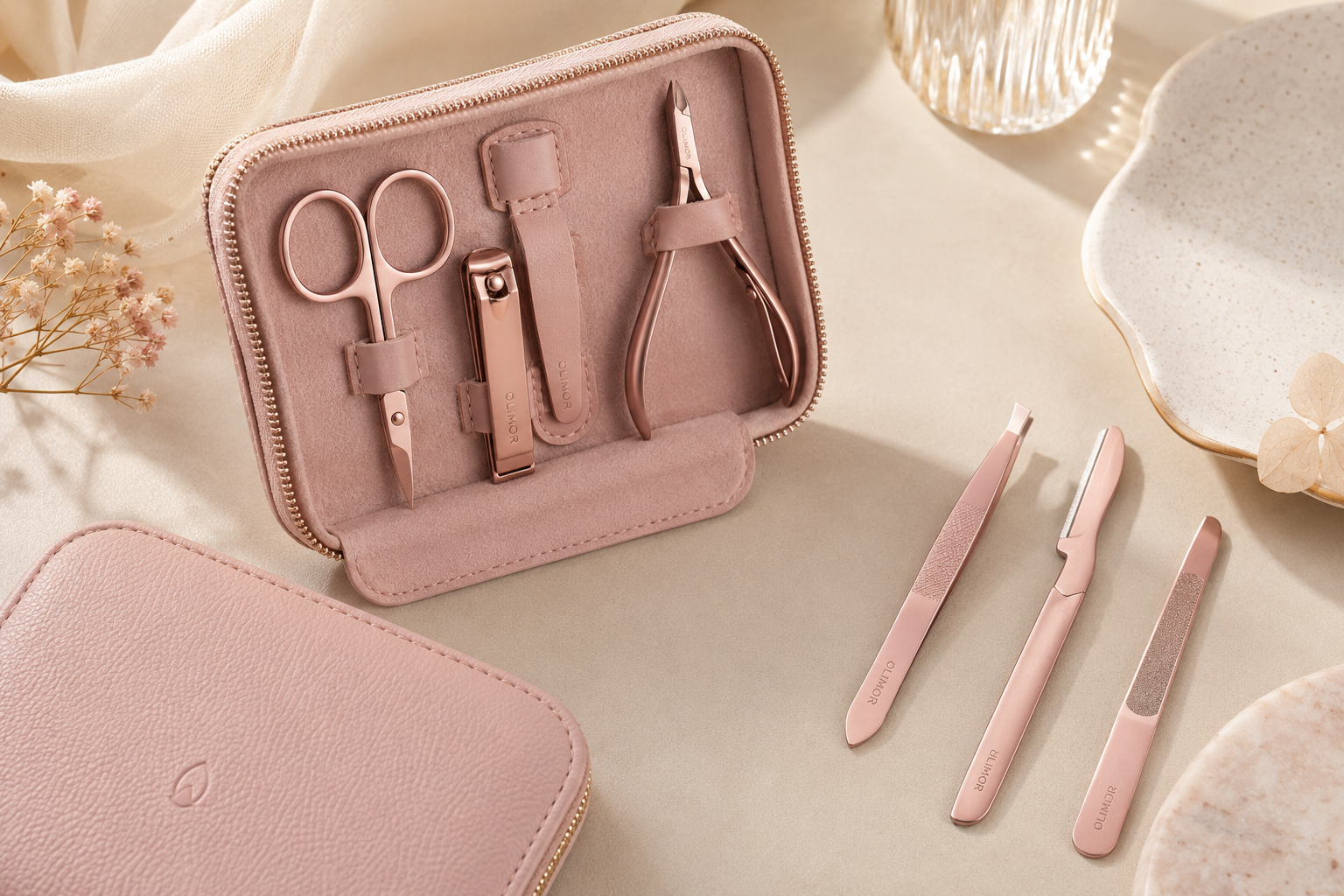
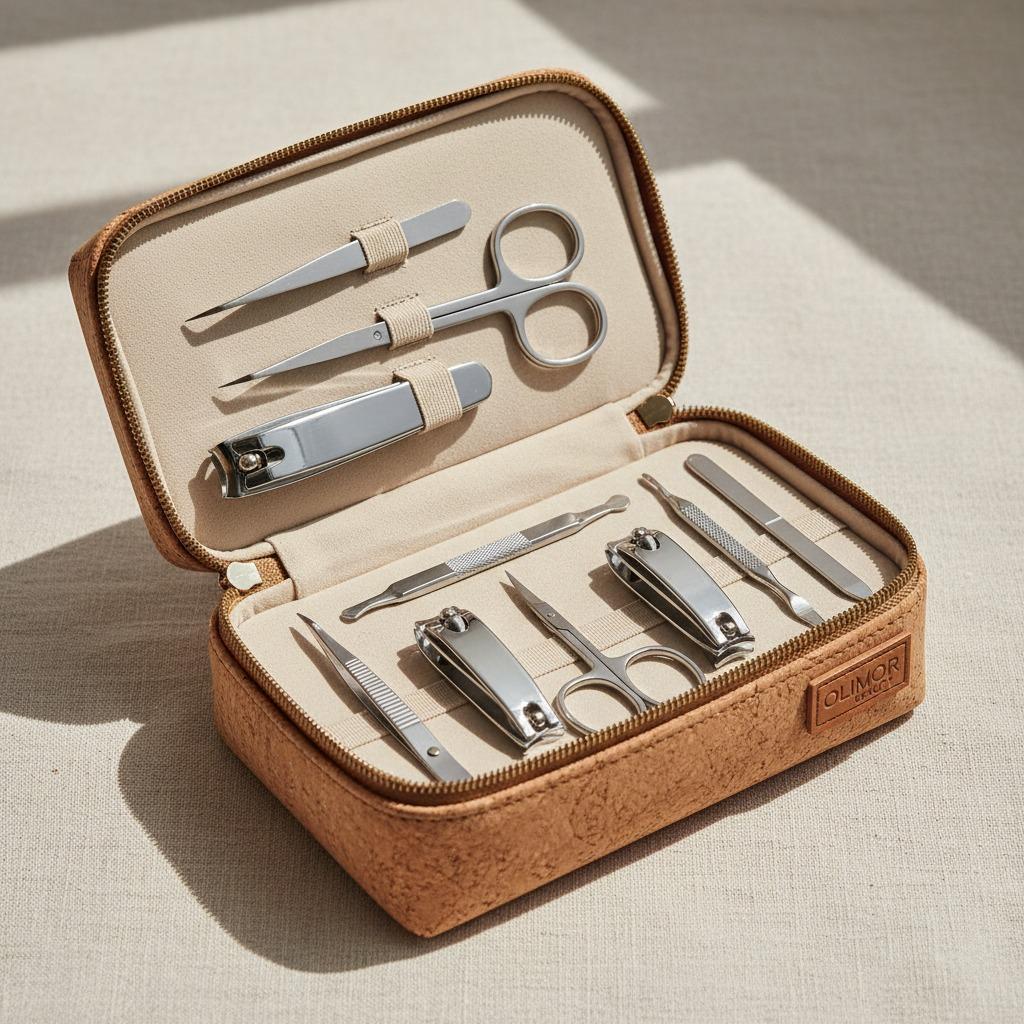
If you are building a coordinated grooming assortment, compare nail clippers with files, tweezers, scissors, cuticle tools and travel pouches in the broader Olimor beauty tool range. A consistent finish, compatible size and clear packaging structure can make a product line easier for retailers to merchandise and easier for end users to understand.
Comparison and Inspection Checklist for B2B Buyers
For B2B sourcing, inspection should begin before packaging and continue through final packing review. The following checklist helps purchasing teams compare stainless steel nail clippers for retail sets, salon kits, travel grooming programs or private-label personal-care lines.
| Evaluation Area | What to Check | Why It Matters | Useful Buyer Question |
|---|---|---|---|
| Material and finish | Look for even stainless steel polishing, no visible rough burrs and no uncomfortable edges on the lever or body. | Smooth finishing supports comfort, cleaning and retail presentation. | How are surface defects and burrs checked before packing? |
| Blade alignment | Close the clipper and confirm that upper and lower cutting edges meet evenly across the jaw. | Poor alignment can crush, tear or leave incomplete cuts. | What is the inspection method for jaw alignment? |
| Cutting response | Test on different nail thicknesses and observe pressure, edge cleanliness and slipping. | End users notice cutting performance immediately. | Can production samples be reviewed before bulk confirmation? |
| Lever stability | Press repeatedly and check for wobble, sticking, weak rebound or excessive stiffness. | A stable lever improves control and perceived durability. | How is lever function checked during assembly? |
| Grip texture | Hold the clipper with dry and slightly damp fingers to assess traction. | Texture helps reduce slipping during detailed trimming. | Can the grip pattern or surface finish be customized? |
| Cleaning access | Check whether nail dust and residue can be wiped away from the jaw, hinge and file area. | Easy cleaning supports hygiene perception and repeat use. | Are there deep grooves that may trap debris? |
| Packaging fit | Confirm that the clipper sits securely and does not rub excessively during transit. | Packaging protects the polished finish and improves presentation. | What packaging options are available for the target channel? |
Buyers who need a broader assortment can review Olimor product collections to compare how nail clippers may fit with other manicure and personal-care tools.
How to Use Stainless Steel Nail Clippers for a Smoother Result
Even a well-made clipper performs best when used correctly. The most common mistake is trying to remove too much nail in one cut. That can increase pressure and reduce control, especially on thicker nails. A cleaner approach is to trim in small sections and follow the nail’s natural shape.
- Clean and dry the clipper before use. If nails are very hard, trimming after washing may make them easier to cut.
- Position the curved blade at one side of the nail and remove a small section.
- Continue across the nail gradually instead of forcing one deep cut.
- Avoid cutting too close to the skin or corners.
- Use a nail file to smooth tiny edges after clipping.
- Wipe away nail dust and allow the tool to dry fully before storage.
For shared or professional environments, users should follow their own hygiene procedures and local requirements for tool cleaning and disinfection. Stainless steel supports cleaning, but every buyer should confirm whether the chosen clipper design is suitable for the intended setting and maintenance routine.
Supplier Evaluation, Customization and Cost Factors
When selecting a nail clipper supplier, the lowest unit cost is rarely the only factor. Cost can be affected by stainless steel selection, body thickness, blade finishing, polishing process, grip detailing, holder or stand design, built-in file requirements, packaging, logo application, inspection scope and order complexity. Buyers should compare the complete specification rather than a simple product photo.
Ask for clear information on sample availability, customization options, packaging choices and quality checkpoints. For private-label or retail programs, useful customization discussions may include surface finish, logo placement, handle texture, display packaging, holder style and whether the clipper will be sold alone or as part of a set. Avoid confirming bulk production until functional samples have been checked for blade contact, lever pressure, grip comfort and finish consistency.
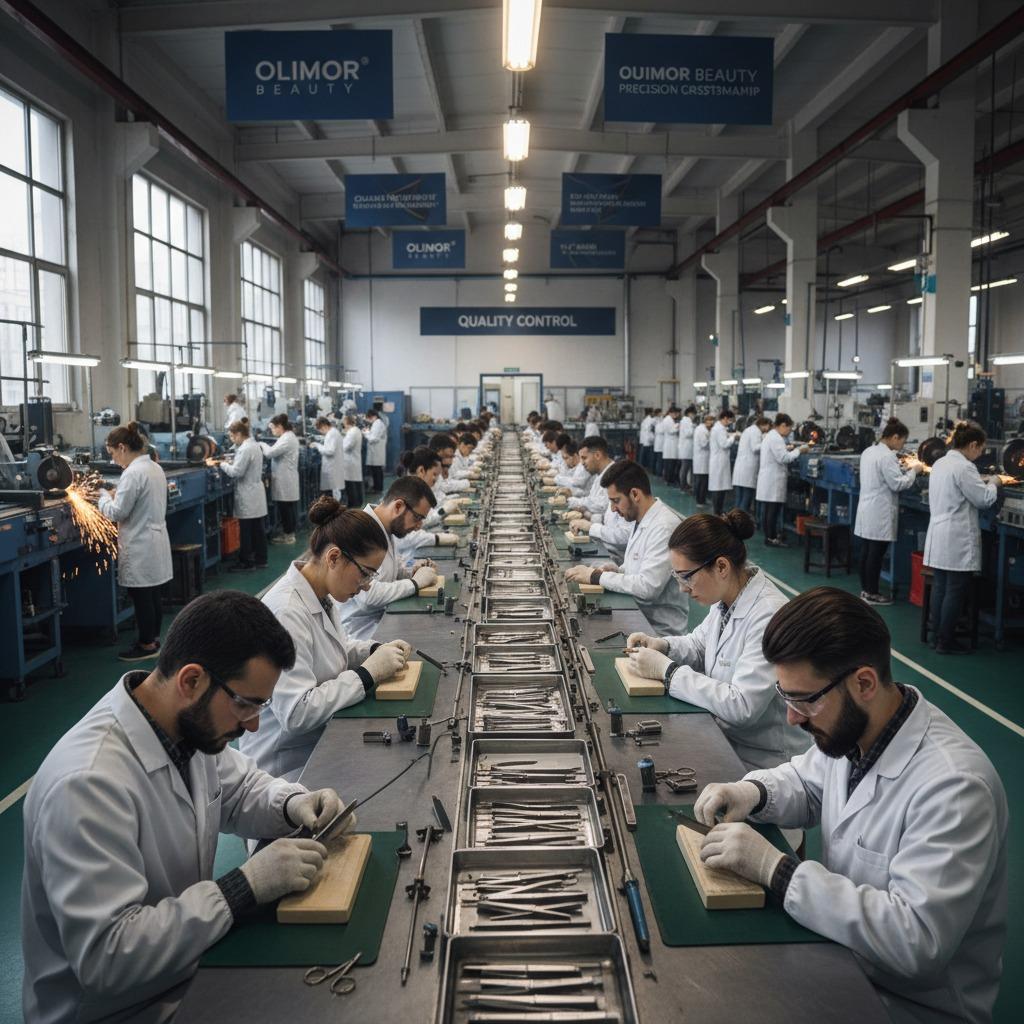
Where compliance documentation is relevant to the destination market, buyers should verify the applicable version and supplier documentation rather than assuming coverage. Depending on market and product scope, this may include material declarations connected to EU REACH or RoHS requirements, or supplier quality documentation aligned with recognized quality management practices such as ISO 9001. Olimor should not be assumed to hold any certification unless it is specifically documented for the order, product and facility involved.
To discuss specifications, packaging direction or sample review for a sourcing program, contact the team through Olimor Beauty contact support or submit project details through the product inquiry page.
Maintenance and Storage for Longer Service Life
Routine maintenance helps stainless steel nail clippers preserve both function and appearance. After trimming, remove nail dust from the jaw and hinge area. Wipe the tool dry before storing it, especially if it has been used near water or cleaned with liquid products. Avoid leaving the clipper wet in a sealed pouch, because moisture trapped around the hinge can affect appearance and smooth operation over time.
Store the clipper separately from keys, metal accessories or abrasive items that can scratch the finish. If the design includes a holder or stand, use it to keep the cutting edge protected and the tool easier to find. For retail kits and travel sets, packaging should keep the clipper secure so it does not rub against other tools during shipping or daily carry.
FAQ
Can buyers request samples before placing a bulk order?
Sample availability should be confirmed with Olimor for the specific nail clipper style, finish and packaging direction. Buyers should use samples to check blade alignment, lever feel, grip comfort, surface finishing and packaging fit before confirming a larger order.
Is there a fixed MOQ for stainless steel nail clippers?
MOQ can depend on the product style, customization level, packaging type and production plan. Buyers should contact Olimor with the intended application, target market and customization needs rather than assuming a standard quantity.
Can the nail clippers be customized for retail or private-label programs?
Customization may include elements such as logo placement, finish direction, grip style, holder or stand choice and packaging format, depending on the product design and order requirements. Confirm feasibility with current supplier documentation and approved samples.
What quality checks are most important before shipment?
Important checks include blade alignment, cutting response, lever stability, surface polish, absence of burrs, grip comfort, cleaning access and packaging security. Buyers should agree on inspection expectations before production and review representative samples when possible.
How should buyers confirm lead time?
Lead time can vary with sample approval, customization, packaging development, order quantity and production scheduling. Confirm the expected timeline directly with Olimor for the specific project rather than relying on general estimates.