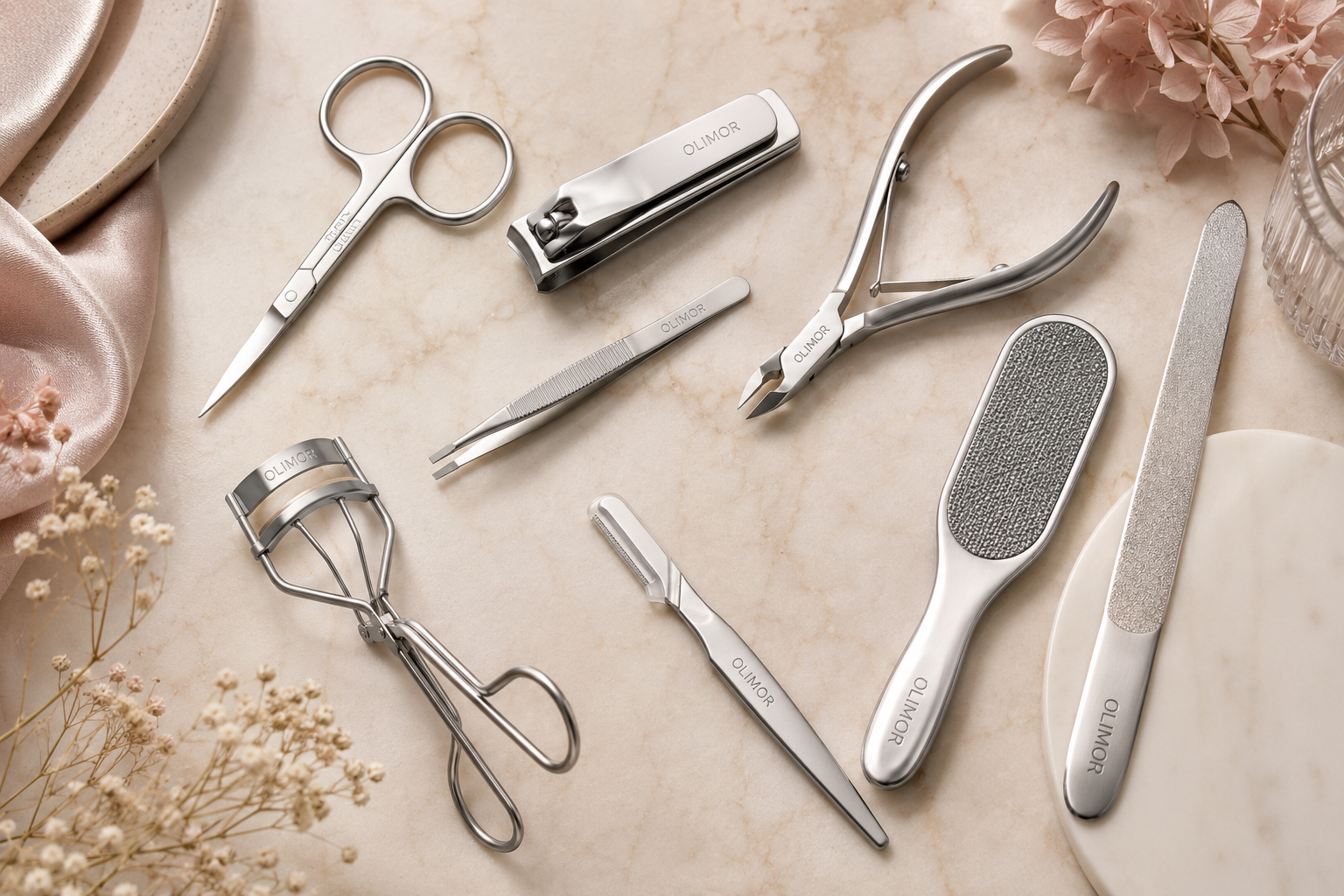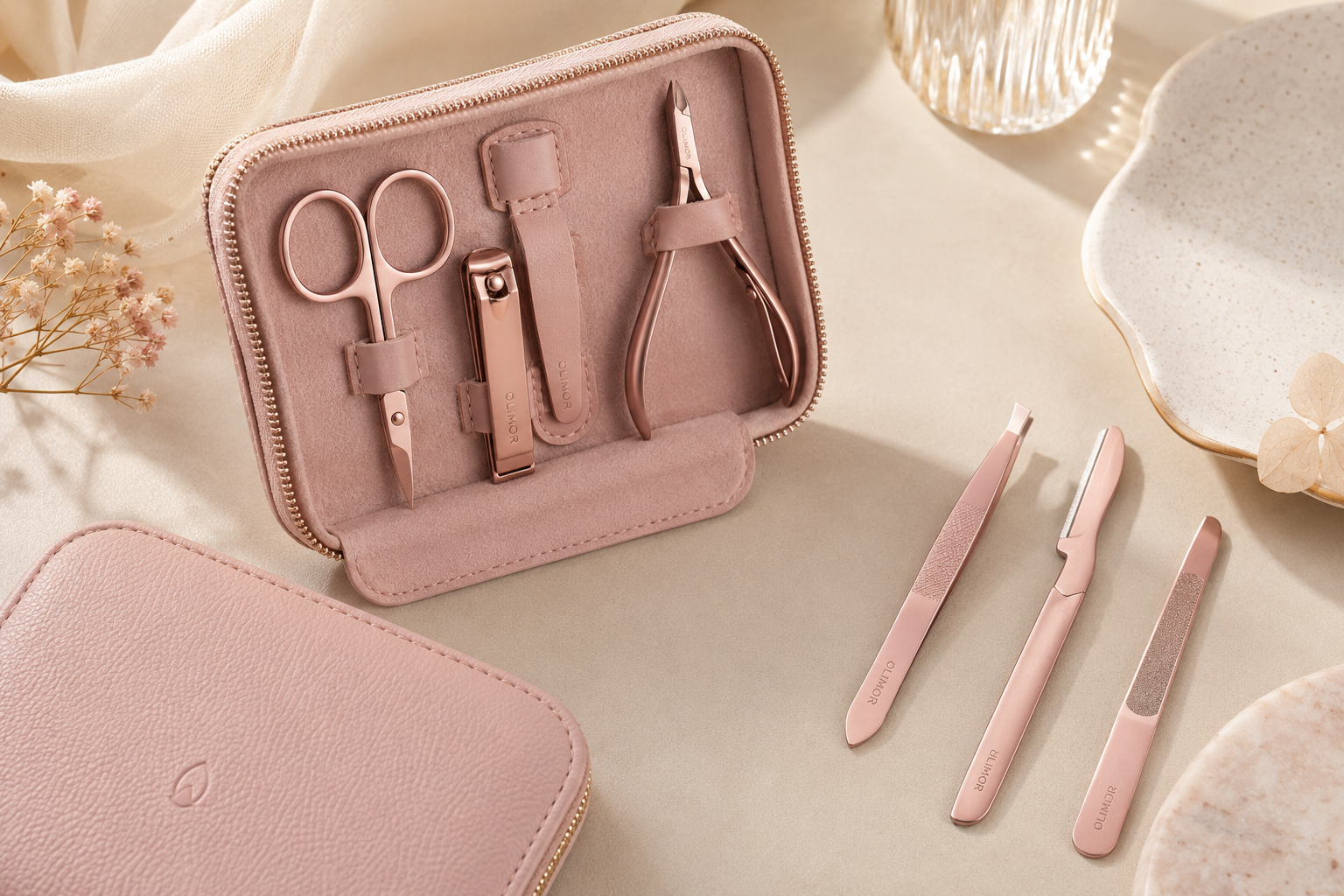











A nail clipper looks simple, but small design choices make a noticeable difference in comfort, cutting control, and the final nail edge. For buyers comparing personal grooming tools, the best nail clipper is not only sharp; it should match the user’s hand, the nail thickness, the trimming environment, and the way the product will be stored or carried. A compact clipper with stainless steel blades, a slightly curved cutting edge, and a secure handle can support everyday nail care at home, in a handbag, or in a travel kit.
Olimor Beauty’s nail clipper offering described on this page focuses on precision, compact sizing, and visual finish. The product information highlights a vibrant magenta handle, a height of 95 mm, a width of 13 mm, stainless steel blades, and a slightly curved blade design. The same page also refers to an all-black nail clipper set with a textured grip, an added nail file, and multiple clipper sizes for different nail types. This guide explains how those details affect real use and how to evaluate similar nail clippers for retail, gift, salon, or personal care assortments.
What Makes a Nail Clipper Precise?
Precision is not just about how sharp the blade feels on the first cut. A precise clipper gives the user predictable control from the moment the jaws touch the nail until the cut is complete. The blade should meet evenly, the lever should move smoothly, and the user should be able to see the cutting line clearly. If the jaw alignment is poor, the nail may bend before it cuts, leaving a rough edge or encouraging splitting.
A slightly curved blade is useful because natural fingernails and toenails are rarely straight across. The curved cutting profile can follow the contour of the nail more easily, helping the user trim in shorter, controlled sections instead of forcing a single heavy cut. For fingernails, this can create a cleaner rounded edge. For toenails, many users still prefer trimming more conservatively to reduce the risk of cutting too deeply at the corners.
The stated stainless steel blade material is also important. Stainless steel is commonly selected for nail tools because it can provide a firm cutting edge and better resistance to corrosion than untreated low-grade metals. For sourcing or purchasing decisions, the key point is not only the material name, but the finishing quality: smooth edges, consistent blade contact, and no visible burrs around the cutting area.
Compact Size: When 95 mm by 13 mm Matters
The compact size noted for this nail clipper, 95 mm high and 13 mm wide, makes it suitable for situations where portability matters. A slim tool can fit into a pouch, desk drawer, travel toiletry bag, salon station, or small retail package. Size should not be judged only by whether the clipper is easy to carry; it also affects grip, leverage, and the type of user who will find it comfortable.
A smaller clipper can be ideal for fingernails, quick touch-ups, and people who prefer a lightweight grooming tool. However, very thick toenails may require a larger jaw opening or stronger leverage. This is why a set with multiple clipper sizes can be practical: one tool may be used for delicate fingernail trimming, while another may be reserved for harder toenails. For brands and distributors building assortments, a compact single clipper works well as an impulse item or travel tool, while a set can offer broader household use.
- For travel: choose a compact body, secure lever action, and a finish that resists visible wear from storage in bags.
- For daily home use: focus on comfortable pressure, clean blade alignment, and easy cleaning after each trim.
- For salon or professional counters: prioritize consistent manufacturing, hygienic storage, and simple inspection before use.
- For gift or retail sets: consider visual finish, included file, multiple clipper sizes, and clear packaging communication.
Grip, Handle Finish, and Cutting Control
The original product description notes a vibrant magenta handle and an ergonomic approach to function. Color is often treated as a cosmetic detail, but the handle finish also affects the way the product is positioned. A bold color can make a grooming tool easier to find inside a bag or drawer. For retail display, it also helps the clipper stand apart from basic chrome-only designs.
Grip is more than appearance. A clipper is used with pressure, usually between the thumb and forefinger, and the hand may be wet or recently moisturized. A smooth lever can still work, but a textured surface helps reduce slipping and gives users a more secure feel. The page also mentions an all-black nail clipper set with a textured grip, which is a practical feature for people who want stronger control during toenail trimming or when cutting harder nails.
When evaluating grip quality, look for a handle that does not flex excessively under pressure. The lever should return easily after each cut. The surface should not have sharp seams, rough stamping marks, or coatings that peel at the edges. If the clipper is intended for a higher-end grooming range, these finishing details strongly influence the user’s perception of quality.
Single Clipper or Nail Clipper Set?
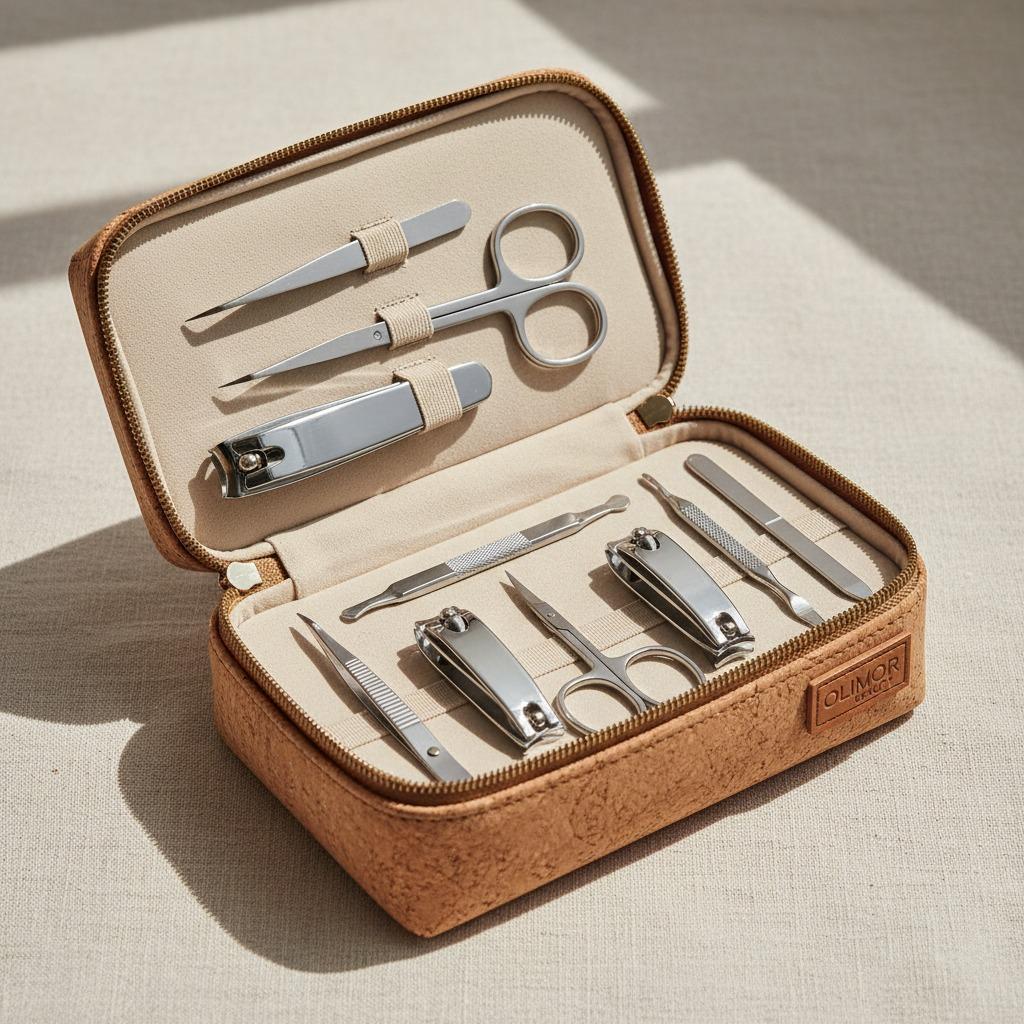
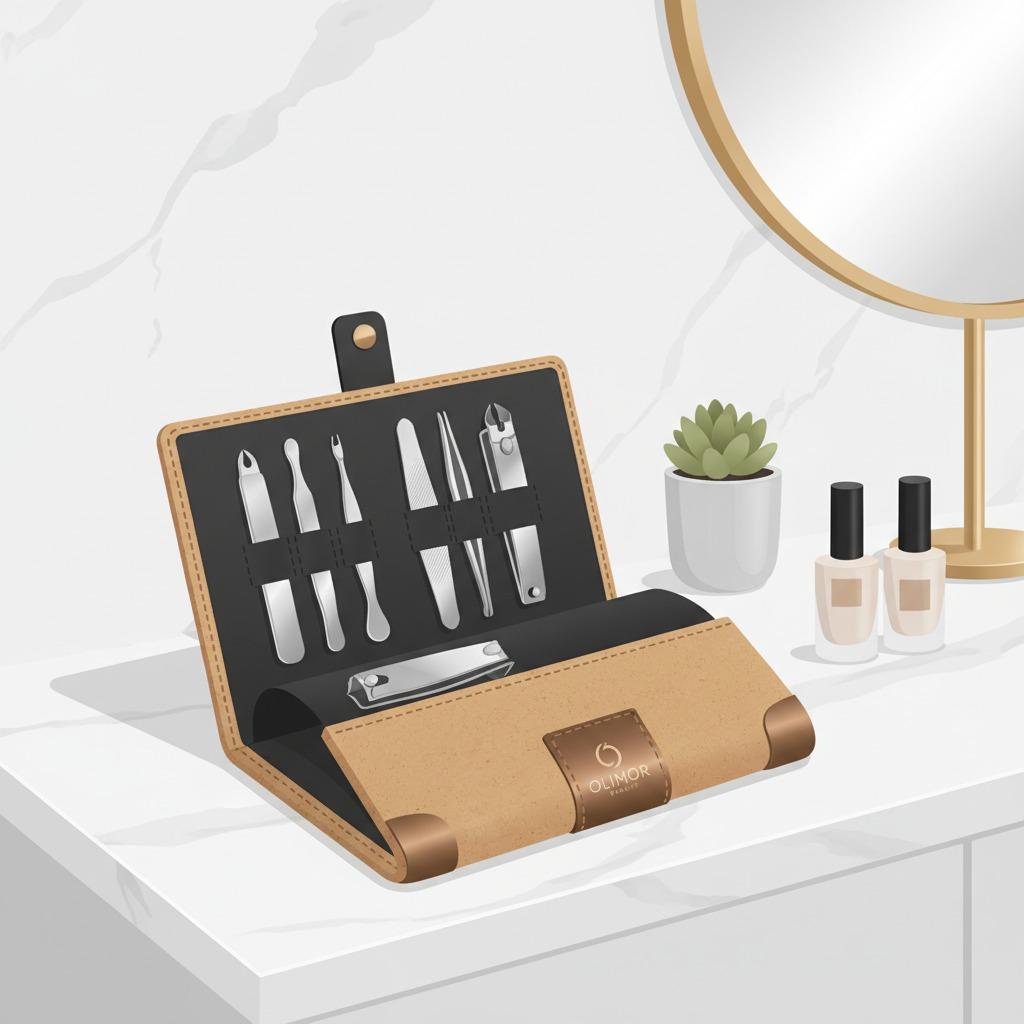
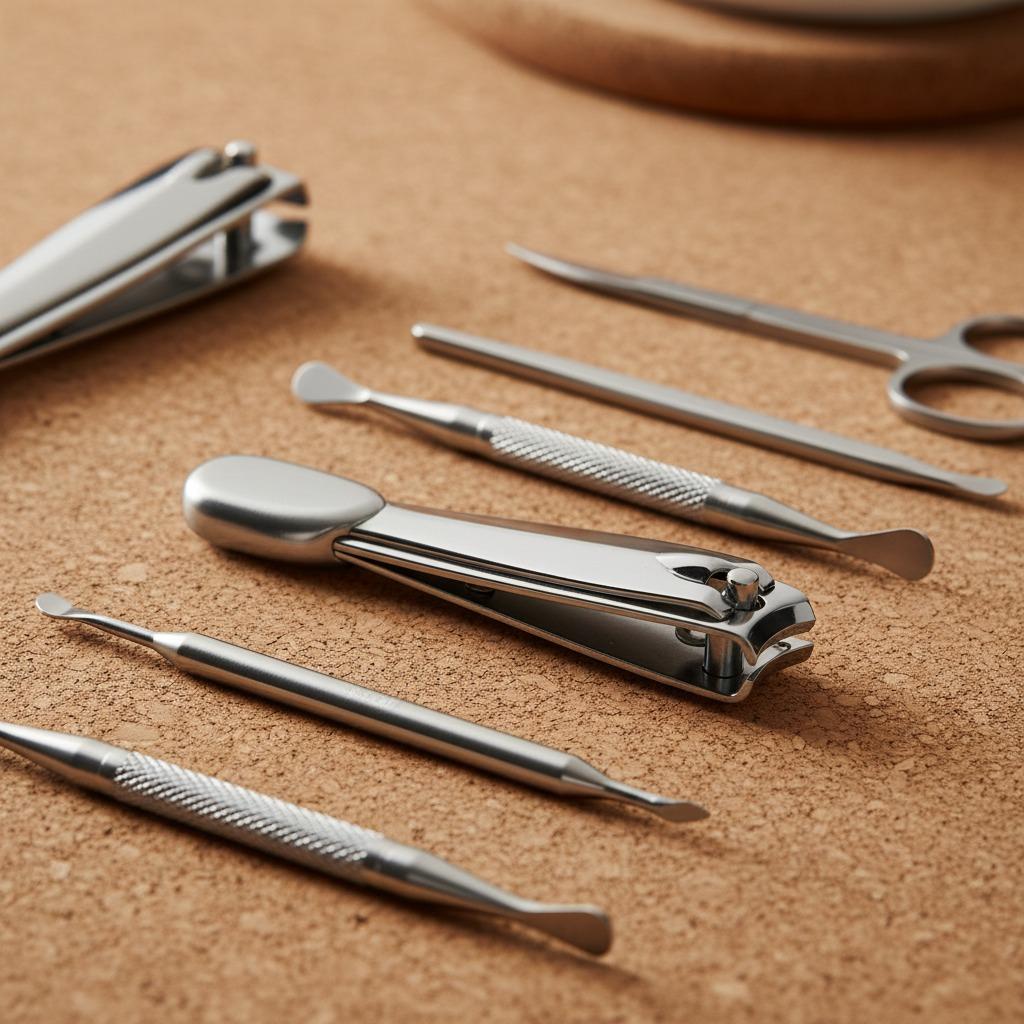
A single precision nail clipper is useful when the goal is portability or a focused product offering. A set becomes more appropriate when users need several functions in one package. The supplied product information mentions an all-black nail clipper set with an added nail file and multiple clipper sizes. That combination can support more complete nail care because trimming is only the first step; filing helps smooth the edge and reduce snagging on fabric.
The table below shows how different configurations can fit different buying needs.
| Option | Best Use | Selection Priority |
|---|---|---|
| Compact single clipper | Travel, desk drawer, handbag, quick fingernail trimming | Small size, clean blade alignment, comfortable lever |
| Clipper with curved blade | Controlled shaping of natural nail contours | Smooth curved edge, sharp contact, easy visibility |
| Set with multiple sizes | Household grooming, fingernails and toenails | Different jaw sizes, secure grip, organized storage |
| Set with nail file | Finishing after trimming | Usable file texture, convenient placement, durable finish |
If you are comparing wider ranges, visit Olimor’s beauty tool products to review additional grooming tool categories, or browse product collections for assortment planning. The right choice depends on whether the end user values portability, complete care, visual presentation, or multi-user household convenience.
Maintenance for Cleaner Cuts and Longer Use
Even a well-made clipper performs poorly if it is stored dirty or damp. Nail dust and residue can collect around the blade joint, increasing friction and reducing cutting smoothness. After each use, wipe the blades with a clean dry cloth. If the clipper is exposed to moisture, dry it thoroughly before storage. For shared environments, hygiene practices should follow the requirements of the business or local regulations.
- Trim after softening when needed. Nails are often easier to cut after washing hands or bathing, but the clipper should be dried afterward.
- Cut in small sections. Short, controlled cuts reduce stress on the nail and help prevent splitting.
- Do not twist the clipper during cutting. Twisting can roughen the edge and strain the tool joint.
- File after trimming. A nail file helps smooth corners and reduce snagging.
- Store separately from heavy tools. Keeping the cutting edge protected helps maintain alignment and finish.
For buyers, maintenance instructions are also part of product value. Clear use and care guidance can reduce complaints caused by misuse, especially for compact clippers that may be carried loosely with keys or cosmetics.
Buyer Checklist for Sourcing Nail Clippers
When choosing nail clippers for a retail line, promotional kit, salon supply range, or private-label personal care program, evaluate the tool from both a user and merchandising perspective. Avoid judging by appearance alone. A clipper may look polished but fail if the blades do not meet properly or the lever feels unstable.
- Blade alignment: the cutting edges should close evenly without visible gaps.
- Blade finish: check for burrs, rough edges, or uneven grinding.
- Lever comfort: pressure should feel stable and controlled, not loose or overly stiff.
- Grip security: textured or shaped surfaces can improve control, especially for thicker nails.
- Size fit: compact dimensions are excellent for travel, while larger clippers may be needed for toenails.
- Included accessories: a nail file or multiple sizes can increase usefulness in a set.
- Visual consistency: colored handles, black finishes, and coated parts should appear even across units.
- Packaging purpose: travel items, gift sets, and salon tools may need different packaging and instructions.
If your project requires a tailored assortment or you need to compare nail clipper options with other grooming tools, you can contact Olimor or send an inquiry with your intended market, packaging direction, and product use case.
Final Thoughts on Precision, Portability, and Practical Design
A good nail clipper should make routine trimming simple, controlled, and repeatable. The details highlighted for this Olimor Beauty nail clipper—stainless steel blades, a slightly curved cutting edge, compact 95 mm by 13 mm sizing, and a distinctive magenta handle—point to a tool designed for practical precision and easy portability. For users who prefer a broader grooming solution, the referenced all-black set with textured grip, nail file, and multiple clipper sizes offers a more complete approach.
Whether you are selecting one clipper for daily use or evaluating a range for retail, focus on the features that affect real performance: blade contact, grip stability, size, finishing quality, and after-cut smoothing. Those details determine whether a nail clipper feels reliable after the first use and remains useful over time.