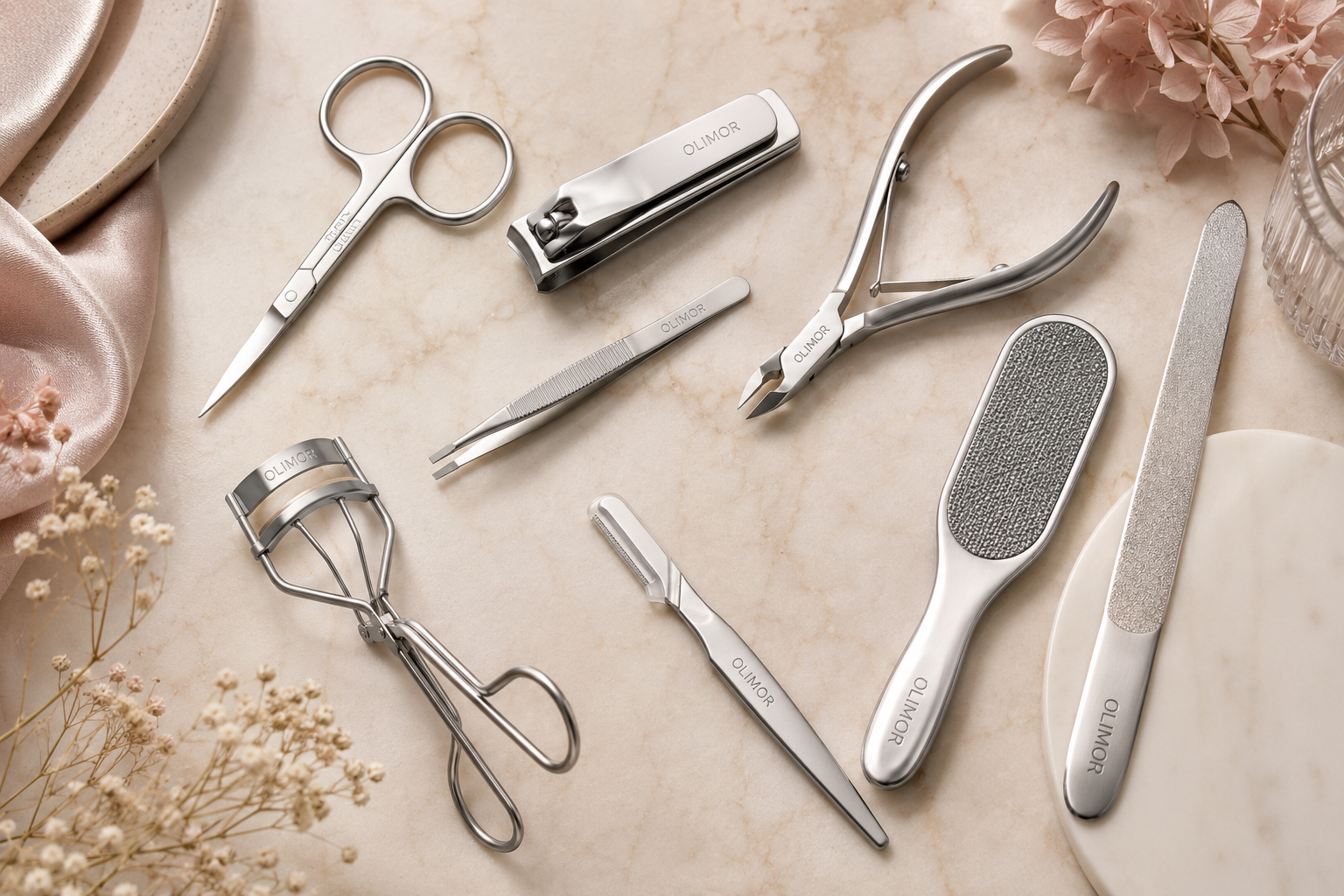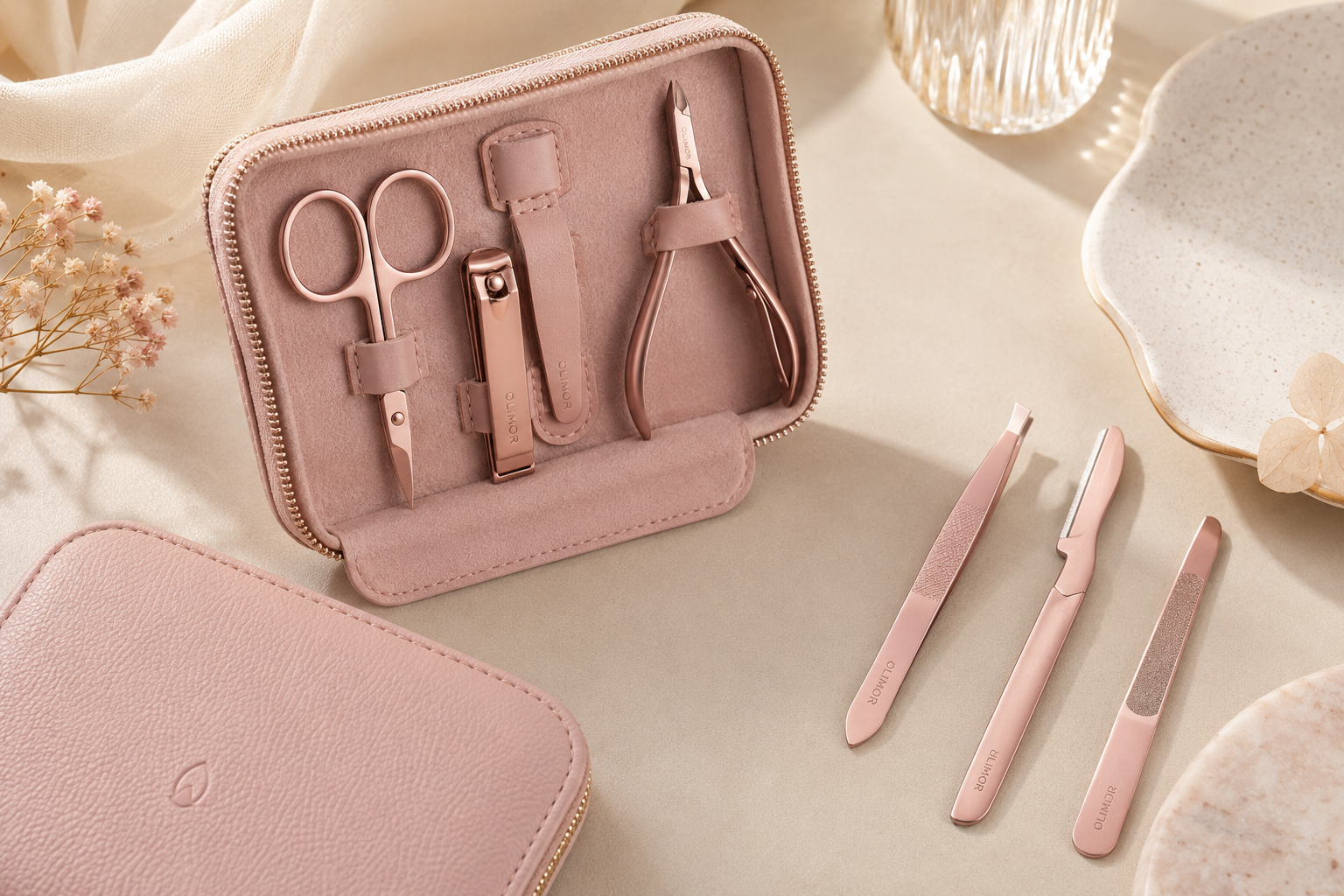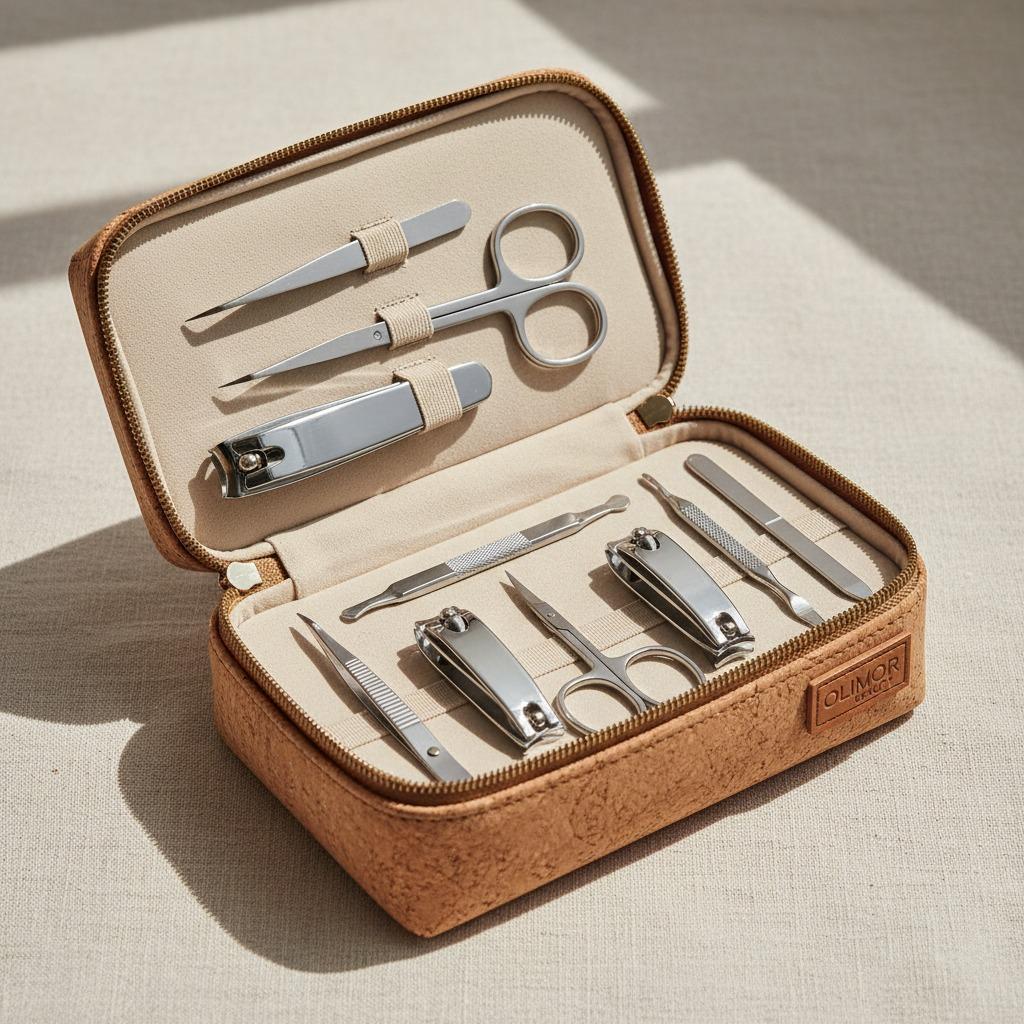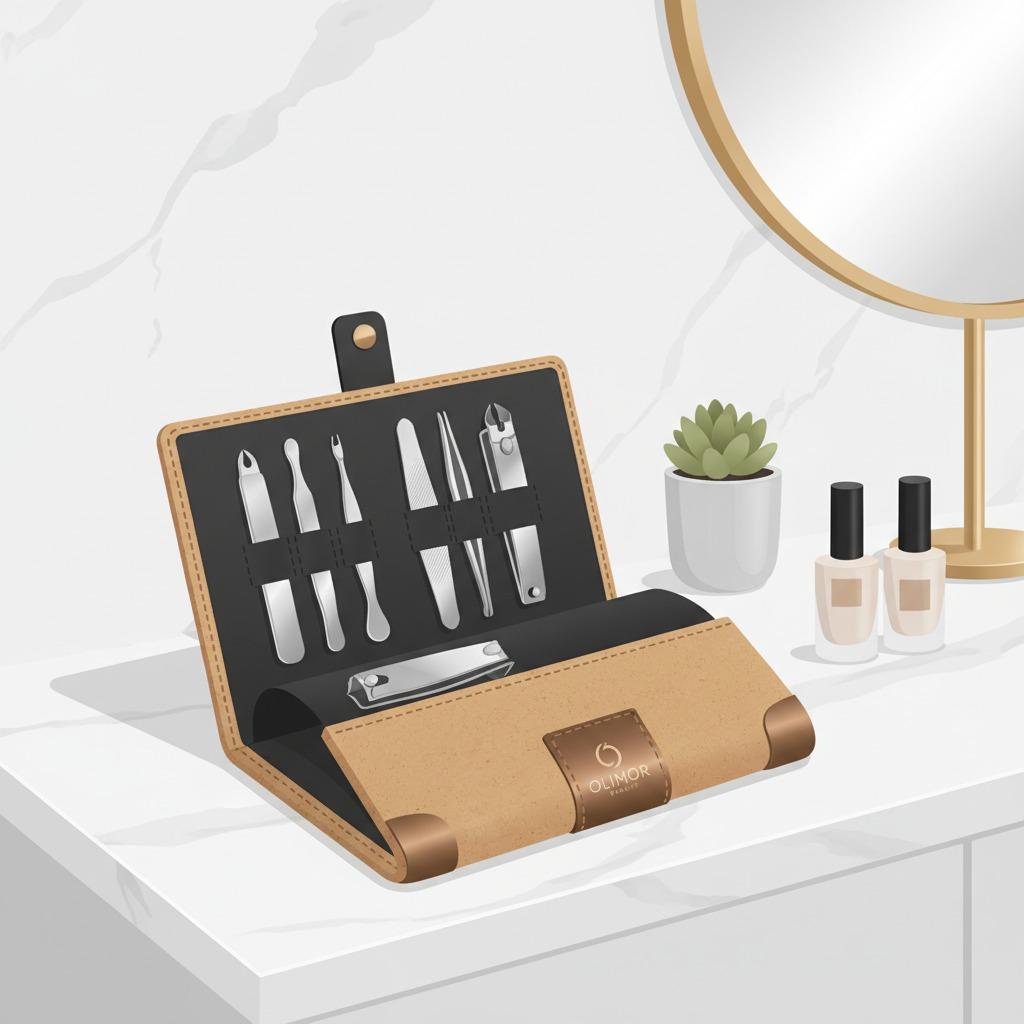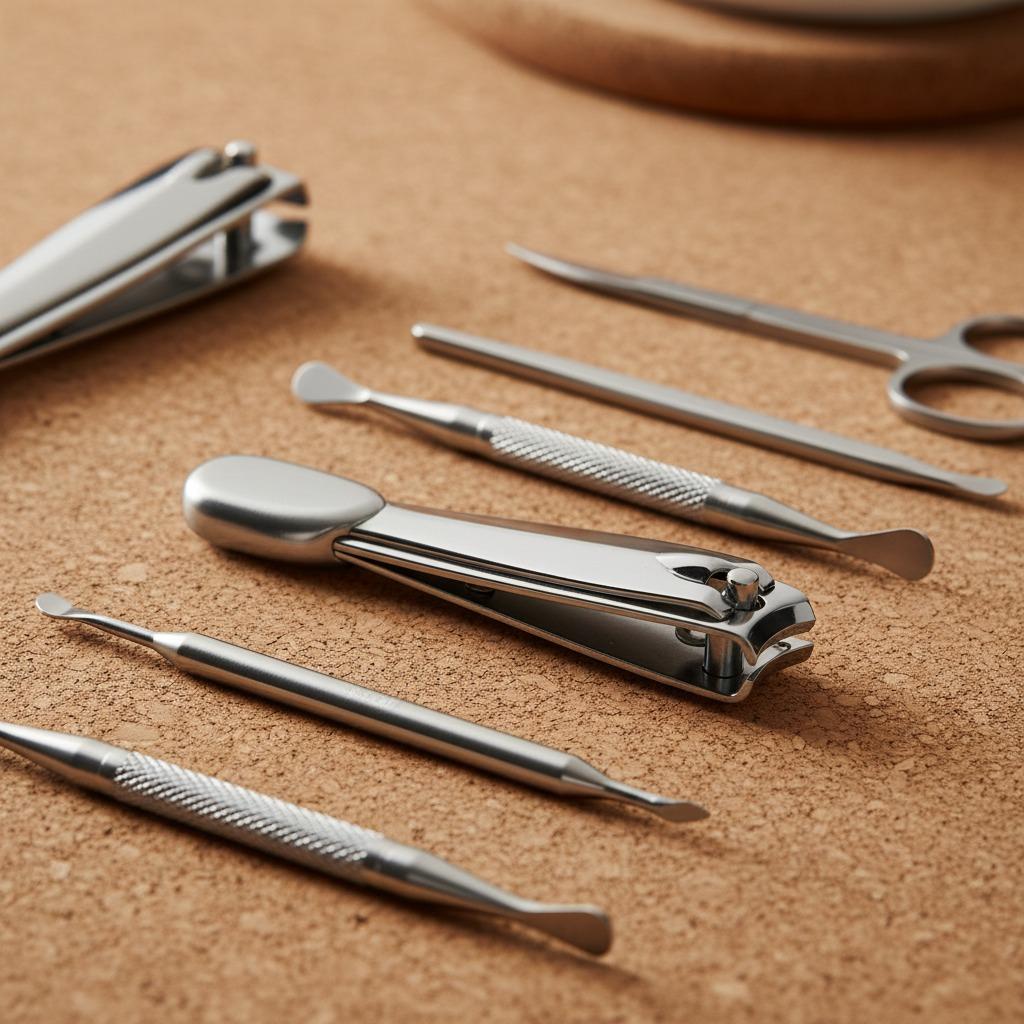












A cuticle nipper is a small tool, but it has a large effect on the finish of a manicure or pedicure. For nail technicians, salon buyers, beauty tool distributors and careful at-home users, the right nipper should trim excess cuticle and hangnails cleanly without crushing, tearing or forcing the hand into an awkward position. The cuticle nipper introduced here is designed around a simple purpose: controlled trimming in the delicate skin area around the nail.
This tool features sharp, angled stainless steel blades, a copper-colored coiled handle, a polished stainless steel finish and a compact size of 110mm long by 43mm wide. At 45g, it is light enough for repeated use while still feeling stable in the hand. These details matter because cuticle work requires accuracy, not force. A well-made nipper should allow the user to make small cuts with clear visibility and predictable spring return.
If you are comparing nail implements for professional service kits, retail manicure sets or personal grooming, this guide explains what to look for, how to use the tool safely, how to maintain it and what buyer questions help separate a useful cuticle nipper from a low-value accessory. You can also browse more beauty tool products from Olimor Beauty when building a complete nail care assortment.
What a Cuticle Nipper Is Designed to Do
A cuticle nipper is a precision grooming tool used to trim loose cuticle tissue and hangnails around the fingernails or toenails. It is different from a standard nail clipper. Nail clippers are shaped to cut the harder free edge of the nail plate, while cuticle nippers have smaller angled blades intended for soft, narrow areas near the nail fold.
The best use case is selective trimming. A cuticle nipper should not be used to cut healthy attached skin or to remove large sections of living tissue. Instead, it is most effective after the cuticle area has been softened and gently pushed back. The user can then remove only the lifted, dry or ragged skin that would otherwise catch, split or make the manicure look unfinished.
For professional nail services, the tool supports a neat polish line and a tidy final look. For home care, it helps manage hangnails before they tear further. For pedicures, it can help with small bits of excess skin around toenails, provided the user works slowly and does not cut aggressively.
Key Product Details That Affect Performance
The value of a cuticle nipper comes from how its components work together. Blade sharpness, blade angle, handle return and tool weight all influence whether trimming feels controlled or clumsy.
- Sharp angled blades: The stainless steel blades are shaped for accurate cuts in narrow spaces around the nail. Angled tips help the user approach the cuticle from the side without blocking the view.
- Stainless steel construction: Stainless steel is commonly used in manicure tools because it provides a polished appearance and durable cutting surfaces when properly maintained.
- Copper-colored coiled handle: The spring-like handle helps reopen the tool after each cut. This reduces repetitive finger effort and supports smoother work during full manicures or pedicures.
- Compact dimensions: At 110mm long and 43mm wide, the nipper is sized for control rather than bulk. A compact body can be helpful for small hands, travel kits and professional trays with limited space.
- Lightweight build: The 45g weight makes the tool easy to hold for detailed trimming without feeling flimsy or oversized.
- Polished finish: A smooth stainless steel finish gives the tool a clean professional look and makes routine wiping easier after use.
These characteristics are especially important for buyers who plan to supply the tool to salons, nail bars, beauty retailers or private label programs. A cuticle nipper is judged quickly by how it feels during the first few cuts. If the blades do not align cleanly, if the spring feels inconsistent or if the tool is too heavy at the tip, users will notice.
Who This Cuticle Nipper Is Best Suited For
This type of precision cuticle nipper fits several practical buying scenarios. A professional nail technician may need a reliable nipper for daily cuticle cleanup before gel polish, classic polish or natural nail care. A salon owner may include it in technician tool kits where comfort and predictable cutting action are priorities. A beauty distributor may add it to a stainless steel manicure tool range because it is a core item that pairs naturally with pushers, nail files, buffers and clippers.
For at-home users, the main advantage is control. A dedicated cuticle nipper is easier to manage than trying to use scissors or nail clippers around the nail fold. The angled blades allow careful trimming of hangnails after soaking, while the coiled handle helps the tool reopen without the user manually resetting it each time.
It is also useful for pedicure care, but toenails require extra caution because the surrounding skin can be thicker and less flexible. Users should soften the area first, trim only loose skin and avoid deep cuts near the sidewalls. Anyone with diabetes, poor circulation, infection, swelling or painful nail conditions should seek appropriate professional care instead of cutting at home.
How to Use a Cuticle Nipper Safely and Effectively
Good results depend as much on technique as on the tool itself. Cuticle trimming should be slow, minimal and deliberate. The goal is a clean edge, not over-removal.
- Clean the tool and hands first. Wash hands or feet and ensure the nipper is clean before it touches the skin.
- Soften the cuticle area. Soak in warm water or use an appropriate cuticle softening product. Softened tissue is easier to trim cleanly.
- Push back gently. Use a cuticle pusher to move loosened cuticle from the nail plate. Do not scrape harshly or force the skin backward.
- Identify only loose tissue. Look for dry, lifted cuticle or hangnails. Avoid cutting skin that is attached, firm or painful.
- Trim with small cuts. Place the angled blade carefully and remove tiny sections at a time. Do not pull the skin after cutting.
- Check both sides of the nail. Hangnails often appear near the sidewalls. Trim only what is clearly loose.
- Moisturize after trimming. Apply cuticle oil, hand cream or lotion to reduce dryness and support a smoother appearance.
- Clean the nipper after use. Remove residue and dry thoroughly before storage.
A common mistake is trying to cut the entire cuticle line in one continuous motion. This increases the risk of over-cutting and uneven skin. Short, controlled snips are safer and produce a cleaner look.
Maintenance Tips for Longer Tool Life
Because a cuticle nipper is used close to the skin, maintenance is not optional. Regular cleaning protects the user, preserves blade performance and keeps the tool looking professional. After each use, wipe away visible residue and dry the tool carefully. Moisture left in the hinge or blade area can reduce smoothness over time.
Store the nipper in a dry pouch, case or tray where the blades do not strike other metal tools. Blade tips are small and should be protected from drops. If the blades become misaligned, dull or damaged, trimming will feel less precise and may pull at the skin. At that point, the tool should be replaced or serviced according to the buyer’s quality policy.
For salons, hygiene procedures should follow local requirements and the salon’s sanitation system. A tool intended for repeated professional use should be easy to clean and inspect. The polished stainless steel finish helps with visual inspection because residue is easier to see on a smooth reflective surface.
Buyer Checklist for Sourcing Cuticle Nippers
When sourcing manicure tools, buyers often focus on appearance first. However, a cuticle nipper should be evaluated by function, consistency and packaging suitability. The following checklist can help when comparing samples or preparing an inquiry.
| Evaluation Point | Why It Matters |
|---|---|
| Blade alignment | The blade edges should meet cleanly so the tool cuts rather than pinches or tears. |
| Tip precision | Fine angled tips help reach small hangnails and tight nail corners with better visibility. |
| Spring return | The coiled handle should reopen smoothly after each cut without feeling loose or stiff. |
| Hand comfort | The 110mm by 43mm size and 45g weight should feel balanced during repeated trimming. |
| Surface finish | A polished stainless steel finish should be smooth, clean and suitable for beauty retail presentation. |
| Packaging needs | Retail, salon kit and distributor packaging may require different protection and presentation. |
For assortment planning, consider whether the cuticle nipper will be sold as a single tool, paired with a pusher, or included in a manicure set. It can also sit within broader product collections for nail care, grooming or travel beauty accessories. The right choice depends on the customer’s expected use: professional service, home manicure maintenance, giftable beauty kits or wholesale refill inventory.
If you need to clarify available options, packaging direction or sourcing requirements, you can contact Olimor or send an inquiry with the details of your project.
Why Precision Matters in Nail Grooming
Cuticle care is one of the most visible details in nail grooming. Even when the nail shape and polish are attractive, ragged hangnails or uneven cuticle trimming can make the result look unfinished. A sharp stainless steel cuticle nipper gives the user a better chance of making clean, minimal cuts with less pressure.
The combination of angled blades, a coiled spring handle and compact lightweight dimensions makes this nipper practical for both professional and personal use. It is not a tool for rushing. Its strength is controlled trimming: softening first, pushing back gently, removing only what is loose and finishing with moisture.
For buyers, the most important question is whether the tool performs consistently in real hand use. Check the cut, the spring feel, the finish and the packaging fit for your market. A well-selected cuticle nipper can become a dependable part of a nail care range because it solves a specific grooming need with a simple, familiar design.