Eyebrow shaping looks simple until a tweezer slips, cuts a hair instead of pulling it, or feels uncomfortable after only a few minutes of use. For consumers, salons, beauty retailers, and private-label buyers, the best tweezers for eyebrows are not defined by appearance alone. The real value is in tip alignment, material choice, edge finishing, hand feel, and consistent gripping performance from the first use to repeated daily grooming.
This guide explains what to look for when selecting eyebrow tweezers, especially stainless steel tweezers intended for detailed brow work. It focuses on practical evaluation: how the tips meet, how the tool sits in the hand, what makes a tweezer easier to clean, and how to compare options before adding them to a beauty kit or product assortment. If you are reviewing broader beauty tool options, you can also explore Olimor beauty tool products or browse related product collections for context.

What Makes Eyebrow Tweezers Different from General Tweezers?
Eyebrow tweezers are designed for short, fine, and sometimes hard-to-see hairs around the brow line. Unlike utility tweezers, which may only need to pick up small objects, brow tweezers must grasp individual hairs close to the skin without pinching, scraping, or repeatedly missing the target. That requires a controlled closing action and tips that meet evenly across the gripping surface.
The brow area also demands precision because a single misplaced pull can affect the overall shape. A reliable pair of tweezers helps users remove one hair at a time, refine the lower brow line, clean the space between brows, and manage regrowth without over-plucking. For professional or retail use, this consistency matters because the same tool may be used by people with different hand sizes, grooming habits, and hair textures.
Key Features to Check Before Choosing Eyebrow Tweezers
When comparing tweezers, focus less on broad product claims and more on physical details that can be inspected. A well-made tweezer should feel stable when squeezed, return to its original position without twisting, and grip hair without forcing the hand to work too hard. The following criteria are especially useful when assessing quality.
- Tip alignment: The two tips should meet evenly. If one side sits higher than the other, hairs may slip or break instead of being removed from the root.
- Tip finish: The gripping surface should be clean and precise. Rough or uneven tips can feel uncomfortable and may damage the hair before it is pulled.
- Material: Stainless steel tweezers are commonly preferred because stainless steel is durable, hygienic, and resistant to rust when properly cared for.
- Tension: The tweezer should close smoothly with moderate pressure. Too much tension causes hand fatigue; too little tension can reduce control.
- Ergonomic handling: A comfortable body shape makes detailed brow work easier, especially when shaping both brows or working in a salon setting.
- Cleaning suitability: Brow tools contact skin and hair, so surfaces should be easy to wipe clean and keep dry after use.
Slant, Pointed, and Flat Tips: Which Type Suits Brow Work?
Different tip shapes serve different grooming habits. The best choice depends on whether the user is shaping the full brow, removing isolated fine hairs, or maintaining a finished shape between appointments. Buyers sourcing tweezers for a retail range may choose more than one tip style to cover multiple use cases.
| Tip Style | Best Use | Selection Notes |
|---|---|---|
| Slant tip | General eyebrow shaping and routine cleanup | Often preferred for control because the angled edge can approach hairs from different directions. |
| Pointed tip | Very fine, short, or isolated hairs | Requires careful handling; useful for precision but less forgiving for beginners. |
| Flat tip | Gripping multiple visible hairs or broader cleanup | Can be useful for simple grooming, but may be less precise around a carefully shaped arch. |
For most eyebrow grooming sets, slant-tip tweezers are a practical starting point because they balance visibility, reach, and control. Pointed tips can add value for advanced users, but they should be manufactured and finished carefully so the points meet accurately without feeling sharp against the skin.
Why Stainless Steel Is Commonly Preferred
Material selection affects both product life and hygiene. Stainless steel is widely used for beauty tools because it offers a strong balance of durability and care convenience. In eyebrow tweezers, stainless steel helps maintain a stable tool body and supports repeated cleaning when the tool is used correctly.
Resistance to rust is also important because grooming tools are often stored in bathrooms, makeup bags, salon drawers, or retail demonstration kits where humidity may be present. Stainless steel is not a reason to ignore maintenance, but it gives the tool a practical foundation for long-term use. After cleaning, the tweezer should still be dried before storage, especially around the tip area where water or residue can remain.
For buyers, stainless steel construction is only one part of the evaluation. Two tweezers may both be made from stainless steel but perform differently if the tips are not aligned or if the finishing process leaves uneven edges. Always treat material, shaping, polishing, and quality control as connected factors rather than separate selling points.
How to Test Tweezers for Grip and Comfort
Before committing to a personal purchase or sourcing decision, it helps to test tweezers with simple, repeatable checks. These checks do not require laboratory equipment and can reveal whether a tool is suitable for brow grooming.
- Inspect the tips under good light. Close the tweezer slowly and check whether both sides meet from edge to edge without visible gaps.
- Test the closing action. Squeeze several times. The motion should feel smooth and controlled, not stiff, loose, or uneven.
- Check the grip on a fine hair or similar sample. The tips should hold firmly without needing excessive pressure.
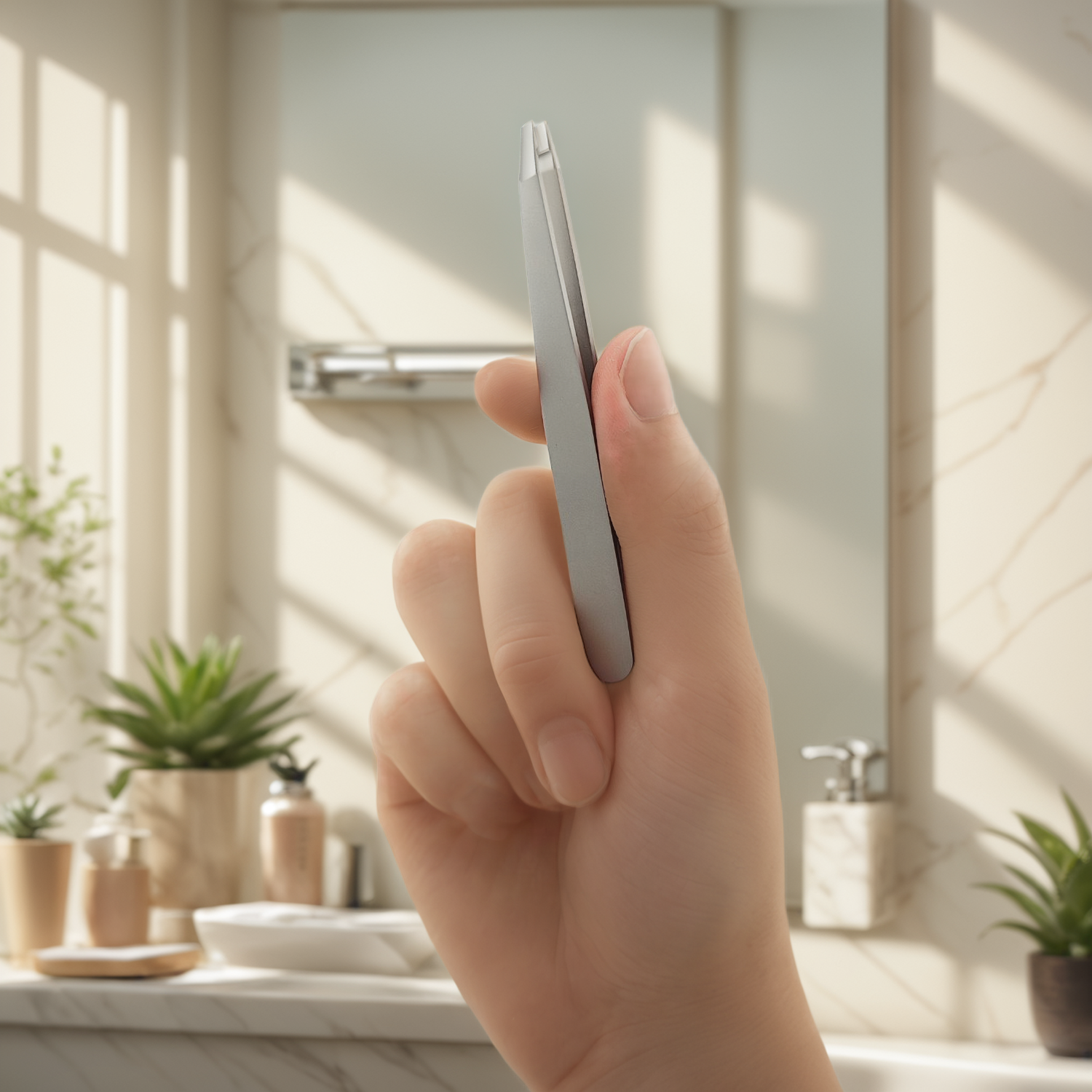
- Assess hand comfort. Hold the tweezer as you would during brow shaping. If the body feels slippery or forces an awkward angle, precision may suffer.
- Review finish quality. Edges should feel clean, and the tool should not have rough spots where fingers rest.
For business buyers, these same checks can be turned into a simple incoming inspection routine. Instead of relying only on appearance, evaluate several samples from a batch for alignment, tension, and finishing consistency. If you need help comparing options for a product line or retail program, you can contact Olimor or send an inquiry with your intended use and sourcing priorities.
Using Eyebrow Tweezers Correctly for Cleaner Results
Good tweezers perform best when paired with proper technique. Start with clean skin and clean tools. Work in bright, even lighting, ideally with a mirror that allows you to see both the detail and the overall brow balance. Avoid rushing; eyebrow shaping is easier to adjust when hairs are removed gradually.
To reduce discomfort, gently hold the skin taut near the hair you plan to remove. Grip one hair at a time close to the base and pull in the direction of hair growth. Pulling against the growth direction can increase the chance of breakage, leaving a short hair behind that is harder to remove. Step back frequently to compare both brows before continuing, because symmetry is judged by the full face rather than a magnified section of one brow.
It is also wise to avoid heavy reshaping when the skin is irritated or immediately before applying strong skincare products around the brow area. After tweezing, keep the area clean and avoid repeatedly touching the skin with unwashed hands.
Care and Storage Tips That Protect Tweezer Performance
Even well-made tweezers can lose performance if the tips are dropped, bent, or stored loosely with other metal tools. The tips are the most important part of the tool, so protecting their alignment should be a daily habit.
- Wipe the tweezer after use to remove skin oils, hair, and product residue.
- Dry thoroughly before storage, especially if the tool was cleaned with water.
- Store with a protective cap or in a separate pouch when possible.
- Avoid dropping tweezers on hard surfaces, as impact can misalign the tips.
- Do not use brow tweezers as a utility tool for opening packaging or gripping hard objects.
For salons and beauty businesses, hygiene routines should be consistent and appropriate for the working environment. Tools used on multiple people require a more structured cleaning and sanitation process than tools kept for personal use.
Choosing Tweezers for Retail, Salon, or Private-Label Programs
When selecting eyebrow tweezers for a product assortment, think about the end user first. A beginner may value an easy-grip slant tweezer that feels stable in the hand. A brow technician may need sharper precision and consistent tension across repeated use. A travel or gift set may prioritize compact storage and protection for the tips.
Packaging and presentation also matter, but they should not distract from function. Clear product information should help users understand the tip type, intended use, and basic care instructions. For sourcing discussions, it is useful to prepare a checklist covering tip style, material expectations, finish preference, packaging requirements, and inspection standards. This keeps the conversation focused on measurable details instead of vague descriptions such as “premium” or “professional.”
The best tweezers for eyebrows are the ones that combine accurate tip alignment, dependable grip, comfortable handling, and sensible maintenance. Whether you are buying one pair for home grooming or comparing stainless steel tweezers for a beauty tool line, judging these details carefully will lead to better results and fewer disappointing tools.