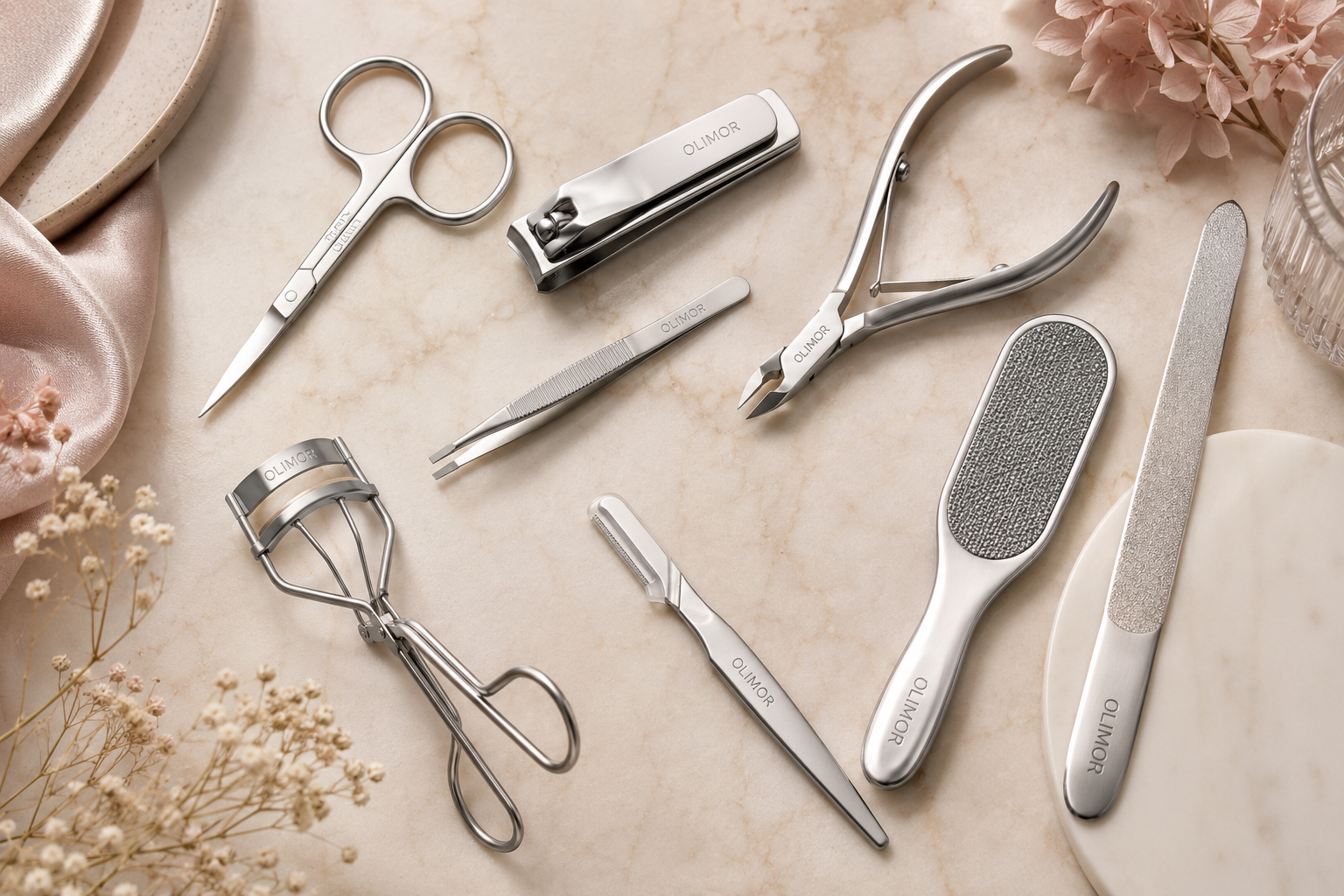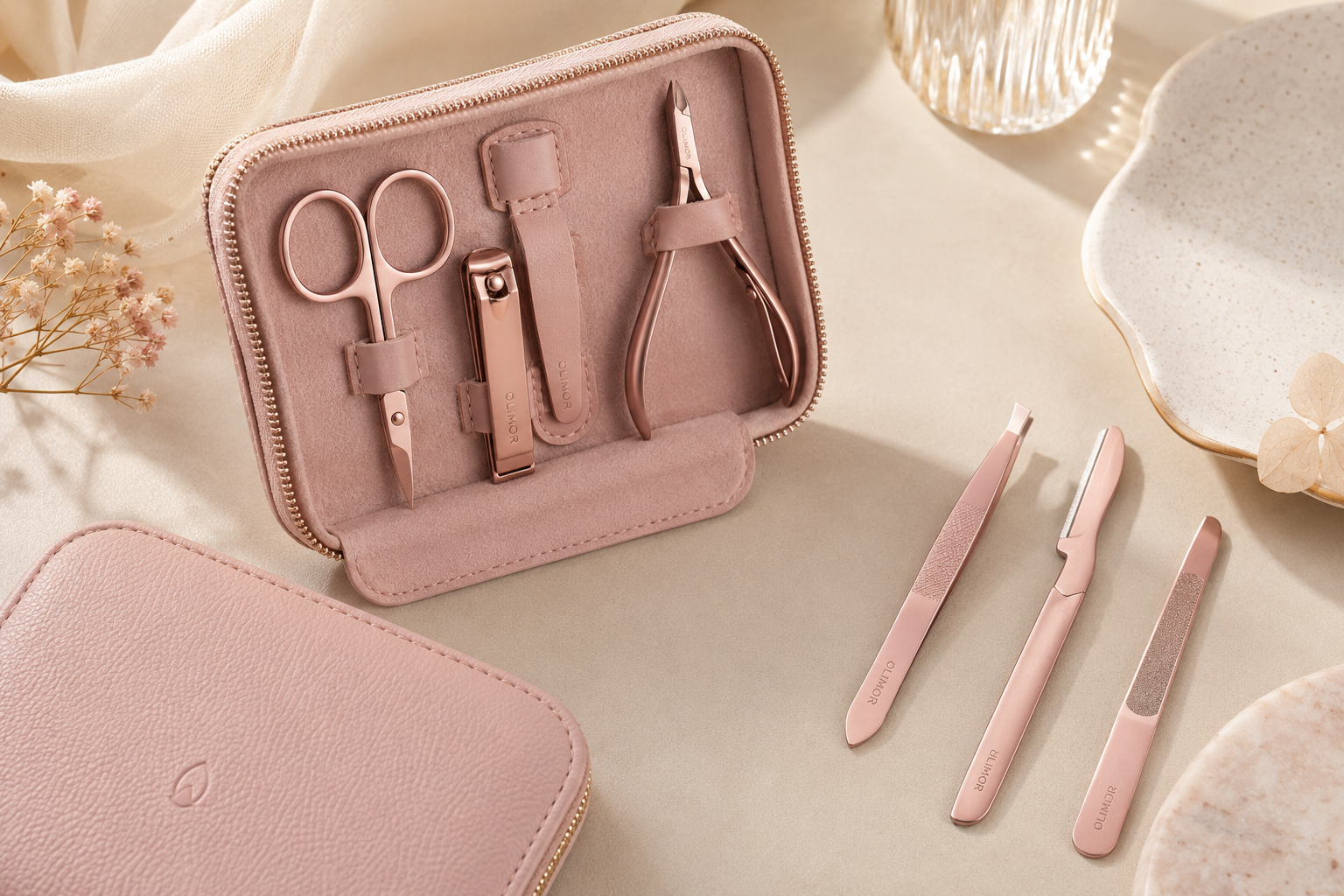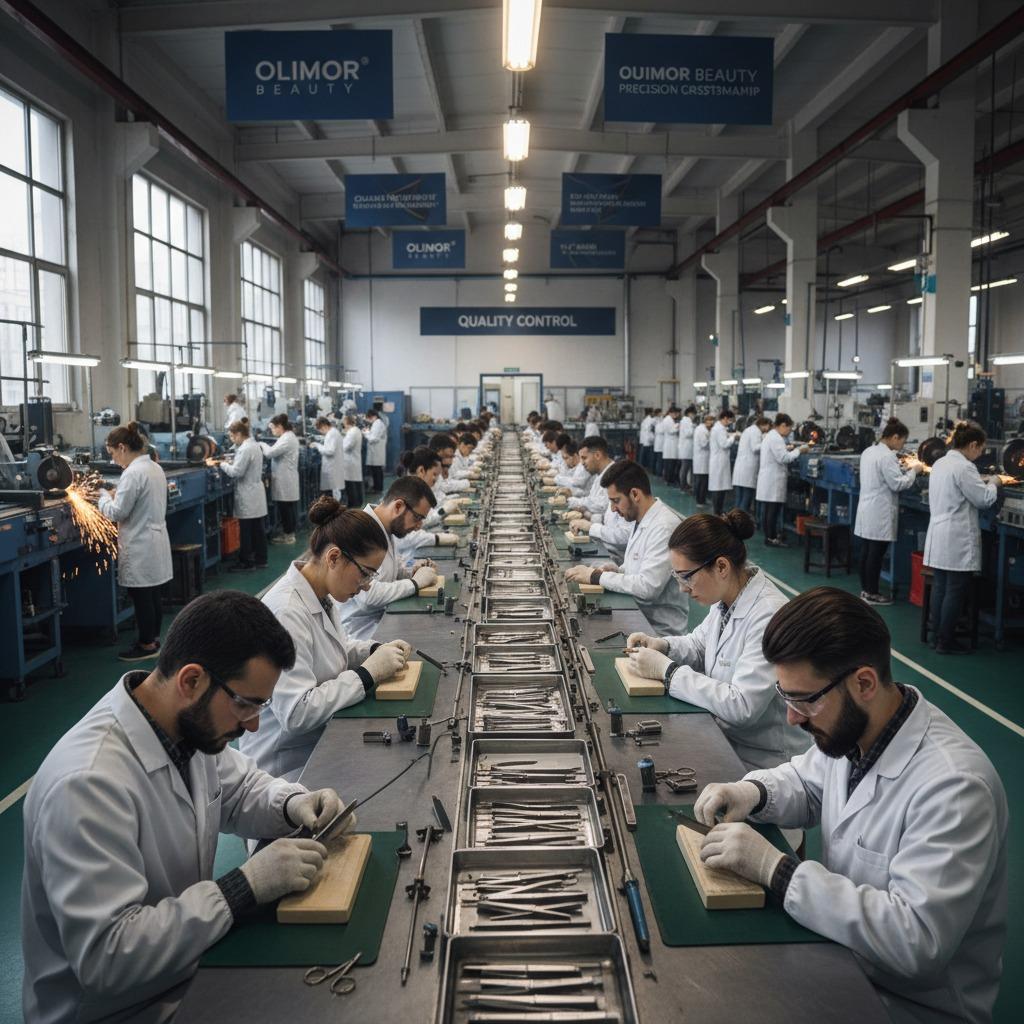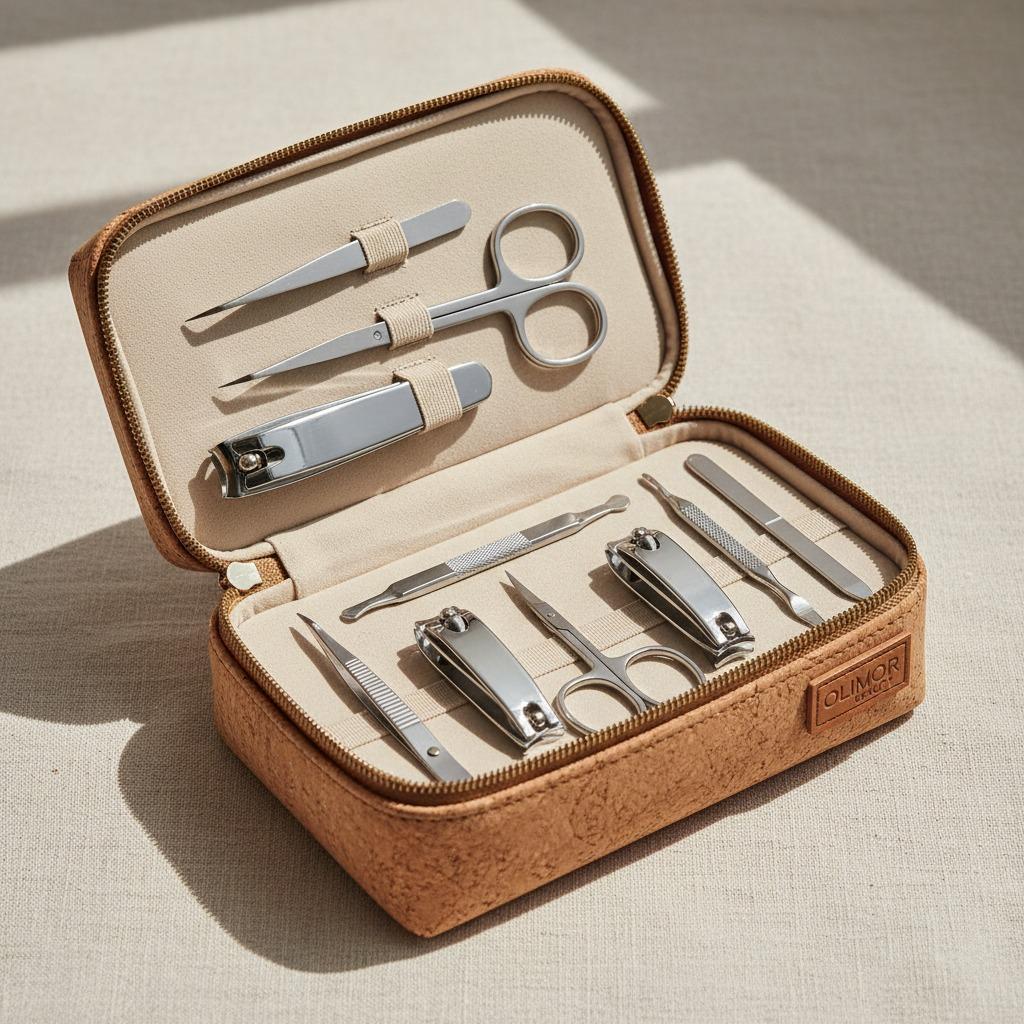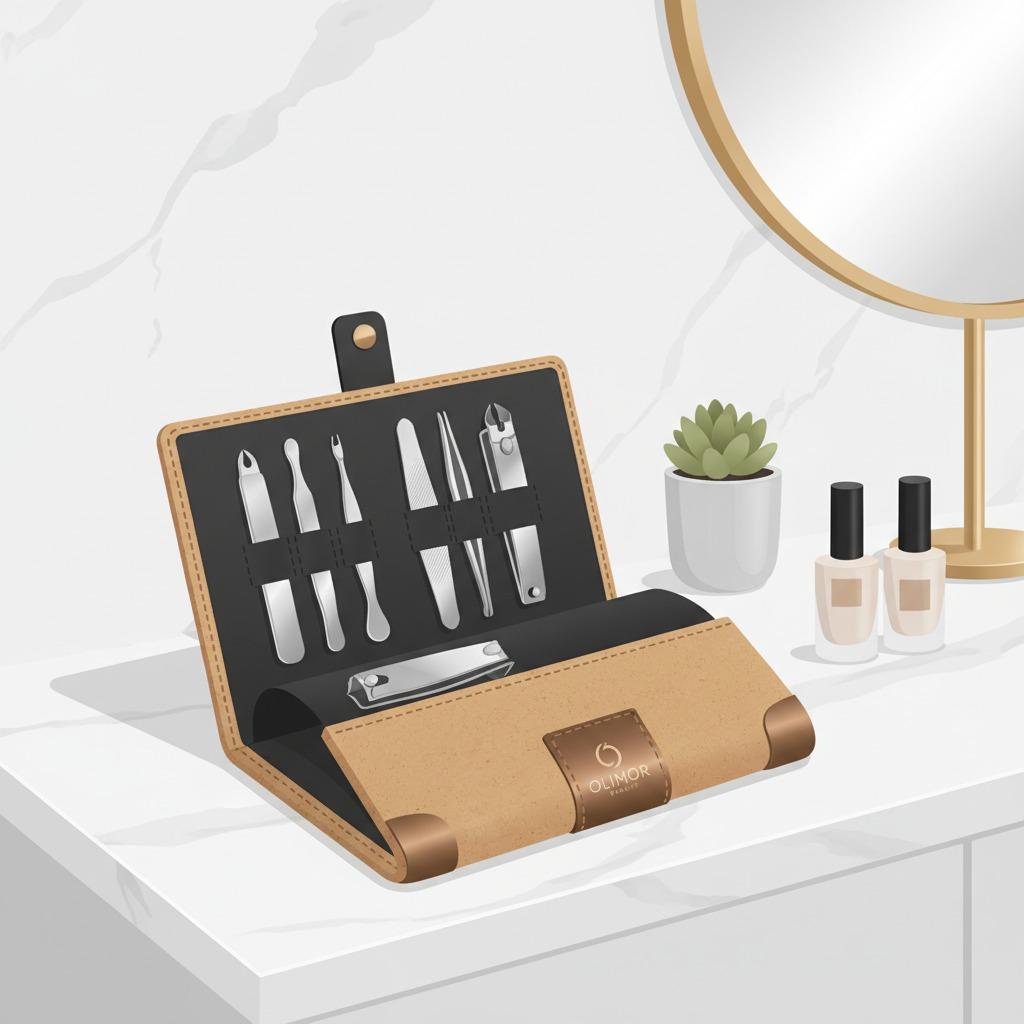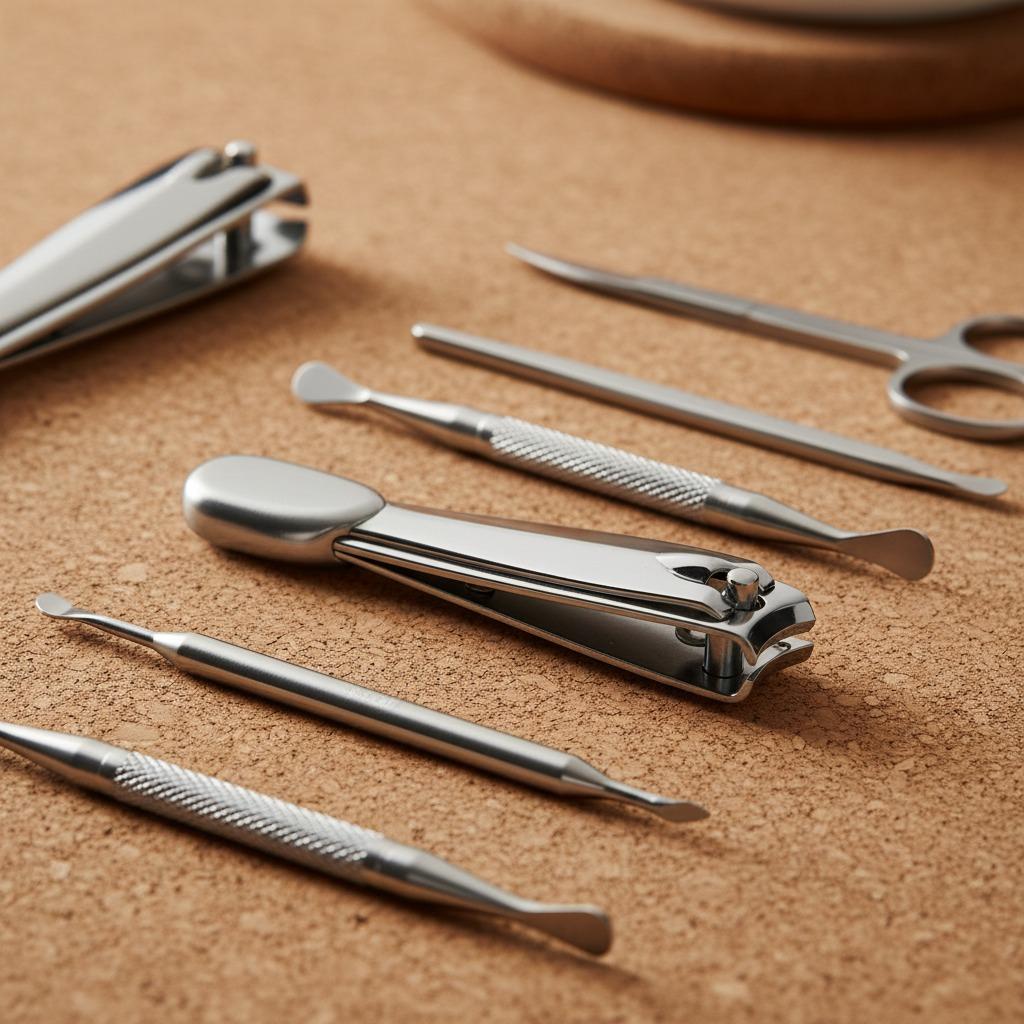











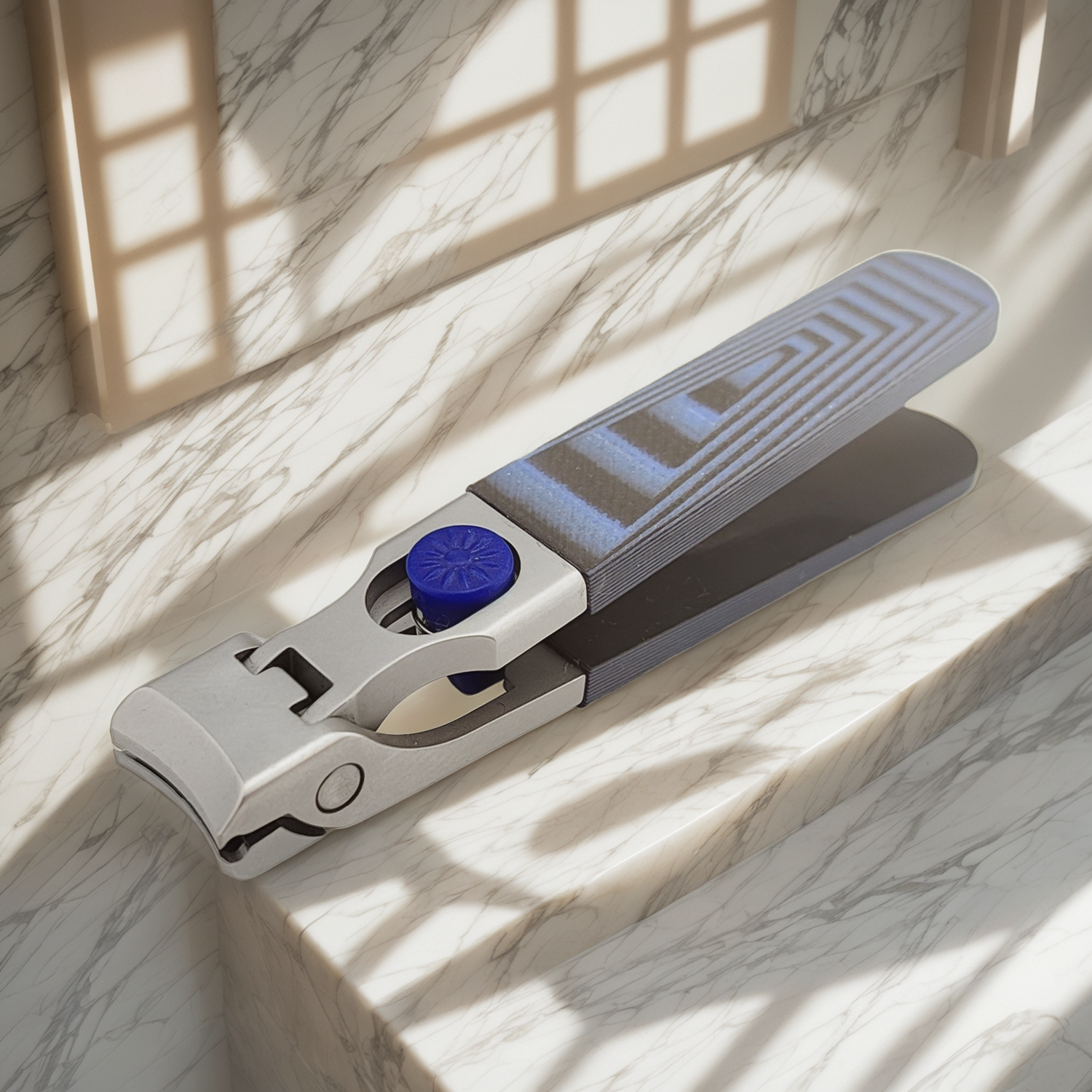
The best nail clipper is the one that trims cleanly, feels stable in the hand, and supports controlled cutting on both fingernails and toenails. For personal grooming kits, salon stations, travel sets, and retail beauty assortments, the most useful clipper is usually not the most complex one. It is the one with dependable blade alignment, a comfortable grip, a smooth lever, and a shape that helps the user work carefully instead of forcing the cut.
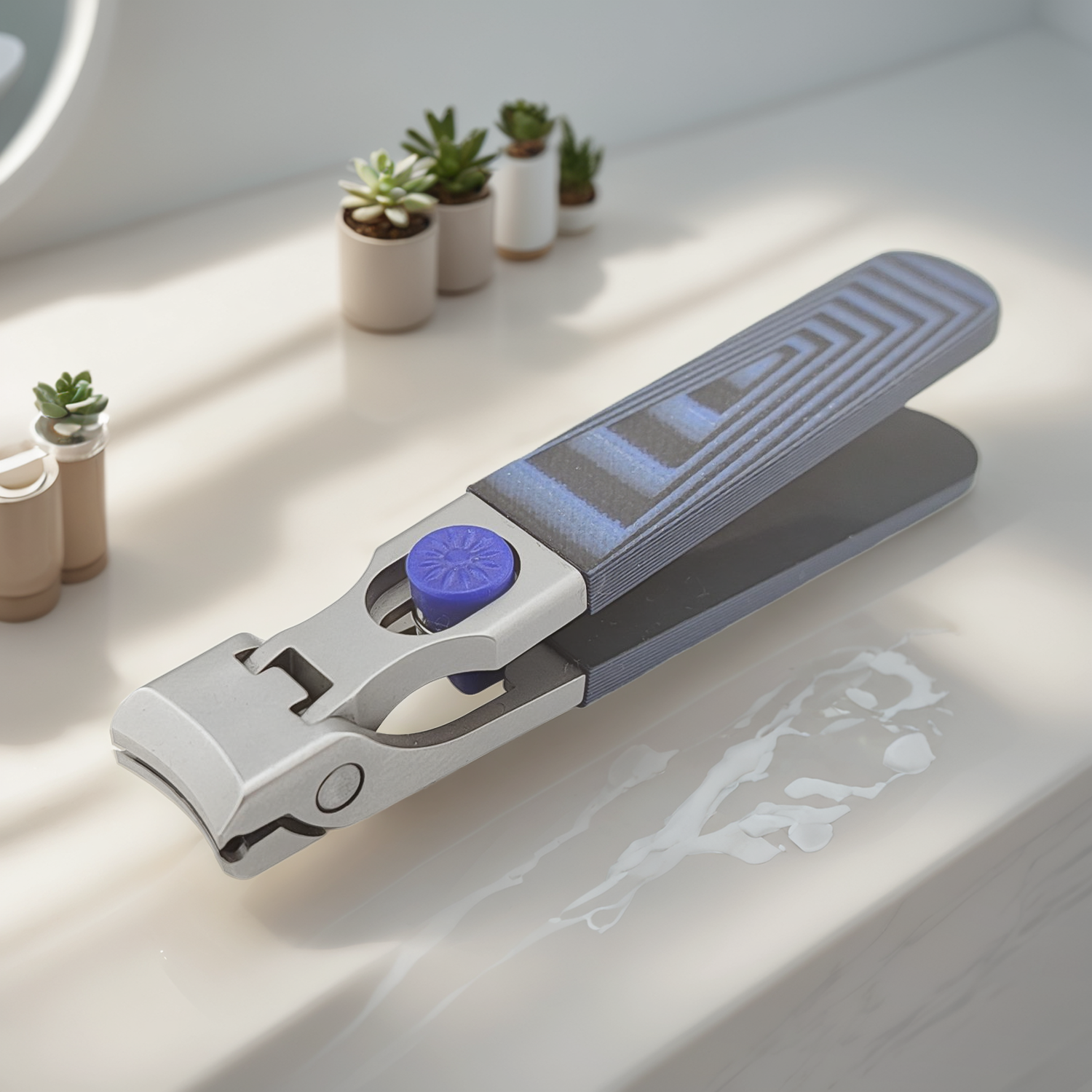
This stainless steel clipper has a blue and black geometric surface, an ergonomic form, and a contoured cutting edge designed for manicure and pedicure use. Those details matter because they support practical trimming, easier handling, and a more polished look for retail presentation. Used well, a professional nail clipper can reduce rough edges, help maintain a cleaner nail shape, and make routine grooming more comfortable.
What a Professional Nail Clipper Should Do
A professional nail clipper should cut in a controlled way, not simply remove length. That means the jaws should meet evenly, the lever should feel firm, and the body should sit securely in the hand. If a clipper crushes the nail edge or requires repeated force to finish the cut, it is less suitable for regular grooming and less comfortable for thicker toenails.
Toenails are typically harder and less flexible than fingernails, so a pedicure nail clipper needs enough stability to keep the cutting action steady. Fingernails usually need a lighter, more rounded trimming motion. A versatile clipper should handle both without feeling loose or awkward. For buyers, that versatility is valuable because one tool can serve household grooming, salon support, and gift-set use.
Stainless steel is widely used for nail grooming tools because it is durable, easy to wipe clean, and well suited to repeated handling. It does not eliminate maintenance, but it gives the clipper a practical foundation for long-term use when the tool is cleaned and dried properly after each session.
Design Details That Affect Cutting Control
Not all nail clippers perform the same way. Small design choices can change how the tool cuts, how it feels during use, and how easily it fits into a retail assortment.
Stainless steel construction
Stainless steel gives the clipper a sturdy feel and a clean appearance. For sourcing teams, it is also a useful baseline material because it suits both personal grooming and professional-style retail presentation. The key is not just the material itself, but how the tool is finished. Smooth edges, consistent polishing, and a hinge that moves without catching are all signs that the clipper is likely to feel better in everyday use.
Contoured cutting edge
The contoured cutting edge on this design is useful because it follows the nail more naturally than a harsh or awkward edge. That can help with fingernails, where a rounded or softly curved finish is often preferred, and with toenails, where careful trimming across the front of the nail is usually safer than cutting too deeply into the corners. A contoured edge does not replace good technique, but it gives the user a more forgiving starting point.
Ergonomic grip and lever feel
Ergonomics matter more than many buyers expect. A clipper that fits the hand well is easier to align, especially when trimming toenails at an angle. The lever should provide enough resistance to feel controlled, but not so much that it becomes tiring. For left-handed or right-handed users, a balanced shape is helpful because it makes the tool more predictable in daily use.
The blue and black geometric surface also gives this clipper a distinct retail identity. That visual detail is useful for assortments, but it should remain secondary to function. Buyers should always check whether the decorative finish still leaves the tool comfortable, secure, and easy to clean.
Fingernail vs Toenail Trimming: What to Prioritize
A single clipper can often handle both fingernails and toenails, but the trimming approach should not be the same. The comparison below helps clarify what users and buyers should look for when choosing a tool for different nail types.
| Use case | What to prioritize | Why it matters |
|---|---|---|
| Fingernail trimming | Comfortable grip, smooth cut, controlled curve | Helps create a neat shape without leaving sharp corners |
| Toenail trimming | Stable leverage, wider opening, even blade contact | Supports cleaner cuts on thicker nails and reduces repeated pressure |
| Salon or kit use | Easy cleaning, consistent finish, compact size | Useful for repeated handling, storage, and display |
| Retail assortment | Clear visual identity, dependable feel, practical packaging | Improves shelf appeal without sacrificing usability |
When trimming toenails, many users do better with smaller, deliberate cuts rather than trying to remove too much length at once. That keeps the edge cleaner and makes it easier to keep the nail shape conservative. For fingernails, a smoother, more rounded outline is often easier to maintain. A versatile clipper should allow both approaches without slipping or binding.
How to Evaluate a Sample Before Buying
For salons, retailers, distributors, and private-label buyers, sample evaluation is one of the most practical ways to judge whether a nail clipper is worth adding to a line. Visual appeal matters, but it should never replace a hands-on check of how the tool opens, closes, and cuts.
Use the checklist below when comparing options from a supplier or when reviewing a sample from a new assortment.
| Inspection point | What good looks like | Why it matters |
|---|---|---|
| Blade alignment | The cutting edges meet evenly without visible gaps | Supports a cleaner cut and reduces crushing |
| Lever action | Smooth movement with firm, controlled resistance | Makes the tool easier to use repeatedly |
| Grip comfort | The body feels secure in the hand from several angles | Helps with both fingernail and toenail trimming |
| Cut quality | The nail edge looks clean rather than jagged or compressed | Shows whether the clipper performs as expected |
| Finish and cleaning | Surfaces are smooth and residue can be wiped away easily | Supports hygiene and longer service life |
| Overall balance | The tool feels stable, not top-heavy or awkward | Improves control during regular grooming |
At the sourcing stage, it is also smart to ask what affects cost. Without discussing price directly, the main factors usually include material choice, surface finish, lever construction, packaging, customization requirements, and the amount of inspection or sorting needed before shipment. A simpler finish may be easier to source, while a more distinctive decorative appearance can add complexity. Clear packaging requests can also influence the final setup.
If you are building a broader assortment, compare the clipper against other items in the beauty tool products range and review matching styles in the collection selection. That makes it easier to keep the product line consistent in quality and presentation.
Using the Clipper for Cleaner Results
Even a well-made nail clipper performs better when the user follows a simple trimming routine. The goal is controlled removal, not speed. That is especially true for thicker toenails or nails that have become dry and hard.
- Clean the tool first. Wipe the jaws and cutting area so no residue interferes with the cut.
- Soften the nails if needed. Trimming after washing or soaking can make thick nails easier to cut.
- Position the nail carefully. Place only a manageable section between the blades instead of forcing a large bite.
- Cut in small steps. Move across the nail gradually to keep the edge under control.
- Avoid over-cutting the corners. Leave enough nail edge to reduce discomfort as the nail grows.
- Finish with a file if necessary. Smooth any sharp points after clipping.
- Dry and store the clipper properly. Good storage helps keep the tool ready for the next use.
For salons and professional grooming settings, hygiene routines should follow the rules and service standards that apply in the local market. For retail or home use, cleaning, drying, and separate storage already make a meaningful difference in tool care.
Maintenance and Common Problems
A stainless steel nail clipper can last a long time when it is treated like a grooming tool rather than a disposable accessory. The most common problems are often caused by misuse or poor storage, not by the design alone.
| Problem | Likely cause | What to check |
|---|---|---|
| Rough or jagged cuts | Blade alignment issues, dull edge, or forcing the cut | Inspect the sample, test on different nail thicknesses, and review cutting technique |
| Lever feels stiff | Debris in the hinge or lack of cleaning | Clean and dry the moving area before assuming wear |
| Clipper slips in hand | Poor grip shape or unsuitable finish | Hold the tool in manicure and pedicure positions |
| Cut feels uneven | Jaw alignment or unstable handling | Check whether both sides close evenly under pressure |
| Rust-like marks or dull appearance | Moisture left on the tool after use | Review drying and storage habits immediately after cleaning |
To extend service life, remove nail debris after each use, wipe the jaws, and store the clipper in a dry place. Avoid using it for wire, packaging, plastic tags, or other non-grooming tasks. That can damage alignment and reduce cutting quality even if the material is sturdy.
Where This Type of Clipper Fits in Retail and Sourcing
This style of nail clipper works well for customers who want one practical tool for daily grooming and occasional pedicure use. It also fits retailers who need a visually distinct item that still feels useful rather than decorative. The stainless steel body, ergonomic shape, and contoured cutting edge make it suitable for personal care kits, travel sets, and multi-item grooming bundles.
For sourcing teams, the most important question is whether the clipper matches your target user. A home-grooming buyer may care most about comfort and ease of use. A salon buyer may focus on cleaning and handling. A retail buyer may want a product that presents well on shelf or in a boxed set. The same clipper can meet different needs if the fit between product design and market expectation is clear.
If you are preparing a purchase list or comparing options, contact our team to discuss product direction, or send a sourcing inquiry with your intended use, packaging preferences, and customization needs. If you sell into markets with specific compliance rules, verify the current requirements of the EU General Product Safety Regulation and any local consumer product safety guidance, and keep supplier documents on file for your own review.
The strongest buying decision is usually the one that balances function, presentation, and practical maintenance. A good nail clipper should be easy to use, easy to clean, and dependable enough to become part of a routine rather than a backup tool.
FAQ
Can I request a sample before placing an order?
In most sourcing conversations, samples are the best way to check blade alignment, grip comfort, cutting feel, and finish before moving forward. Use the sample to test both fingernail and toenail trimming if your market needs both.
Is customization possible for retail or private-label use?
Customization is often discussed at the product planning stage, especially for packaging, surface appearance, and assortment fit. Share your intended market and presentation goals so the supplier can confirm what can be supported.
What should I ask about quality control?
Ask how the clipper is inspected for alignment, finish consistency, lever movement, and cutting performance. It is also helpful to ask how surface cleanliness and packaging condition are checked before shipment.
What affects lead time for a nail clipper order?
Lead time usually depends on order details, customization needs, production capacity, and the current scheduling of the supplier. Confirm timing directly with the supplier and make sure your order requirements are written clearly.
How do I decide whether this clipper suits my market?
Compare the clipper against your target user, your packaging style, and the quality level of the rest of your assortment. If the tool feels stable, trims cleanly, and matches the look of your line, it is more likely to fit well in retail or kit use.