A professional eyelash curler should lift lashes smoothly without pinching the eyelid, crimping the hair or requiring excessive force. The best choice depends on the frame arch, silicone pad contact, handle control and how well the tool matches different eye shapes and lash types. For retailers, salon suppliers, makeup artists and private-label buyers, the same details also affect customer satisfaction, repeat use and product positioning.
Olimor Beauty focuses on practical beauty tools with refined finishing and controlled handling. In an eyelash curler, that means paying attention to the curve of the frame, the feel of the tension mechanism, the softness and stability of the silicone pad, and the way the tool sits near the lash root. This guide explains how to evaluate a professional eyelash curler for daily use, retail assortments or sourcing projects without relying on appearance alone.
What Makes an Eyelash Curler Professional?
A professional eyelash curler is not defined only by a metal body or a polished finish. It should provide controlled pressure, consistent pad contact and a comfortable fit close to the lash line. When these factors work together, the user can create a rounded lift with light, gradual pressure instead of one hard clamp.
The key point is alignment. The upper bar of the curler and the silicone pad need to meet evenly across the lash line. If the frame closes unevenly, lashes at the inner or outer corner may be missed, bent sharply or pulled. A well-designed arch helps the curler follow the natural contour of the eyelid, while ergonomic handles allow the user to close the tool slowly and confidently.
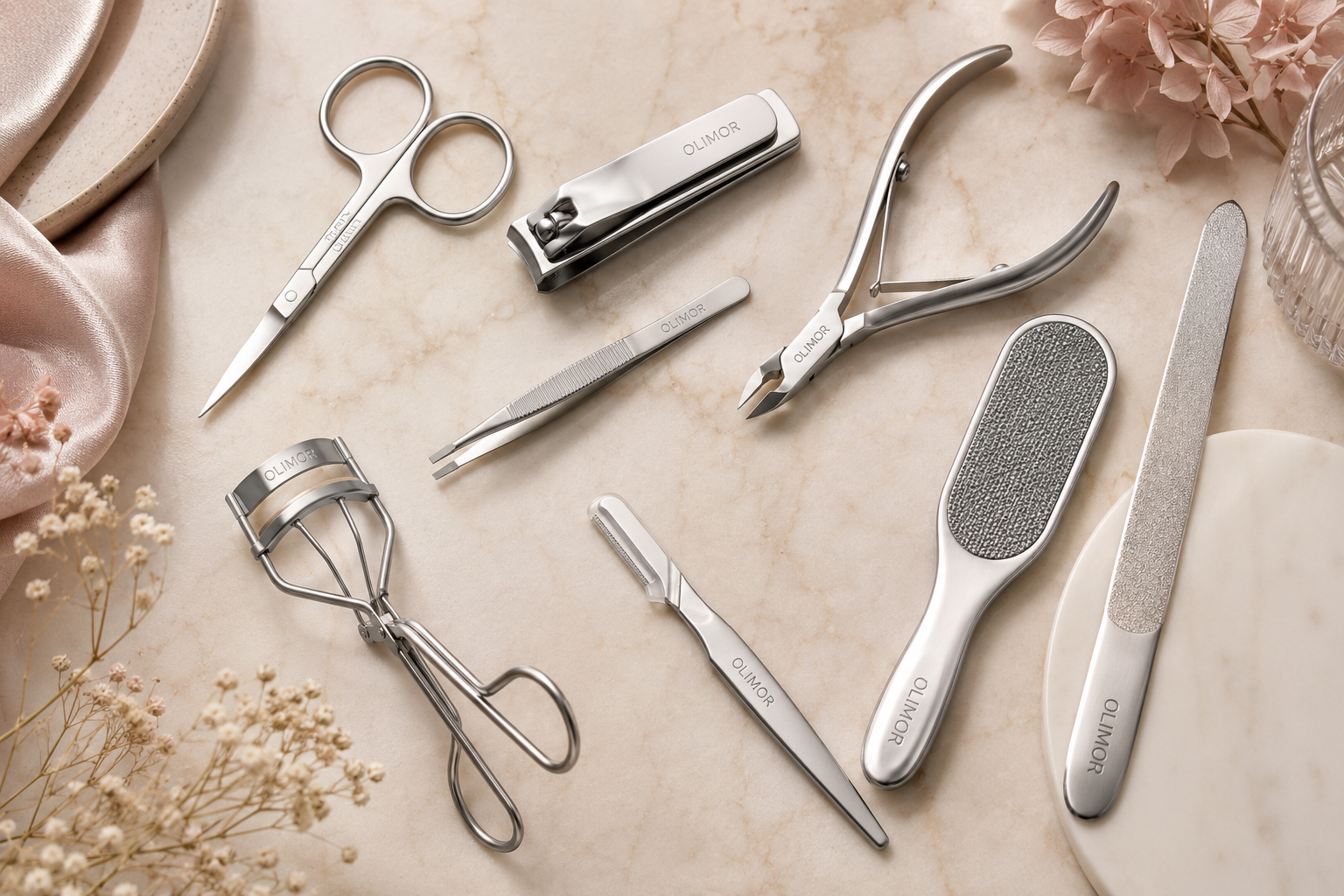
The Olimor Beauty product details highlight several relevant features: a superior arch, ergonomic design, a gentle yet firm tension spring system, a soft silicone pad and a dual-toned metal finish. These features matter because they affect fit, control, cushioning and presentation. For professional users and B2B buyers, they should be checked in actual samples rather than judged only from product images.
Why Curler Design Matters More Than Squeezing Force
Many users press too hard because they think force creates curl. In practice, too much pressure often causes crimping, discomfort or lash stress. A clean curl comes from good placement, stable cushioning and repeated light presses from the base toward the mid-length of the lashes.
The frame arch determines how close the tool can sit to the lash root without pressing into the eyelid. The pad determines whether pressure is cushioned or sharp. The handle movement determines whether the user can build tension gradually. If any of these elements feel wrong, the user may compensate by squeezing harder, which usually reduces comfort and consistency.
For commercial buyers, this is important because an eyelash curler is a hands-on tool. Customers may not describe the problem in technical terms, but they will notice if a curler pinches, misses short lashes or creates an angular bend. A tool that feels stable and predictable is easier to recommend for everyday makeup kits, salon retail shelves and beauty tool assortments.
How to Match a Curler to Eye Shape and Lash Type
The best professional eyelash curler is the one that fits the user’s eye contour and captures the lashes evenly. A curler that works well for one person may feel too curved, too flat, too narrow or too difficult to position for another. This is why sampling and fit evaluation are essential for beauty retailers and sourcing teams.
Eye shape considerations
For rounder eyes, a more pronounced arch may help the frame sit closer to the lash line. For flatter or less prominent eye shapes, a curler that is too curved may touch only the center lashes and miss the corners. For deeper-set eyes, opening width and handle clearance can affect how easily the curler reaches the lash base. For hooded lids, controlled placement is especially important to avoid catching the skin.
Lash type considerations
Long lashes may need enough opening width so the hairs can be placed inside the curler without folding. Downward-pointing lashes often benefit from curling in stages, starting near the root and moving slightly outward. Fine lashes need gentle pressure and a smooth pad surface. Short lashes require close root access, clear visibility and an arch that can capture small hairs without trapping the eyelid.
The supplied Olimor Beauty details note that the curler is designed with arch engineering and ergonomic principles to suit different eye shapes and sizes. When comparing professional beauty tool options, buyers should check whether the sample reaches the inner and outer lashes comfortably, whether the pad supports the full lash line and whether the handles close smoothly without a sudden snap.
Selection Checklist for Buyers and Product Teams
For B2B sourcing, an eyelash curler should be evaluated like a precision beauty tool. A polished finish may support shelf appeal, but performance depends on the details users feel near the eye area. Use the checklist below when comparing samples, reviewing supplier options or planning a retail assortment.
| Review point | What to check | Why it matters |
|---|---|---|
| Frame arch | Place the curler near different eye shapes and observe whether it follows the lash line. | A suitable arch helps capture lashes evenly and reduces pinching risk. |
| Pad contact | Close the curler slowly and check that the bar meets the silicone pad evenly. | Even contact supports a smooth curl from inner to outer lashes. |
| Pad softness | Press gently and inspect whether the pad cushions without feeling unstable. | A pad that is too hard may crease lashes; one that is too soft may feel imprecise. |
| Handle movement | Open and close repeatedly to feel whether movement is smooth and controlled. | Gradual pressure helps users avoid sudden clamping. |
| Tension mechanism | Assess whether the spring action feels gentle yet firm during use. | Controlled resistance improves predictability for daily users and makeup artists. |
| Surface finishing | Check edges, coating appearance and comfort near the eye area. | Finishing affects both safety perception and retail presentation. |
| Replacement pad planning | Ask how pads are supplied, packed or replaced for your program. | Frequent users need a practical pad maintenance solution. |
| Packaging compatibility | Review whether the packaging can protect the tool and explain use clearly. | Good packaging reduces confusion and supports retail display. |
If you are building a coordinated beauty tool line, compare finishes and packaging direction across the broader Olimor Beauty collection so the eyelash curler fits the same retail story as other tools.
How to Use a Professional Eyelash Curler Correctly
Good technique protects the lashes and improves the final lift. The safest general approach is to curl clean, dry lashes before mascara. Dried mascara can make lashes stiff or sticky, increasing the chance that lashes will catch on the pad.
- Start with clean lashes. Remove heavy residue from mascara, eyeliner, skincare or eye cream before curling.
- Look slightly downward into a mirror. This exposes the lash base and makes the curler easier to position.
- Place the curler near the root. Get close to the lash line, but do not press the metal frame into the eyelid.
- Close slowly. Apply gentle pressure for a short moment instead of clamping hard.
- Repeat at the mid-length. Move the curler slightly outward and press again with lighter pressure for a rounded curve.
- Apply mascara after curling. Mascara can help define the lifted shape, but it should not be used to glue lashes to the pad.
If the curler pinches, stop and reposition. The angle may be too steep, or the arch may not be the best match for the eye shape. If the lashes look sharply bent, reduce pressure and curl in two or three smaller steps. If only the center lashes lift, check whether the corners are actually inside the opening before closing the handles.
Special Tips for Short, Straight or Fine Lashes
Short lashes are harder to curl because many standard tools sit too far from the lash root. A useful curler for short lashes should allow careful placement close to the base while protecting the eyelid. The pad and arch need to work together so small hairs are lifted rather than trapped or skipped.
The Olimor Beauty product information describes a precise arch and soft silicone pad intended to help lift even shorter lashes from the base. It also mentions a dark silicone pad, which can make pale, fine or short lashes easier for some users to see before closing the curler. Visibility matters because the user must confirm that lashes are inside the tool rather than caught under the frame.
For short lashes, do not rush placement. Hold the curler open, bring it close to the lash line and blink gently so the lashes settle into the opening. Once the lashes are positioned, close the handles slowly. If you feel skin pressure, open the curler and adjust before applying tension. For very straight lashes, a second lighter press at the mid-length can help create a more natural sweep instead of a single upright bend.
Cleaning, Pad Care and Maintenance
An eyelash curler touches the eye area, so hygiene and maintenance are essential. Residue from mascara, eyeliner, skincare and natural oils can collect on the silicone pad and frame. This buildup can make lashes stick, reduce smoothness and affect the way the pad cushions pressure.
After use, wipe the pad and metal surfaces with a clean, soft cloth. For heavier residue, use a suitable gentle cleaner and allow the tool to dry completely before storing it. Avoid leaving wet residue around the pad seat or hinge area. Do not share a personal eyelash curler without proper cleaning, especially around sensitive eyes.
Inspect the silicone pad regularly. Replace it if you see a groove, crack, sticky texture, uneven surface or loss of cushioning. A worn pad may allow lashes to press against the metal edge, which can increase breakage risk. The curler itself should be retired if the frame becomes misaligned, the handles feel unstable or the tension mechanism no longer closes in a controlled way.
Professional users should create a routine inspection habit. A simple pre-service check can include pad condition, frame alignment, residue, handle smoothness and visible damage. Retailers can also reduce customer dissatisfaction by including basic use and cleaning instructions in packaging or product listings.
Cost Factors and Supplier Evaluation for B2B Sourcing
The cost of a professional eyelash curler is influenced by more than the metal frame. Buyers should consider tooling, finishing, pad requirements, packaging, inspection process, order configuration and customization needs. A lower unit price may not be the best value if the curler has inconsistent alignment, poor pad fit or packaging that does not protect the tool during shipping and retail handling.
When evaluating suppliers, ask practical questions rather than focusing only on price. Can the supplier explain the arch, pad and tension mechanism clearly? Can samples be checked before a larger order? Are replacement pads available as part of the project? Can packaging or color direction be discussed for a retail or private-label program? Are inspection expectations documented before production?
For consumer products sold in different markets, buyers should also verify applicable safety and labeling obligations. Depending on destination and product category, public bodies or regulations such as the U.S. Consumer Product Safety Commission and the EU General Product Safety Regulation may be relevant. Requirements can change, so always verify current versions, destination-market rules and supplier documents instead of assuming that a general beauty tool description is enough.
Common Problems and How to Troubleshoot Them
Most eyelash curler problems come from fit, pad condition or technique. Before replacing a product, review the symptoms carefully.
- Pinching: The frame may be too curved or too flat for the eye, or the user may be pressing the tool into the eyelid. Reposition and close more slowly.
- Crimped lashes: Pressure is likely too strong or held in one place. Use lighter pressure and curl in stages.
- Outer lashes not lifting: Check corner reach. The curler may not be capturing the full lash line.
- Lashes sticking to the pad: Clean residue from the pad and avoid curling after mascara has dried.
- Uneven curl: Inspect frame alignment and pad seating. A shifted or worn pad can affect pressure distribution.
- Short lashes not captured: Improve visibility, place closer to the root and consider whether the arch is suitable for short lashes.
For retailers and distributors, these troubleshooting points can be turned into product education. Clear instructions help customers use the tool correctly and reduce avoidable complaints caused by technique rather than construction.
When to Choose Olimor Beauty for Eyelash Curler Projects
Olimor Beauty’s eyelash curler approach emphasizes practical engineering details: ergonomic handling, a refined arch, a gentle yet firm curling mechanism, a soft silicone pad and polished visual presentation. These are relevant to beauty retailers, salon suppliers, makeup artists and private-label sourcing teams that want a curler selected for both use experience and retail appeal.
Before making a sourcing decision, request and test samples under realistic conditions. Try the tool on different eye shapes where appropriate, inspect the pad and frame alignment, review packaging needs and confirm customization possibilities directly. Avoid relying on broad claims that are not supported by supplier documents or sample inspection.
For product questions, assortment planning or private-label discussions, you can contact Olimor Beauty. If you already have project details prepared, send an eyelash curler sourcing inquiry with your target market, packaging needs and customization questions.
FAQ
Can I request samples before placing a larger eyelash curler order?
Sample availability should be confirmed with Olimor Beauty based on the current product and project requirements. For B2B buyers, sample review is recommended so you can check arch fit, pad contact, handle feel, finishing and packaging direction before confirming an order plan.
Is there a fixed MOQ for customized eyelash curlers?
MOQ can depend on the customization scope, packaging requirements and production arrangement. Confirm the current requirement directly with Olimor Beauty rather than assuming one quantity applies to every eyelash curler project.
Can the eyelash curler be customized for private-label retail?
Customization may include elements such as finish direction, packaging concept or branding discussion, depending on the project. Share your target market, retail positioning and preferred presentation so the supplier can advise what is practical.
How should quality be checked before shipment?
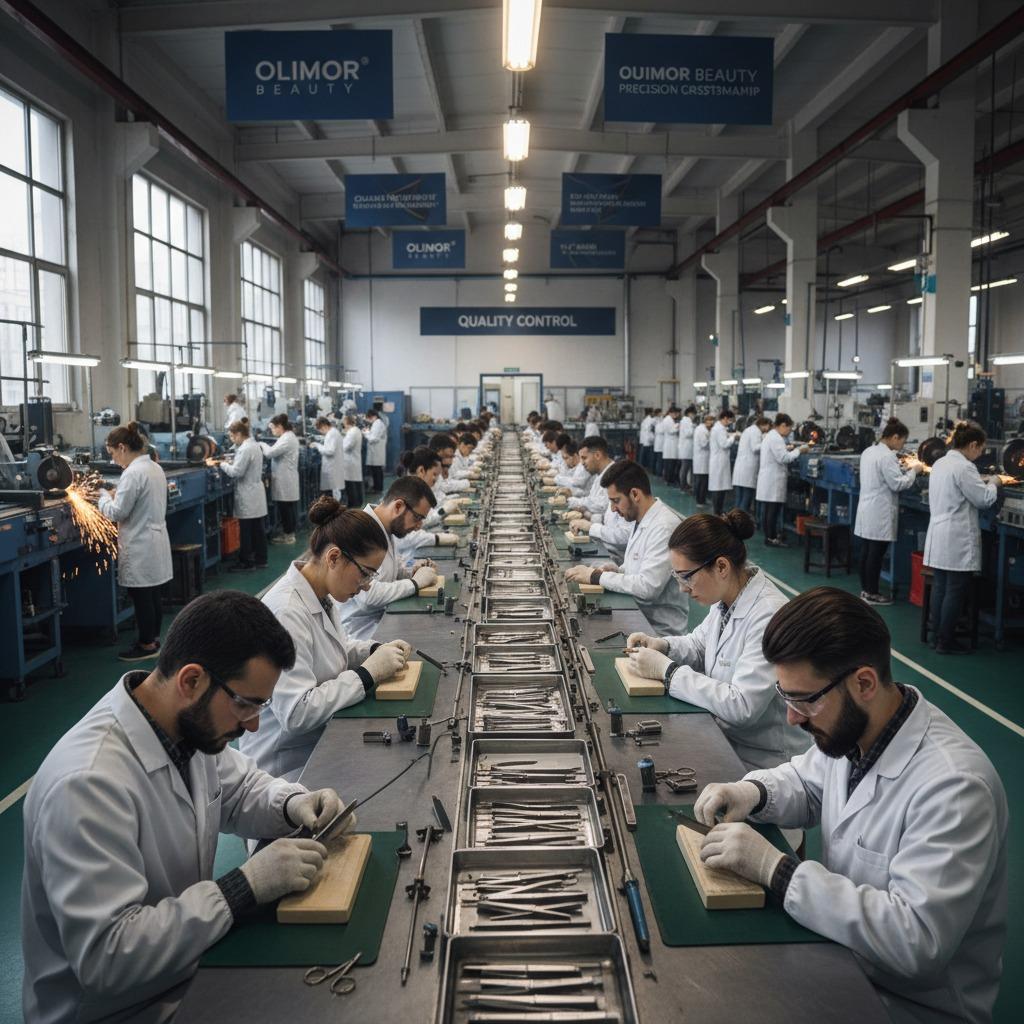
Useful inspection points include frame alignment, pad fit, handle movement, tension feel, surface finishing, cleanliness, packaging protection and consistency against the approved sample. Buyers should document their expectations before production and verify supplier documents for the destination market.
How is lead time determined for eyelash curler orders?
Lead time can vary according to order details, customization, packaging and production schedule. Ask for a current project timeline during quotation and confirm whether sample approval, artwork approval or packaging decisions affect the schedule.